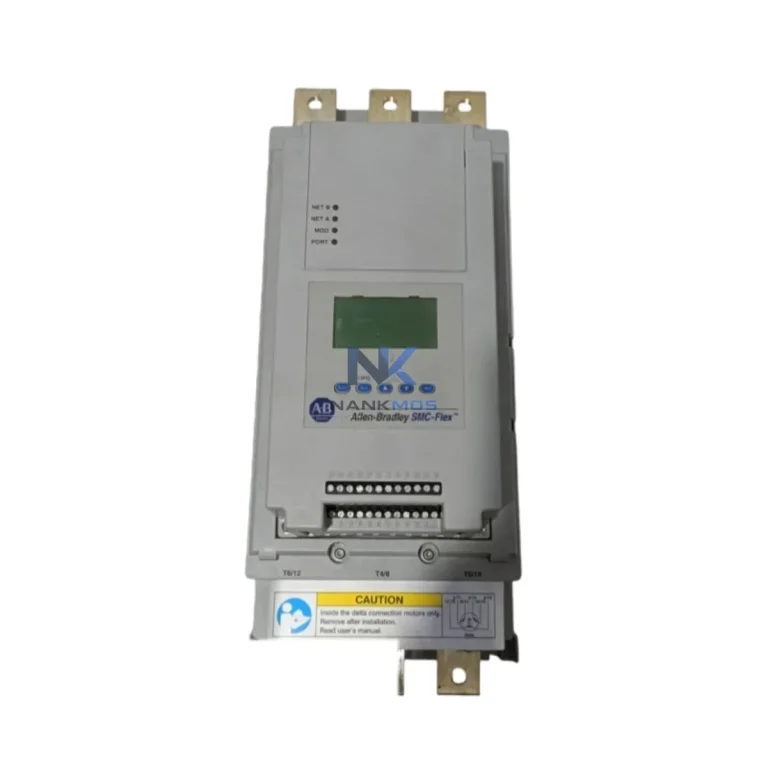
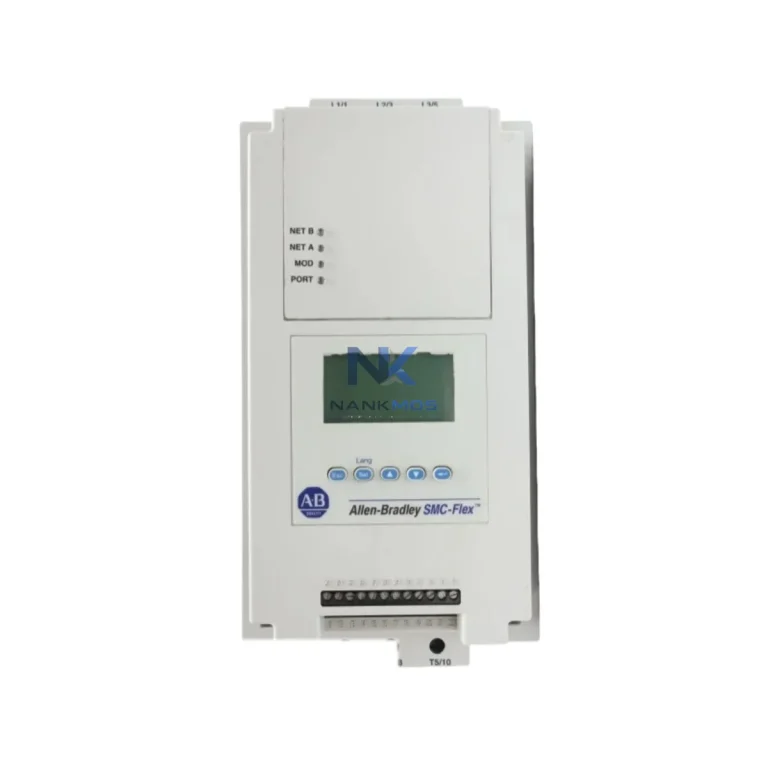
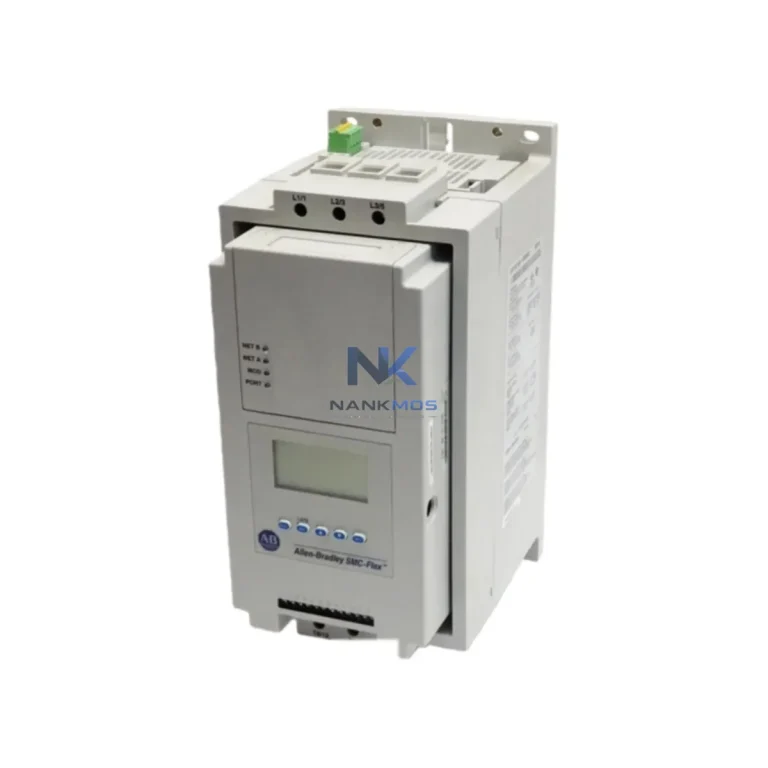
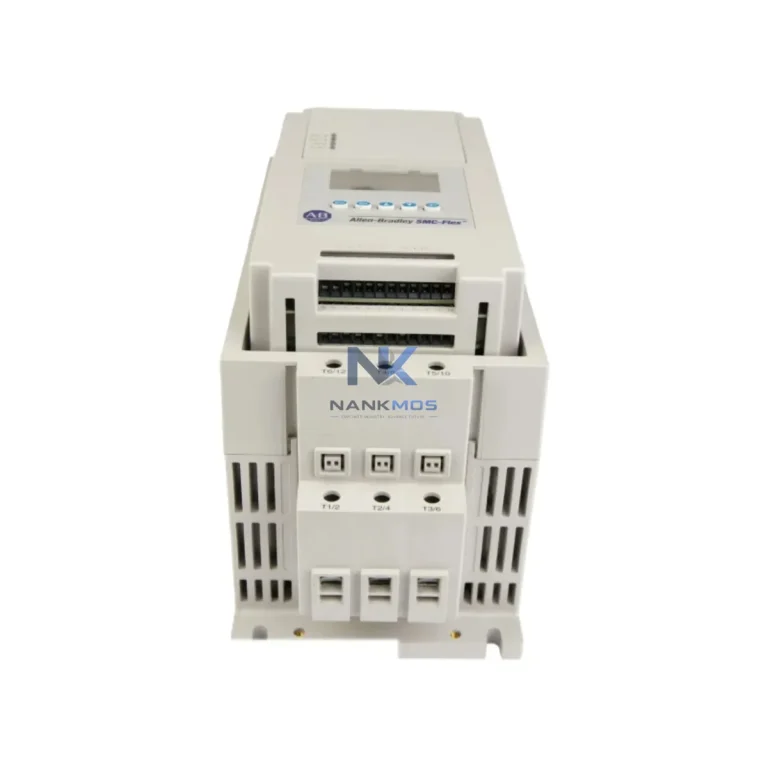
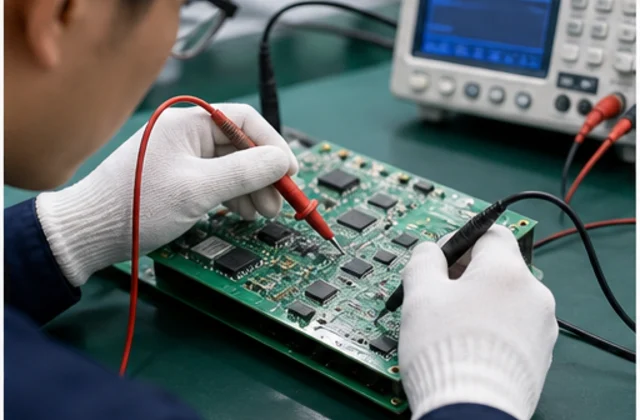
 Functional Inspection
100% tested on professional platforms to ensure stable performance.
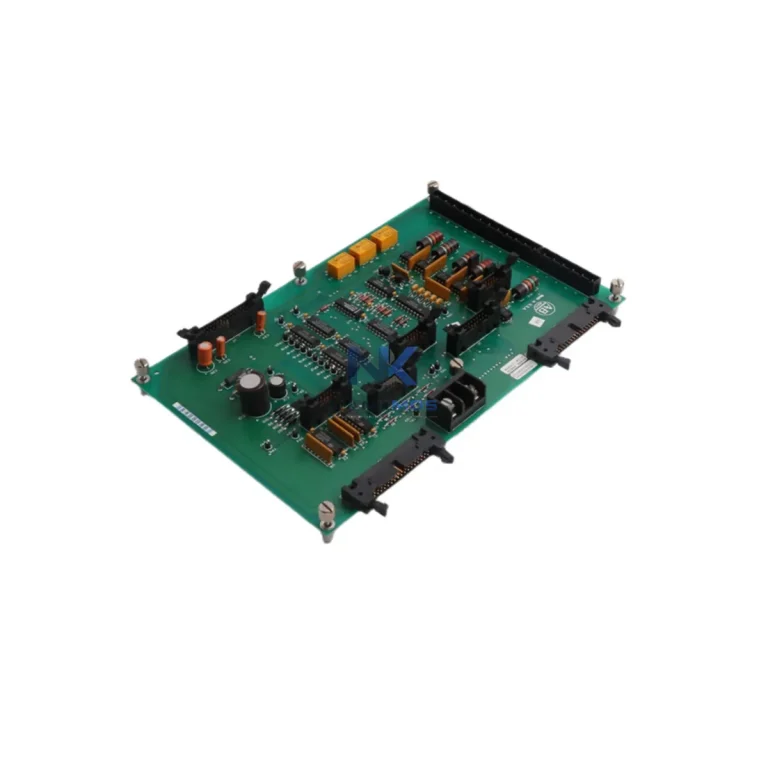
Allen-Bradley 1771-OBD is a NANKMOS industrial automation product record Listed under PLC-5 series and Business & Industrial > Automation, Control & Flow Devices > Programmable Logic Controllers. Confirm condition, availability, lead time, compatibility and documentation by email inquiry.
Brand names are used for identification only.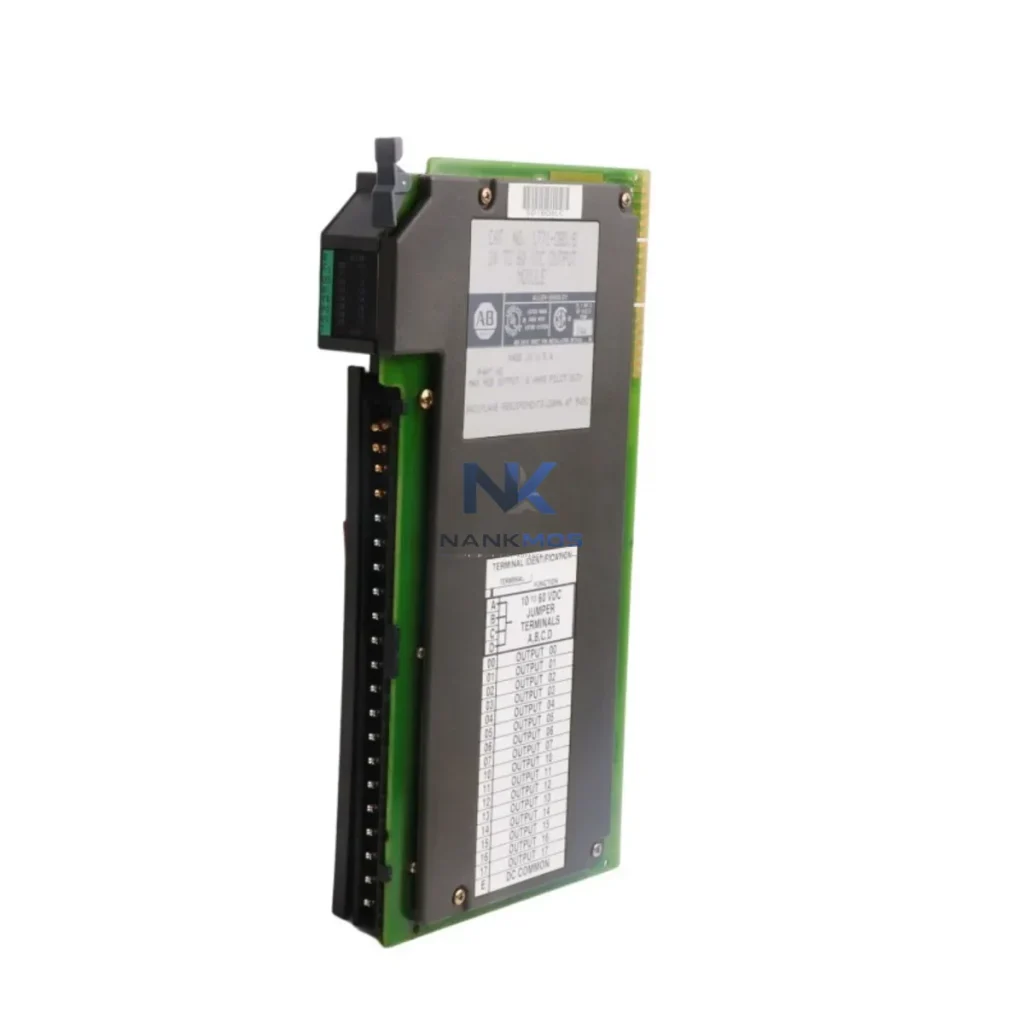
Allen-Bradley 1771-OBD is a NANKMOS industrial automation product record Listed under PLC-5 series and Business & Industrial > Automation, Control & Flow Devices > Programmable Logic Controllers. Confirm condition, availability, lead time, compatibility and documentation by email inquiry.
| Manufacturer | Allen-Bradley |
|---|---|
| Application | Controller Processing & System Control |
| Part Number / Model | 1771-OBD |
| Compatible System | PLC-5 |
| Series | PLC-5 |
| Condition Options | To Confirm |
| Module Type | Controller / CPU Module |
| Warranty | 12 Months |
| Packaging | Anti-static Bag / Secure Box |
| Shipping Methods | DHL / FedEx / UPS / Air / Sea |
| Availability | To Confirm |
| Lead Time | To Confirm |
| Documentation | Part number and revision checked before quote |
The Allen-Bradley 1771-OBD is a 16-point, 24VDC digital output module engineered for the PLC-5 programmable controller platform — one of Rockwell Automation's most enduring and widely deployed control architectures in discrete manufacturing, process automation, and energy management. In modern smart factory environments where every actuator, relay, and field device must be traceable, controllable, and diagnostically transparent, the 1771-OBD serves as a critical last-mile output node in the plant-wide data chain. It bridges the gap between high-level SCADA logic and physical field execution, ensuring that command signals from the control layer reach actuators with deterministic timing and full auditability.
Deployed within the 1771 I/O chassis, the 1771-OBD interfaces directly with the PLC-5 processor backplane, receiving discrete output commands via the PLC-5's Data Highway Plus (DH+) or Remote I/O (RIO) communication network. This architecture allows the module to participate in a distributed I/O topology where a single PLC-5 processor — such as the 1785-L40B or 1785-L80B — can manage multiple remote chassis across a production floor, each populated with 1771-series I/O modules including the 1771-OBD for output control, 1771-IBD for 24VDC digital input acquisition, and 1771-OFE for analog output to variable-speed drives and positioners.
In a fully integrated smart factory architecture, the 1771-OBD occupies a pivotal position in the output execution layer. Signal flow begins at the sensor and field device level — where instruments such as proximity sensors, photoelectric detectors, and pressure transmitters feed real-time process data into 1771-IBD digital input modules or 1771-IFE analog input modules mounted in the same or adjacent 1771 chassis. These raw field signals are scanned by the PLC-5 processor, processed through ladder logic or function block programs, and translated into discrete output commands that are written to the 1771-OBD's output image table.
The 1771-OBD then drives field actuators — solenoid valves, motor starters, indicator lamps, relay coils, and conveyor control contactors — with 24VDC sourcing outputs rated for industrial-grade loads. Each of the 16 output points is individually addressable, enabling granular control of complex multi-step sequences such as robotic arm positioning, packaging line indexing, or batch reactor valve sequencing.
At the network layer, the PLC-5 processor communicates with supervisory systems via Data Highway Plus (DH+), a token-passing LAN protocol that connects multiple PLC-5 controllers, programming terminals running RSLogix 5, and HMI panels such as the PanelView 1000 or PanelView Plus 6. For facilities requiring integration with modern EtherNet/IP-based SCADA platforms — such as FactoryTalk View SE or Ignition SCADA — a 1761-NET-ENI or 1756-DHRIO gateway module bridges the DH+ segment to the plant Ethernet backbone, making 1771-OBD output status and fault data visible to enterprise-level dashboards and historian databases.
Remote I/O (RIO) capability extends the 1771-OBD's reach across large plant footprints. A PLC-5 processor can address up to 32 remote I/O racks distributed across distances of up to 10,000 feet via RIO cable, with each rack potentially housing multiple 1771-OBD modules. This distributed architecture is common in automotive assembly lines, water treatment facilities, and oil & gas processing plants where control points are geographically dispersed but must respond to centralized PLC logic within deterministic scan cycle times.
For facilities transitioning toward ControlNet or EtherNet/IP architectures, the 1771-OBD can be retained in service alongside newer 1756 ControlLogix I/O modules by using a 1771-ACN15 ControlNet adapter, which maps the 1771 chassis I/O — including 1771-OBD outputs — onto the ControlNet network. This hybrid approach protects capital investment in existing 1771 infrastructure while enabling phased migration to modern Logix platforms. Variable-frequency drives such as the PowerFlex 40 or PowerFlex 700 can receive start/stop and direction commands from 1771-OBD output points, while drive status feedback is returned via 1771-IBD inputs, creating a closed-loop drive control circuit fully visible to the SCADA layer.
Edge computing nodes and industrial IoT gateways — such as the Moxa MGate or Kepware KEPServerEX — can poll PLC-5 data tables via DH+ or EtherNet/IP to extract 1771-OBD output status for cloud-based analytics, predictive maintenance dashboards, and OEE (Overall Equipment Effectiveness) reporting. This positions the 1771-OBD not merely as a legacy output module, but as a live data source within a modern Industrial IoT architecture.
Protocol Fragmentation: Many brownfield plants operate mixed networks — DH+, Modbus RTU, PROFIBUS, and EtherNet/IP coexisting on the same floor. The 1771-OBD, native to the PLC-5/RIO ecosystem, integrates cleanly with DH+ segments and can be bridged to modern protocols via Rockwell's 1756-DHRIO or third-party gateways, eliminating the need for full I/O replacement during protocol migration projects.
Data Islands and Output Opacity: In older installations, output module status is often invisible to SCADA operators — a relay fires, but no confirmation reaches the control room. By connecting the PLC-5 system to FactoryTalk Diagnostics or Ignition's tag historian via DH+ gateway, every 1771-OBD output point becomes a logged, time-stamped data tag, enabling alarm tracking, output cycle counting, and predictive relay wear analysis.
Remote Monitoring and Diagnostics: Field technicians no longer need to walk the floor to verify output states. With DH+ or RIO network connectivity, RSLogix 5 online monitoring or FactoryTalk View SE remote HMI panels display real-time 1771-OBD output status, force values, and fault indicators. Remote diagnostic sessions can be initiated over VPN-secured EtherNet/IP connections, reducing mean time to repair (MTTR) and minimizing unplanned downtime.
Production Line Transparency and Alarm Traceability: Integrating 1771-OBD output data into SCADA historian systems enables shift-level and batch-level reporting on actuator activation counts, cycle times, and fault events. This data feeds continuous improvement initiatives, supports ISO 9001 audit trails, and provides the operational transparency required for smart manufacturing certifications.
System Scalability: The 1771 chassis architecture supports modular expansion — additional 1771-OBD modules can be added to existing racks or new remote racks commissioned on the RIO network without modifying the PLC-5 processor hardware. This scalability makes the 1771-OBD a cost-effective choice for phased capacity expansions in discrete manufacturing and process industries.
Q1: What communication protocols does the Allen-Bradley 1771-OBD support, and is it compatible with modern EtherNet/IP SCADA systems? The 1771-OBD communicates natively via the PLC-5 Remote I/O (RIO) backplane protocol and Data Highway Plus (DH+) network. For integration with EtherNet/IP-based SCADA platforms such as FactoryTalk View SE or Ignition, a gateway module — such as the 1756-DHRIO or a third-party DH+-to-EtherNet/IP bridge — is required. This allows 1771-OBD output status and control data to be exposed as EtherNet/IP tags accessible to modern HMI, historian, and analytics systems.
Q2: How does the 1771-OBD perform in terms of network latency and deterministic output response? The 1771-OBD operates within the PLC-5 I/O scan cycle, which is deterministic and configurable based on the processor's program scan time and RIO network update rate. In typical industrial applications, output response times are in the range of 1–20ms depending on chassis configuration and network load — well within the requirements of discrete manufacturing, conveyor control, and valve sequencing applications. DH+ network latency is minimal for point-to-point command delivery within a single RIO segment.
Q3: Can the 1771-OBD be integrated into a ControlNet or EtherNet/IP architecture without replacing the entire I/O chassis? Yes. Using a 1771-ACN15 ControlNet adapter or a 1771-ASB Remote I/O adapter, the existing 1771 chassis — including 1771-OBD modules — can be mapped onto ControlNet or bridged to EtherNet/IP networks. This hybrid integration approach is widely used in phased migration projects, allowing facilities to retain proven 1771-series I/O while upgrading the control and network layers to modern Logix and EtherNet/IP standards.
Q4: What warranty and pre-shipment testing does the 1771-OBD include? Every 1771-OBD unit supplied by NANKMOS is covered by a 12-month warranty against manufacturing defects and functional failures. Prior to shipment, each module undergoes functional output verification testing to confirm all 16 output points operate within specification. In-stock units are available for same-week dispatch with global shipping support. For bulk procurement or project-specific lead time requirements, contact our technical sales team at [email protected] or +86 18359268345.
Functional Inspection100% tested on professional platforms to ensure stable performance.
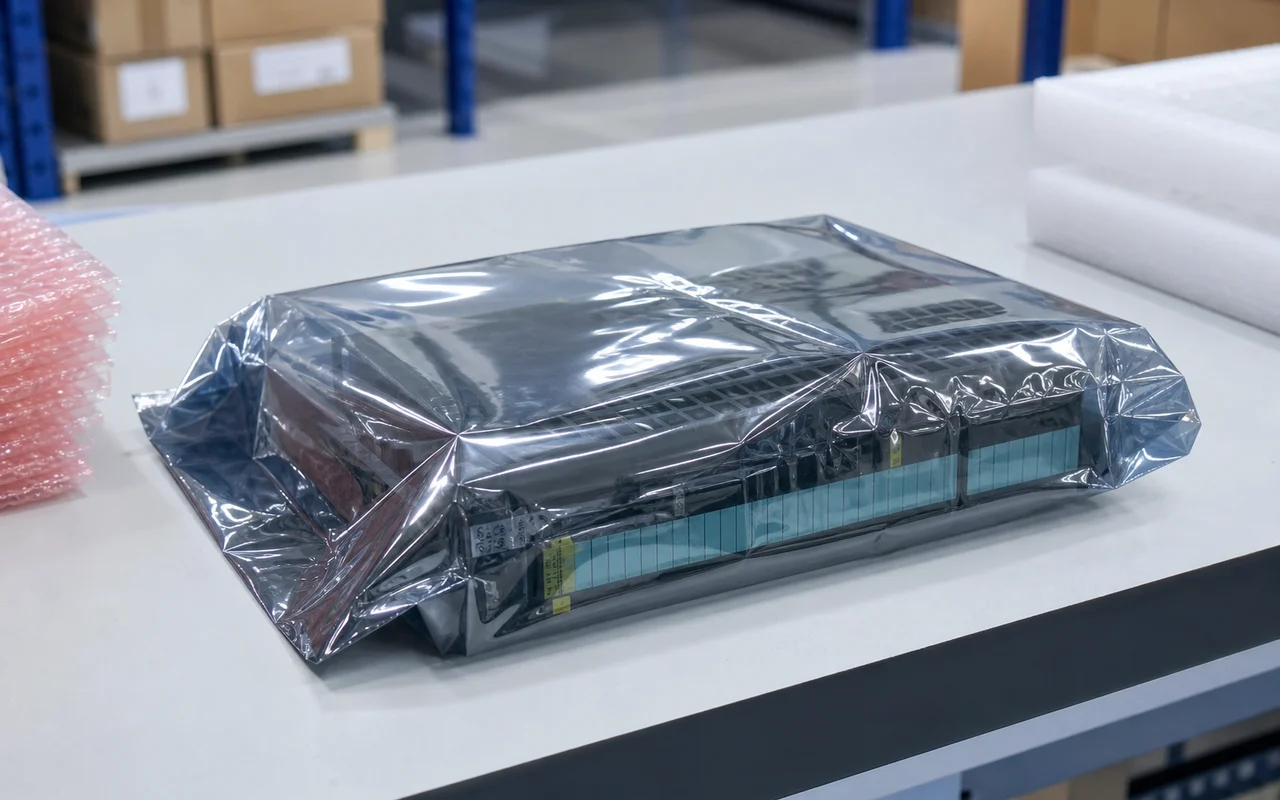 Anti-static Packaging
Modules are packed in anti-static bags to prevent electrostatic damage.
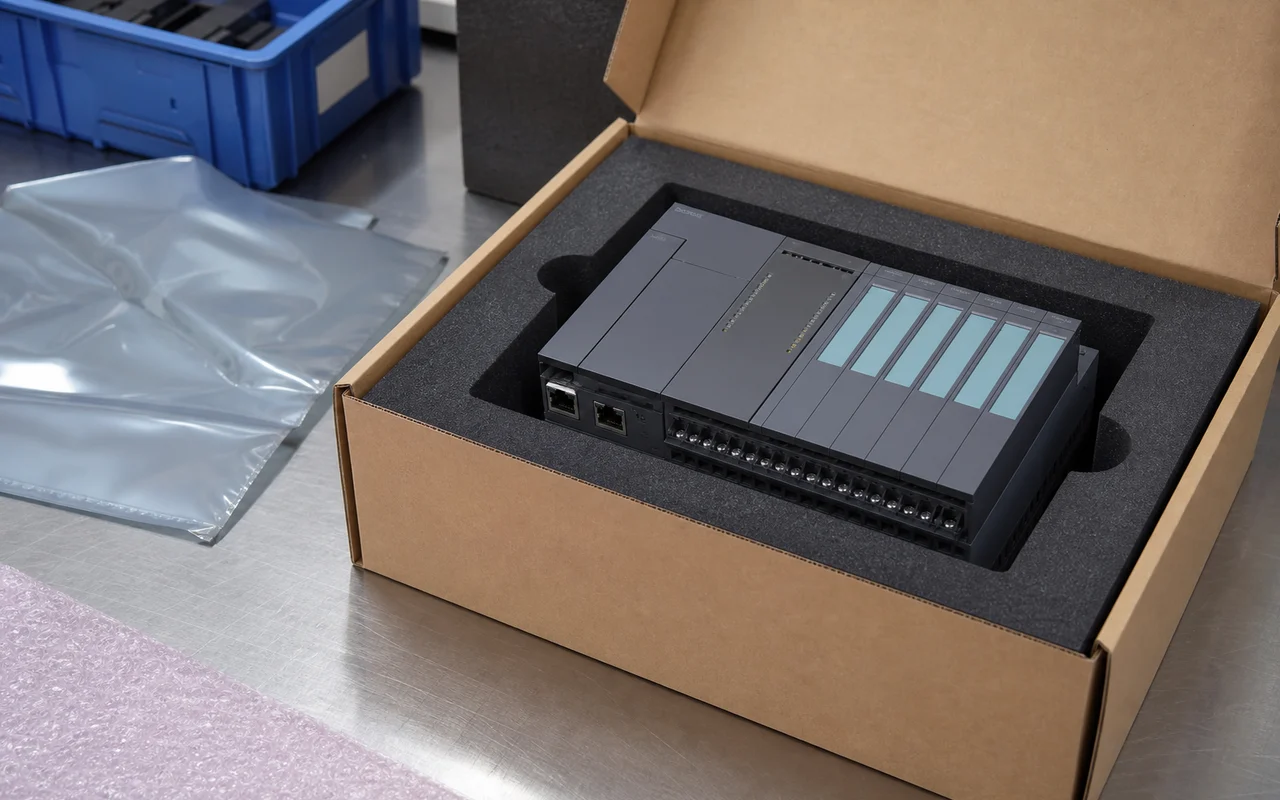 Secure Export Packing
Cushion protection and strong cartons ensure safe transportation.
 Worldwide Shipping
Global logistics network supports air, sea and express delivery.
 Documentation Check
Part number, revision and compatibility verified before shipment.
 After-sales Support
Professional technical support to help resolve your issues.