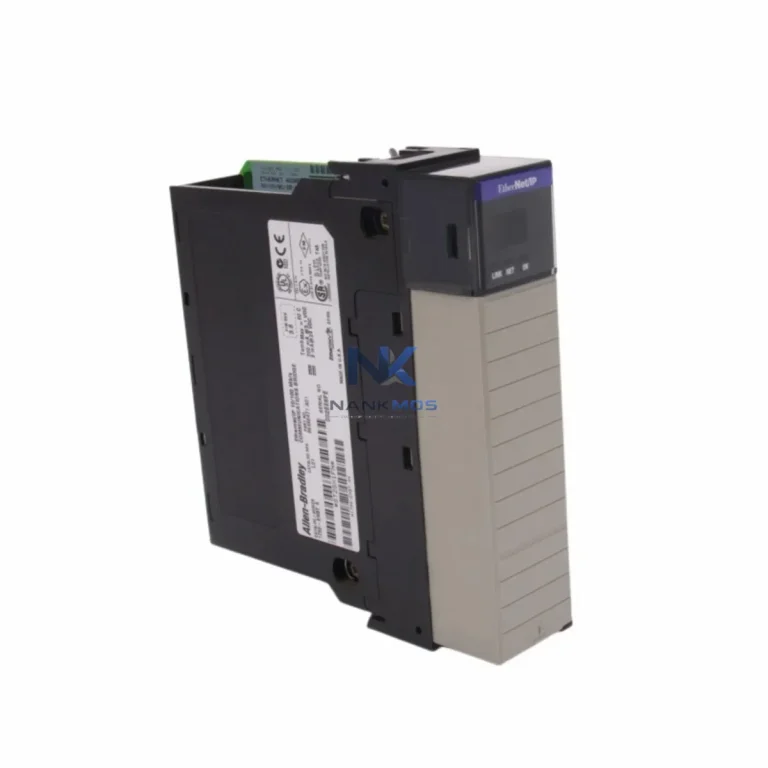
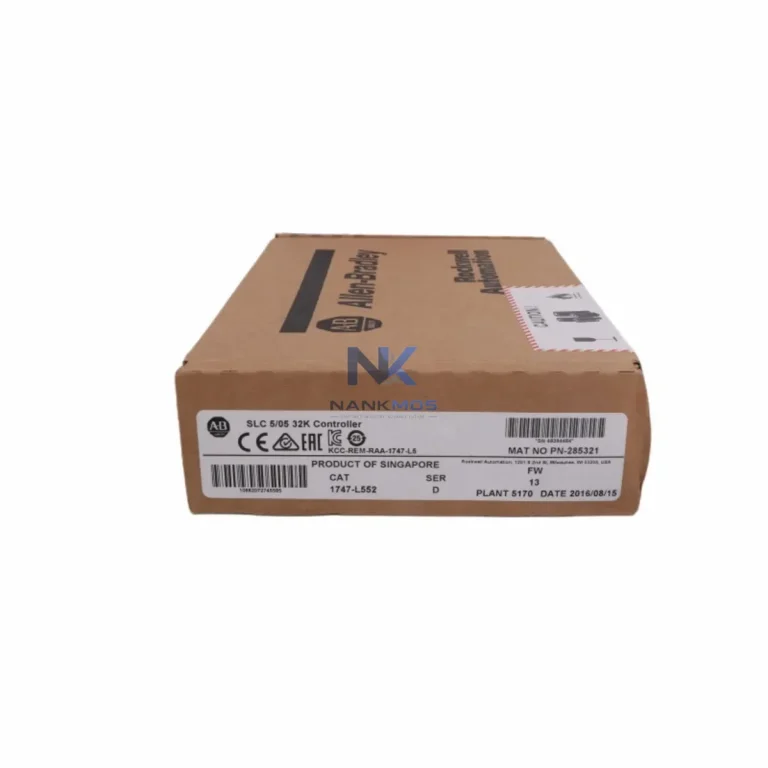
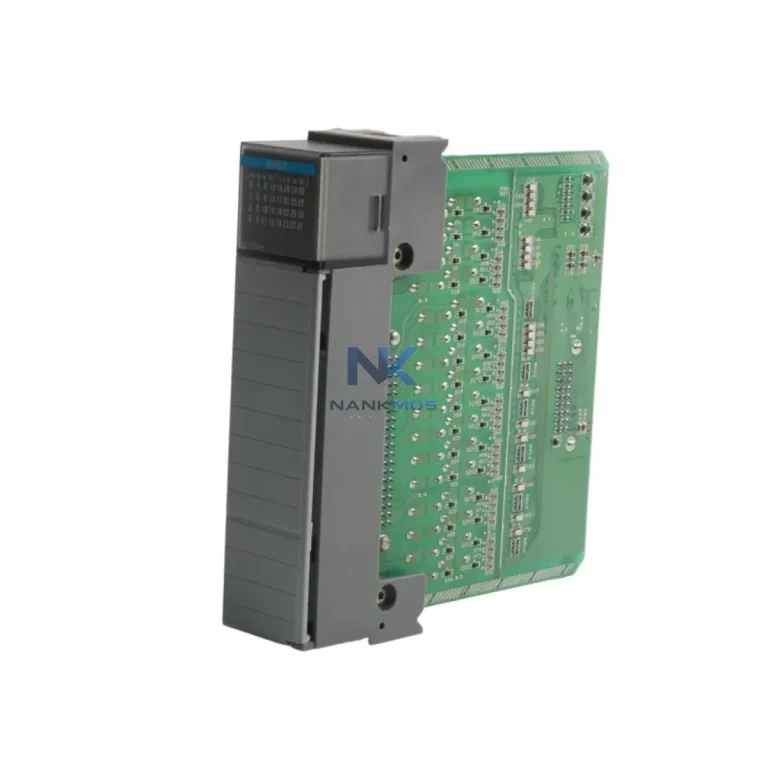
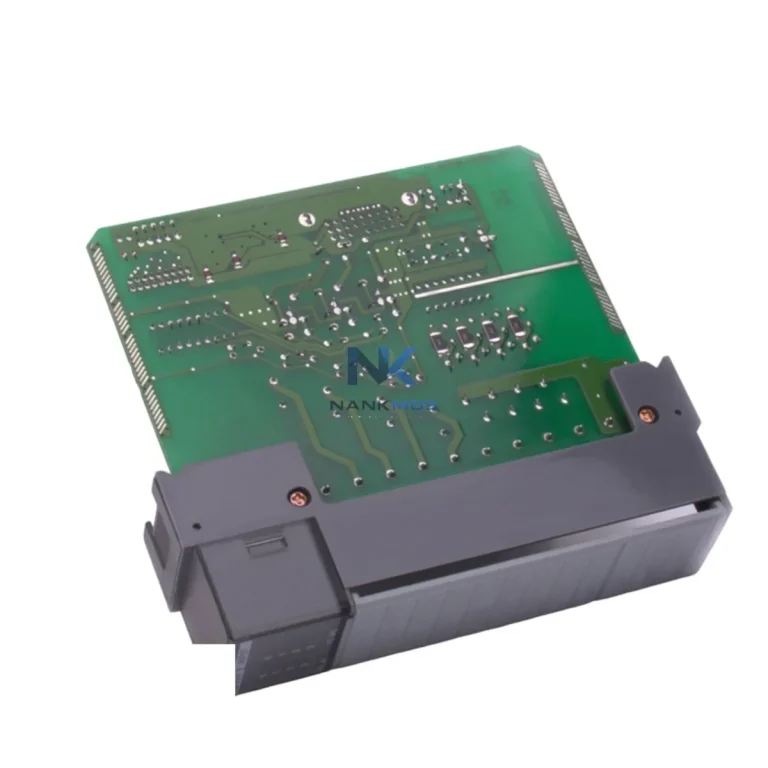
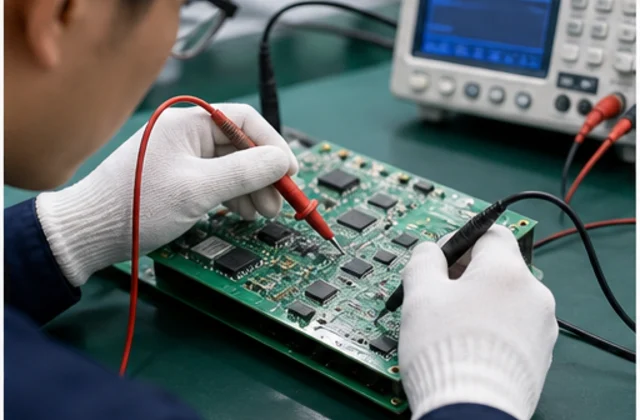
 Functional Inspection
100% tested on professional platforms to ensure stable performance.
Allen-Bradley 1775-S4A is a NANKMOS industrial automation product record Listed under PLC-3 series and HMI Panels. Confirm condition, availability, lead time, compatibility and documentation by email inquiry.
Brand names are used for identification only.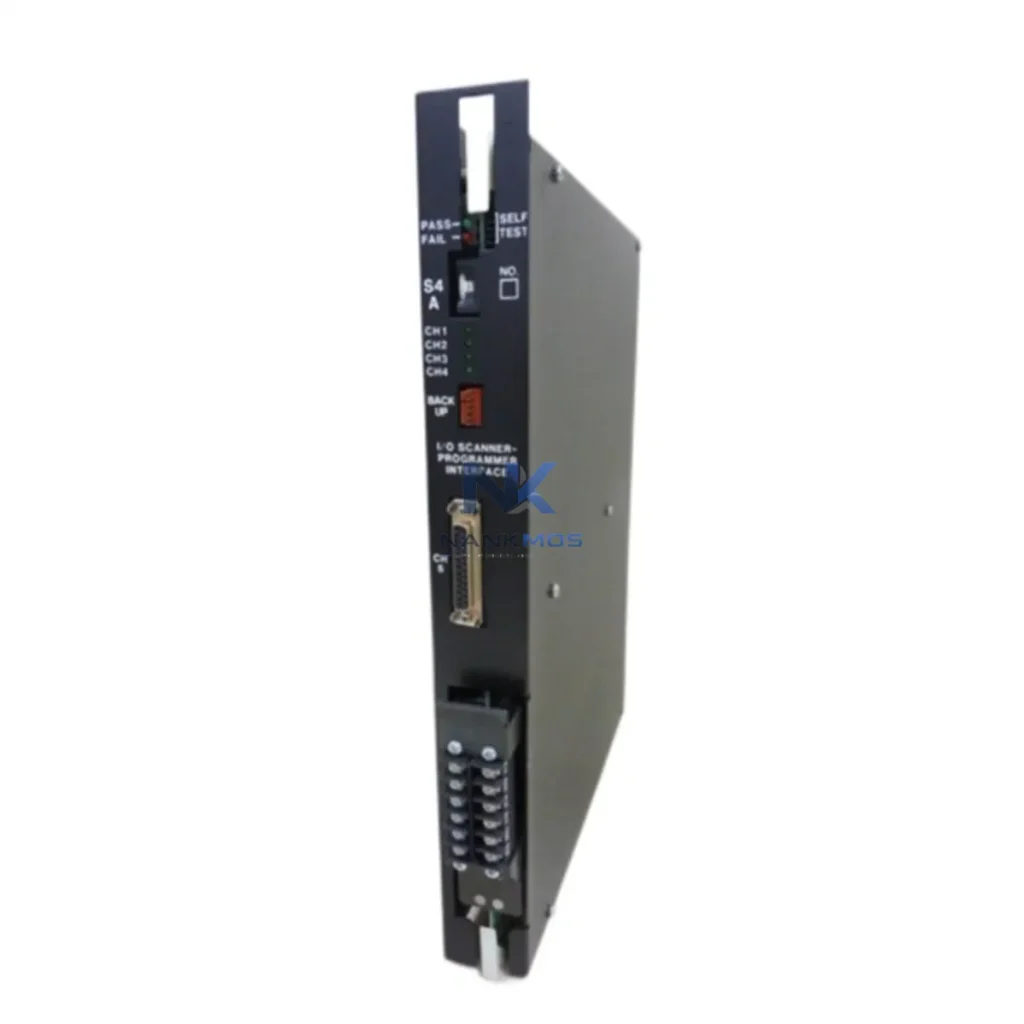
Allen-Bradley 1775-S4A is a NANKMOS industrial automation product record Listed under PLC-3 series and HMI Panels. Confirm condition, availability, lead time, compatibility and documentation by email inquiry.
| Manufacturer | Allen-Bradley |
|---|---|
| Application | Industrial Network Communication |
| Part Number / Model | 1775-S4A |
| Compatible System | PLC-3 |
| Series | PLC-3 |
| Condition Options | To Confirm |
| Module Type | Communication Module |
| Warranty | 12 Months |
| Packaging | Anti-static Bag / Secure Box |
| Shipping Methods | DHL / FedEx / UPS / Air / Sea |
| Availability | To Confirm |
| Lead Time | To Confirm |
| Documentation | Part number and revision checked before quote |
The Allen-Bradley 1775-S4A is a high-integrity I/O Scanner and Programmer Interface module engineered for PLC-3 control systems operating across Data Highway Plus (DH+) network architectures. In modern smart factory environments, where production continuity depends on seamless data exchange between field devices, PLCs, remote I/O racks, HMI panels, SCADA platforms, and edge gateways, the 1775-S4A serves as a critical network node — bridging legacy PLC-3 logic controllers with distributed I/O subsystems and upstream supervisory systems. Its role in the automation data chain extends from signal acquisition at the sensor level through to real-time visualization and remote diagnostic access at the SCADA layer, making it an indispensable component for facilities pursuing transparent, connected production lines.
Designed for demanding industrial environments, the 1775-S4A supports structured communication across DH+ segments, enabling deterministic data transfer between the PLC-3 processor and remote I/O chassis. This capability is foundational for facilities running mixed automation architectures — where Allen-Bradley 1775-KA communication adapters, 1771-series I/O modules, and 1785-series PLC-5 controllers may coexist on the same network backbone. The 1775-S4A ensures that I/O scan cycles remain synchronized with the PLC-3 scan rate, preserving data integrity across the full control loop from field instrument to control room.
In a fully connected smart factory deployment, the 1775-S4A operates at the intersection of field-level I/O and network-level data distribution. At the base of the data chain, sensors — including proximity switches, pressure transmitters, and temperature probes — feed signals into 1771-series I/O modules housed in remote I/O chassis. The 1775-S4A scans these remote racks over the DH+ network, aggregating real-time process values and delivering them to the PLC-3 processor for execution of control logic. This scan cycle forms the heartbeat of the automation loop, ensuring that actuator commands and sensor feedback remain tightly coupled across the production floor.
As data flows upward from the PLC-3 through the DH+ segment, Allen-Bradley 1785-KA5 or 1770-KF2 communication interface modules can bridge the DH+ network to Ethernet or RS-232 links, enabling SCADA platforms such as Rockwell FactoryTalk View or third-party supervisory systems to access live process data. HMI panels connected via DH+ — including legacy PanelView terminals — can display real-time status, alarm conditions, and production metrics sourced directly from the 1775-S4A scan data. This architecture supports full production line transparency without requiring a complete system migration.
For facilities integrating variable frequency drives (VFDs) into the same control network, the 1775-S4A's I/O scan capability allows drive status registers — speed reference, fault codes, output current — to be mapped into the PLC-3 data table via remote I/O adapters such as the 1771-ASB. This enables centralized monitoring of drive performance alongside discrete I/O states, supporting predictive maintenance workflows and reducing unplanned downtime. Similarly, edge gateway devices positioned at the network boundary can aggregate DH+ data and forward it to cloud-based analytics platforms or MES systems, extending the reach of the 1775-S4A's data collection capability beyond the plant floor.
Remote diagnostic access is a key operational benefit of DH+ network architectures built around the 1775-S4A. Using programming terminals or SCADA-connected diagnostic tools, maintenance engineers can interrogate the PLC-3 processor and remote I/O status without physical access to the control panel. Fault isolation — identifying whether an alarm originates from a field sensor, an I/O module, or the network communication layer — becomes a structured, data-driven process rather than a manual inspection task. This capability is particularly valuable in large-scale facilities where control panels may be distributed across multiple production zones.
Industrial Ethernet switches positioned at the network aggregation layer can further extend connectivity by linking DH+ segments to broader plant networks, enabling integration with ERP systems and enterprise data warehouses. Power supply modules such as the Allen-Bradley 1771-P4S provide stable backplane power to the I/O chassis housing the 1775-S4A, ensuring consistent module operation under variable load conditions. The combination of reliable power infrastructure, deterministic DH+ communication, and structured I/O scanning makes the 1775-S4A a foundational element in both legacy system maintenance and phased smart factory upgrade programs.
Many industrial facilities operating PLC-3-based control systems face persistent challenges around data visibility, protocol fragmentation, and remote access limitations. The 1775-S4A directly addresses several of these operational pain points:
Protocol Fragmentation: In mixed-generation automation environments, DH+ networks coexist with Modbus RTU, Profibus, and Ethernet/IP segments. The 1775-S4A anchors the DH+ layer, providing a stable communication foundation from which protocol gateway devices can bridge to adjacent network segments. This eliminates data islands between PLC-3 systems and newer controllers or SCADA platforms operating on different protocols.
Remote Monitoring Gaps: Without a reliable I/O scanner, remote I/O racks become invisible to the PLC-3 processor during network disruptions. The 1775-S4A's deterministic scan cycle ensures that I/O status is continuously updated, and that communication faults are immediately flagged in the PLC-3 fault table — enabling SCADA alarm systems to trigger maintenance notifications before production impact escalates.
Production Line Transparency: Facilities transitioning toward smart factory standards require granular, real-time data from every point in the production process. By maintaining continuous I/O scan coverage across remote chassis, the 1775-S4A provides the data density needed to support OEE calculations, cycle time analysis, and quality traceability systems operating at the MES layer.
System Expansion: As production capacity grows, additional remote I/O racks can be added to the DH+ network and brought under the 1775-S4A's scan management without requiring processor replacement. This scalability protects the existing PLC-3 investment while accommodating incremental automation expansion across new production zones.
Alarm Tracking and Fault Isolation: Structured I/O scanning enables precise fault localization — distinguishing between field device failures, wiring faults, and network communication errors. This granularity reduces mean time to repair (MTTR) and supports root cause analysis workflows integrated with SCADA historian and alarm management systems.
Q1: What communication protocol does the Allen-Bradley 1775-S4A use, and which systems is it compatible with? The 1775-S4A operates on the Data Highway Plus (DH+) protocol, which is native to Allen-Bradley PLC-3, PLC-5, and SLC 500 control platforms. It is compatible with DH+ network segments and can interface with SCADA and HMI systems via DH+-to-Ethernet bridge modules or dedicated communication gateways. Third-party SCADA platforms supporting DH+ drivers can access process data through the network without modification to the PLC-3 program.
Q2: How does the 1775-S4A support remote diagnostics and network stability monitoring? The 1775-S4A continuously scans remote I/O racks and reports communication status to the PLC-3 processor. Any loss of communication with a remote chassis is immediately reflected in the PLC-3 fault table, enabling SCADA alarm systems to generate maintenance alerts in real time. Remote programming terminals connected via DH+ can access module status, I/O data tables, and fault logs without requiring physical presence at the control panel, supporting efficient remote diagnostic workflows.
Q3: Can the 1775-S4A be integrated into a smart factory architecture alongside newer Ethernet-based systems? Yes. While the 1775-S4A operates natively on DH+, it can be integrated into broader smart factory architectures through the use of protocol bridge modules and industrial gateways that translate DH+ data to Ethernet/IP, Modbus TCP, or OPC-UA formats. This allows PLC-3 systems equipped with the 1775-S4A to participate in plant-wide data networks, MES integrations, and cloud-connected analytics platforms without requiring a full control system migration.
Q4: What pre-shipment testing and warranty coverage does NANKMOS provide for the 1775-S4A? Every Allen-Bradley 1775-S4A unit supplied by NANKMOS undergoes pre-shipment functional verification to confirm communication integrity and module operability prior to dispatch. All units are covered by a 12-month warranty from the date of shipment, covering manufacturing defects and communication failures under normal operating conditions. In-stock units are available for immediate dispatch, and RFQ submissions are processed promptly to support urgent maintenance and replacement requirements.
Functional Inspection100% tested on professional platforms to ensure stable performance.
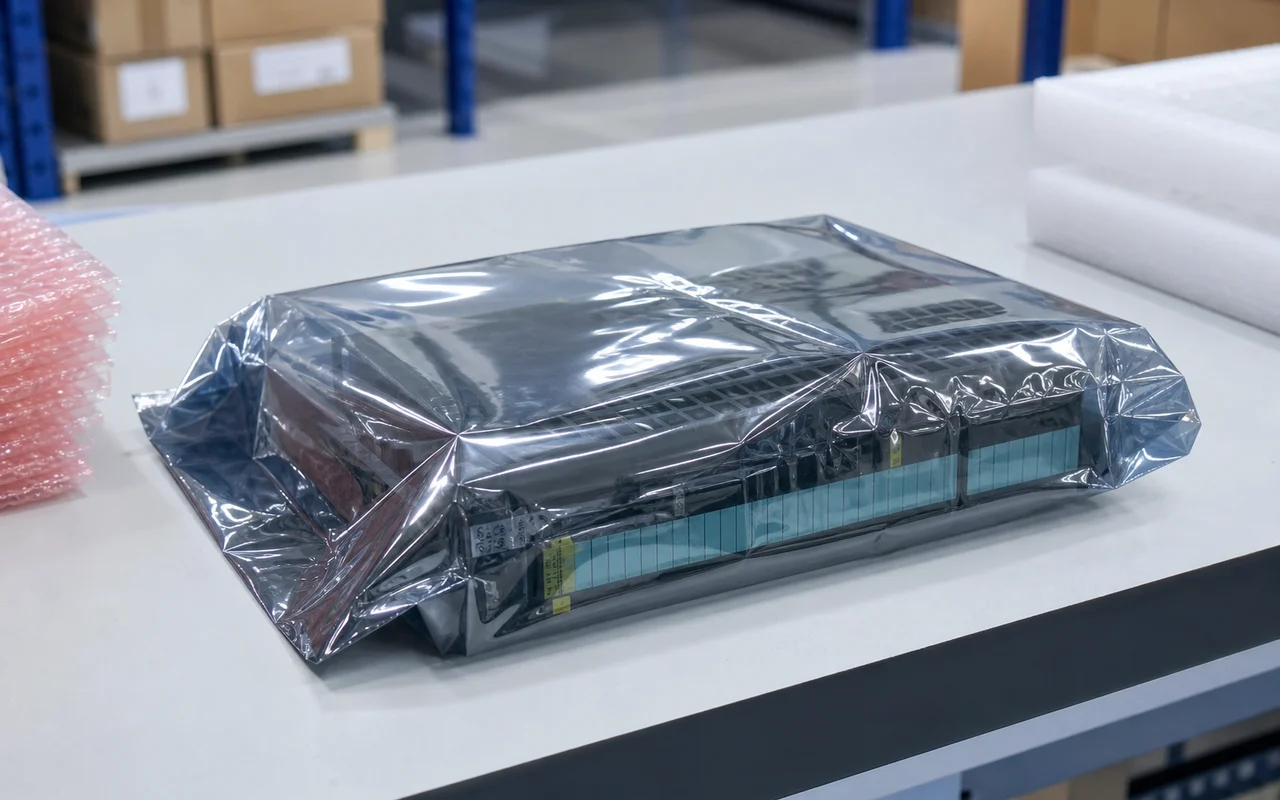 Anti-static Packaging
Modules are packed in anti-static bags to prevent electrostatic damage.
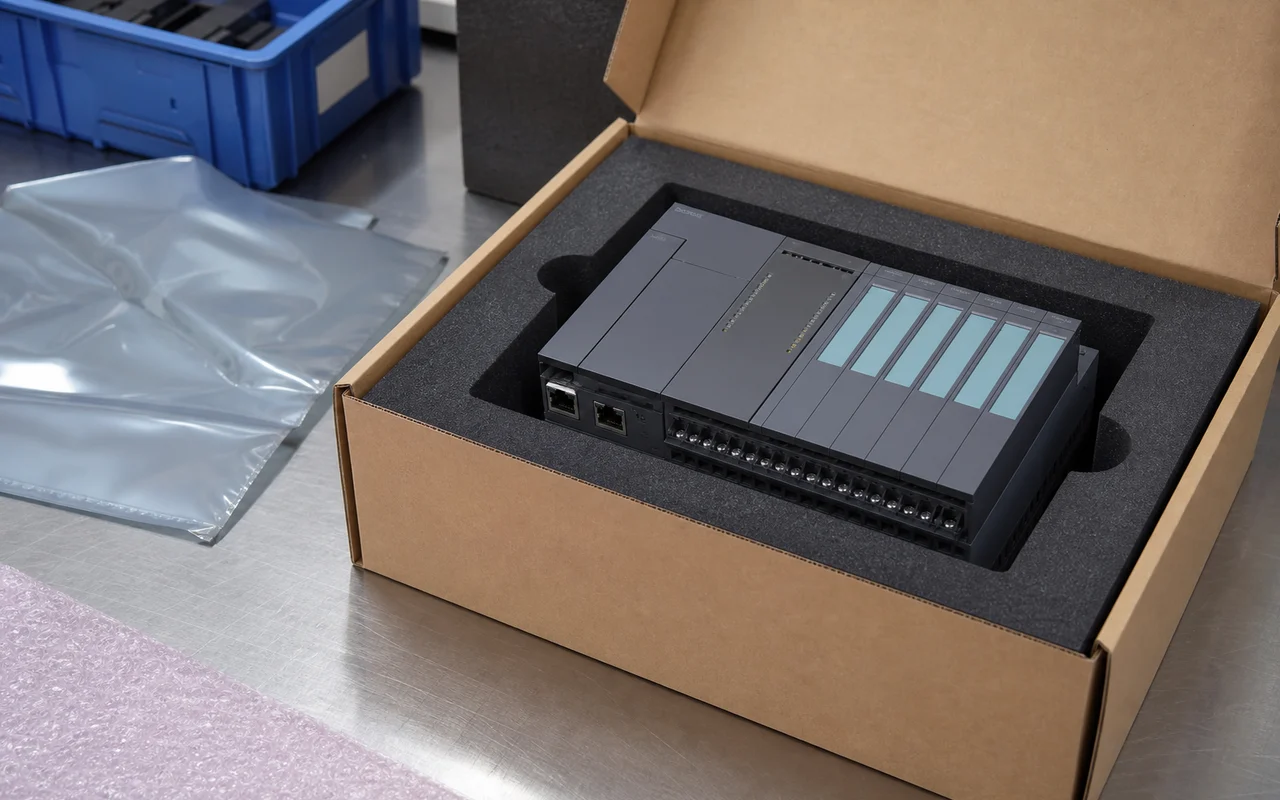 Secure Export Packing
Cushion protection and strong cartons ensure safe transportation.
 Worldwide Shipping
Global logistics network supports air, sea and express delivery.
 Documentation Check
Part number, revision and compatibility verified before shipment.
 After-sales Support
Professional technical support to help resolve your issues.