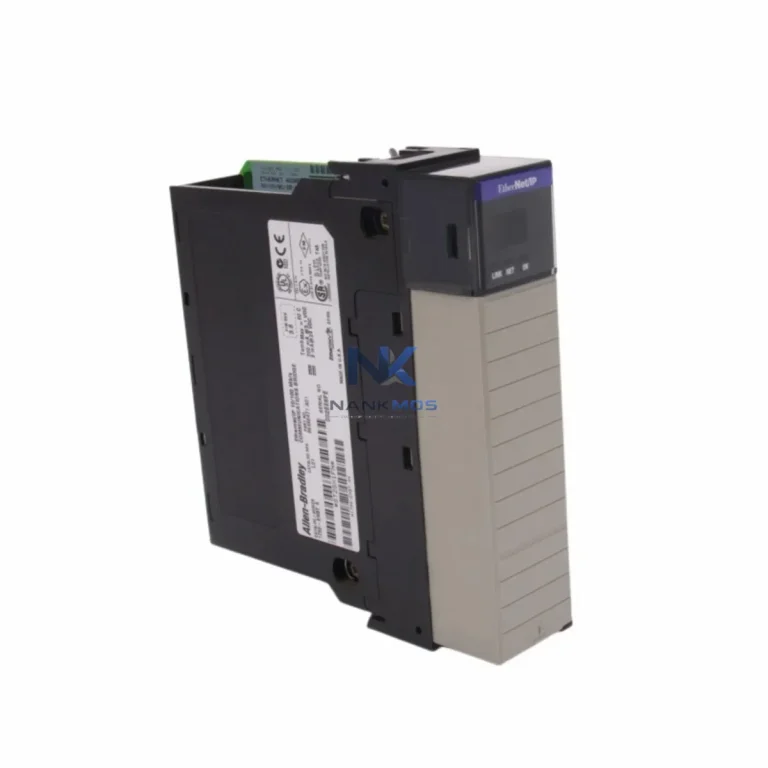
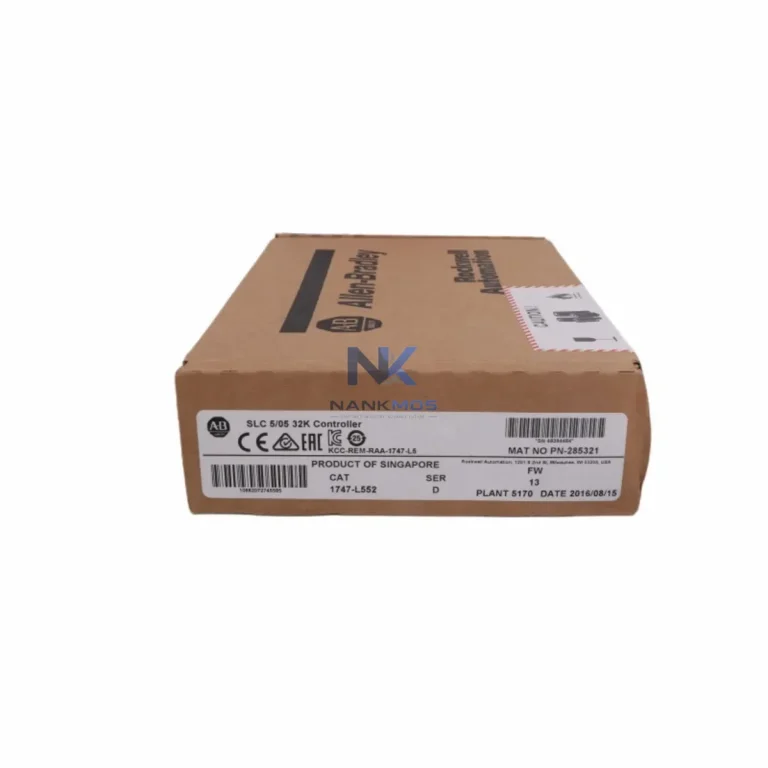
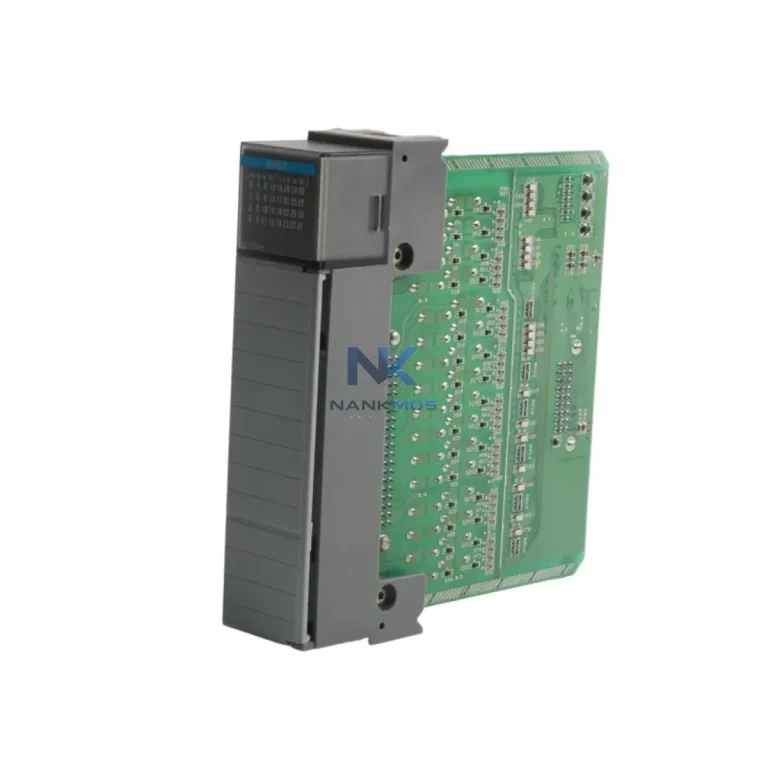
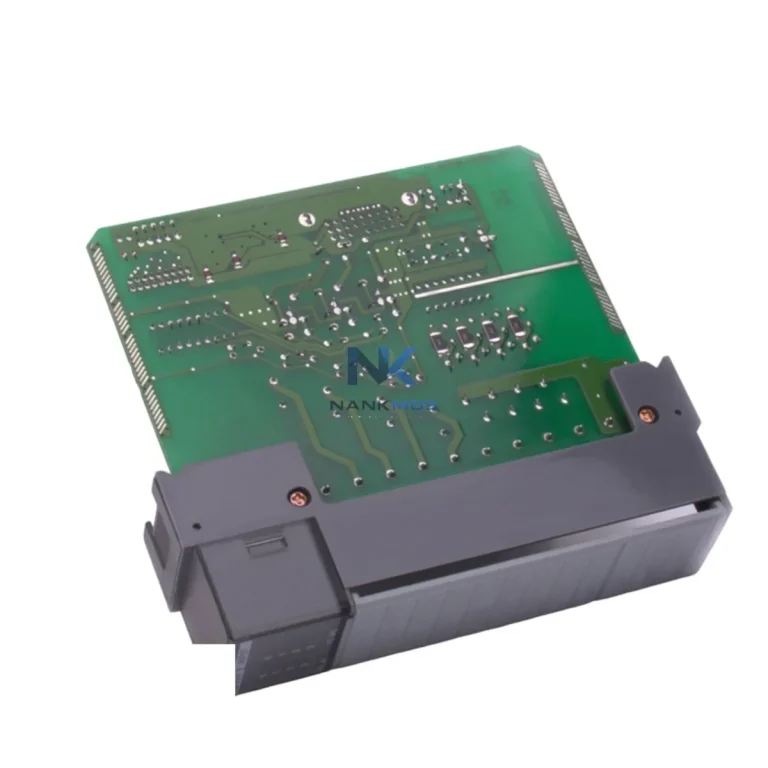
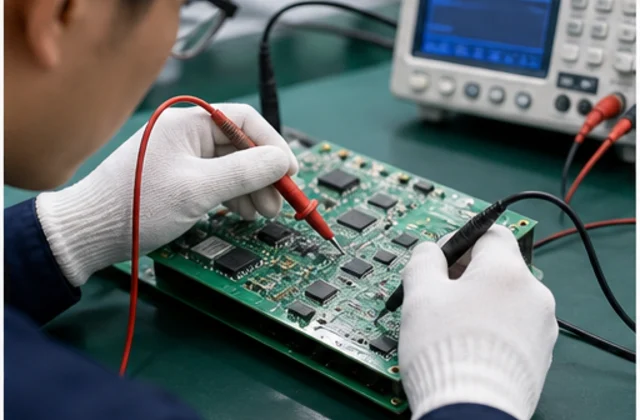
 Functional Inspection
100% tested on professional platforms to ensure stable performance.
Allen-Bradley 2711-T10C8L1 is a NANKMOS industrial automation product record Listed under 2711 series and HMI Panels. Confirm condition, availability, lead time, compatibility and documentation by email inquiry.
Brand names are used for identification only.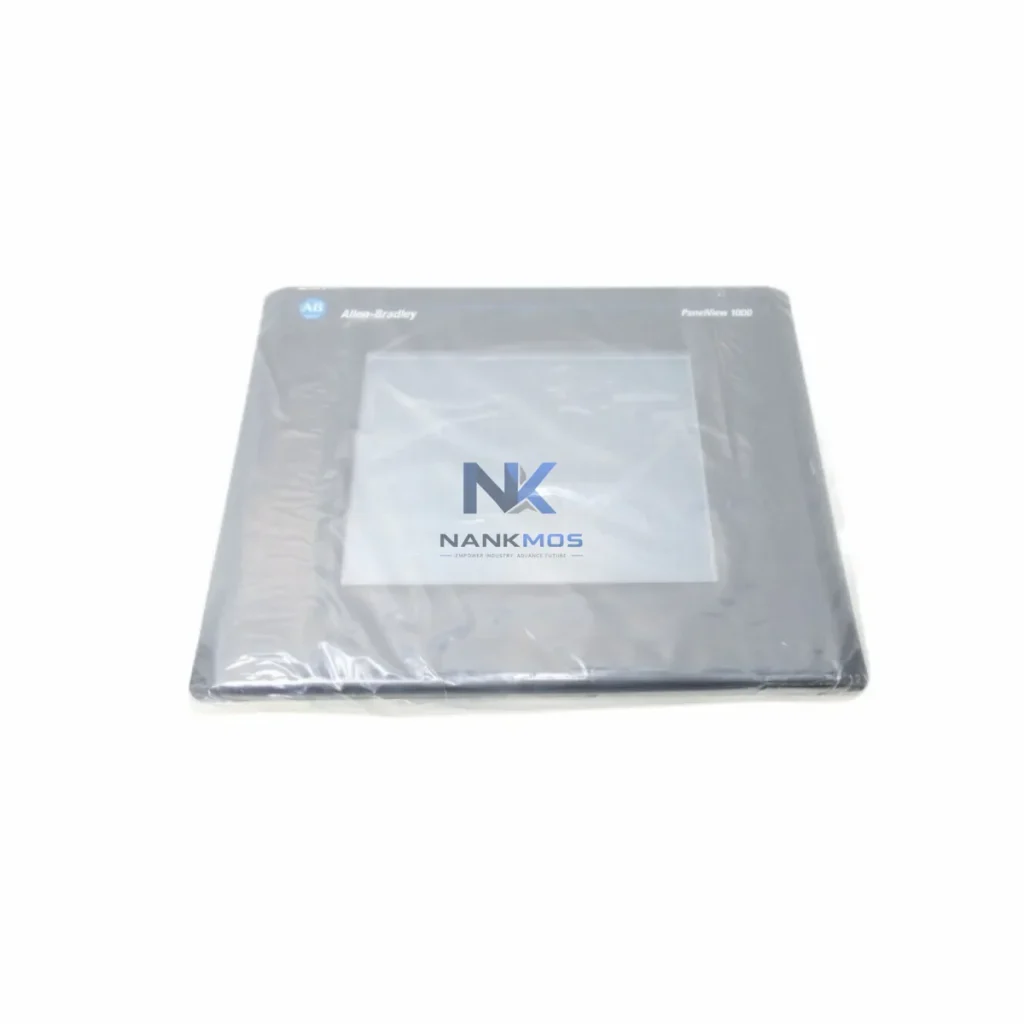
Allen-Bradley 2711-T10C8L1 is a NANKMOS industrial automation product record Listed under 2711 series and HMI Panels. Confirm condition, availability, lead time, compatibility and documentation by email inquiry.
| Manufacturer | Allen-Bradley |
|---|---|
| Application | Industrial Automation Maintenance |
| Part Number / Model | 2711-T10C8L1 |
| Compatible System | 2711 |
| Series | 2711 |
| Condition Options | To Confirm |
| Module Type | HMI Panels |
| Warranty | 12 Months |
| Packaging | Anti-static Bag / Secure Box |
| Shipping Methods | DHL / FedEx / UPS / Air / Sea |
| Availability | To Confirm |
| Lead Time | To Confirm |
| Documentation | Part number and revision checked before quote |
The Allen-Bradley 2711-T10C8L1 is a PanelView 1000 color touch terminal engineered for demanding industrial environments where reliable human-machine interface performance and seamless network integration are non-negotiable. Operating over the DH-485 communication protocol, this HMI terminal serves as a critical data link between field-level devices and supervisory control systems, enabling real-time visualization, operator interaction, and process transparency across the full automation hierarchy. From signal acquisition at the sensor layer to data presentation at the SCADA level, the 2711-T10C8L1 anchors the information flow that defines modern smart factory operations.
In a connected factory architecture, the 2711-T10C8L1 interfaces directly with Allen-Bradley SLC 500 and MicroLogix PLC controllers via the DH-485 network, receiving live process data — analog inputs, discrete I/O states, counter values, and alarm registers — and rendering them on its 10-inch color touchscreen display. Operators gain immediate visibility into machine states, production counts, and fault conditions without navigating complex control panel wiring. This direct PLC-to-HMI data path eliminates communication latency that would otherwise degrade operator response time in time-sensitive production scenarios.
The DH-485 protocol backbone supported by the 2711-T10C8L1 enables multi-drop network topologies, allowing a single communication segment to connect multiple PanelView terminals, remote I/O adapters, and PLC nodes simultaneously. When integrated alongside Allen-Bradley 1747-AIC Advanced Interface Converters or 1761-NET-AIC network interface modules, the 2711-T10C8L1 extends its reach across longer cable runs and more complex plant floor layouts. This network flexibility is essential in facilities where control cabinets, operator stations, and field junction boxes are distributed across large production areas.
For facilities running Rockwell Automation's RSView32 or FactoryTalk View SCADA platforms, the 2711-T10C8L1 integrates naturally into the supervisory data layer. Tag databases configured in the SCADA system map directly to PLC data tables accessible through the DH-485 network, enabling the HMI terminal to display real-time trends, historical data logs, and alarm summaries that feed upward into plant-wide dashboards. This bidirectional data flow — from field device through PLC, across the DH-485 network, through the HMI, and into the SCADA historian — forms the backbone of production transparency and continuous improvement programs.
Remote diagnostics capability is a key operational advantage of deploying the 2711-T10C8L1 within a structured network architecture. Maintenance engineers can monitor PLC register values, I/O module status, and communication health indicators through the HMI display without requiring physical access to the PLC rack. When paired with Allen-Bradley 1747-SDN DeviceNet Scanner modules or 1756-ENBT EtherNet/IP bridge modules at the controller level, the diagnostic data captured by the 2711-T10C8L1 can be forwarded to remote monitoring workstations, enabling predictive maintenance workflows and reducing unplanned downtime.
Variable frequency drives, including Allen-Bradley PowerFlex 40 and PowerFlex 70 series, frequently appear in the same automation network as the 2711-T10C8L1. Drive parameters — output frequency, motor current, fault codes, and run/stop status — are mapped into PLC data files and surfaced on the HMI display, giving operators a unified view of motor control performance alongside process variables from pressure transmitters, flow meters, and temperature sensors connected through analog input modules. This consolidated data presentation reduces the cognitive load on operators managing complex, multi-drive production lines.
Industrial Ethernet infrastructure, including managed switches from the Allen-Bradley Stratix 2000 series, often forms the backbone of the upper network layer in facilities where the 2711-T10C8L1 operates at the field level. While the HMI terminal itself communicates over DH-485, gateway devices bridge this legacy protocol to EtherNet/IP or Modbus TCP networks, allowing the 2711-T10C8L1's data to be aggregated into plant-wide MES and ERP systems. This protocol bridging capability ensures that investments in proven DH-485 infrastructure remain productive as facilities modernize their upper-layer network architecture.
Edge computing nodes and data acquisition modules deployed alongside the 2711-T10C8L1 can capture high-frequency process data that the HMI terminal surfaces in real time. When alarm conditions are detected — whether from a PLC fault, a sensor out-of-range signal, or a communication timeout — the 2711-T10C8L1 displays configurable alarm banners and logs event timestamps, providing the audit trail required for quality management systems and regulatory compliance documentation. This alarm management capability transforms the HMI from a passive display into an active participant in the facility's safety and quality assurance framework.
Every 2711-T10C8L1 unit supplied by NANKMOS undergoes pre-shipment functional testing, verifying display integrity, touchscreen calibration, communication port operation, and power supply performance before dispatch. Units are available from verified inventory with fast global shipping, supported by a 12-month warranty covering hardware defects and communication failures. For system integrators and OEM machine builders requiring multiple units or long-term supply agreements, NANKMOS maintains consistent stock availability to support project timelines without procurement delays.
The 2711-T10C8L1 sits at the intersection of field-level control and operator-facing visualization in a layered smart factory architecture. At the base layer, sensors — including pressure transmitters, thermocouple inputs, and proximity switches — feed analog and discrete signals into Allen-Bradley 1746-series I/O modules housed in SLC 500 racks. The SLC 500 processor scans these inputs, executes ladder logic, and writes output states and data values to its data file registers. The DH-485 network then carries this processed data upstream to the 2711-T10C8L1, where operators view live process values, trend graphs, and alarm states on the color touchscreen.
In parallel, Allen-Bradley MicroLogix 1100 and MicroLogix 1400 controllers connected to the same DH-485 segment contribute additional data streams — motor run status from PowerFlex 40 drives, valve position feedback from solenoid output modules, and batch counter values from high-speed counter inputs. The 2711-T10C8L1 aggregates these multi-source data streams into a unified operator display, eliminating the need for separate indicator panels or dedicated drive display units at each machine station.
At the supervisory layer, Allen-Bradley 1761-NET-AIC or 1747-AIC interface converters bridge the DH-485 segment to RS-232 or RS-422 connections that feed into SCADA workstations running RSView32 or FactoryTalk View SE. Historical data logged by the SCADA system — production counts, alarm event timestamps, and process variable trends — flows into plant MES databases, enabling production reporting, OEE calculation, and quality traceability without manual data entry. The 2711-T10C8L1 thus functions not merely as a display device but as an active node in the facility's data acquisition and reporting infrastructure.
For facilities expanding toward IIoT architectures, edge gateway devices can be deployed alongside the existing DH-485 network to capture data from the 2711-T10C8L1's connected PLC nodes and forward it to cloud-based analytics platforms. This hybrid approach — preserving the proven reliability of DH-485 communication while adding cloud connectivity at the edge — allows facilities to implement predictive maintenance algorithms, energy consumption monitoring, and remote KPI dashboards without replacing existing control hardware.
Many industrial facilities operating legacy DH-485 networks face a common set of challenges: protocol fragmentation between older SLC 500 systems and newer EtherNet/IP-based controllers, data silos where HMI terminals cannot share information with SCADA historians, and limited remote visibility into machine states during off-shift hours. The 2711-T10C8L1 addresses these challenges by providing a stable, proven DH-485 interface that integrates with both legacy and modern control architectures through appropriate gateway and bridge devices.
Protocol inconsistency — where field devices speak DH-485 while upper-layer systems expect Modbus TCP or EtherNet/IP — is resolved through protocol conversion gateways that sit between the DH-485 segment and the plant Ethernet backbone. These gateways translate register addresses and data formats transparently, allowing the 2711-T10C8L1's connected PLC data to appear as standard Modbus or EtherNet/IP tags in SCADA and MES systems. This eliminates the data island effect where valuable process information remains trapped within the DH-485 network segment.
Remote monitoring gaps — where maintenance teams lack visibility into machine states outside of normal working hours — are addressed by combining the 2711-T10C8L1's alarm logging capability with SCADA alarm forwarding to mobile notification systems. When a PLC fault or process deviation triggers an alarm on the HMI terminal, the SCADA system can simultaneously send SMS or email alerts to on-call engineers, enabling rapid remote diagnosis and reducing mean time to repair. Production line transparency improves as alarm frequency data accumulates in the historian, revealing recurring fault patterns that drive targeted maintenance interventions.
System expansion — adding new machine cells, additional I/O points, or new operator stations to an existing DH-485 network — is straightforward with the 2711-T10C8L1 architecture. The DH-485 multi-drop topology supports up to 32 nodes per segment, and additional segments can be linked through repeaters, allowing the network to grow incrementally as production capacity expands. New PanelView terminals, remote I/O adapters, and PLC nodes join the network without requiring changes to existing node configurations, protecting the investment in established control logic and HMI application software.
Q: What communication latency can be expected on a DH-485 network with the 2711-T10C8L1? A: DH-485 networks operating at 19.2 kbps — the standard rate for PanelView 1000 terminals — typically deliver screen update rates of 1–2 seconds for standard data displays. For time-critical alarm displays, the 2711-T10C8L1 prioritizes alarm tag polling to minimize response latency. Network loading from multiple nodes on the same segment can affect update rates; NANKMOS recommends limiting active nodes to 16 or fewer per segment for optimal performance.
Q: Is the 2711-T10C8L1 compatible with both SLC 500 and MicroLogix PLC families? A: Yes. The 2711-T10C8L1 communicates natively with Allen-Bradley SLC 500 (1747-series) and MicroLogix (1761/1762/1764-series) controllers over DH-485. Application files developed in PanelBuilder32 software can reference data files from either PLC family, and mixed networks containing both SLC 500 and MicroLogix nodes are fully supported within the DH-485 multi-drop topology.
Q: How does the 2711-T10C8L1 support remote diagnostics and network health monitoring? A: The 2711-T10C8L1 displays PLC communication status indicators and can be configured to show node communication fault alarms when a DH-485 node fails to respond within the configured timeout period. When integrated with RSView32 or FactoryTalk View SCADA platforms, communication health data from the HMI terminal's connected PLC nodes is logged in the SCADA historian, enabling trend analysis of communication reliability over time and early detection of cable degradation or node hardware issues.
Q: What does the 12-month warranty from NANKMOS cover, and what is the pre-shipment testing process? A: Every 2711-T10C8L1 unit supplied by NANKMOS is covered by a 12-month warranty against hardware defects, including display panel failures, touchscreen calibration drift, communication port faults, and power supply failures. Pre-shipment testing includes display pixel verification, touchscreen response calibration, DH-485 port loopback communication test, and AC power input verification across the full rated voltage range. Units that do not pass all test criteria are quarantined and not dispatched. Warranty claims are processed directly through NANKMOS with replacement or repair turnaround communicated at the time of claim submission.
Functional Inspection100% tested on professional platforms to ensure stable performance.
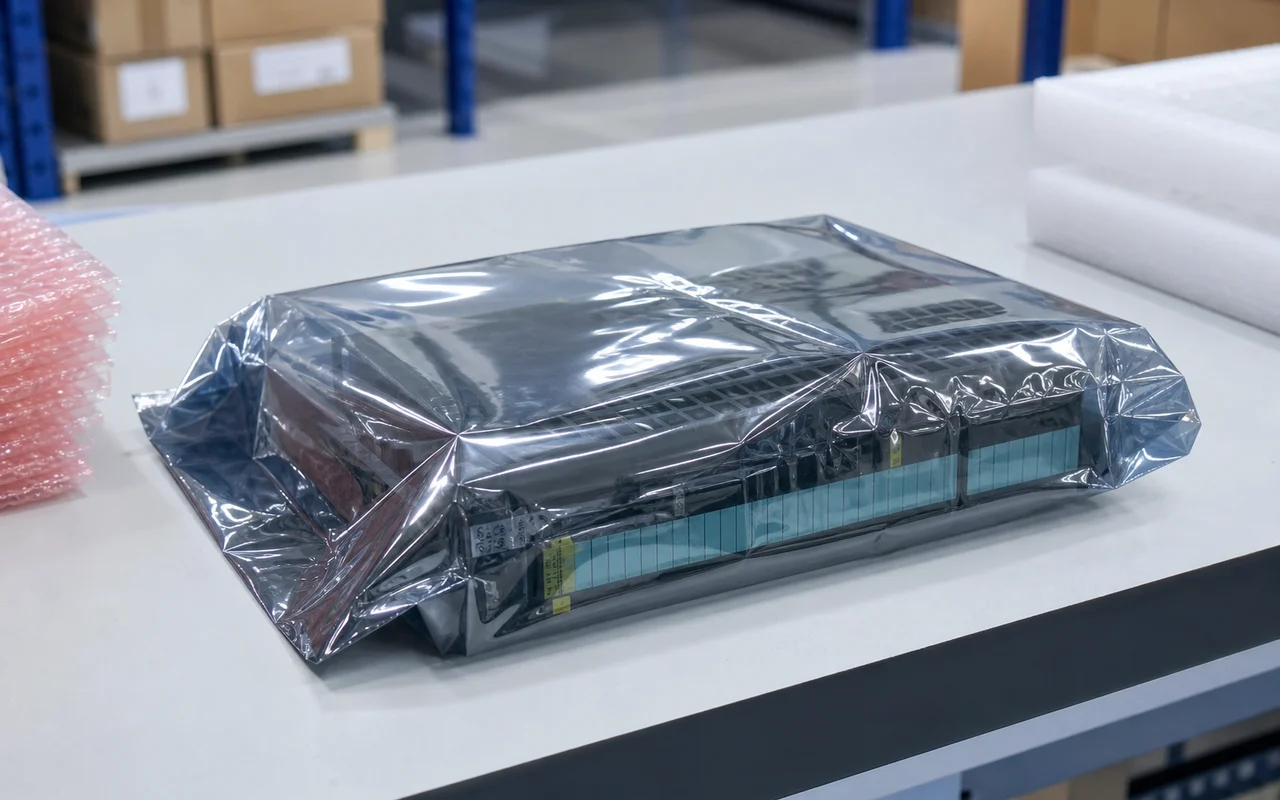 Anti-static Packaging
Modules are packed in anti-static bags to prevent electrostatic damage.
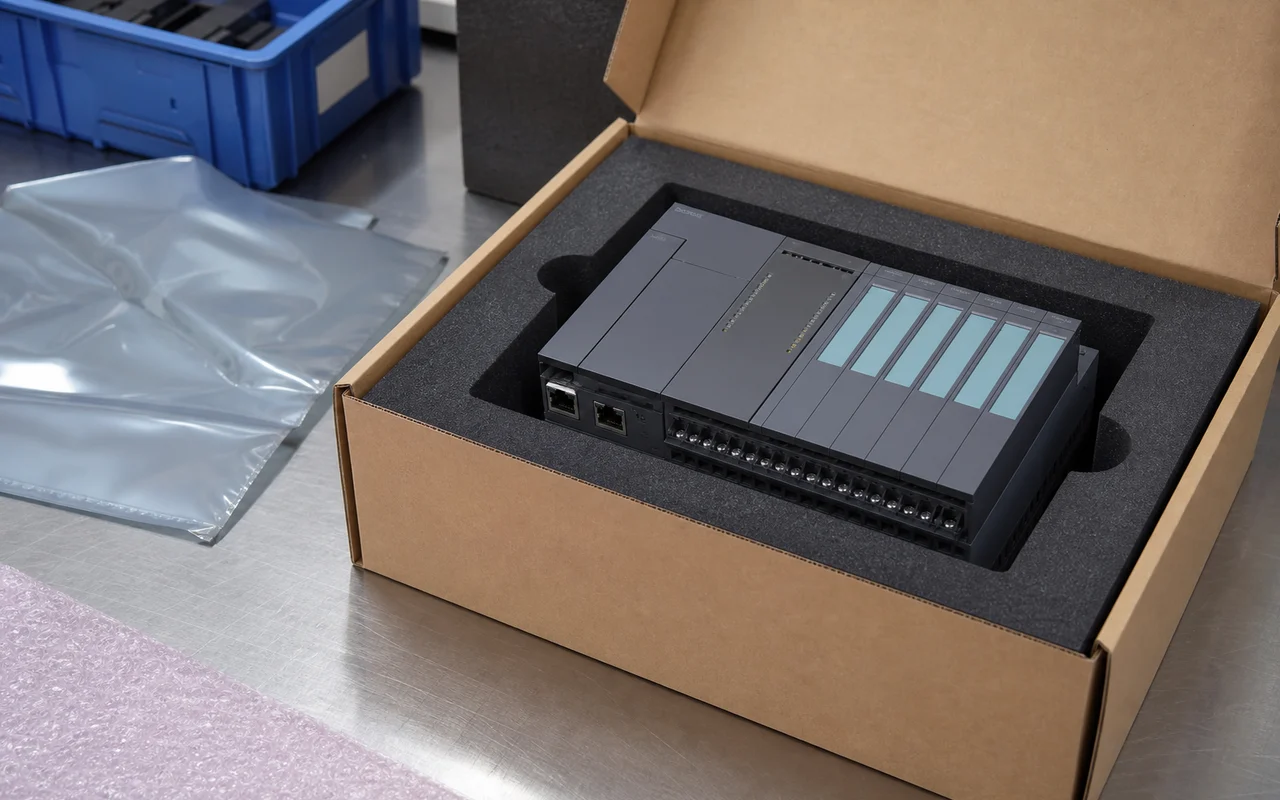 Secure Export Packing
Cushion protection and strong cartons ensure safe transportation.
 Worldwide Shipping
Global logistics network supports air, sea and express delivery.
 Documentation Check
Part number, revision and compatibility verified before shipment.
 After-sales Support
Professional technical support to help resolve your issues.