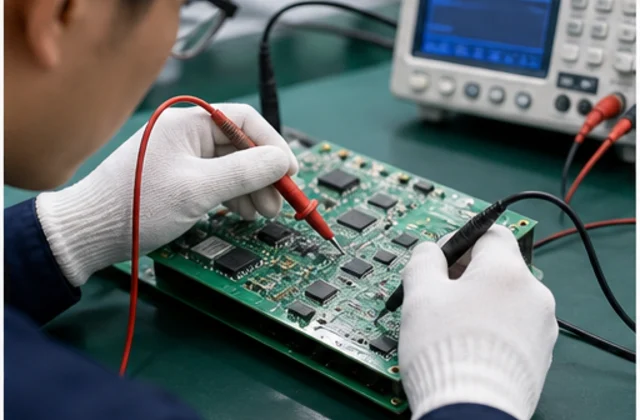
 Functional Inspection
100% tested on professional platforms to ensure stable performance.
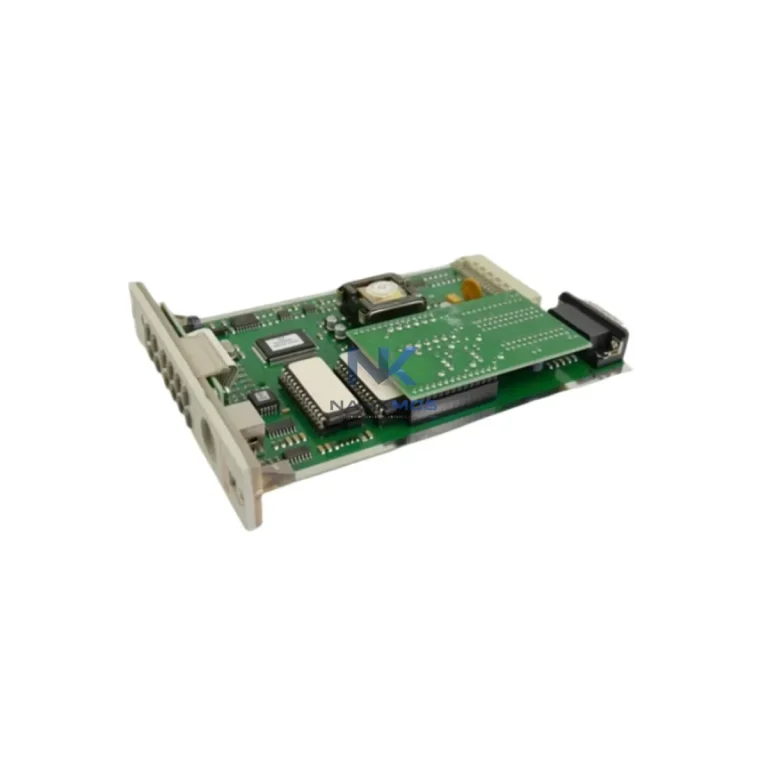
Honeywell 51195096-200 is a NANKMOS industrial automation product record Listed under TDC 3000 series and Business & Industrial > Automation, Control & Flow Devices. Confirm condition, availability, lead time, compatibility and documentation by email inquiry.
Brand names are used for identification only.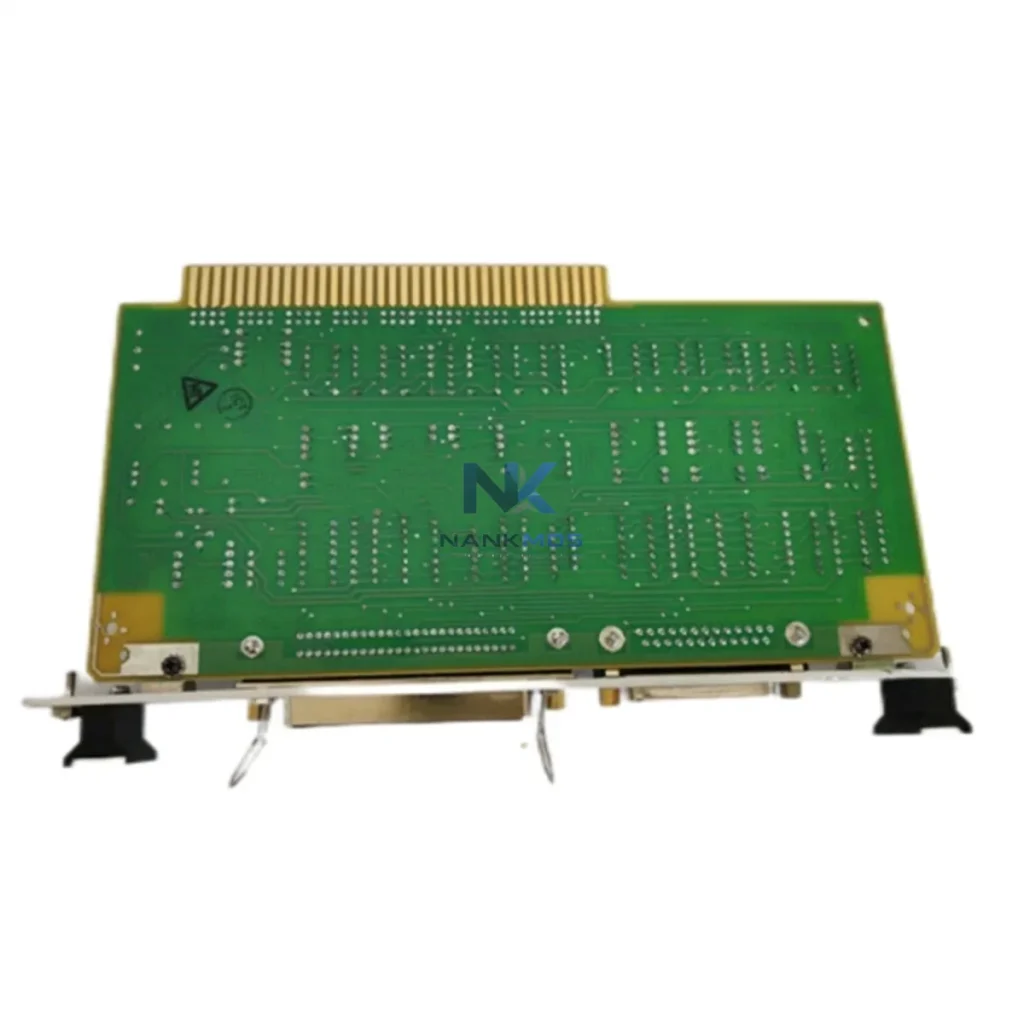
Honeywell 51195096-200 is a NANKMOS industrial automation product record Listed under TDC 3000 series and Business & Industrial > Automation, Control & Flow Devices. Confirm condition, availability, lead time, compatibility and documentation by email inquiry.
| Manufacturer | Honeywell |
|---|---|
| Application | Industrial Network Communication |
| Part Number / Model | 51195096-200 |
| Compatible System | TDC 3000 |
| Series | TDC 3000 |
| Condition Options | To Confirm |
| Module Type | Communication Module |
| Warranty | 12 Months |
| Packaging | Anti-static Bag / Secure Box |
| Shipping Methods | DHL / FedEx / UPS / Air / Sea |
| Availability | To Confirm |
| Lead Time | To Confirm |
| Documentation | Part number and revision checked before quote |
The Honeywell 51195096-200 is a precision-engineered industrial network interface module designed for the TDC 3000 Distributed Control System platform. In modern smart factory environments, where every millisecond of data latency and every dropped packet can translate into production loss or safety risk, this module serves as a critical bridge between field-level devices and upper-layer supervisory systems. It enables seamless, high-integrity data exchange across the full automation hierarchy — from sensors and actuators on the plant floor to SCADA servers, historian databases, and enterprise MES platforms.
Engineered to Honeywell's exacting industrial standards, the 51195096-200 supports the proprietary TDC 3000 Local Control Network (LCN) and Universal Control Network (UCN) architectures, providing deterministic, real-time communication between process controllers, I/O subsystems, and network nodes. Its role in the data chain is foundational: without a reliable network interface at this layer, the entire DCS topology loses its ability to synchronize control loops, propagate alarm states, and deliver live process values to operator workstations and historian nodes.
In a fully integrated TDC 3000 installation, the 51195096-200 network interface sits at the heart of the plant-wide data backbone. Signal acquisition begins at the field level, where process transmitters — pressure, temperature, flow, and level sensors — feed raw analog and digital values into Honeywell PM (Process Manager) and HPM (High-Performance Process Manager) controllers via dedicated I/O termination assemblies. These controllers execute the PID and advanced control strategies that govern the process, and they rely on the network interface to propagate real-time setpoints, measured values, and control outputs across the LCN.
From the LCN, data flows upward through NIM (Network Interface Module) nodes — of which the 51195096-200 is a key representative — to the Universal Station (US) and GUS (Global User Station) operator consoles. Operators at these HMI workstations receive live process graphics, trend displays, and alarm summaries that are only possible because the network interface maintains sub-second data refresh cycles across all connected nodes. Any degradation in the NIM's communication integrity immediately manifests as stale data on operator screens and delayed alarm annunciation — risks that the 51195096-200's robust design is built to eliminate.
For facilities running hybrid automation architectures, the TDC 3000 network interface also enables integration with third-party PLC platforms — such as Allen-Bradley ControlLogix or Siemens S7 series controllers — through OPC DA/UA gateways or dedicated protocol converters. This allows the Honeywell DCS to act as the supervisory layer while PLCs handle localized machine control, with the 51195096-200 ensuring that cross-system data remains synchronized and available to the plant SCADA historian. Platforms such as Honeywell PHD (Process Historian Database) and third-party historians like OSIsoft PI can subscribe to real-time tag data flowing through this interface, enabling long-term trend analysis, KPI dashboards, and regulatory compliance reporting.
Edge connectivity is increasingly important in smart factory deployments. Industrial edge gateways — positioned between the TDC 3000 LCN and cloud analytics platforms — rely on stable, low-latency data feeds from the network interface to perform local pre-processing, anomaly detection, and predictive maintenance calculations before forwarding aggregated data upstream. The 51195096-200 supports this architecture by maintaining consistent node communication even under high-load network conditions, ensuring that edge devices always receive the process data they need without polling delays or packet loss.
Power infrastructure reliability is equally critical. Honeywell MC-PDPY01 and similar DCS power supply modules provide the regulated DC power that keeps network interface cards and I/O subsystems operational during grid fluctuations. Pairing the 51195096-200 with redundant power supplies and managed industrial Ethernet switches — such as those in the Honeywell FSC (Fail-Safe Controller) ecosystem — creates a fault-tolerant network topology where no single component failure can interrupt plant-wide data flow.
Many industrial facilities operating legacy TDC 3000 systems face a common set of challenges: protocol fragmentation across generations of equipment, data silos between DCS and ERP layers, and limited visibility into real-time process performance. The Honeywell 51195096-200 directly addresses these pain points by providing a standardized, high-reliability network node that bridges older UCN-based I/O subsystems with modern LCN infrastructure.
Protocol unification is one of the most immediate benefits. Sites that have added newer PLC-based skids or variable frequency drives (VFDs) alongside their TDC 3000 backbone often struggle with data translation between proprietary DCS protocols and open standards like Modbus RTU, PROFIBUS DP, or EtherNet/IP. By deploying the 51195096-200 as the central network node and pairing it with appropriate protocol gateways, engineers can consolidate all process data into a single SCADA namespace — eliminating the manual data reconciliation that previously consumed hours of operator time per shift.
Remote diagnostics capability is another critical advantage. With the network interface maintaining continuous node health reporting on the LCN, maintenance teams can monitor communication status, detect node dropouts, and identify degraded signal paths from a central engineering workstation — without requiring physical access to the field cabinet. This is particularly valuable for unmanned substations, offshore platforms, and geographically distributed process units where on-site troubleshooting is costly and time-consuming.
Production line transparency improves dramatically when all data flows through a reliable network interface. SCADA dashboards fed by the 51195096-200 can display real-time OEE (Overall Equipment Effectiveness) metrics, batch tracking data, and alarm frequency analysis — giving plant managers the visibility they need to identify bottlenecks, reduce unplanned downtime, and optimize throughput. Alarm rationalization projects also benefit, as the network interface's deterministic data delivery ensures that alarm timestamps are accurate and sequenced correctly for root-cause analysis.
System scalability is preserved by the modular TDC 3000 architecture. As production capacity expands, additional PM/HPM controllers, I/O cabinets, and operator stations can be added to the LCN without disrupting existing nodes — provided the network interface infrastructure is maintained with genuine, specification-compliant modules like the 51195096-200. Substituting counterfeit or non-OEM components at this layer introduces communication instability that can cascade across the entire DCS, making sourcing from a verified supplier a non-negotiable requirement.
Q1: What communication latency can I expect from the Honeywell 51195096-200 on a TDC 3000 LCN?The TDC 3000 LCN is a deterministic token-passing network designed for sub-second scan cycles. Under normal operating conditions, the 51195096-200 network interface supports data refresh rates consistent with Honeywell's published LCN specifications, typically in the range of 500 ms or better for standard process variables. Actual latency depends on network load, number of active nodes, and configuration parameters set in the system engineering database.
Q2: Is the 51195096-200 compatible with both UCN and LCN architectures in the same TDC 3000 system?Yes. The TDC 3000 platform supports coexistence of UCN (Universal Control Network) and LCN (Local Control Network) segments within the same system. The 51195096-200 functions as a network interface node on the LCN, and can communicate with UCN-attached I/O and controllers through the appropriate NIM and gateway modules. Consult your TDC 3000 system engineering documentation to confirm node addressing and compatibility with your specific firmware revision.
Q3: How does the module support remote diagnostics and network health monitoring?The 51195096-200 participates in the TDC 3000 node health reporting framework, which allows the system's engineering workstation to monitor communication status, error counts, and node availability in real time. Maintenance teams can use Honeywell's system management tools to detect degraded nodes, log communication faults, and initiate diagnostic routines without interrupting live process control — a key advantage for facilities with high-availability requirements.
Q4: What warranty and pre-shipment testing does NANKMOS provide for the 51195096-200?Every Honeywell 51195096-200 shipped by NANKMOS is covered by a 12-month warranty against manufacturing defects and functional failures. Prior to dispatch, each unit undergoes a pre-shipment functional verification to confirm communication integrity and module health. Units are sourced from verified inventory channels and stored under controlled conditions to preserve long-term reliability. For volume orders or urgent replacement requirements, contact our team at [email protected] or +86 18359268345 for lead time confirmation and RFQ support.
Functional Inspection100% tested on professional platforms to ensure stable performance.
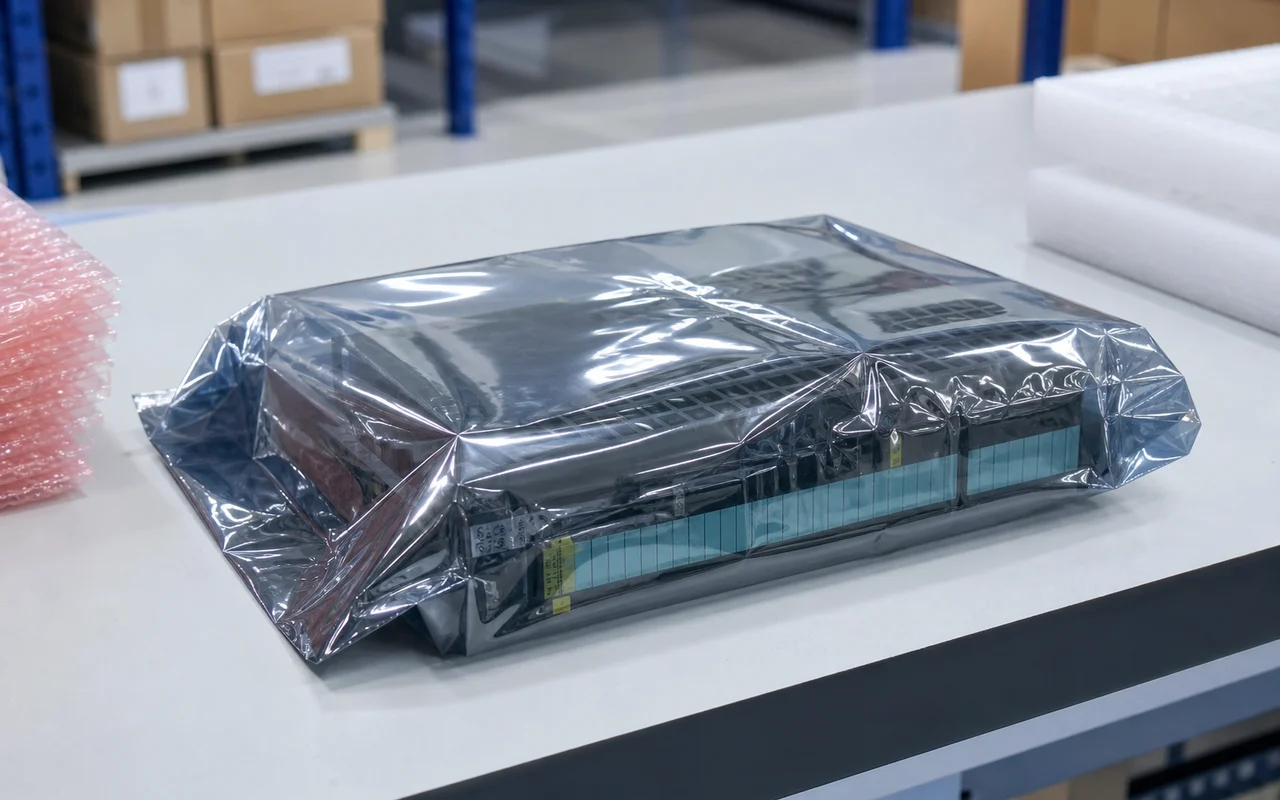 Anti-static Packaging
Modules are packed in anti-static bags to prevent electrostatic damage.
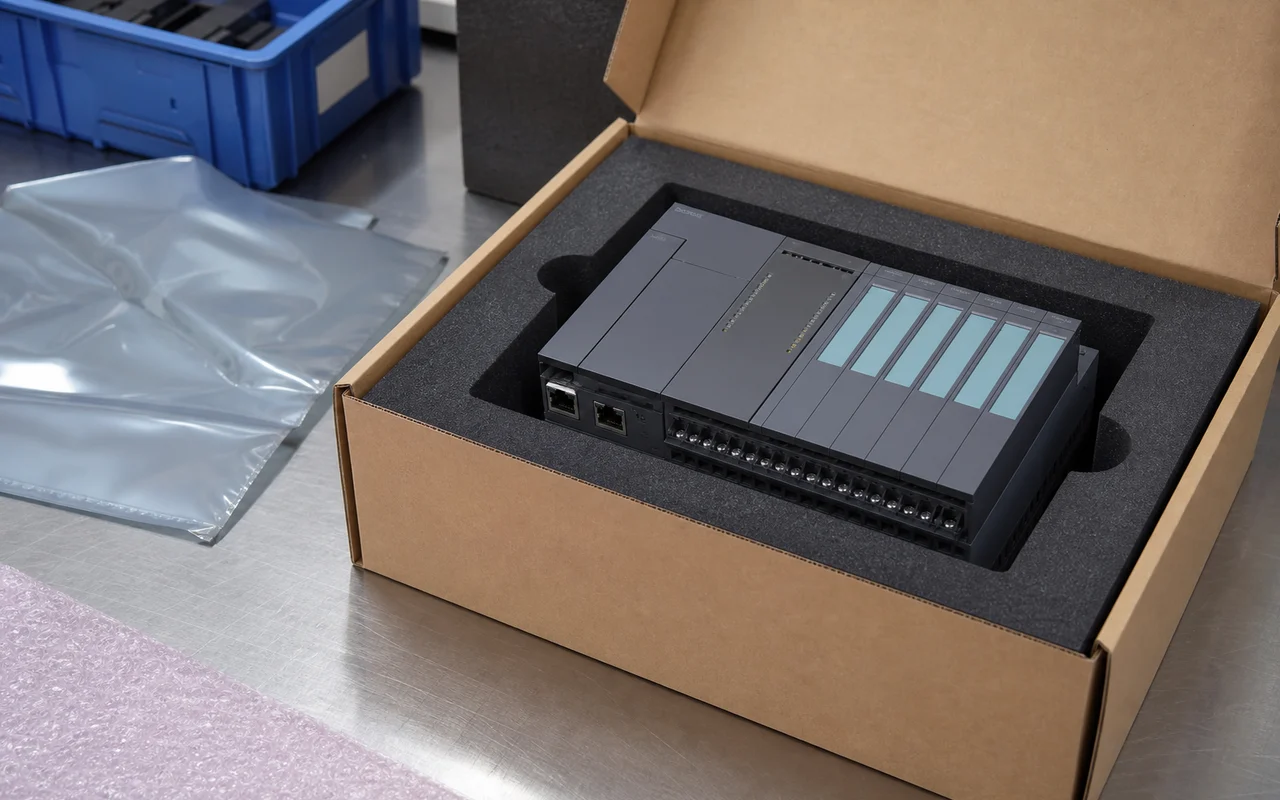 Secure Export Packing
Cushion protection and strong cartons ensure safe transportation.
 Worldwide Shipping
Global logistics network supports air, sea and express delivery.
 Documentation Check
Part number, revision and compatibility verified before shipment.
 After-sales Support
Professional technical support to help resolve your issues.