Functional Inspection
100% tested on professional platforms to ensure stable performance.
Mitsubishi Electric A1SCPU is a NANKMOS industrial automation product record Listed under MELSEC-A series and Business & Industrial > Automation, Control & Flow Devices > Programmable Logic Controllers. Confirm condition, availability, lead time, compatibility and documentation by email inquiry.
Brand names are used for identification only.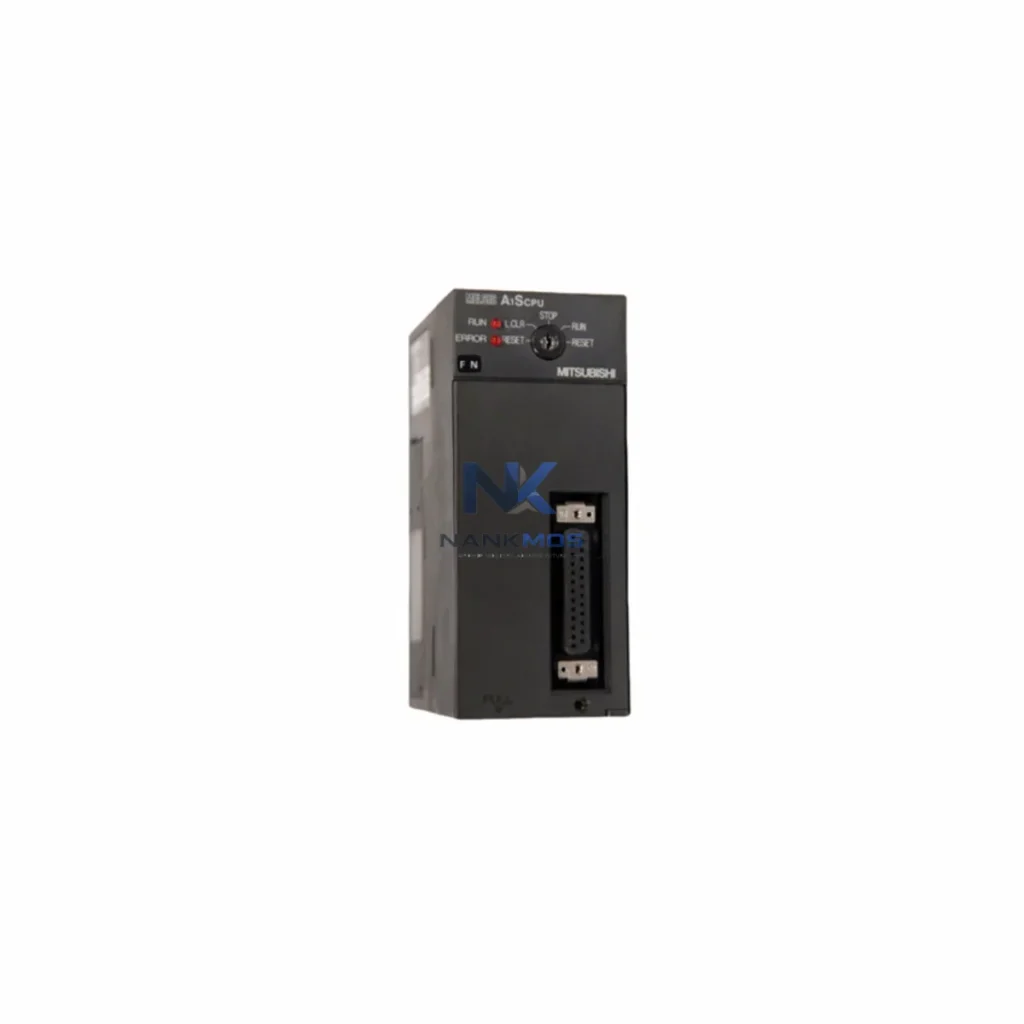
Mitsubishi Electric A1SCPU is a NANKMOS industrial automation product record Listed under MELSEC-A series and Business & Industrial > Automation, Control & Flow Devices > Programmable Logic Controllers. Confirm condition, availability, lead time, compatibility and documentation by email inquiry.
| Manufacturer | Mitsubishi Electric |
|---|---|
| Application | Controller Processing & System Control |
| Part Number / Model | A1SCPU |
| Compatible System | MELSEC-A |
| Series | MELSEC-A |
| Condition Options | To Confirm |
| Module Type | Controller / CPU Module |
| Warranty | 12 Months |
| Packaging | Anti-static Bag / Secure Box |
| Shipping Methods | DHL / FedEx / UPS / Air / Sea |
| Availability | To Confirm |
| Lead Time | To Confirm |
| Documentation | Part number and revision checked before quote |
The Mitsubishi Electric A1SCPU is a compact, high-reliability CPU module engineered for the MELSEC-A series programmable logic controller platform. Designed to serve as the central processing unit within a structured industrial control architecture, the A1SCPU coordinates program execution, I/O scanning, inter-module communication, and system diagnostics across the full automation stack. Whether deployed in a standalone machine controller or integrated into a multi-tier distributed control system, the A1SCPU delivers deterministic scan-cycle performance, robust instruction processing, and long-term operational stability that demanding industrial environments require.
In modern control architecture, the CPU module is not an isolated component — it is the orchestration core that binds every layer of the automation system together. The A1SCPU interfaces directly with the MELSEC-A base unit and backplane, enabling seamless slot-based expansion with digital I/O modules, analog signal modules, communication interface cards, and specialty function modules. This modular architecture allows engineers to scale the control system incrementally, adding capacity without redesigning the core control logic or replacing the CPU platform.
The A1SCPU achieves its full engineering value when deployed as part of a cohesive MELSEC-A automation platform. At the control layer, the A1SCPU executes the user program and manages the system clock, error detection, and watchdog timer functions. Paired with the A1S61PN or A1S62PN power supply module, the CPU receives stable 5 VDC bus power, ensuring consistent logic operation even under fluctuating input voltage conditions. The power supply module's built-in overcurrent and overvoltage protection circuits safeguard the entire rack from electrical anomalies.
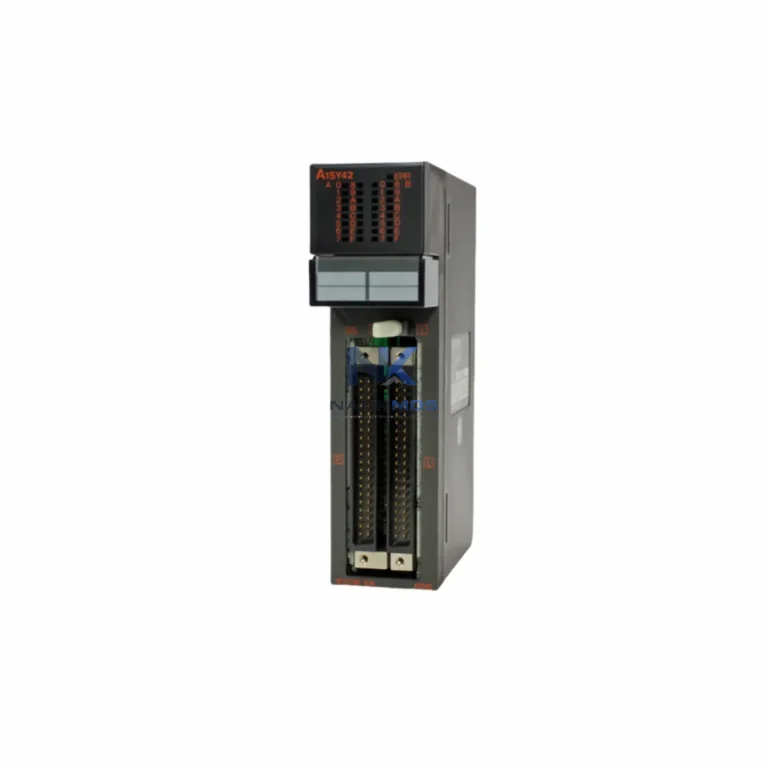
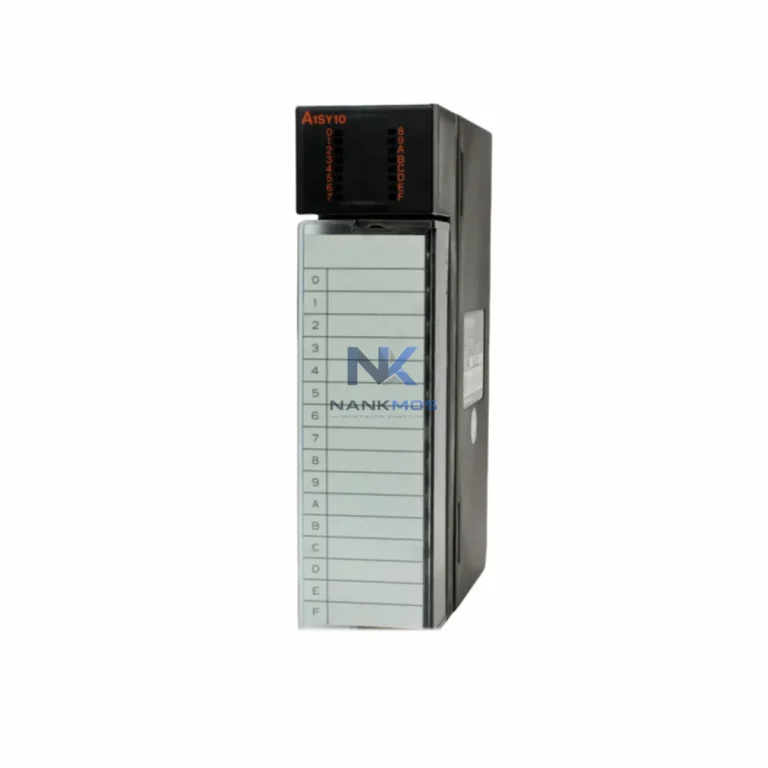
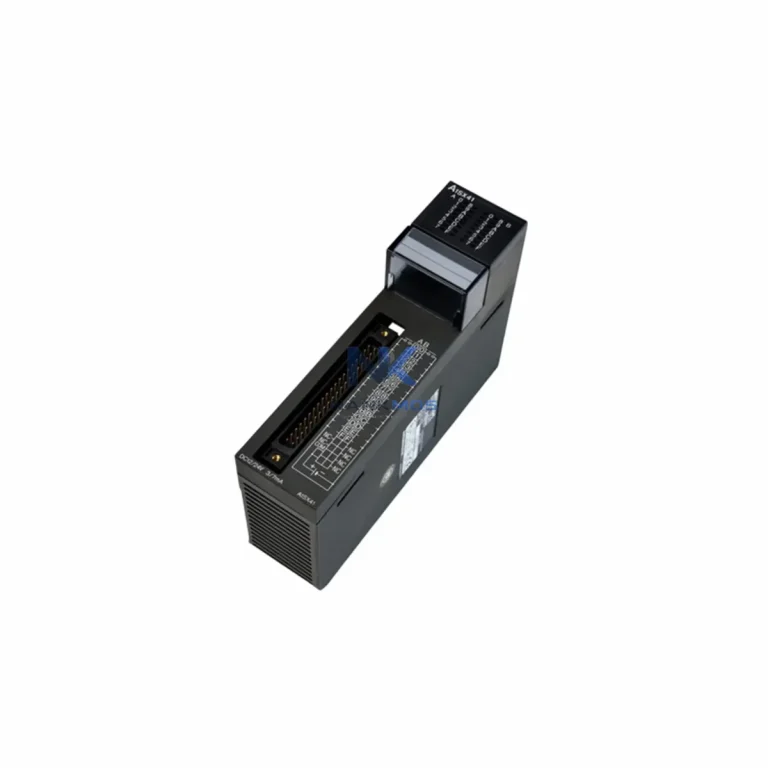
At the I/O layer, the A1SCPU communicates with A1SX40 digital input modules and A1SY10 transistor output modules through the backplane bus, enabling high-speed discrete signal acquisition and actuation. For process control applications requiring analog measurement, the A1S68AD analog input module and A1S62DA analog output module extend the system's signal handling capability to 4–20 mA and 0–10 VDC process loops, supporting PID control loops managed directly by the A1SCPU's built-in instruction set.
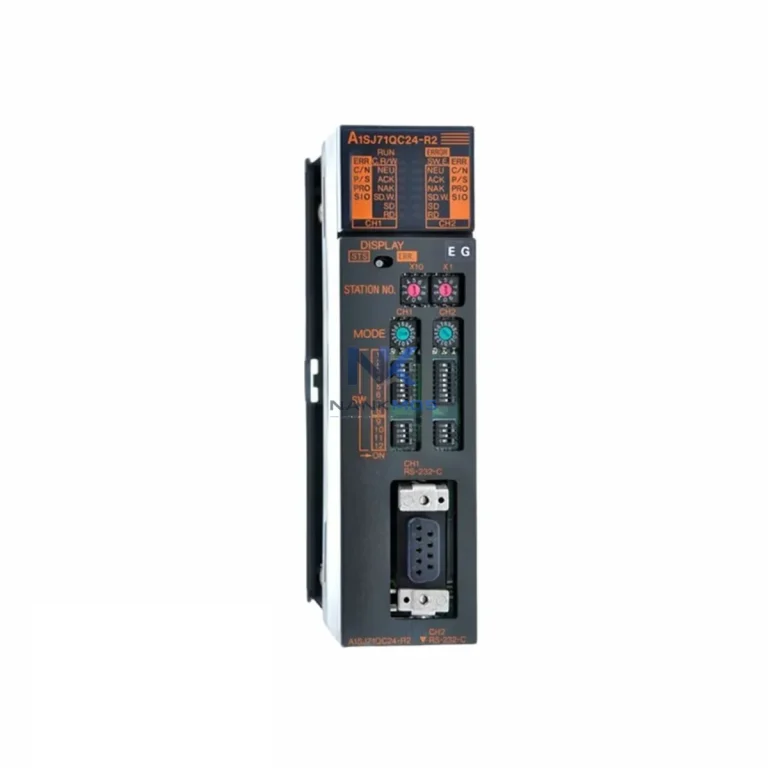
At the communication layer, the A1SJ71UC24-R2 serial communication module enables RS-232C and RS-422 connectivity to HMI panels, SCADA hosts, and third-party instrumentation. For networked multi-PLC architectures, the A1SJ71BR11 MELSECNET/B data link module allows the A1SCPU to participate in peer-to-peer data sharing across multiple controller nodes, supporting distributed I/O architectures and redundant control topologies. Where higher-bandwidth inter-controller communication is required, the A1SJ71QLP21 MELSECNET/10 optical loop module provides deterministic token-ring network communication at up to 10 Mbps.
At the HMI layer, the A1SCPU interfaces with Mitsubishi GOT1000 series HMI panels (such as the GT1055-QSBD) via the RS-232C port or through a dedicated communication module, enabling real-time process visualisation, alarm management, and operator parameter entry. This HMI integration is critical for applications where operators must monitor multi-zone process variables and respond to system events without accessing the programming environment.
For applications requiring terminal block connectivity and field wiring flexibility, A1S-TB series terminal block modules provide screw-terminal interfaces that simplify field wiring, reduce installation time, and improve long-term maintenance access. In control cabinet designs where space is constrained, the slim-profile MELSEC-A base units — such as the A1S38B or A1S55B extension base units — allow the system to be expanded horizontally without increasing cabinet depth, preserving the compact footprint that the A1SCPU platform is known for.
Discrete Manufacturing: In automotive assembly lines, packaging machinery, and material handling systems, the A1SCPU manages sequential machine logic, conveyor interlocking, and safety relay coordination. Its deterministic scan cycle ensures that machine state transitions occur within defined timing windows, preventing mechanical conflicts and protecting tooling from damage caused by out-of-sequence actuation.
Power Distribution and Electrical Substations: The A1SCPU is deployed in medium-voltage switchgear control panels and transformer monitoring systems, where it manages protection relay logic, breaker status monitoring, and load-shedding sequences. Its compatibility with MELSECNET/B data link modules allows substation controllers to report real-time status to SCADA systems without requiring protocol conversion gateways.
Petrochemical and Refinery Process Control: In continuous process environments, the A1SCPU executes PID control loops for temperature, pressure, and flow regulation. Paired with analog I/O modules and intrinsically safe signal isolators, the system maintains process stability across multi-zone reactor control applications where signal integrity and loop response time are critical to product quality and operational safety.
Water and Wastewater Treatment: Municipal water treatment facilities use the A1SCPU to automate pump sequencing, chemical dosing, and filtration cycle management. The module's robust operating temperature range and resistance to electrical noise make it well-suited for wet environments where variable-frequency drives and high-current motor starters generate significant electromagnetic interference.
Mining and Mineral Processing: In ore crushing, conveyor belt management, and flotation cell control, the A1SCPU provides reliable program execution in environments characterised by heavy vibration, dust ingress, and wide ambient temperature variation. Its panel-mount installation within sealed enclosures, combined with the A1S61PN power supply's surge protection, ensures continuous operation during the demanding duty cycles typical of mining operations.
Metallurgy and Steel Production: Rolling mill control systems and furnace temperature management applications leverage the A1SCPU's analog I/O integration and high-speed instruction processing to maintain tight process tolerances. The module's compatibility with MELSECNET/10 network modules enables real-time data exchange between furnace zone controllers and the plant-level SCADA system.
Q1: Is the A1SCPU compatible with MELSEC-A extension base units, and how many I/O modules can be connected? The A1SCPU is fully compatible with the MELSEC-A slim base unit series, including the A1S38B (8-slot) and A1S55B (5-slot) extension base units. The system supports up to 256 I/O points across the main base and extension racks. Each extension rack connects to the main base via the A1SC□B extension cable, and the CPU automatically recognises all installed modules during the initial power-on scan. For applications requiring more than 256 I/O points, a distributed I/O architecture using MELSECNET/B data link modules is recommended.
Q2: Can the A1SCPU communicate with modern SCADA systems and HMI platforms that use Ethernet-based protocols? The A1SCPU's native communication interface is RS-232C, which supports direct connection to HMI panels and programming devices. For Ethernet-based SCADA integration, the A1SJ71E71 Ethernet interface module can be installed in an adjacent slot on the base unit, providing TCP/IP connectivity and enabling the A1SCPU to exchange data with SCADA hosts using the MELSEC communication protocol. This approach preserves the existing A1SCPU installation while adding modern network connectivity without replacing the CPU platform.
Q3: What does the 12-Month Warranty cover, and what is the typical lead time for replacement units? The 12-Month Warranty covers manufacturing defects, component failure, and functional non-conformance under normal operating conditions as defined in the product specification. Units are inspected and functionally tested prior to shipment, including power-on verification, memory read/write cycle testing, and communication port validation. Replacement units are held in stock and are typically dispatched within 1–3 business days of order confirmation. For critical infrastructure applications where downtime cost is high, we recommend maintaining a spare A1SCPU unit on-site as part of a structured preventive maintenance programme.
Functional Inspection100% tested on professional platforms to ensure stable performance.
 Anti-static Packaging
Modules are packed in anti-static bags to prevent electrostatic damage.
 Secure Export Packing
Cushion protection and strong cartons ensure safe transportation.
 Worldwide Shipping
Global logistics network supports air, sea and express delivery.
 Documentation Check
Part number, revision and compatibility verified before shipment.
 After-sales Support
Professional technical support to help resolve your issues.