Functional Inspection
100% tested on professional platforms to ensure stable performance.
Mitsubishi Electric A1SX41 is a NANKMOS industrial automation product record Listed under MELSEC-A series and Business & Industrial > Automation, Control & Flow Devices > Programmable Logic Controllers. Confirm condition, availability, lead time, compatibility and documentation by email inquiry.
Brand names are used for identification only.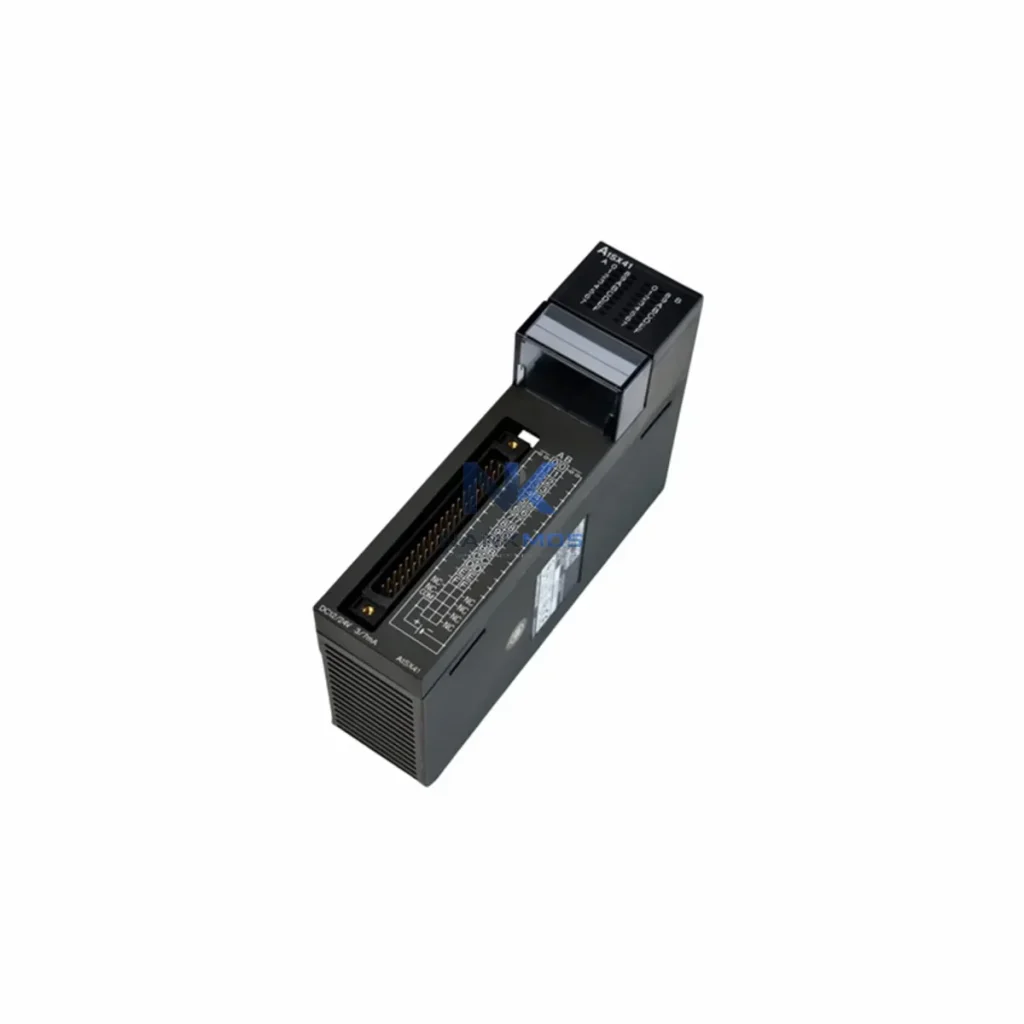
Mitsubishi Electric A1SX41 is a NANKMOS industrial automation product record Listed under MELSEC-A series and Business & Industrial > Automation, Control & Flow Devices > Programmable Logic Controllers. Confirm condition, availability, lead time, compatibility and documentation by email inquiry.
| Manufacturer | Mitsubishi Electric |
|---|---|
| Application | Controller Processing & System Control |
| Part Number / Model | A1SX41 |
| Compatible System | MELSEC-A |
| Series | MELSEC-A |
| Condition Options | To Confirm |
| Module Type | Controller / CPU Module |
| Warranty | 12 Months |
| Packaging | Anti-static Bag / Secure Box |
| Shipping Methods | DHL / FedEx / UPS / Air / Sea |
| Availability | To Confirm |
| Lead Time | To Confirm |
| Documentation | Part number and revision checked before quote |
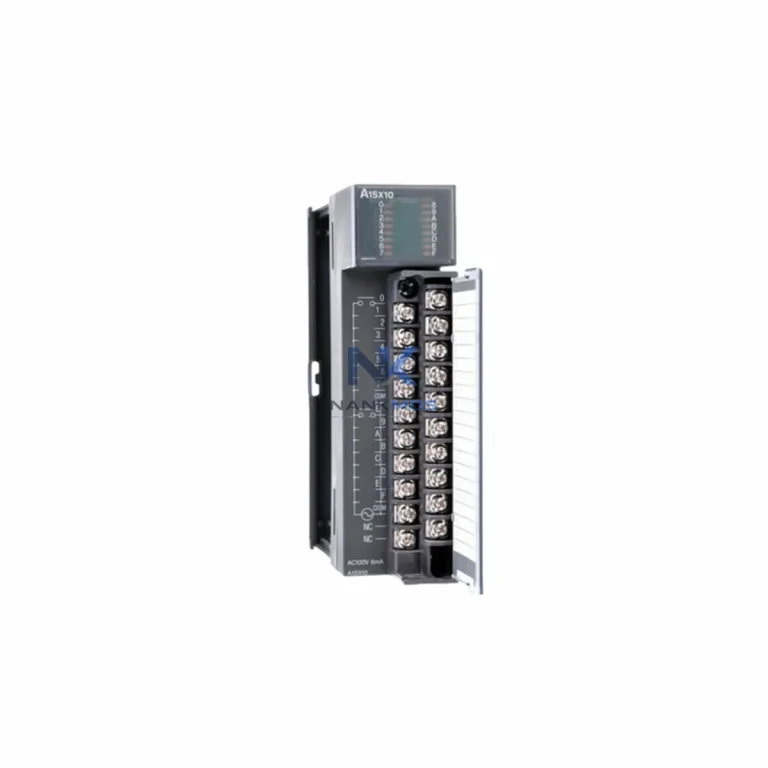
The Mitsubishi Electric A1SX41 is a 32-point, 24VDC sink-type DC input module engineered for the MELSEC-A Series programmable logic controller platform. Designed to serve as the foundational signal acquisition layer in industrial automation architectures, the A1SX41 captures discrete field-level signals from sensors, limit switches, proximity detectors, and push-button stations, converting them into structured digital data that flows upstream through the MELSEC backplane bus to the CPU module. In smart factory environments where data integrity and real-time responsiveness are non-negotiable, the A1SX41 delivers the reliable, low-latency input scanning that underpins every downstream decision — from PLC ladder logic execution to SCADA alarm generation and HMI visualisation.
As industrial sites evolve toward connected, data-driven operations, the role of a high-density DC input module extends far beyond simple signal detection. The A1SX41 integrates seamlessly into multi-tier automation architectures where field devices, remote I/O stations, communication gateways, and supervisory systems must exchange data continuously and without interruption. Its 32-channel capacity reduces panel wiring complexity, consolidates I/O addressing, and supports the kind of structured, scalable I/O mapping that modern SCADA and MES platforms depend on for production transparency.
In a fully connected smart factory, the A1SX41 sits at the field layer — the first point of contact between the physical process and the digital control system. Field devices such as inductive proximity sensors, photoelectric sensors, and mechanical limit switches wire directly into the A1SX41's 32 input terminals. Each input state is scanned at the PLC cycle rate and written into the MELSEC-A CPU's input image register, where it becomes immediately available to the ladder logic program running on modules such as the A2SCPU or A3NCPU.
From the CPU, process data propagates upward through the communication layer. When paired with a AJ71QLP21 MELSEC-NET/10 network module, the A1SX41's input states can be shared across a multi-drop network of MELSEC-A and MELSEC-Q stations, enabling distributed I/O architectures where a single supervisory CPU monitors dozens of remote field panels. For Ethernet-based connectivity, the AJ71E71 Ethernet interface module bridges the MELSEC backplane to TCP/IP networks, allowing SCADA servers and MES platforms to poll real-time I/O data using MELSEC communication protocol over standard industrial Ethernet infrastructure.
At the HMI layer, operators interact with A1SX41 input data through graphical displays connected via RS-232 or RS-422 serial links to the MELSEC-A CPU. Panels running GOT series HMI software — such as those built on the GT1575-VNBA or compatible GOT1000 platform — render live input states, alarm conditions, and trend data sourced directly from the A1SX41's input registers. This real-time visualisation closes the loop between field signal and operator awareness, enabling rapid fault identification and process adjustment without requiring physical inspection of the panel.
For remote diagnostics and predictive maintenance, the A1SX41's input data can be routed through an edge gateway — such as a Mitsubishi-compatible IIoT gateway running MC Protocol or SLMP — to cloud-based analytics platforms. By continuously streaming discrete input states, engineers can detect abnormal signal patterns, identify sensor degradation, and schedule preventive maintenance before unplanned downtime occurs. This data path — from field sensor through A1SX41, across the MELSEC backplane, through a communication module, and into a cloud analytics engine — represents the complete industrial data link that defines Industry 4.0 connectivity.
In multi-axis drive systems, the A1SX41 complements servo and inverter control architectures by providing the discrete interlock and permissive signals that gate drive enable commands. When integrated alongside FR-A700 series inverters or MR-J4 servo amplifiers, the A1SX41 captures feedback from motor overload relays, door interlock switches, and emergency stop circuits, feeding these critical safety states into the PLC logic that governs drive operation. This tight integration between I/O acquisition and motion control ensures that the automation system responds to field conditions with the determinism that high-speed production lines demand.
Power distribution within the control panel is managed by dedicated industrial DIN-rail power supplies — typically 24VDC units rated at 5A or 10A — that provide the stable input voltage the A1SX41 requires for consistent signal detection. Voltage ripple and transient suppression are critical at this layer; a stable 24VDC supply directly impacts the A1SX41's input filter response time and false-trigger immunity. Pairing the A1SX41 with a high-quality industrial power supply is therefore a best practice in any MELSEC-A panel build.
Data visualisation and reporting are handled at the SCADA layer, where historians such as those integrated into GENESIS64 or Wonderware System Platform log A1SX41 input transitions over time. These logs feed production dashboards, OEE calculations, and alarm frequency reports that give plant managers the operational transparency needed to drive continuous improvement. The A1SX41's role in this data chain — as the originating source of discrete field signals — makes its reliability and signal integrity foundational to the accuracy of every upstream report and KPI.
Protocol Fragmentation: Many legacy automation sites operate with a mix of MELSEC-A, MELSEC-Q, and third-party PLC platforms, creating protocol islands where data cannot flow freely between systems. The A1SX41, when deployed within a MELSEC-A rack alongside a MELSEC-NET or Ethernet communication module, provides a standardised data source that protocol gateways can bridge to other networks — eliminating the data silos that prevent plant-wide visibility.
Remote Monitoring Gaps: Sites without remote I/O visibility rely on manual rounds for fault detection, introducing latency between failure and response. By integrating the A1SX41 into a networked MELSEC architecture with Ethernet or MELSEC-NET connectivity, engineers gain the ability to monitor all 32 input states from a central SCADA workstation or mobile HMI — reducing mean time to detect (MTTD) and accelerating fault resolution.
Production Line Transparency: Without structured I/O data flowing into MES or ERP systems, production counts, cycle times, and downtime events remain invisible to business systems. The A1SX41's input data — when mapped through the PLC CPU and communicated via Ethernet to an MES middleware layer — provides the machine-level event data that drives accurate production reporting, shift summaries, and OEE dashboards.
Alarm Tracking and Escalation: Unstructured alarm management leads to alarm floods and missed critical events. By routing A1SX41 input transitions through the MELSEC-A CPU's alarm processing logic and forwarding alarm states to a SCADA historian, sites can implement structured alarm management with time-stamped event logs, alarm frequency analysis, and escalation workflows that ensure critical faults reach the right personnel immediately.
System Expansion: As production capacity grows, I/O requirements expand. The MELSEC-A platform supports multi-rack expansion using extension base units, allowing additional A1SX41 modules to be added without redesigning the control architecture. This scalability protects the initial investment in MELSEC-A infrastructure while accommodating future production line additions.
Q1: What is the input response time of the A1SX41, and does it support high-speed signal detection? The A1SX41 features a standard input response time (filter time) that is configurable via the MELSEC-A CPU parameter settings, typically ranging from 1ms to 70ms. For high-speed applications requiring sub-millisecond response, Mitsubishi Electric offers dedicated high-speed input modules within the MELSEC-A range. The A1SX41 is optimised for standard discrete I/O applications where filter stability and noise immunity are prioritised over raw speed.
Q2: Is the A1SX41 compatible with MELSEC-Q and MELSEC-iQ-R series CPUs? The A1SX41 is designed specifically for the MELSEC-A series backplane and is not directly compatible with MELSEC-Q or MELSEC-iQ-R base units. For migration projects, Mitsubishi Electric provides conversion adapters and replacement modules within the MELSEC-Q range that offer equivalent functionality with enhanced network capabilities. Our team can advise on migration pathways that preserve existing wiring investments.
Q3: How does the A1SX41 support remote diagnostics and predictive maintenance? Remote diagnostics for A1SX41 input states are achieved by pairing the MELSEC-A CPU with a network communication module — such as the AJ71E71 Ethernet module — and connecting to a SCADA or IIoT platform via MELSEC or SLMP protocol. This configuration enables continuous polling of input register states, historical logging of signal transitions, and alarm notification via email or SMS when abnormal input patterns are detected. All units supplied by NANKMOS are pre-tested prior to shipment and covered by a 12-month warranty.
Q4: What quality assurance and warranty coverage applies to the A1SX41 supplied by NANKMOS? Every A1SX41 unit supplied by NANKMOS undergoes functional verification testing prior to dispatch, confirming input channel integrity, backplane communication, and power consumption within specification. Units are supplied with a 12-month warranty covering manufacturing defects and functional failures under normal operating conditions. In-stock units are available for immediate shipment, with lead times confirmed at the time of order. For technical support or warranty claims, contact [email protected] or call +86 18359268345.
Functional Inspection100% tested on professional platforms to ensure stable performance.
 Anti-static Packaging
Modules are packed in anti-static bags to prevent electrostatic damage.
 Secure Export Packing
Cushion protection and strong cartons ensure safe transportation.
 Worldwide Shipping
Global logistics network supports air, sea and express delivery.
 Documentation Check
Part number, revision and compatibility verified before shipment.
 After-sales Support
Professional technical support to help resolve your issues.