Functional Inspection
100% tested on professional platforms to ensure stable performance.
Mitsubishi Electric A1SY42 is a NANKMOS industrial automation product record Listed under MELSEC-A series and Business & Industrial > Automation, Control & Flow Devices > Programmable Logic Controllers. Confirm condition, availability, lead time, compatibility and documentation by email inquiry.
Brand names are used for identification only.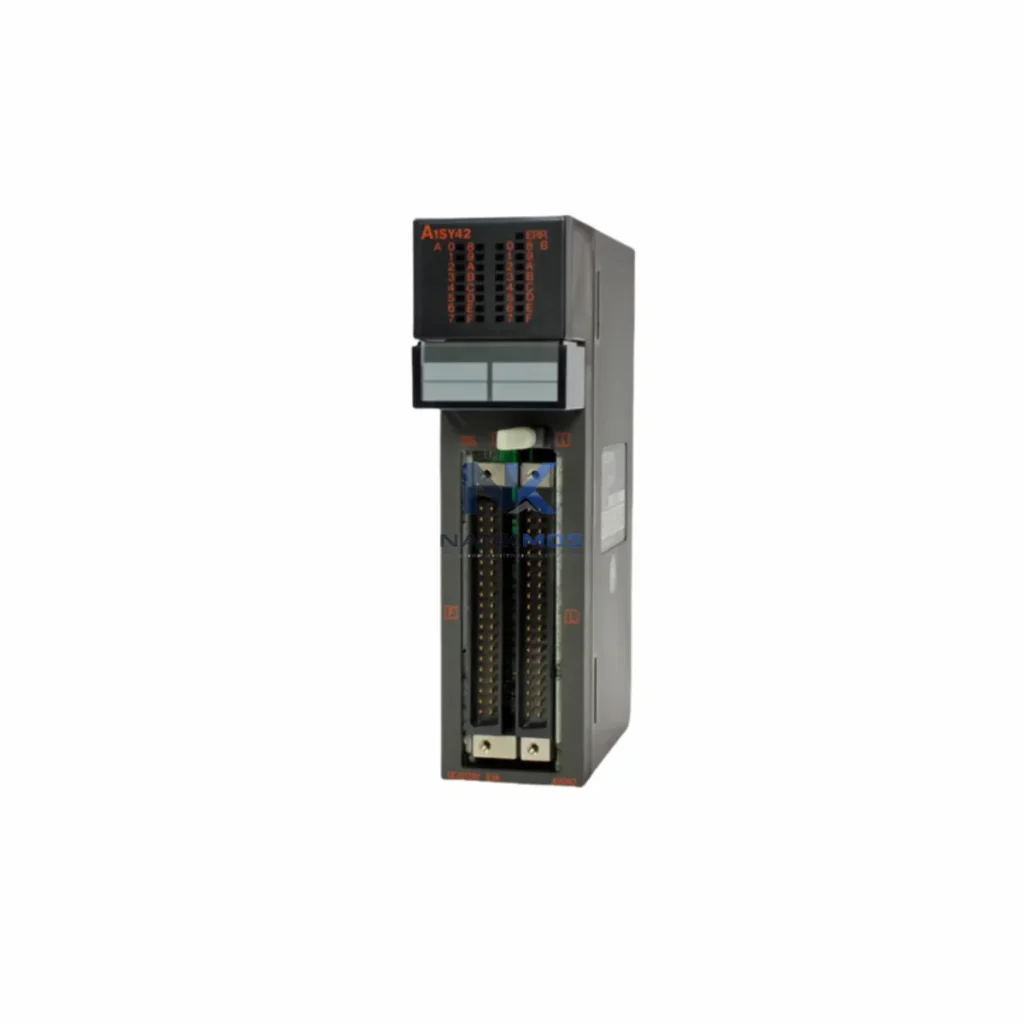
Mitsubishi Electric A1SY42 is a NANKMOS industrial automation product record Listed under MELSEC-A series and Business & Industrial > Automation, Control & Flow Devices > Programmable Logic Controllers. Confirm condition, availability, lead time, compatibility and documentation by email inquiry.
| Manufacturer | Mitsubishi Electric |
|---|---|
| Application | Controller Processing & System Control |
| Part Number / Model | A1SY42 |
| Compatible System | MELSEC-A |
| Series | MELSEC-A |
| Condition Options | To Confirm |
| Module Type | Controller / CPU Module |
| Warranty | 12 Months |
| Packaging | Anti-static Bag / Secure Box |
| Shipping Methods | DHL / FedEx / UPS / Air / Sea |
| Availability | To Confirm |
| Lead Time | To Confirm |
| Documentation | Part number and revision checked before quote |
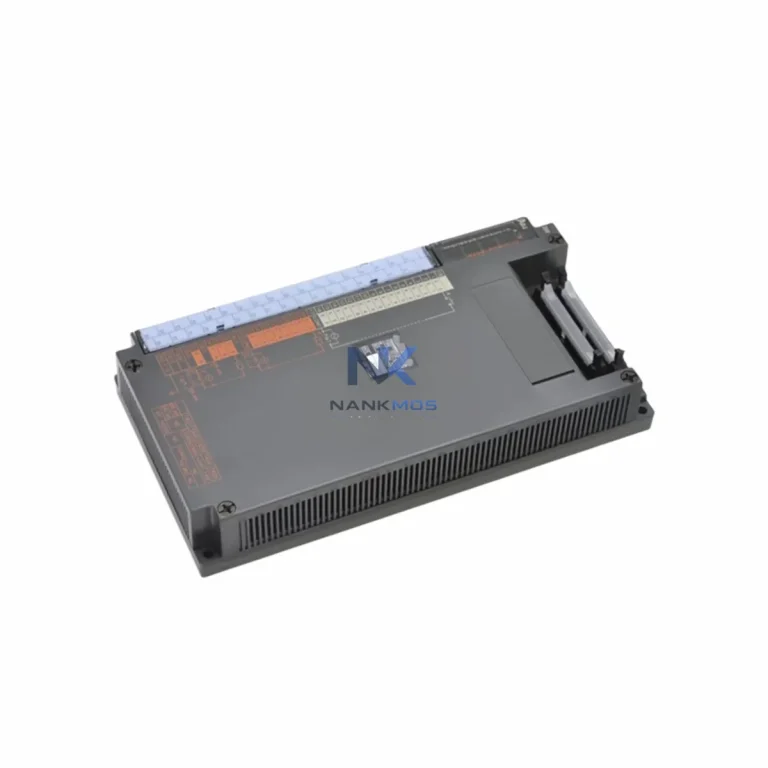
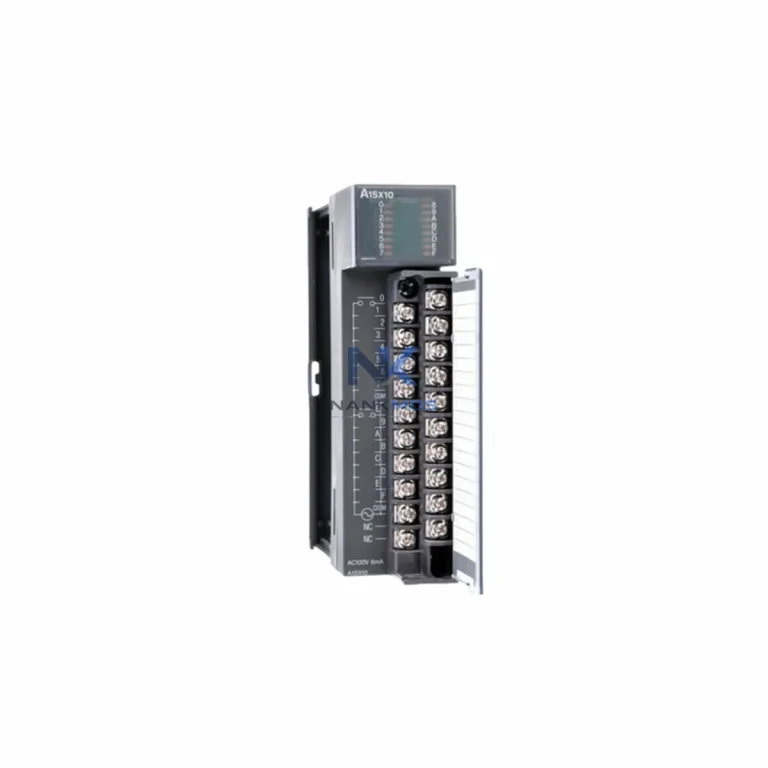
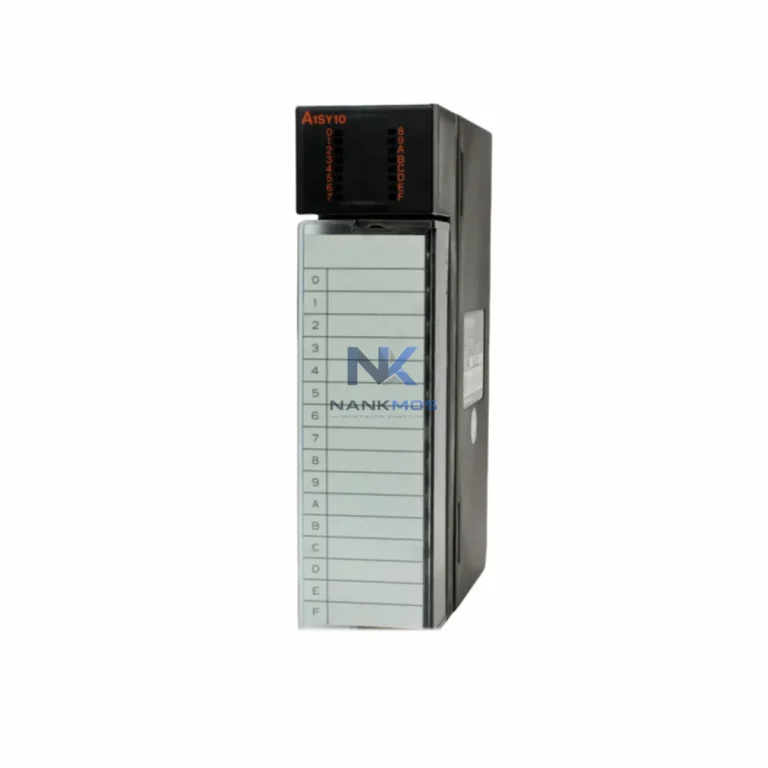
The Mitsubishi A1SY42 is a 64-point transistor digital output module engineered for the MELSEC-A series PLC platform — one of Mitsubishi Electric's most proven industrial control architectures. Designed to serve as a high-density output interface within distributed automation networks, the A1SY42 bridges the gap between PLC logic execution and real-world actuator control across complex smart factory environments. Whether deployed in automotive assembly, food processing, semiconductor manufacturing, or energy management systems, this module delivers reliable, high-speed digital output switching that forms the backbone of a connected industrial data chain.
In modern smart factory deployments, the A1SY42 does not operate in isolation. It functions as a critical node within a layered automation architecture — receiving command signals from the MELSEC-A CPU module (such as the A2USCPU or A3UCPU), executing output logic at the field level, and feeding status data back upstream to SCADA platforms and HMI terminals. This bidirectional data flow enables real-time visibility into actuator states, output fault detection, and remote diagnostic capability — all essential requirements for Industry 4.0 connectivity.
The A1SY42 sits at the output execution layer of a multi-tier industrial data architecture. Understanding its role requires tracing the complete data flow from signal origination to physical actuation — and back again through the monitoring chain.
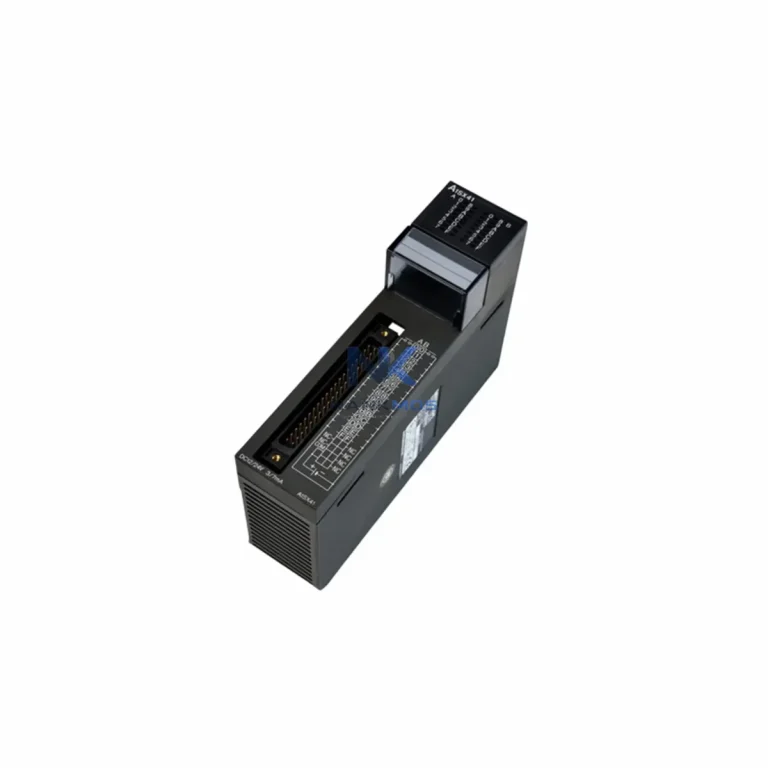
At the field level, sensors and encoders feed real-time process data into remote I/O modules such as the A1SI61 (analog input) or A1SX42 (64-point digital input module), which mirror the A1SY42's form factor on the input side. These signals are processed by the MELSEC-A CPU — typically an A2USCPU-S1 or A3UCPU — which executes ladder logic and issues output commands to the A1SY42 via the high-speed backplane bus. The A1SY42 then drives actuators, solenoid valves, motor starters, and indicator lamps at the machine level.
For networked deployments, the MELSEC-A rack integrates with CC-Link master modules (such as the A1SJ61BT11) to extend I/O reach across the plant floor. Remote CC-Link slave stations — including compact I/O blocks and distributed drive controllers — communicate status back to the master, which aggregates data for the CPU. Variable frequency drives (VFDs) connected via CC-Link or RS-485 serial links report speed, torque, and fault status, while the A1SY42 issues run/stop commands to the drive's digital input terminals.
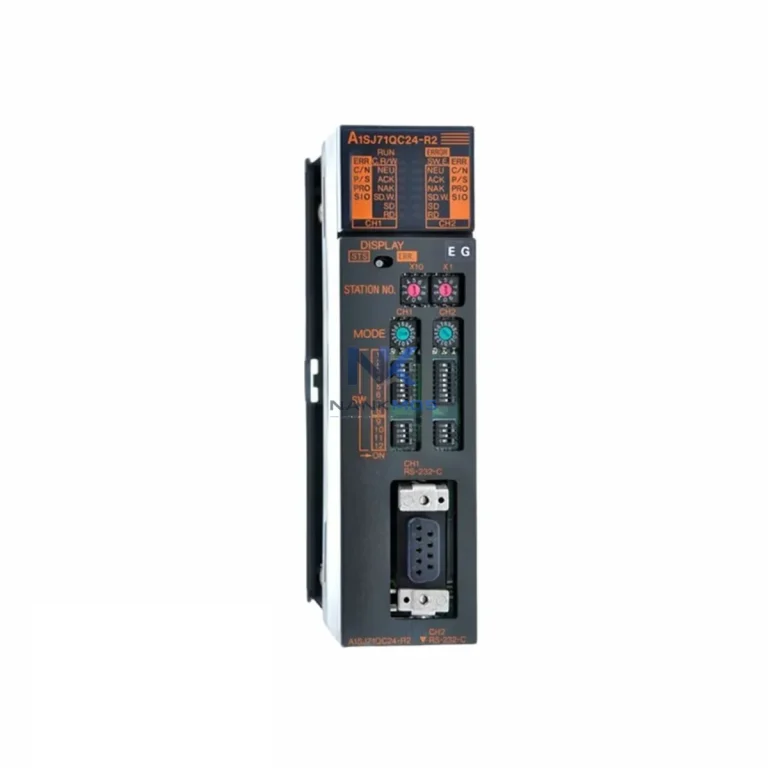
At the supervisory layer, MELSEC communication modules such as the A1SJ71QE96 Ethernet interface or the A1SJ71UC24-R4 serial communication module bridge the MELSEC-A platform to SCADA systems. Platforms like Citect SCADA, Wonderware InTouch, or Mitsubishi's own SCADA software connect via MELSEC protocol drivers, pulling real-time output status from the A1SY42's I/O map into process dashboards. Operators at GOT2000 series HMI terminals can monitor individual output point states, acknowledge alarms triggered by output faults, and initiate remote reset sequences — all without physical access to the control panel.
Edge gateway devices — such as Mitsubishi's MELIPC MI5000 or third-party IIoT gateways supporting MELSEC protocol — collect time-stamped output event logs from the CPU and forward them to cloud analytics platforms or MES systems. This enables predictive maintenance workflows: abnormal output switching frequencies or unexpected OFF states trigger alerts in the MES, prompting maintenance teams to inspect actuators before failure occurs. Industrial Ethernet switches with managed VLAN support segment the automation network, ensuring that SCADA polling traffic does not interfere with real-time PLC scan cycles.
Power distribution for the A1SY42 and its associated rack is typically handled by A1S61PN or A1S62PN power supply modules, which provide regulated 5VDC backplane power with overcurrent protection. Stable power delivery is critical for maintaining output switching accuracy, particularly in high-cycle applications where the A1SY42 may execute thousands of output transitions per hour.
Protocol Fragmentation: Many legacy MELSEC-A installations coexist with newer MELSEC-Q or MELSEC-iQ-R systems on the same plant floor. The A1SY42, when paired with protocol gateway modules, allows older A-series racks to participate in unified CC-Link IE Field networks — eliminating data silos between generations of control hardware without requiring full system replacement.
Remote Monitoring Gaps: Sites relying solely on local HMI panels lack the remote visibility needed for multi-shift or unmanned operations. By integrating the MELSEC-A platform with Ethernet communication modules and SCADA drivers, the A1SY42's output states become accessible from centralized control rooms or remote engineering workstations — enabling 24/7 monitoring without on-site presence.
Alarm Traceability: Output faults — such as a transistor output remaining ON when commanded OFF — are difficult to diagnose without time-stamped event logs. SCADA integration with the A1SY42's I/O data map enables alarm historians to record every output state change with millisecond precision, providing the audit trail needed for root cause analysis and regulatory compliance.
Production Line Transparency: In mixed-signal environments where the A1SY42 controls both safety-critical outputs (e.g., emergency stop relays) and process outputs (e.g., conveyor drives), data visualization tools can display output utilization rates, cycle counts, and fault frequencies on production dashboards — giving plant managers real-time insight into line efficiency and equipment health.
System Scalability: As production capacity grows, additional A1SY42 modules can be added to the MELSEC-A rack (up to the base unit's slot capacity) or distributed via CC-Link remote I/O stations — allowing output point counts to scale without architectural redesign. This modularity protects the initial automation investment while accommodating future expansion.
Q1: What communication protocols does the A1SY42 support for SCADA integration? The A1SY42 communicates via the MELSEC-A backplane bus to the CPU module, which in turn connects to SCADA systems through dedicated communication modules supporting MELSEC protocol (MC protocol), CC-Link, RS-232C, RS-422, or Ethernet — depending on the communication module installed in the rack. This architecture supports integration with all major SCADA platforms including Wonderware, Citect, iFIX, and GENESIS64.
Q2: How is network stability maintained in high-cycle output applications? The A1SY42 uses transistor output technology (no mechanical contacts), which eliminates contact bounce and wear-related instability. The MELSEC-A backplane bus operates at fixed scan cycle speeds synchronized with the CPU, ensuring deterministic output response times. For networked deployments, managed industrial Ethernet switches with QoS prioritization maintain stable communication between the PLC rack and SCADA/HMI systems even under high network load.
Q3: Can the A1SY42 be used in remote diagnostic and predictive maintenance workflows? Yes. When the MELSEC-A CPU is connected to an Ethernet or serial communication module, the A1SY42's output status data is accessible to remote engineering tools and SCADA historians. Abnormal output patterns — such as unexpected state changes or output faults — can be logged, alarmed, and analyzed remotely. Edge IIoT gateways can further forward this data to cloud-based analytics platforms for predictive maintenance modeling.
Q4: What warranty and pre-shipment testing does the A1SY42 include? Every A1SY42 unit supplied by NANKMOS includes a 12-Month Warranty covering manufacturing defects and functional failures under normal operating conditions. Each unit undergoes functional output testing prior to shipment to verify all 64 output points operate within specification. In-stock units are available for immediate dispatch, with global shipping supported. For lead time and availability confirmation, contact [email protected] or call +86 18359268345.
Functional Inspection100% tested on professional platforms to ensure stable performance.
 Anti-static Packaging
Modules are packed in anti-static bags to prevent electrostatic damage.
 Secure Export Packing
Cushion protection and strong cartons ensure safe transportation.
 Worldwide Shipping
Global logistics network supports air, sea and express delivery.
 Documentation Check
Part number, revision and compatibility verified before shipment.
 After-sales Support
Professional technical support to help resolve your issues.