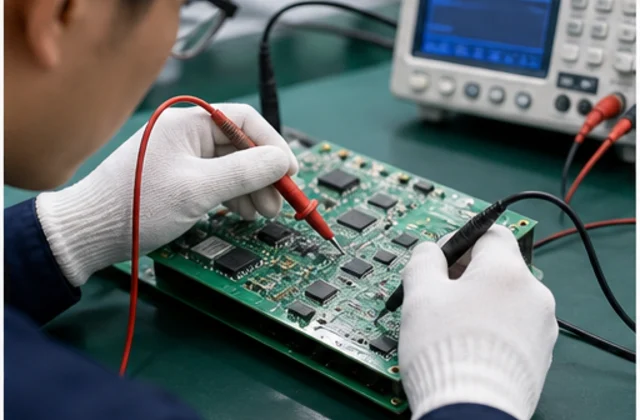
 Functional Inspection
100% tested on professional platforms to ensure stable performance.
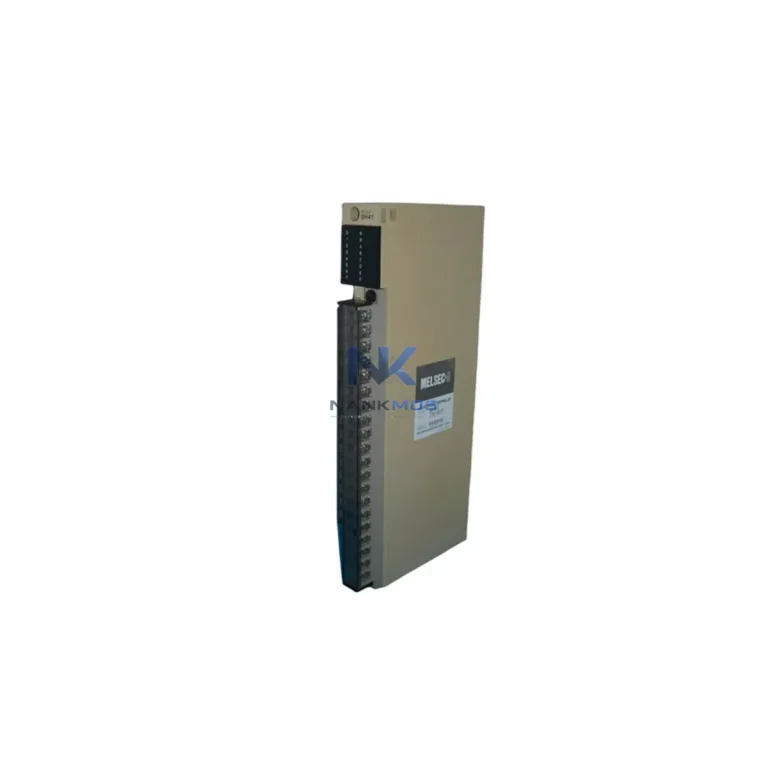
MITSUBISHI A1SY42P is a NANKMOS industrial automation product record Listed under MELSEC-A series and Business & Industrial > Automation, Control & Flow Devices > Programmable Logic Controllers. Confirm condition, availability, lead time, compatibility and documentation by email inquiry.
Brand names are used for identification only.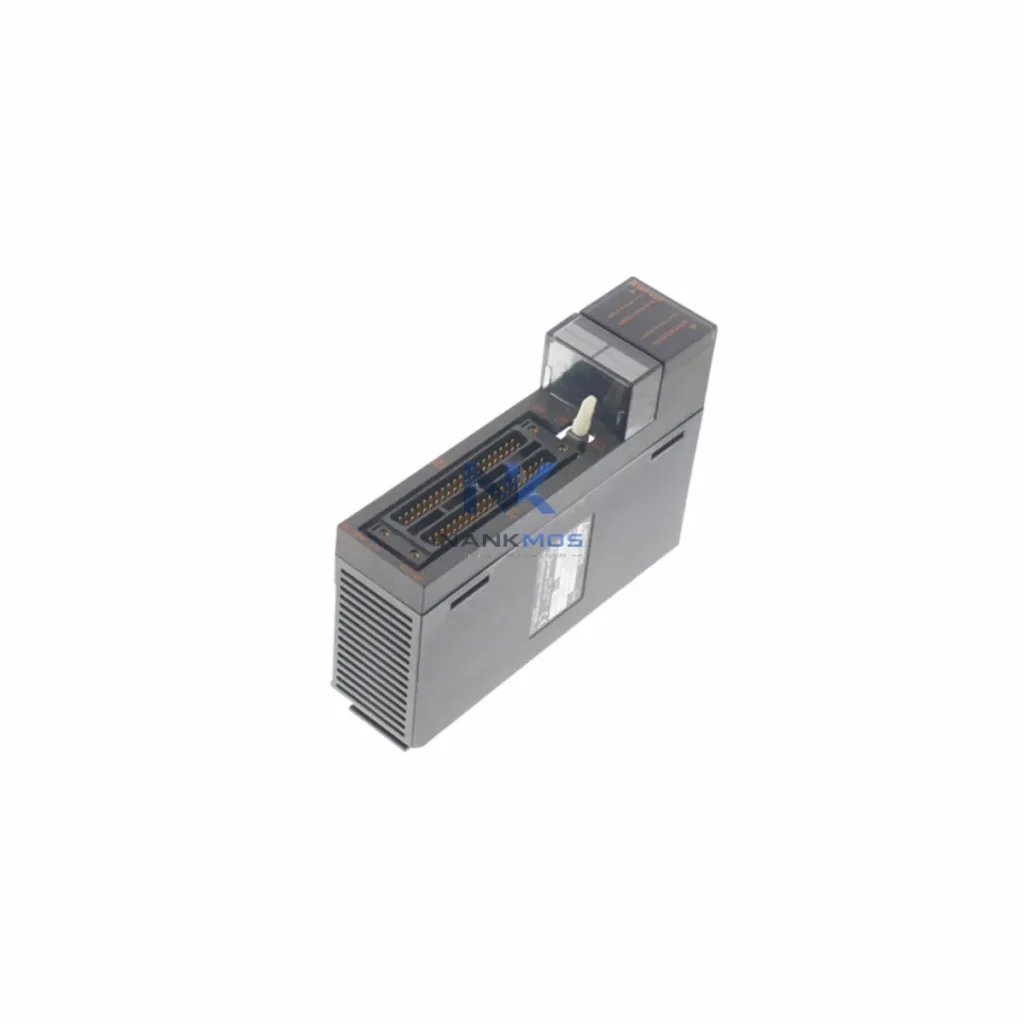
MITSUBISHI A1SY42P is a NANKMOS industrial automation product record Listed under MELSEC-A series and Business & Industrial > Automation, Control & Flow Devices > Programmable Logic Controllers. Confirm condition, availability, lead time, compatibility and documentation by email inquiry.
| Manufacturer | MITSUBISHI |
|---|---|
| Application | Controller Processing & System Control |
| Part Number / Model | A1SY42P |
| Compatible System | MELSEC-A |
| Series | MELSEC-A |
| Condition Options | To Confirm |
| Module Type | Controller / CPU Module |
| Warranty | 12 Months |
| Packaging | Anti-static Bag / Secure Box |
| Shipping Methods | DHL / FedEx / UPS / Air / Sea |
| Availability | To Confirm |
| Lead Time | To Confirm |
| Documentation | Part number and revision checked before quote |
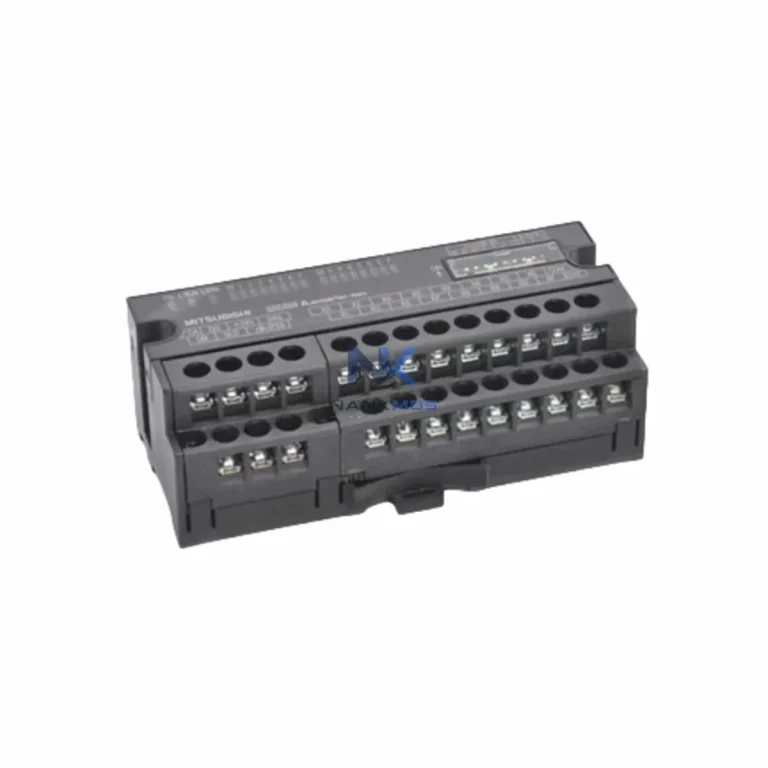
The Mitsubishi A1SY42P is a 64-point sink-type transistor output module engineered for seamless integration within the MELSEC-A series programmable controller platform. Designed to operate as a high-density digital output node within layered industrial control architectures, the A1SY42P delivers reliable, high-speed switching performance across demanding manufacturing, process, and infrastructure environments. Its compact form factor, combined with full compatibility with the A-series backplane and CPU ecosystem, makes it a foundational component for engineers building scalable, maintainable, and redundancy-capable automation systems.
In modern industrial control architecture, no module operates in isolation. The A1SY42P functions as a critical output execution layer within a broader system hierarchy that spans CPU processing, I/O signal conditioning, inter-device communication, power distribution, HMI supervision, and field-level actuation. Understanding its role within this layered architecture is essential for engineers responsible for system design, commissioning, and long-term maintenance.
The A1SY42P achieves its full operational value when deployed as part of a coherent MELSEC-A automation platform. At the control layer, it interfaces directly with CPUs such as the A2SCPU, A3NCPU, and A4UCPU, which execute ladder logic and manage I/O refresh cycles across the backplane bus. The CPU's scan cycle directly governs the output refresh rate of the A1SY42P, making CPU selection a critical architectural decision for time-sensitive output applications.
At the power layer, the A1S61PN and A1S62PN power supply modules provide regulated 5 VDC backplane power and 24 VDC field power, ensuring stable voltage delivery to the A1SY42P's output commons and internal logic circuits. Proper power budget calculation across all installed I/O modules — including the A1SY42P's 64-point output load — is essential during cabinet design to prevent thermal derating or nuisance tripping.
On the input side, the A1SX42 64-point DC input module serves as the natural counterpart to the A1SY42P, enabling symmetric I/O slot allocation within the same base unit. Pairing these modules within a single A1S-series base unit maximises slot utilisation and simplifies field wiring by grouping input and output terminal blocks in adjacent cabinet zones.
For applications requiring analogue signal integration alongside digital output control, the A1S68AD analogue input module and A1S62DA analogue output module can be installed in adjacent slots, allowing the CPU to coordinate both discrete switching via the A1SY42P and proportional control signals within a unified scan cycle. This architecture is particularly effective in process industries where digital actuator commands must be synchronised with analogue setpoint adjustments.
Communication and remote I/O expansion are handled through modules such as the A1SJ71UC24-R4 serial communication module and the A1SJ71QLP21 MELSECNET/10 network module, which extend the control reach of the A1SY42P's host CPU to remote I/O stations, SCADA systems, and supervisory HMI platforms. In distributed architectures, the A1SY42P may be deployed at a remote base unit, with output commands transmitted over MELSECNET/10 from a master CPU station — a configuration that significantly reduces field wiring costs in large-footprint installations.
At the HMI layer, GOT1000 and GOT2000 series graphic operation terminals connect to the MELSEC-A CPU via RS-232 or Ethernet, providing operators with real-time visibility into output status, alarm conditions, and module diagnostics. The A1SY42P's output point status is directly readable by the CPU and can be mapped to HMI screen elements, enabling operators to monitor individual output channel states without requiring additional diagnostic hardware.
For cabinet-level signal conditioning, DIN-rail mounted signal isolators and terminal relay modules — such as those in the A1SY10EU relay output expansion family — can be used in conjunction with the A1SY42P to interface with higher-voltage field devices that exceed the module's 24 VDC direct drive capability. This hybrid output architecture preserves the A1SY42P's high-speed transistor switching for low-voltage actuators while routing higher-voltage signals through interposing relays.
Automotive and Discrete Manufacturing: In body-in-white welding lines and assembly transfer systems, the A1SY42P drives solenoid valves, servo enable signals, and conveyor motor contactors with sub-millisecond response times. Its 64-point density reduces the number of output modules required per control cabinet, lowering both hardware cost and cabinet footprint in high-I/O-count applications.
Power Generation and Electrical Utilities: In substation automation and generator control panels, the A1SY42P provides reliable digital output switching for circuit breaker trip/close commands, alarm annunciator outputs, and auxiliary relay coil drives. Its photocoupler isolation ensures that field-side transients do not propagate to the backplane bus, protecting the CPU and adjacent modules from surge damage.
Petrochemical and Refinery Process Control: In distillation column control and compressor management systems, the A1SY42P interfaces with solenoid-operated control valves and motor starter contactors. Its compatibility with the MELSEC-A redundant CPU configurations — using paired A3NCPU or A4UCPU modules — supports hot-standby architectures that maintain continuous output control during CPU switchover events.
Water and Wastewater Treatment: In pump station automation and filtration plant control, the A1SY42P manages pump start/stop commands, valve actuator signals, and chemical dosing system outputs. Its wide operating temperature range and humidity tolerance make it suitable for installation in outdoor control enclosures subject to seasonal temperature variation.
Mining and Mineral Processing: In conveyor drive control and crusher management systems, the A1SY42P provides high-density output switching for motor control centre (MCC) interface signals. Its robust photocoupler isolation and low-voltage output compatibility align with the signal interface requirements of modern variable frequency drives and soft starters used in mining applications.
Packaging and Material Handling: In high-speed packaging lines and palletising systems, the A1SY42P's fast response time supports precise timing of pneumatic actuators, label applicators, and reject gate solenoids. Its integration within the MELSEC-A platform allows synchronisation with motion control axes managed by the host CPU, ensuring coordinated multi-axis and multi-actuator sequencing.
Q1: Is the A1SY42P compatible with all MELSEC-A series base units, and can it be mixed with other I/O module types in the same rack? The A1SY42P is compatible with all standard MELSEC-A series base units, including the A1S32B, A1S52B, A1S65B, and A1S68B, as well as extension base units connected via the A1SC07B or A1SC12B extension cables. It can be freely mixed with input modules (e.g., A1SX42), analogue modules (e.g., A1S68AD), and communication modules within the same base unit, subject to the total I/O point count and power budget constraints of the installed CPU. Slot assignment is flexible, and the CPU automatically maps module I/O addresses based on physical slot position during initialisation.
Q2: What are the key considerations for integrating the A1SY42P into a redundant MELSEC-A control architecture? In redundant CPU configurations using paired A3NCPU or A4UCPU modules with the A3HCPU redundancy unit, the A1SY42P operates as a standard output module on the shared I/O base. During CPU switchover, the standby CPU assumes control of the backplane bus and resumes output refresh within the configured switchover time — typically less than one scan cycle for hot-standby configurations. Engineers should verify that field devices connected to the A1SY42P can tolerate the brief output state hold during switchover, and should configure the CPU's output hold/clear setting appropriately for each output channel group based on process safety requirements.
Q3: What warranty and supply assurance does NANKMOS provide for the A1SY42P, and how is pre-shipment quality verified? NANKMOS provides a 12-Month Warranty on all A1SY42P units, covering manufacturing defects and functional failures under normal operating conditions. Prior to shipment, each unit undergoes functional output verification testing, including point-by-point output switching confirmation, isolation resistance measurement, and backplane connector integrity inspection. Units are shipped in anti-static packaging with individual serial number traceability. NANKMOS maintains in-stock inventory of the A1SY42P to support urgent project timelines, with standard lead times of 3–7 business days for international shipments. For volume procurement or project-specific scheduling, contact [email protected] or +86 18359268345.
Functional Inspection100% tested on professional platforms to ensure stable performance.
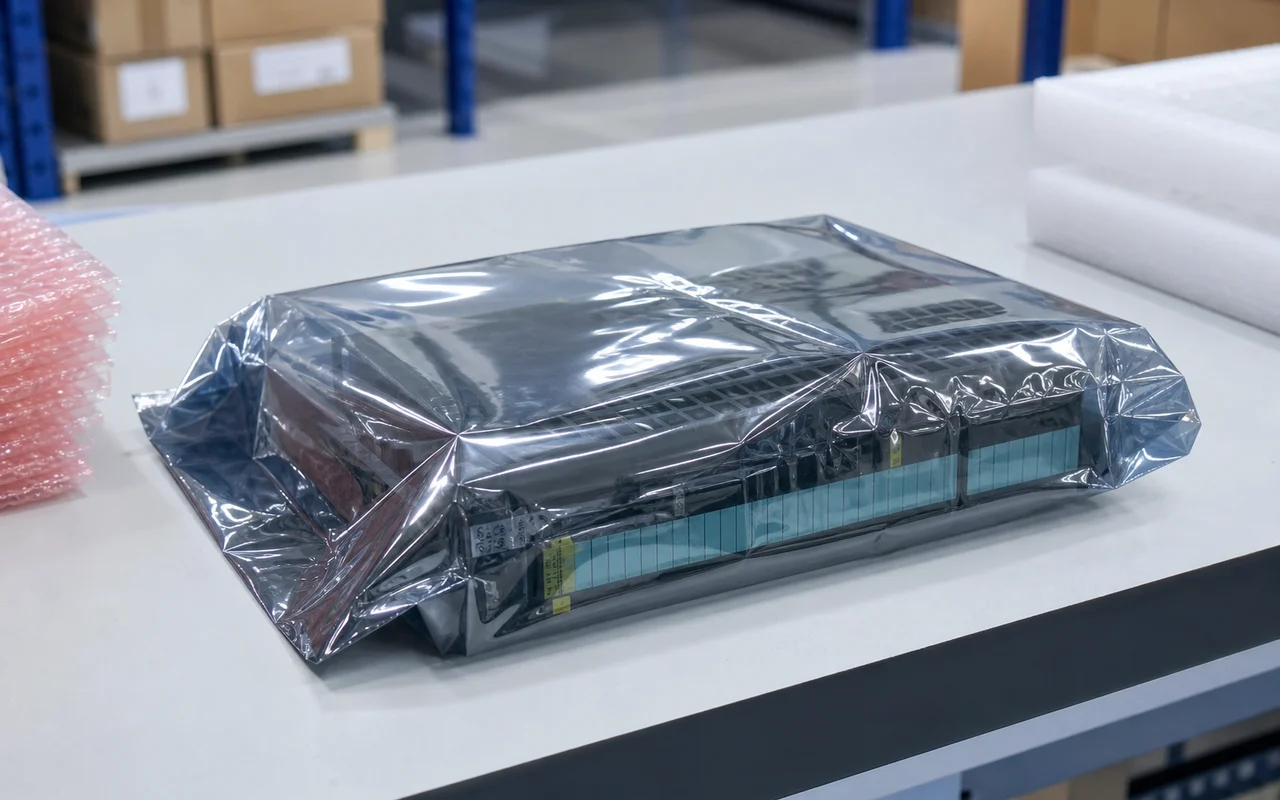 Anti-static Packaging
Modules are packed in anti-static bags to prevent electrostatic damage.
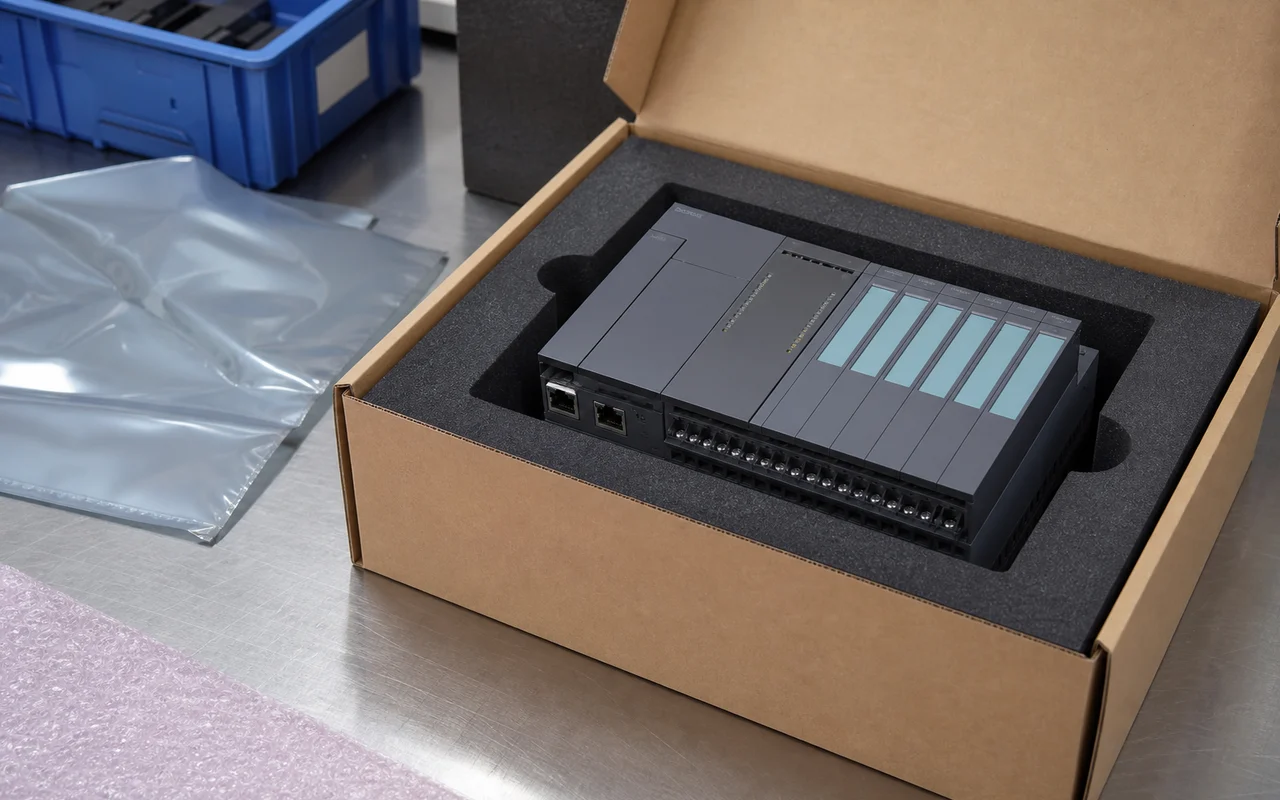 Secure Export Packing
Cushion protection and strong cartons ensure safe transportation.
 Worldwide Shipping
Global logistics network supports air, sea and express delivery.
 Documentation Check
Part number, revision and compatibility verified before shipment.
 After-sales Support
Professional technical support to help resolve your issues.