Functional Inspection
100% tested on professional platforms to ensure stable performance.
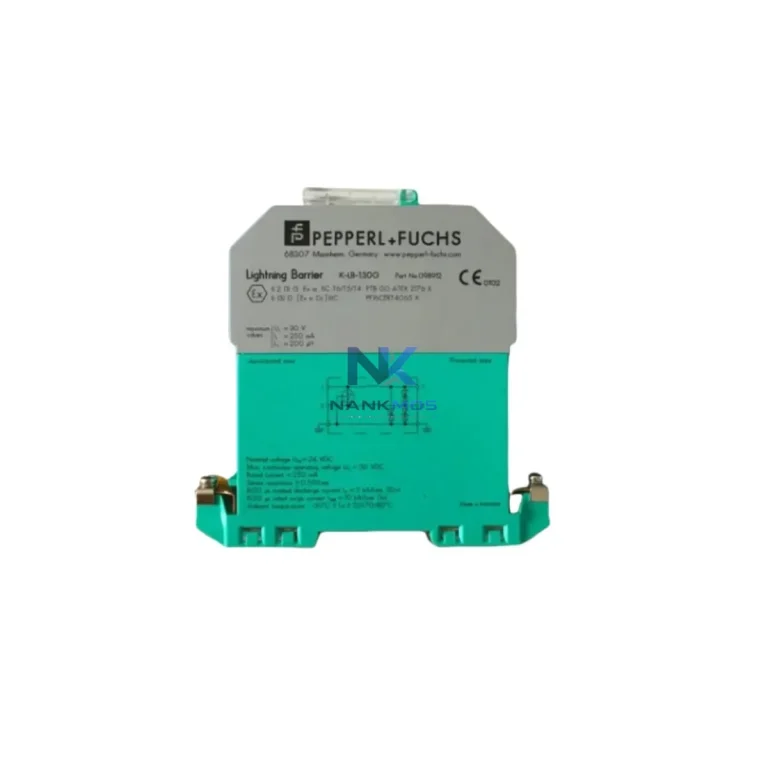
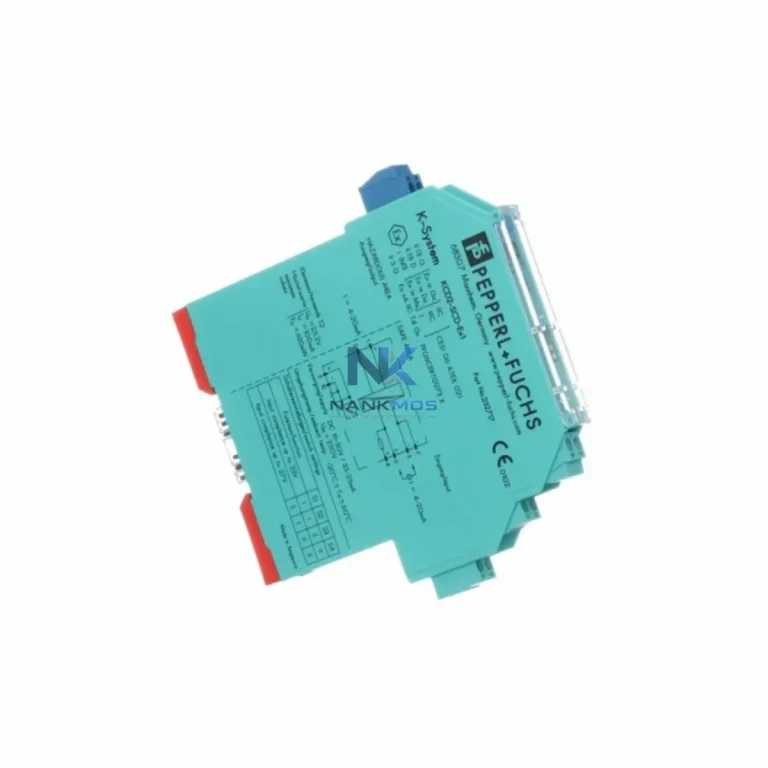
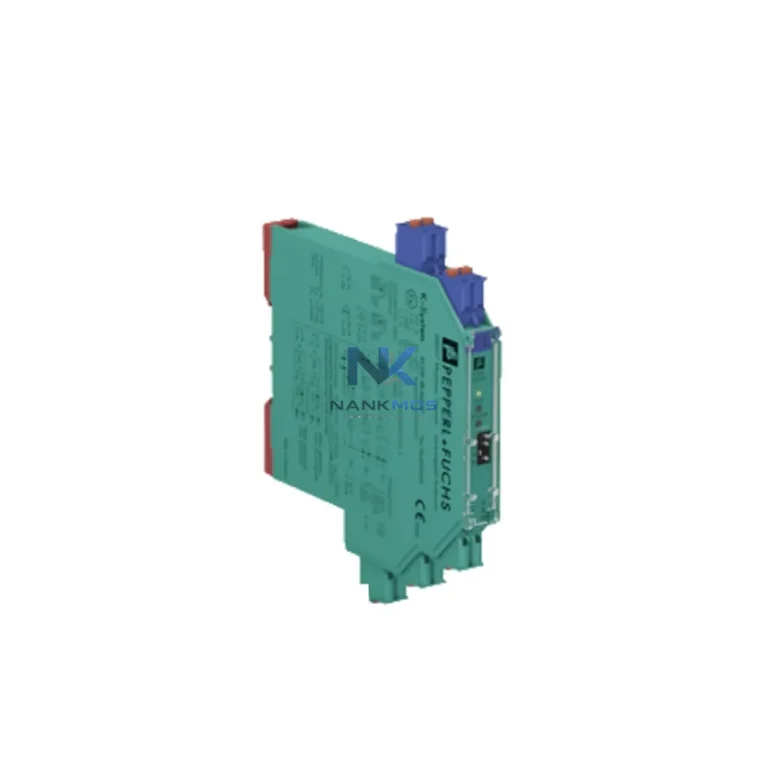
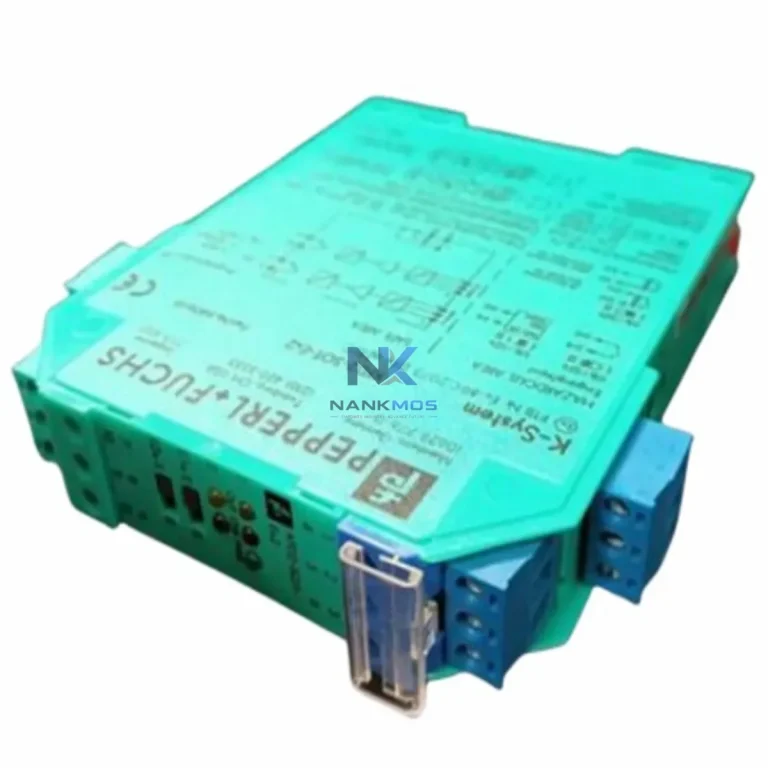
Pepperl+Fuchs KCD2-STC-1 is a NANKMOS industrial automation product record Listed under Other series series and Business & Industrial > Automation, Control & Flow Devices. Confirm condition, availability, lead time, compatibility and documentation by email inquiry.
Brand names are used for identification only.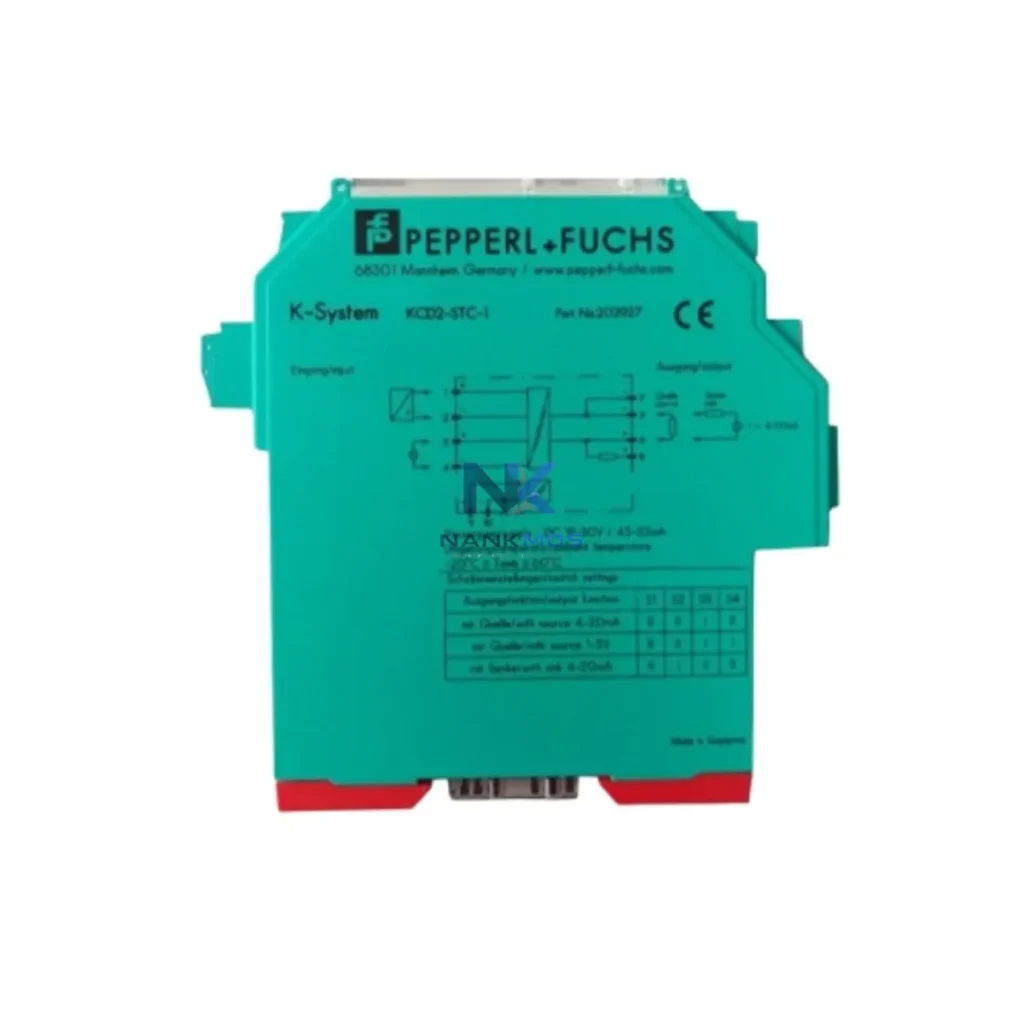
Pepperl+Fuchs KCD2-STC-1 is a NANKMOS industrial automation product record Listed under Other series series and Business & Industrial > Automation, Control & Flow Devices. Confirm condition, availability, lead time, compatibility and documentation by email inquiry.
| Manufacturer | Pepperl+Fuchs |
|---|---|
| Application | Industrial Automation Maintenance |
| Part Number / Model | KCD2-STC-1 |
| Compatible System | Confirmed by inquiry |
| Condition Options | To Confirm |
| Module Type | Automation, Control & Flow Devices |
| Warranty | 12 Months |
| Packaging | Anti-static Bag / Secure Box |
| Shipping Methods | DHL / FedEx / UPS / Air / Sea |
| Availability | To Confirm |
| Lead Time | To Confirm |
| Documentation | Part number and revision checked before quote |
The Pepperl+Fuchs KCD2-STC-1 is a single-channel K-System NAMUR signal conditioner engineered for energy-conscious industrial automation environments. Designed to interface NAMUR-compliant proximity sensors and mechanical contacts with process control systems, the KCD2-STC-1 delivers precise, low-power signal conversion that directly supports energy reduction strategies across smart production lines. Its compact DIN rail form factor, low quiescent current draw, and galvanic isolation make it a foundational component in any power-aware field instrumentation architecture.
In modern manufacturing facilities where energy efficiency is a measurable KPI, every milliwatt of unnecessary consumption represents both cost and carbon impact. The KCD2-STC-1 addresses this by maintaining stable signal integrity at minimal power overhead, reducing the thermal load on control cabinet infrastructure and contributing to lower HVAC demand in electrical enclosures. When deployed across large-scale I/O architectures — where hundreds of field devices feed into a central DCS or PLC — the cumulative energy savings from using low-power signal conditioners like the KCD2-STC-1 become operationally significant.
The KCD2-STC-1 operates within the Pepperl+Fuchs K-System platform, a modular DIN rail isolation barrier family designed for seamless integration with major PLC and DCS platforms. In a typical smart production line, the KCD2-STC-1 sits between NAMUR proximity sensors — monitoring motor shaft position, valve status, or conveyor belt presence — and the digital input cards of a Siemens S7-300/S7-400 PLC or an ABB AC800M controller. By providing clean, isolated switching signals, it eliminates the need for additional signal conditioning stages that would otherwise add power draw and heat generation.
When paired with a Pepperl+Fuchs KFD2-STC4-Ex1 or KCD2-STC-Ex1 in hazardous-area extensions, the system maintains consistent signal quality across Zone 1/Zone 2 boundaries without amplifying power consumption. The relay output of the KCD2-STC-1 can directly drive the digital inputs of a Beckhoff EL1008 or Phoenix Contact Axioline F I/O module, enabling tight integration into distributed I/O architectures without intermediate relay panels.
For energy monitoring applications, the KCD2-STC-1 status outputs can feed into a power monitoring module such as the Siemens SENTRON PAC3200 or a Schneider Electric PowerLogic ION7650, providing real-time equipment run/stop status that correlates with energy consumption data. This integration allows SCADA systems — including Wonderware InTouch or Ignition by Inductive Automation — to build accurate energy consumption profiles per machine or production cell, identifying idle-running equipment and enabling automated load-shedding routines.
In servo-driven production lines, the KCD2-STC-1 interfaces with position feedback sensors that report to Siemens SINAMICS S120 or Yaskawa Sigma-7 servo drives, ensuring that drive enable/disable signals are cleanly conditioned before reaching the drive controller. This prevents spurious enable pulses that could cause unnecessary motor energization — a common source of hidden energy waste in high-axis-count systems. Similarly, in variable frequency drive (VFD) applications using ABB ACS880 or Danfoss FC302 drives, the KCD2-STC-1 provides reliable run/fault feedback signals that support predictive maintenance workflows and reduce unplanned downtime.
Deploying the KCD2-STC-1 across a production line's field instrumentation layer delivers measurable contributions to overall energy optimization strategy. At the cabinet level, its low power dissipation reduces the aggregate thermal load within the control enclosure, directly lowering the duty cycle of cabinet cooling fans or air conditioning units. In facilities with dozens of control panels, this translates to meaningful reductions in auxiliary power consumption.
At the process level, the KCD2-STC-1 enables precise equipment state monitoring — distinguishing between running, stopped, and faulted states for motors, actuators, and conveyors. This granular visibility allows the plant's energy management system (EMS) or MES to implement intelligent load management: automatically de-energizing non-critical equipment during low-demand periods, staggering motor starts to avoid peak demand charges, and scheduling maintenance windows based on actual run-hour data rather than fixed intervals.
The galvanic isolation provided by the KCD2-STC-1 also protects PLC input cards from ground loop currents and transient voltage spikes generated by motor switching events. This protection reduces the risk of I/O card failures that would require unplanned shutdowns — preserving production throughput and avoiding the energy cost of restart sequences. Over a 12-month operational period, the combination of reduced thermal load, lower auxiliary power draw, and improved equipment uptime contributes to a measurable improvement in Overall Equipment Effectiveness (OEE).
For facilities pursuing ISO 50001 energy management certification or targeting carbon reduction commitments, the KCD2-STC-1 supports the data acquisition layer that feeds energy audits and consumption reporting. Its reliable NAMUR signal conversion ensures that energy metering pulses and equipment status signals reach the SCADA historian without data loss, maintaining the integrity of energy performance indicators (EnPIs) across the production site.
Every unit shipped by NANKMOS undergoes pre-shipment functional testing to verify switching thresholds, output relay operation, and isolation integrity. Tested inventory is maintained in stock for immediate dispatch, supporting just-in-time maintenance strategies and minimizing production downtime caused by component lead times.
Q1: How does the KCD2-STC-1 contribute to energy savings in a PLC-controlled production line? The KCD2-STC-1 operates at approximately 0.7 W typical power consumption, significantly lower than conventional relay-based signal conditioning solutions. When deployed across large I/O architectures, the aggregate power reduction lowers cabinet thermal load, reduces cooling requirements, and supports the energy monitoring infrastructure needed to identify and eliminate idle-running equipment. Its clean signal output also prevents spurious PLC inputs that could trigger unnecessary actuator cycles.
Q2: Is the KCD2-STC-1 compatible with modern DCS and SCADA platforms? Yes. The KCD2-STC-1 provides a potential-free relay output compatible with the digital input specifications of all major DCS platforms including ABB System 800xA, Honeywell Experion PKS, and Emerson DeltaV, as well as SCADA systems communicating via Modbus, PROFIBUS, or OPC-UA. It integrates directly into K-System backplane assemblies for high-density I/O configurations.
Q3: Can the KCD2-STC-1 replace legacy signal conditioners from other manufacturers? The KCD2-STC-1 follows standard NAMUR EN 60947-5-6 interface specifications, making it a compatible replacement for equivalent single-channel NAMUR conditioners from other K-System or DIN rail barrier families. Before substitution, verify supply voltage compatibility (20–30 V DC K-bus), output relay contact ratings, and terminal assignment against the existing installation documentation.
Q4: What does the 12-Month Warranty cover, and what is the stock availability? All KCD2-STC-1 units supplied by NANKMOS carry a 12-Month Warranty covering manufacturing defects and functional failures under normal operating conditions. Units are pre-shipment tested for switching accuracy and isolation integrity. Stock is maintained for immediate dispatch; contact NANKMOS for current inventory levels and lead time confirmation for volume orders.
Functional Inspection100% tested on professional platforms to ensure stable performance.
 Anti-static Packaging
Modules are packed in anti-static bags to prevent electrostatic damage.
 Secure Export Packing
Cushion protection and strong cartons ensure safe transportation.
 Worldwide Shipping
Global logistics network supports air, sea and express delivery.
 Documentation Check
Part number, revision and compatibility verified before shipment.
 After-sales Support
Professional technical support to help resolve your issues.