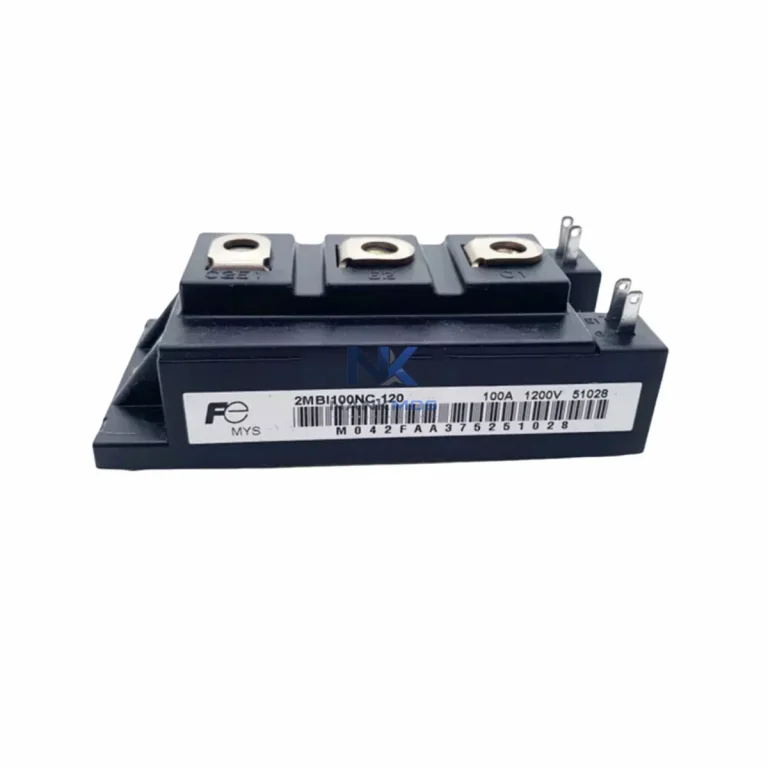
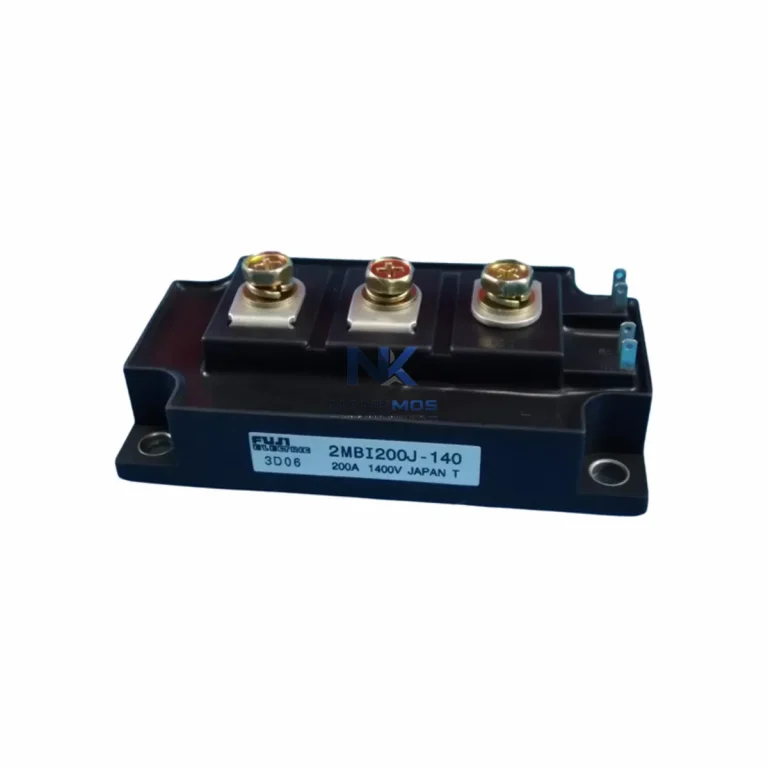
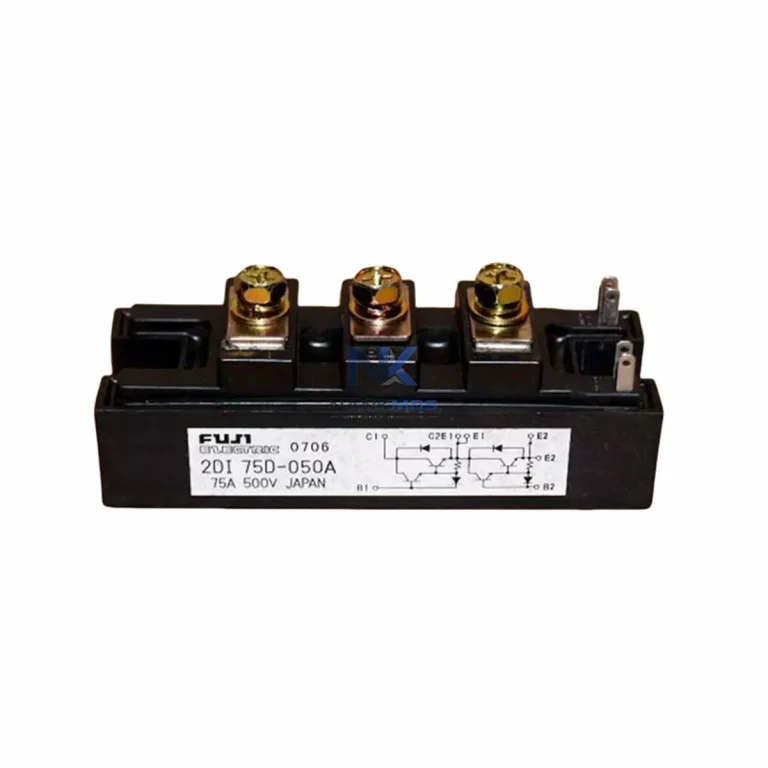
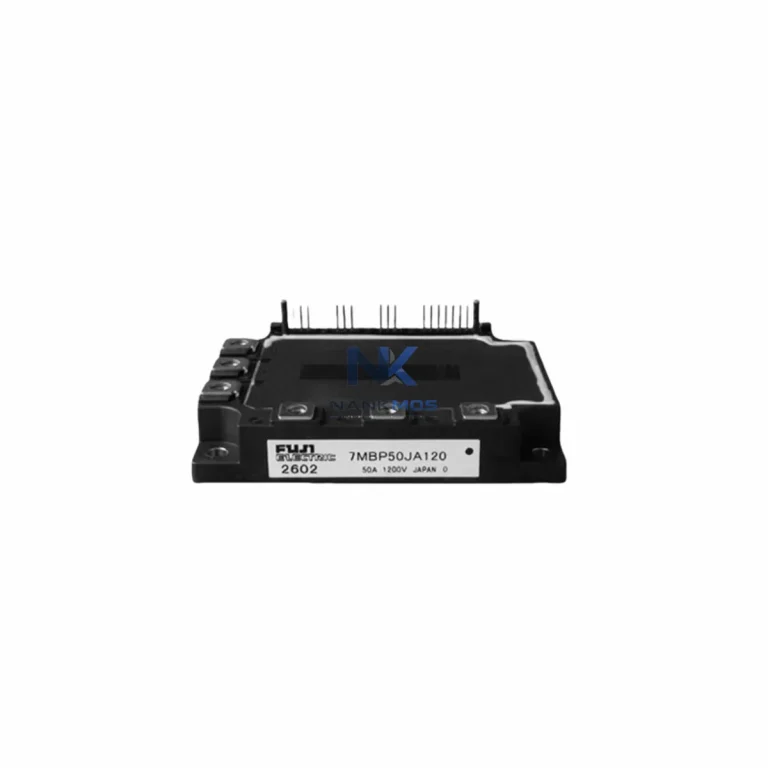
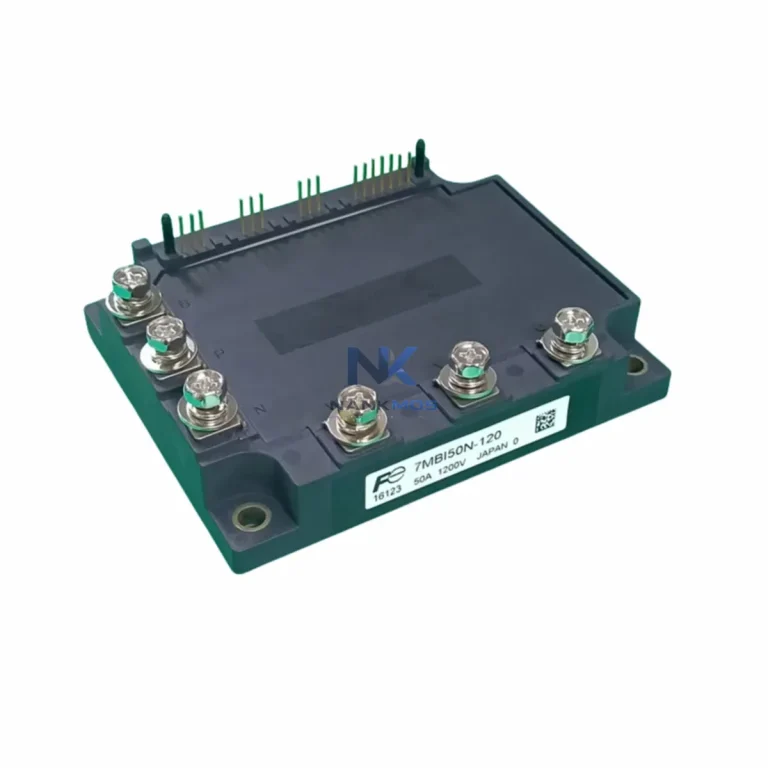
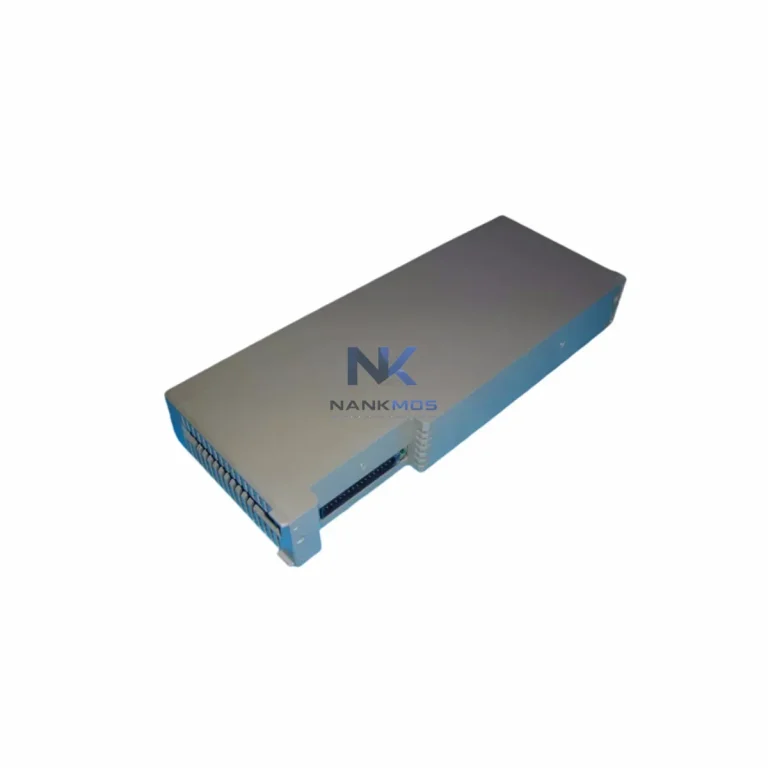
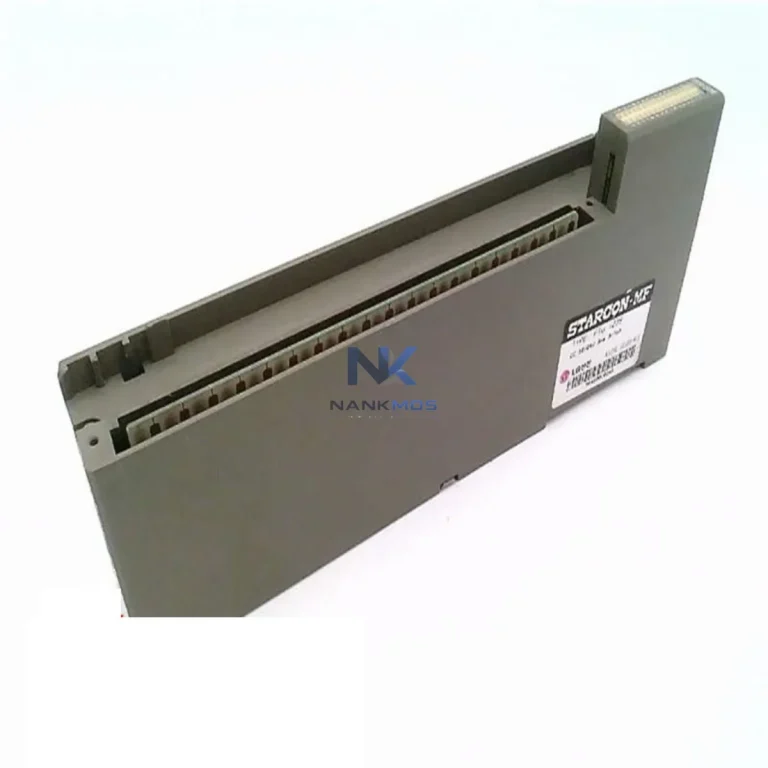
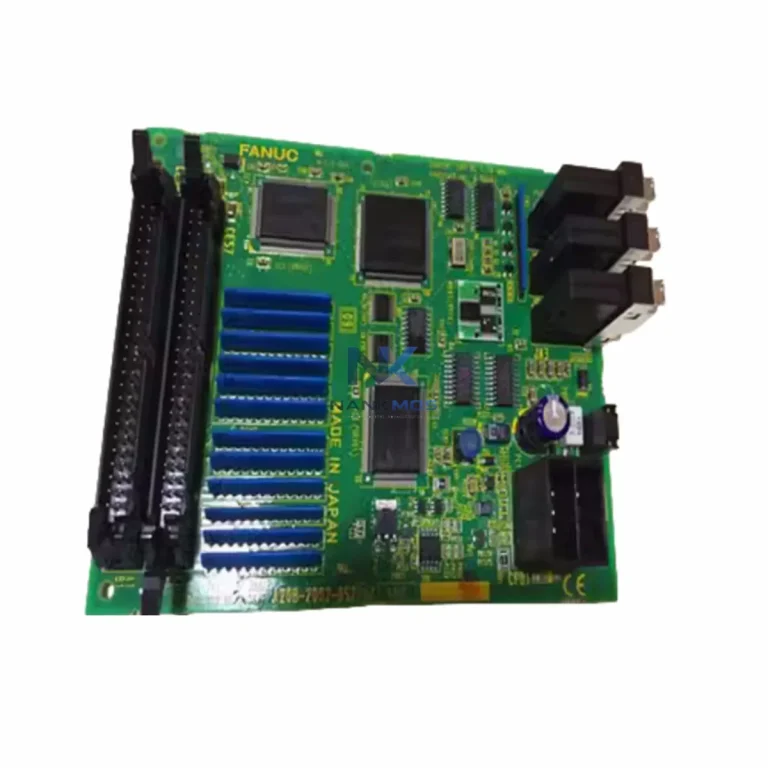
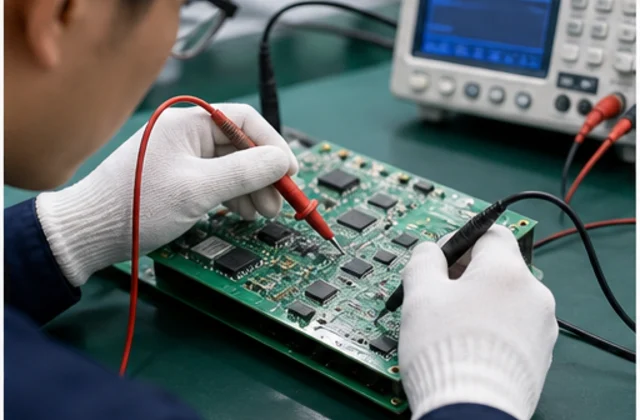
 Functional Inspection
100% tested on professional platforms to ensure stable performance.
Fuji Electric NB1-E40X-AC is a NANKMOS industrial automation product record Listed under Other series series and Business & Industrial > Automation, Control & Flow Devices > Programmable Logic Controllers. Confirm condition, availability, lead time, compatibility and documentation by email inquiry.
Brand names are used for identification only.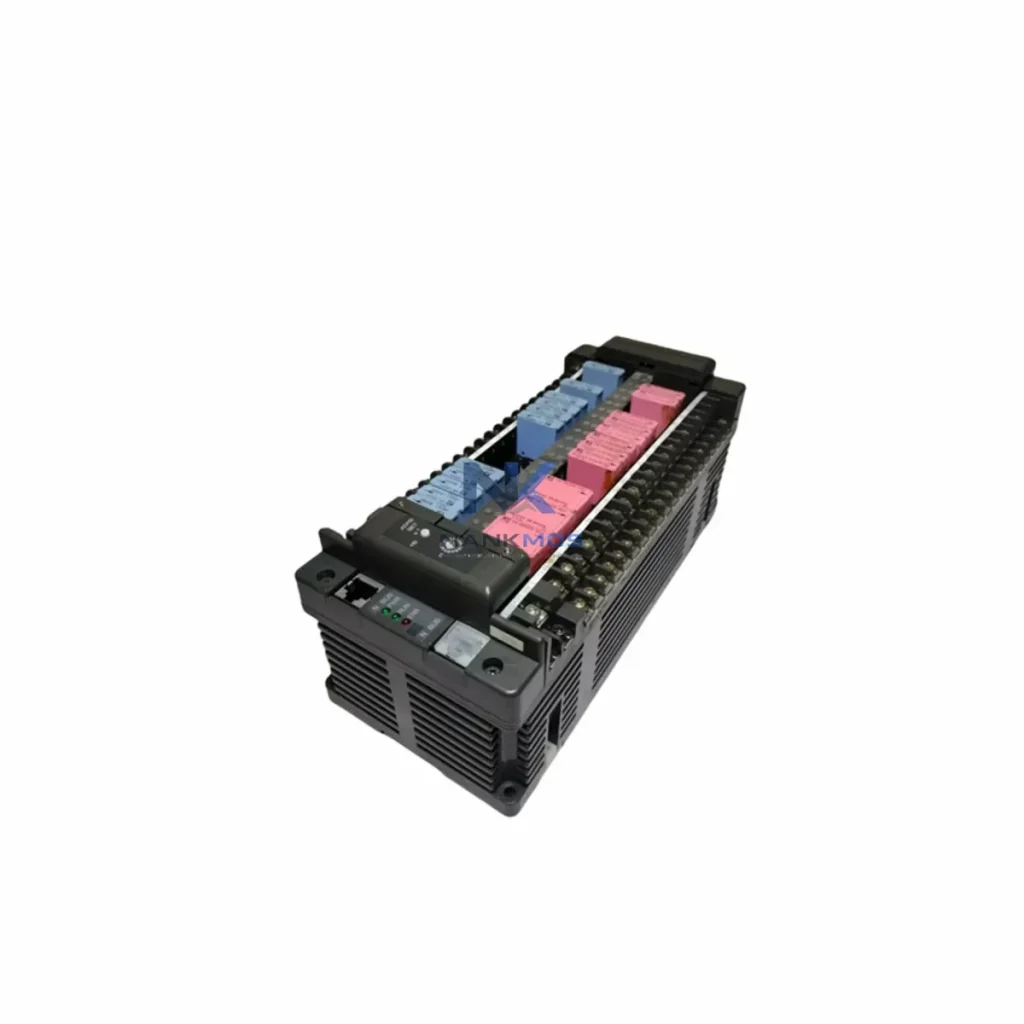
Fuji Electric NB1-E40X-AC is a NANKMOS industrial automation product record Listed under Other series series and Business & Industrial > Automation, Control & Flow Devices > Programmable Logic Controllers. Confirm condition, availability, lead time, compatibility and documentation by email inquiry.
| Manufacturer | Fuji Electric |
|---|---|
| Application | Controller Processing & System Control |
| Part Number / Model | NB1-E40X-AC |
| Compatible System | Confirmed by inquiry |
| Condition Options | To Confirm |
| Module Type | Controller / CPU Module |
| Warranty | 12 Months |
| Packaging | Anti-static Bag / Secure Box |
| Shipping Methods | DHL / FedEx / UPS / Air / Sea |
| Availability | To Confirm |
| Lead Time | To Confirm |
| Documentation | Part number and revision checked before quote |
The Fuji NB1-E40X-AC is a high-density AC expansion I/O unit engineered for the Fuji Electric NB1 series programmable logic controller platform. Designed to extend the digital input/output capacity of NB1 CPU modules, this unit delivers 40 discrete I/O points in a compact DIN-rail form factor, enabling seamless integration into modern smart factory data architectures. Whether deployed in discrete manufacturing, process automation, or infrastructure control, the NB1-E40X-AC serves as a critical node in the field-level data acquisition and command execution layer — bridging physical signals from sensors, actuators, and field devices into the structured data flows that drive SCADA, HMI, and MES decision-making.
In a connected factory environment, data integrity begins at the I/O layer. The NB1-E40X-AC connects directly to the NB1 CPU backplane, ensuring deterministic signal exchange with zero protocol overhead between the expansion unit and the host controller. This tight coupling allows the NB1 CPU to scan all 40 I/O points within its standard cycle time, maintaining real-time responsiveness for time-critical control loops — a fundamental requirement in high-speed assembly lines, conveyor systems, and precision motion control applications.
The NB1-E40X-AC operates as the signal collection front-end within a layered industrial automation architecture. At the field level, discrete sensors — including proximity switches, photoelectric sensors, limit switches, and push-button stations — connect directly to the unit's input terminals. Output channels drive solenoid valves, relay coils, indicator lamps, and motor starters. All 40 I/O states are continuously scanned by the host Fuji NB1 CPU module, which aggregates field data and executes ladder logic or function block programs in real time.
Upstream from the NB1 CPU, communication modules such as the Fuji NB1-ETH Ethernet communication unit or the Fuji NB1-RS485 serial communication module translate the internal backplane data into standard industrial protocols. Modbus TCP packets carry I/O status registers to SCADA servers, while Modbus RTU links connect legacy HMI panels and operator terminals. In larger plant networks, a Fuji NB1 CC-Link master module can aggregate data from multiple NB1 expansion racks — including additional NB1-E40X-AC units — into a single CC-Link network segment, enabling centralized monitoring of distributed I/O across production zones.
At the supervisory layer, SCADA platforms such as Wonderware, Ignition, or iFIX poll the NB1 CPU's Ethernet port for real-time I/O status, alarm states, and counter values. HMI panels — including Fuji Electric V9 series touchscreens — display live process data sourced directly from NB1-E40X-AC input registers, allowing operators to monitor field device states without leaving the control room. When an input signal transitions unexpectedly — a conveyor jam, a safety gate open, or a sensor fault — the NB1 CPU generates an alarm event that propagates through the network to SCADA alarm management systems, triggering notifications and logging timestamped fault records for root-cause analysis.
For facilities implementing IIoT and edge computing strategies, an industrial edge gateway — such as a Moxa MGate protocol converter or an HMS Anybus gateway — can be positioned between the NB1 Ethernet port and the cloud data pipeline. The gateway subscribes to Modbus TCP registers from the NB1 CPU, converts the data to MQTT or OPC-UA format, and publishes I/O telemetry to cloud platforms for long-term trend analysis, predictive maintenance modeling, and KPI dashboards. This architecture allows the NB1-E40X-AC's field signals to flow from the physical device layer all the way to enterprise-level data visualization tools — without any modification to the PLC program or field wiring.
In multi-rack configurations, the NB1-E40X-AC can be paired with Fuji NB1 analog input modules and Fuji NB1 temperature control modules on the same backplane, creating a mixed-signal I/O system that handles both discrete and analog process variables within a unified control architecture. Fuji Electric FRENIC series variable frequency drives connected via RS-485 Modbus RTU to the NB1 CPU can receive speed reference commands derived from the I/O states captured by the NB1-E40X-AC — for example, a conveyor speed ramp triggered by a product-present sensor input. This tight integration between I/O expansion, drive control, and network communication exemplifies the connected factory data flow that modern smart manufacturing demands.
Many industrial facilities face persistent challenges with fragmented data, protocol mismatches, and limited visibility into field-level device states. The NB1-E40X-AC directly addresses several of these pain points within the NB1 platform ecosystem.
Protocol Fragmentation: Legacy field devices often communicate over proprietary or non-standard interfaces. By consolidating 40 discrete I/O signals into the NB1 backplane bus, the NB1-E40X-AC eliminates the need for individual signal converters at each field device. The NB1 CPU then handles protocol translation centrally — converting backplane data to Modbus, CC-Link, or Ethernet/IP as required by the upstream network.
Data Islands and Blind Spots: Production lines with isolated control panels and standalone PLCs create data islands that prevent plant-wide visibility. Deploying NB1-E40X-AC expansion units across multiple control cabinets — all connected to a common NB1 CPU network — consolidates field data into a single addressable data space, eliminating blind spots and enabling cross-zone correlation of process events.
Remote Monitoring Limitations: Without structured I/O data, remote diagnostics are impossible. The NB1-E40X-AC's integration with the NB1 CPU's Ethernet communication capability means that every input and output state is accessible remotely via Modbus TCP or OPC-UA — allowing maintenance engineers to diagnose field faults, verify sensor states, and confirm actuator responses from any networked workstation or mobile device.
Production Line Transparency: Real-time I/O data from the NB1-E40X-AC feeds SCADA trend displays and HMI process graphics, giving production managers continuous visibility into cycle counts, machine states, and throughput rates. Alarm history logs capture every I/O transition with millisecond timestamps, supporting OEE analysis and downtime reduction initiatives.
System Scalability: As production capacity grows, additional NB1-E40X-AC units can be added to the NB1 backplane without reprogramming the CPU communication stack — the expansion bus automatically recognizes new I/O modules and maps them to the next available register addresses, simplifying system expansion and reducing commissioning time.
Q1: What communication protocols does the NB1-E40X-AC support for SCADA integration?The NB1-E40X-AC communicates with the NB1 CPU via the proprietary NB1 backplane bus. The NB1 CPU then exposes I/O data to SCADA systems through its onboard or plug-in communication modules, supporting Modbus TCP, Modbus RTU, CC-Link, and Ethernet/IP depending on the CPU variant and installed communication cards. This architecture allows the NB1-E40X-AC's I/O data to be accessed by any SCADA platform that supports these standard industrial protocols.
Q2: How does the NB1-E40X-AC perform in terms of network latency and real-time response?Because the NB1-E40X-AC connects directly to the NB1 CPU backplane — not through an external network — I/O scan latency is determined by the NB1 CPU's program scan cycle, typically in the range of 1–10 ms depending on program size and CPU model. This deterministic, low-latency response makes the NB1-E40X-AC suitable for time-critical control applications where network-induced jitter would be unacceptable.
Q3: Can the NB1-E40X-AC be used in systems with mixed Fuji and third-party devices?Yes. While the NB1-E40X-AC is a native Fuji Electric NB1 series component, the NB1 CPU's communication modules support standard protocols that allow interoperability with third-party PLCs, HMIs, drives, and SCADA systems. Modbus TCP and RTU compatibility ensures that NB1-E40X-AC I/O data can be shared with non-Fuji controllers and supervisory systems without custom protocol development.
Q4: What quality assurance and warranty coverage is provided for the NB1-E40X-AC?Every NB1-E40X-AC unit supplied by NANKMOS undergoes pre-shipment functional testing to verify I/O point integrity, backplane communication, and AC power supply operation. All units are covered by a 12-Month Warranty from the date of shipment, covering manufacturing defects and component failures under normal operating conditions. In-stock units are available for immediate dispatch, with full traceability documentation provided upon request.
Functional Inspection100% tested on professional platforms to ensure stable performance.
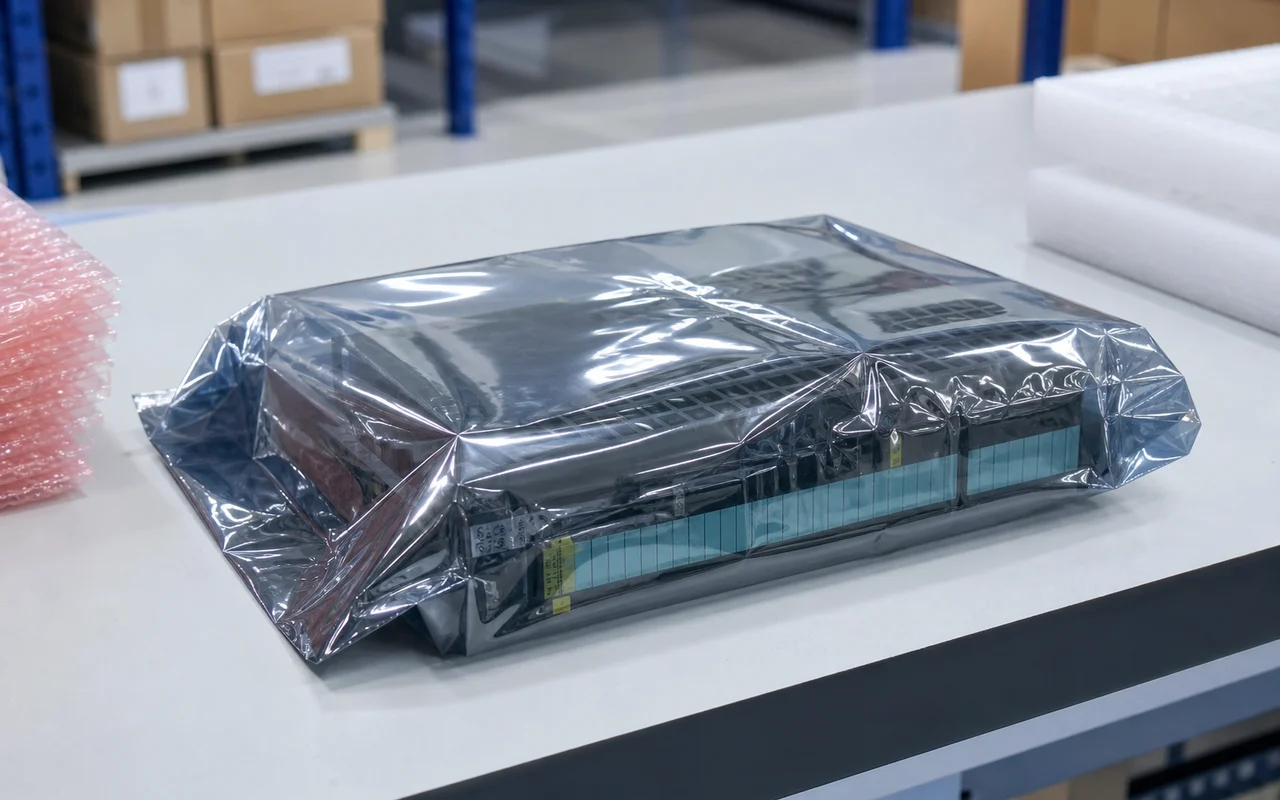 Anti-static Packaging
Modules are packed in anti-static bags to prevent electrostatic damage.
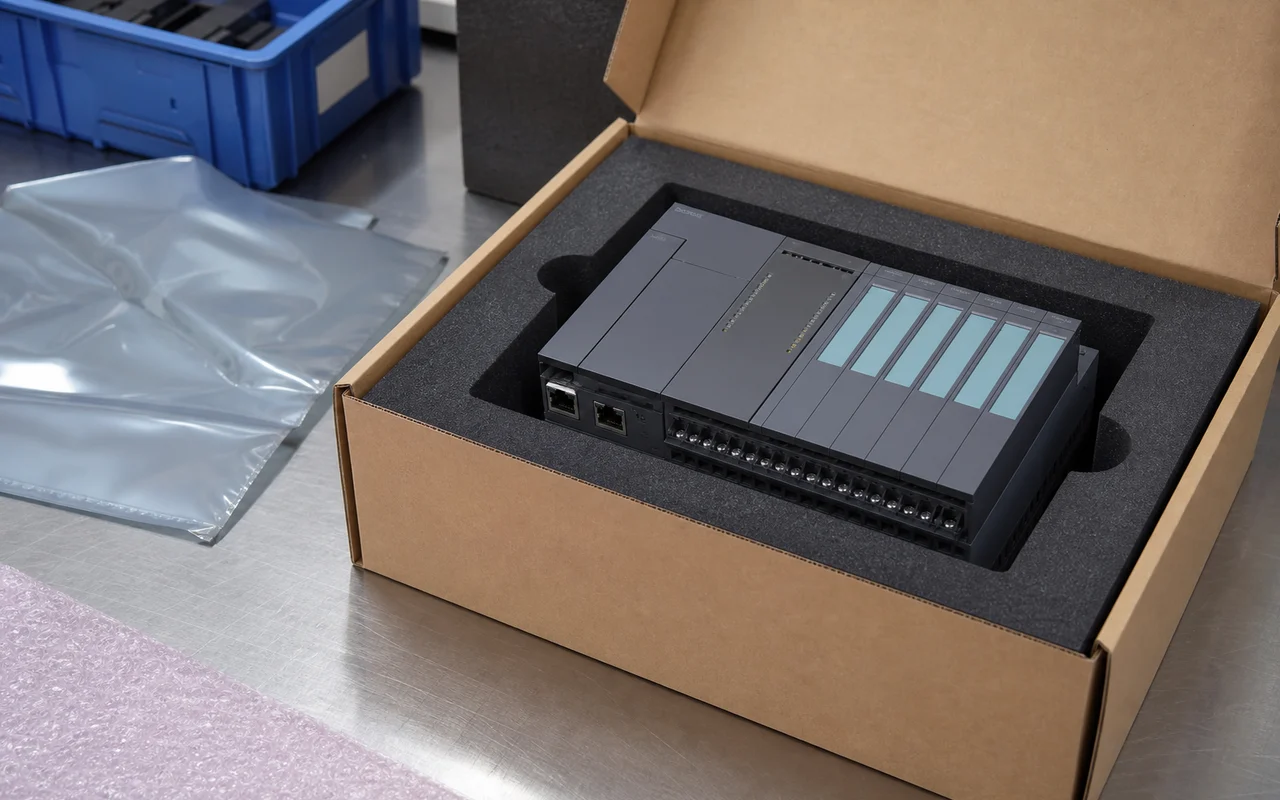 Secure Export Packing
Cushion protection and strong cartons ensure safe transportation.
 Worldwide Shipping
Global logistics network supports air, sea and express delivery.
 Documentation Check
Part number, revision and compatibility verified before shipment.
 After-sales Support
Professional technical support to help resolve your issues.