Functional Inspection
100% tested on professional platforms to ensure stable performance.
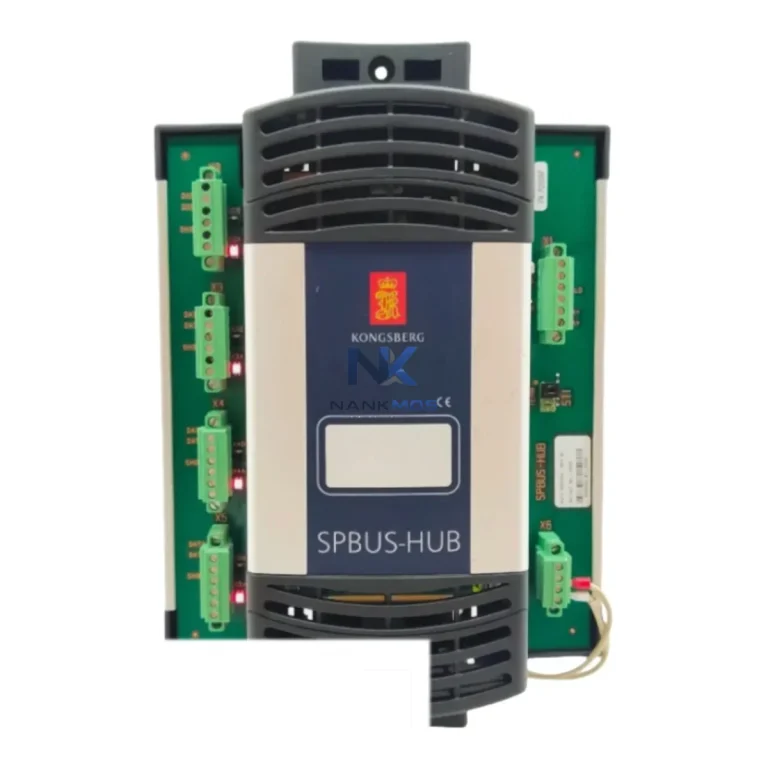
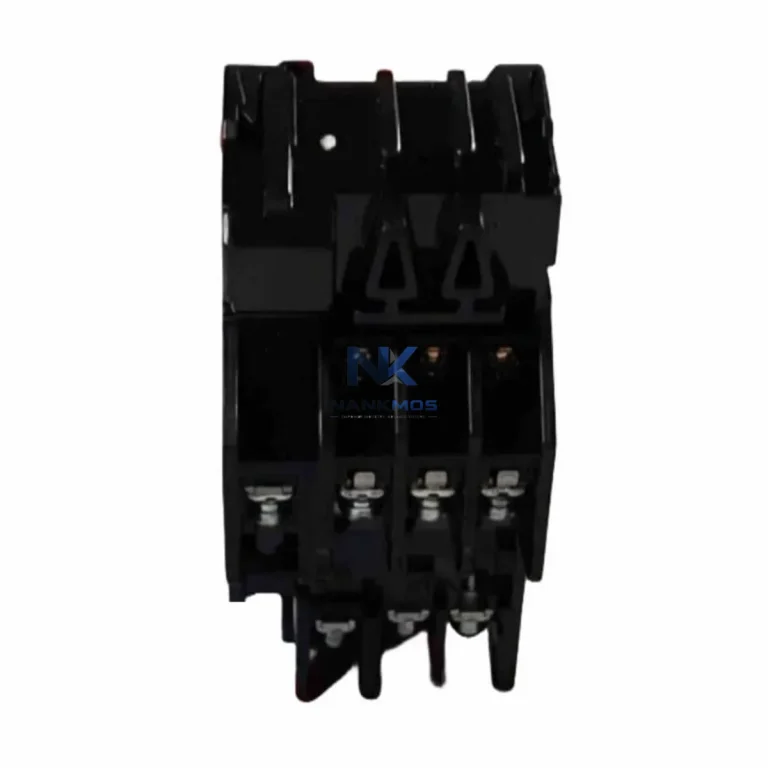
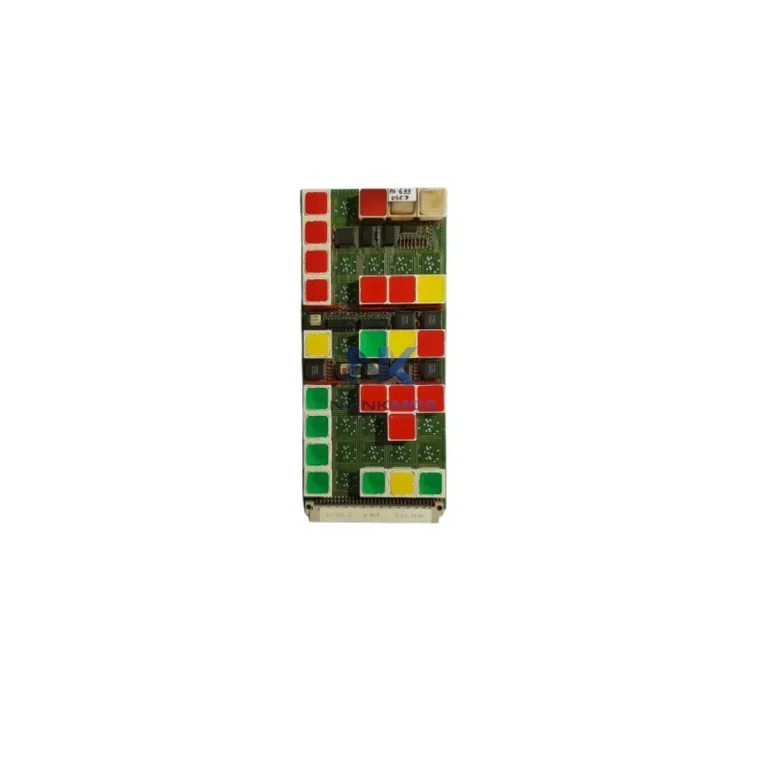
Kongsberg RPM420S is a NANKMOS industrial automation product record Listed under Other series series and Business & Industrial > Automation, Control & Flow Devices. Confirm condition, availability, lead time, compatibility and documentation by email inquiry.
Brand names are used for identification only.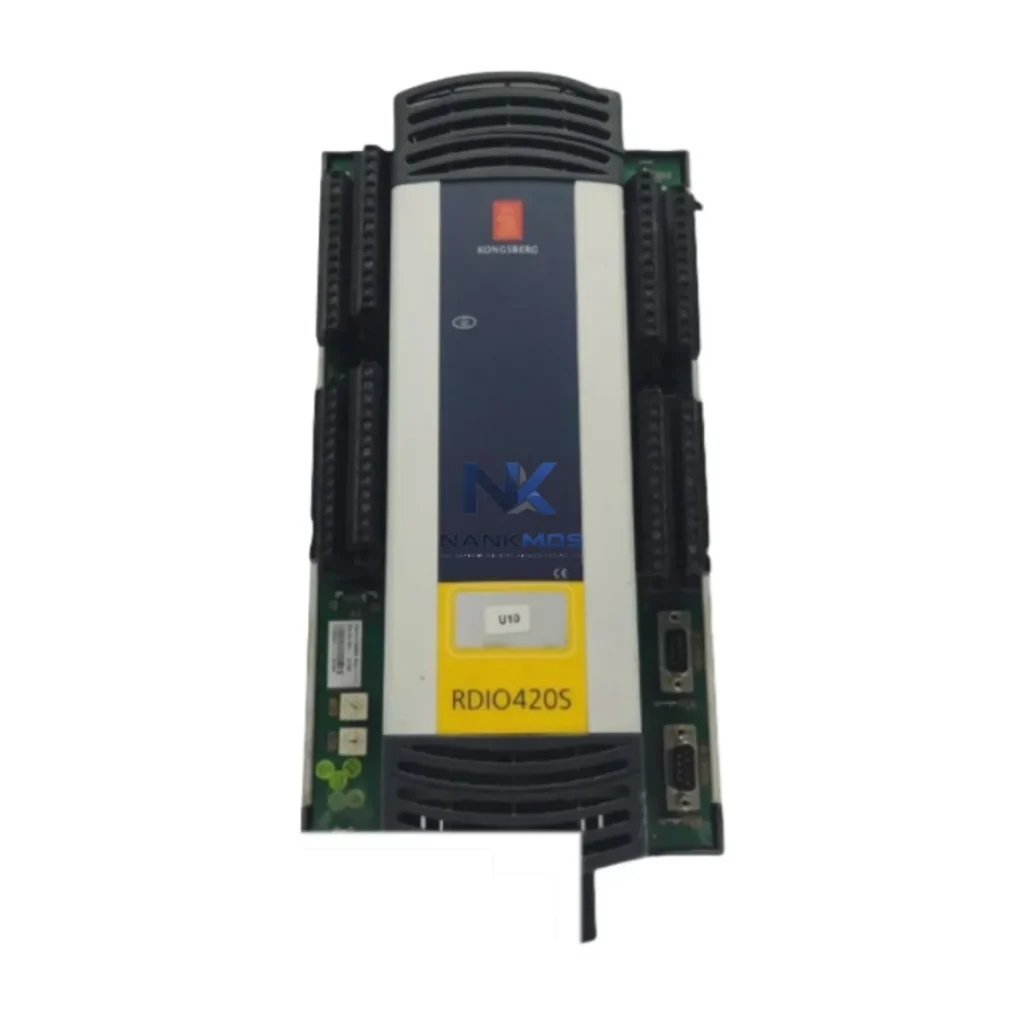
Kongsberg RPM420S is a NANKMOS industrial automation product record Listed under Other series series and Business & Industrial > Automation, Control & Flow Devices. Confirm condition, availability, lead time, compatibility and documentation by email inquiry.
| Manufacturer | Kongsberg |
|---|---|
| Application | Industrial Automation Maintenance |
| Part Number / Model | RPM420S |
| Compatible System | Confirmed by inquiry |
| Condition Options | To Confirm |
| Module Type | Automation, Control & Flow Devices |
| Warranty | 12 Months |
| Packaging | Anti-static Bag / Secure Box |
| Shipping Methods | DHL / FedEx / UPS / Air / Sea |
| Availability | To Confirm |
| Lead Time | To Confirm |
| Documentation | Part number and revision checked before quote |
The Kongsberg RPM420S is a precision industrial signal converter engineered for maritime and heavy-industry automation environments where reliable RPM data acquisition, protocol-transparent communication, and real-time network integration are non-negotiable. Designed to bridge the gap between rotating machinery instrumentation and modern digital control architectures, the RPM420S delivers clean, conditioned speed signals from shaft encoders, magnetic pickups, and proximity sensors directly into PLC controllers, SCADA platforms, HMI terminals, and distributed control systems — without signal degradation or latency-induced data loss.
In smart factory and vessel automation deployments, the RPM420S functions as a critical node in the industrial data chain. Raw pulse signals from propulsion shafts, diesel generators, pump drives, and compressor trains are captured at the field level, converted into standardized engineering values, and transmitted upstream via Modbus RTU, Modbus TCP/IP, or analog 4–20 mA outputs. This multi-protocol output capability ensures seamless compatibility with Kongsberg K-Chief vessel management systems, Siemens S7 PLC series, Rockwell ControlLogix platforms, and third-party SCADA gateways — making the RPM420S a universal translator in heterogeneous automation networks.
The unit's signal conditioning pipeline handles frequency-to-analog conversion with high linearity across the full RPM range, supporting both low-frequency magnetic pickup inputs and high-frequency encoder pulse trains. Output scaling is fully configurable, allowing integration engineers to map raw pulse counts to engineering units (RPM, Hz, or percentage of rated speed) without additional signal conditioning hardware. This reduces panel wiring complexity and eliminates the need for intermediate signal isolators in most installations.
A complete smart automation data chain built around the RPM420S begins at the rotating equipment level. Magnetic pickup sensors or proximity transducers mounted on shaft flanges generate raw pulse trains proportional to rotational speed. The RPM420S receives these pulses, applies configurable scaling and filtering, and outputs a conditioned 4–20 mA signal or a Modbus register value that downstream systems can consume directly.
In a typical vessel or industrial plant topology, the RPM420S feeds its Modbus RTU output into a Kongsberg K-Chief 600 or K-Chief 700 vessel management system via an RS-485 multi-drop bus. Simultaneously, the analog output connects to a remote I/O module — such as a Wago 750-series or Phoenix Contact Axioline F I/O slice — which aggregates multiple field signals before forwarding them to a Siemens S7-1500 PLC over PROFINET. The PLC executes closed-loop speed control logic and forwards normalized process data to an HMI panel (e.g., Siemens TP1500 Comfort or Weintek cMT series) for operator visualization.
For facilities running OPC-UA or MQTT-based IIoT architectures, an edge gateway — such as a Moxa MGate MB3480 or Advantech ADAM-3600 — polls the RPM420S Modbus TCP registers at configurable intervals and publishes speed telemetry to a cloud SCADA platform or on-premise historian (e.g., OSIsoft PI, Ignition SCADA). This enables real-time trending, alarm threshold management, and predictive maintenance analytics without requiring proprietary fieldbus infrastructure.
In power generation applications, the RPM420S integrates alongside Kongsberg AutoChief C20 engine control systems and Woodward EasyGen generator management units. Speed data from the RPM420S is used for synchronization logic, load-sharing algorithms, and overspeed protection relay triggering — all critical functions in diesel-electric propulsion and standby power systems. The unit's fast response time ensures that transient speed events are captured and reported within the control system's scan cycle, preventing missed alarms or delayed protective actions.
For pump and compressor monitoring in petrochemical or water treatment plants, the RPM420S pairs naturally with vibration monitoring modules (such as Kongsberg 3500 series rack-mounted monitors or Bently Nevada 3300 XL proximitor drivers) to provide a combined speed-and-vibration data stream to the plant DCS. This dual-parameter feed enables condition-based maintenance scheduling and reduces unplanned downtime by correlating speed deviations with vibration anomalies in real time.
Many industrial sites operate with legacy instrumentation that outputs only analog signals — 4–20 mA or 0–10 V — with no native digital communication capability. This creates data silos where speed information from rotating equipment never reaches the SCADA historian or the maintenance management system. The RPM420S resolves this by acting as a protocol gateway: it accepts legacy analog or pulse inputs and re-transmits the data over Modbus RTU or Modbus TCP/IP, making previously isolated field devices visible to the entire automation network.
Remote monitoring is another persistent challenge in maritime and offshore environments, where physical access to machinery spaces is limited during operation. With the RPM420S integrated into the vessel's Modbus TCP network, operators at the bridge or in a shore-based operations center can monitor shaft RPM, detect speed drift, and receive alarm notifications without dispatching engineering personnel to the engine room. This capability directly supports remote diagnostics workflows and reduces response time to abnormal operating conditions.
Production line transparency — knowing the exact operating speed of every drive, pump, and conveyor in real time — is a foundational requirement for OEE (Overall Equipment Effectiveness) calculations and digital twin implementations. The RPM420S provides the speed data layer that feeds these analytics platforms, ensuring that KPI dashboards reflect actual machine states rather than estimated or manually entered values. Alarm tracking is similarly improved: because speed data is now network-accessible, alarm events can be time-stamped, logged, and correlated with other process variables automatically.
System expansion is straightforward with the RPM420S. Its Modbus RTU interface supports multi-drop bus topologies with up to 247 addressable nodes, meaning additional RPM420S units can be added to an existing RS-485 network without rewiring or reconfiguring the master controller. This scalability makes it practical to extend speed monitoring to new equipment as plant capacity grows, without incurring the cost of a full instrumentation upgrade.
Q1: What is the communication latency of the RPM420S over Modbus TCP/IP? The RPM420S updates its Modbus holding registers at a rate consistent with its internal sampling cycle. In Modbus TCP/IP mode, register read latency is typically under 10 ms per transaction on a standard 100 Mbps industrial Ethernet network, making it suitable for real-time SCADA polling at 1-second or faster intervals.
Q2: Is the RPM420S compatible with third-party SCADA and HMI platforms? Yes. Because the RPM420S communicates via standard Modbus RTU and Modbus TCP/IP protocols, it is natively compatible with all major SCADA platforms including Ignition, Wonderware, WinCC, and iFIX, as well as HMI terminals from Siemens, Schneider Electric, Weintek, and Proface. No proprietary driver or middleware is required.
Q3: How does the RPM420S maintain network stability in electrically noisy environments? The RPM420S incorporates galvanic isolation on its signal inputs and RS-485 communication port, suppressing common-mode noise and ground loop interference common in marine engine rooms and heavy industrial plants. The Modbus TCP/IP port includes surge protection compliant with industrial EMC standards, ensuring reliable data transmission even in high-interference environments near variable frequency drives and large motor starters.
Q4: What does the 12-Month Warranty cover, and is pre-shipment testing performed? Every RPM420S unit is pre-shipment tested for signal accuracy, protocol communication, and output linearity before dispatch. The 12-Month Warranty covers manufacturing defects, component failures, and communication interface faults under normal operating conditions. In-stock units are available for immediate dispatch, minimizing project lead times for urgent automation upgrades or replacement requirements.
Functional Inspection100% tested on professional platforms to ensure stable performance.
 Anti-static Packaging
Modules are packed in anti-static bags to prevent electrostatic damage.
 Secure Export Packing
Cushion protection and strong cartons ensure safe transportation.
 Worldwide Shipping
Global logistics network supports air, sea and express delivery.
 Documentation Check
Part number, revision and compatibility verified before shipment.
 After-sales Support
Professional technical support to help resolve your issues.