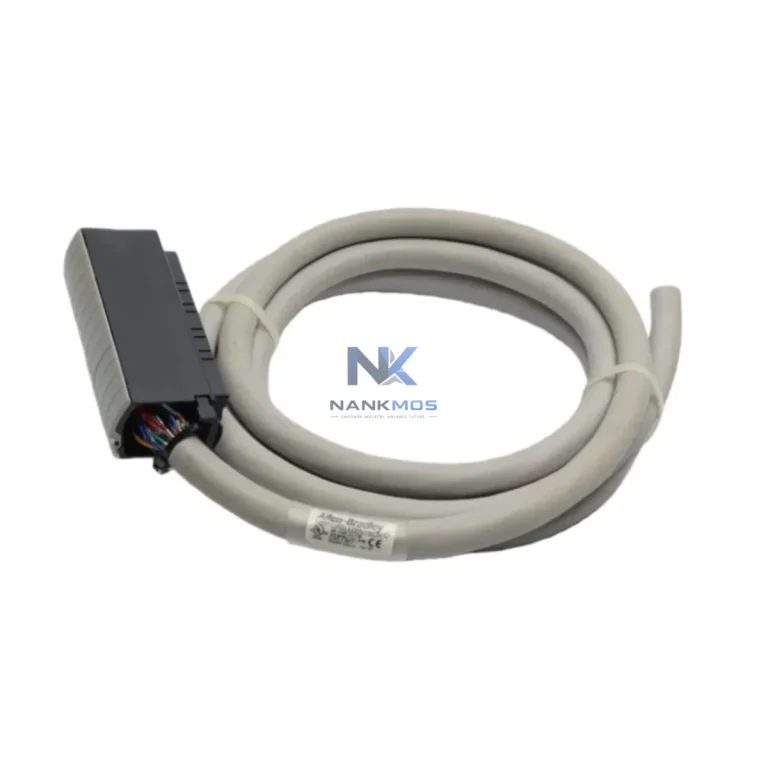
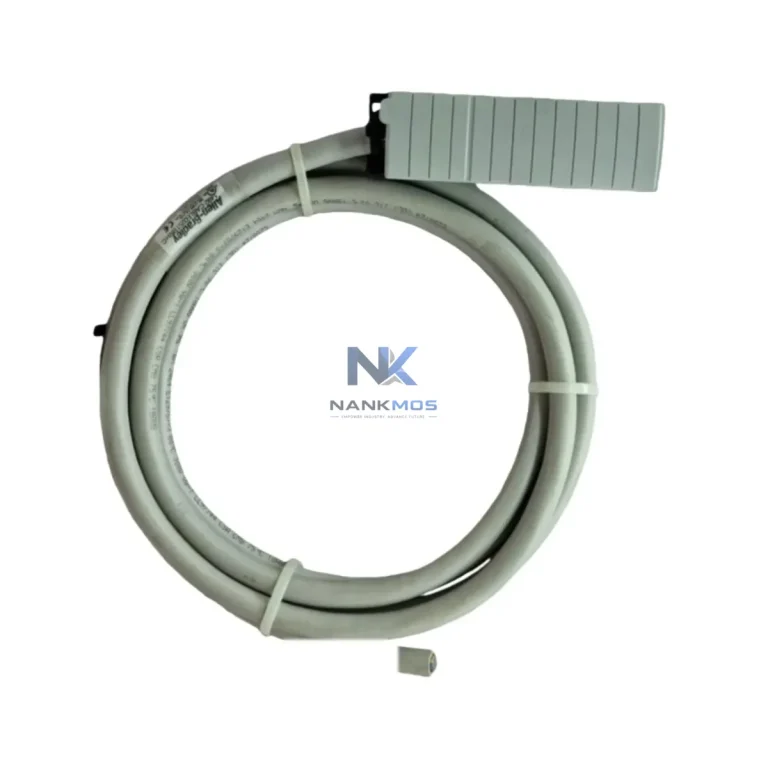
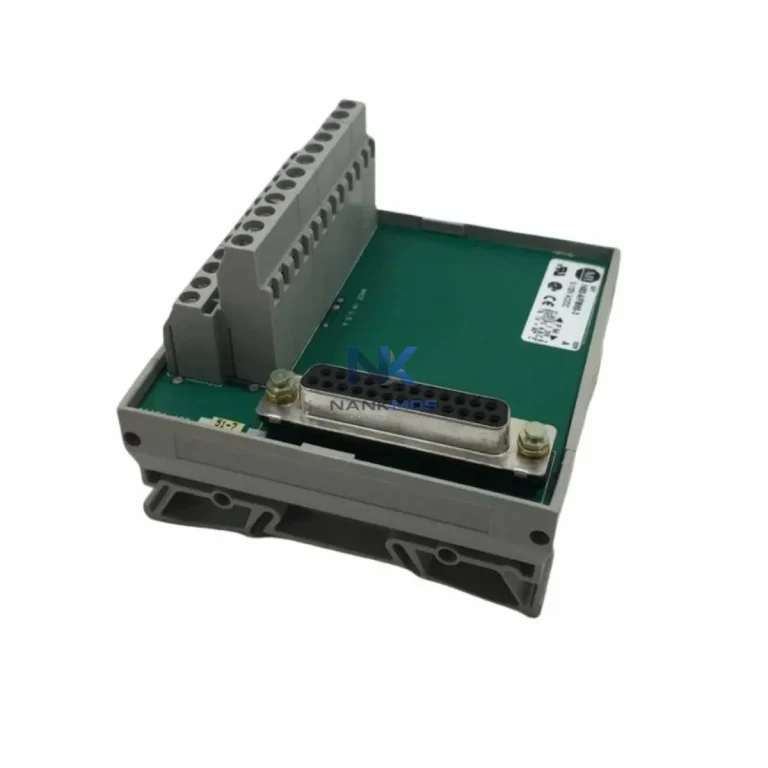
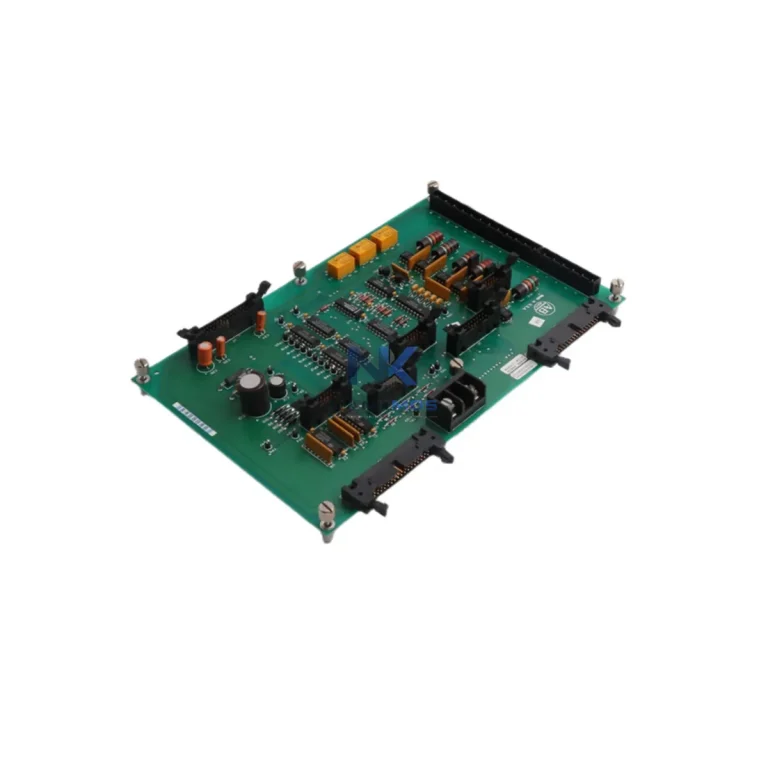
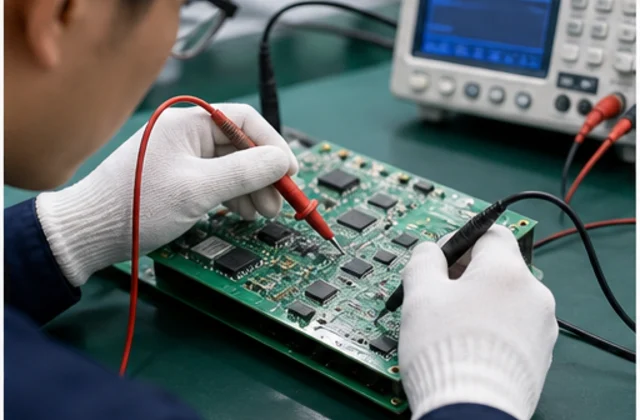
 Functional Inspection
100% tested on professional platforms to ensure stable performance.
Allen-Bradley 1794-IP4 is a NANKMOS industrial automation product record Listed under Flex I/O series and Business & Industrial > Automation, Control & Flow Devices > Programmable Logic Controllers. Confirm condition, availability, lead time, compatibility and documentation by email inquiry.
Brand names are used for identification only.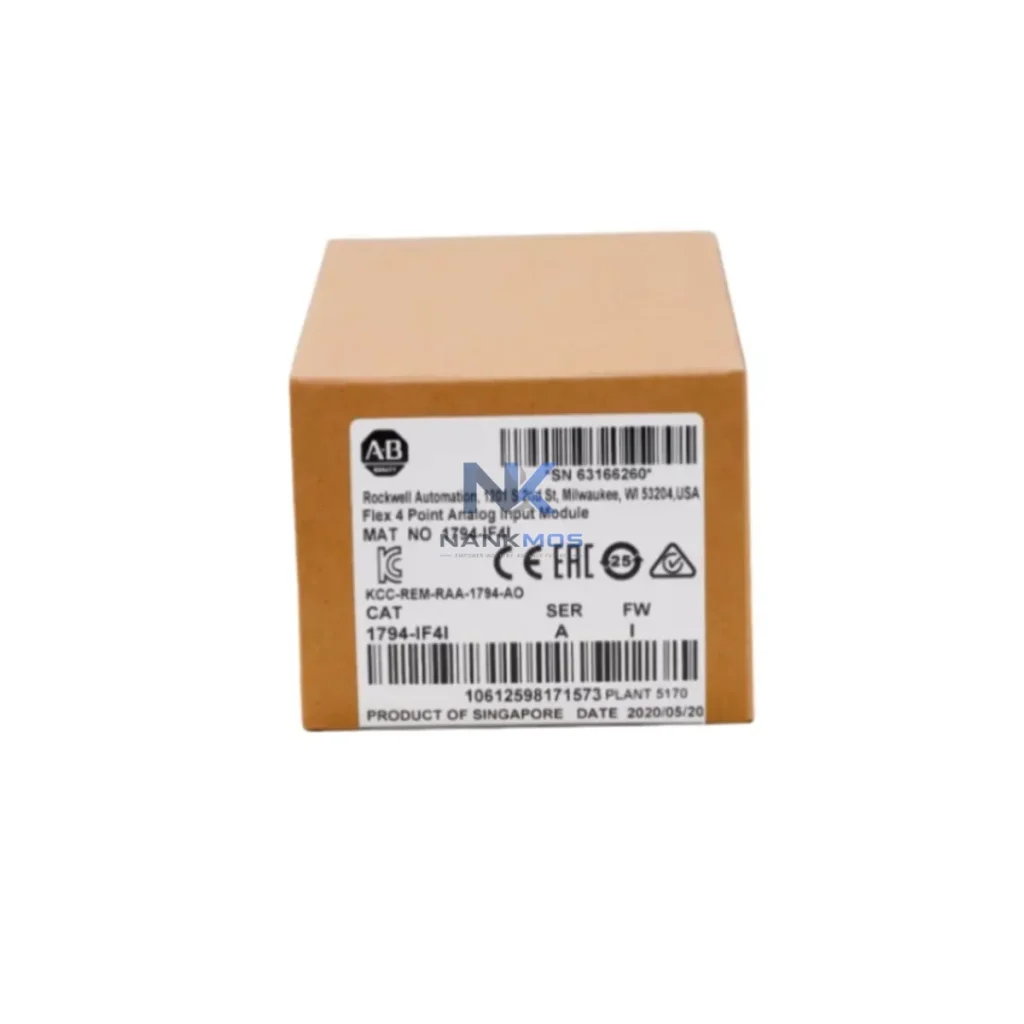
Allen-Bradley 1794-IP4 is a NANKMOS industrial automation product record Listed under Flex I/O series and Business & Industrial > Automation, Control & Flow Devices > Programmable Logic Controllers. Confirm condition, availability, lead time, compatibility and documentation by email inquiry.
| Manufacturer | Allen-Bradley |
|---|---|
| Application | Controller Processing & System Control |
| Part Number / Model | 1794-IP4 |
| Compatible System | Flex I/O |
| Series | Flex I/O |
| Condition Options | To Confirm |
| Module Type | Controller / CPU Module |
| Warranty | 12 Months |
| Packaging | Anti-static Bag / Secure Box |
| Shipping Methods | DHL / FedEx / UPS / Air / Sea |
| Availability | To Confirm |
| Lead Time | To Confirm |
| Documentation | Part number and revision checked before quote |
The Allen-Bradley 1794-IP4 is a 4-channel analog input module engineered for deployment within the FLEX I/O 1794 platform — a distributed I/O architecture designed to deliver high-density signal acquisition, modular scalability, and seamless integration across Rockwell Automation's ControlLogix, CompactLogix, and MicroLogix control ecosystems. As a precision front-end component in the signal layer, the 1794-IP4 plays a critical role in translating real-world process variables into structured digital data streams that feed directly into the control layer for real-time decision-making, closed-loop regulation, and system-wide diagnostics.
In modern industrial automation, no module operates in isolation. The 1794-IP4 is architected to function as part of a coherent, layered control system — where signal fidelity at the I/O layer directly determines the quality of control decisions at the CPU layer, the accuracy of HMI visualisation, and the reliability of communication across fieldbus and Ethernet networks. This document outlines the 1794-IP4's system role, integration logic, and engineering value across the full automation stack.
The 1794-IP4 achieves its full engineering value when deployed as part of a coordinated automation architecture. The following describes its contextual integration across each system layer:
Control Layer — CPU & Processor Coordination: The 1794-IP4 feeds analog process data directly to Rockwell Automation ControlLogix processors such as the 1756-L73 or 1756-L85E, where ladder logic or function block programs execute closed-loop PID control, alarm management, and data logging routines. In CompactLogix deployments, the 1769-L33ER serves as the primary controller, receiving structured analog tags from the FLEX I/O adapter over EtherNet/IP. The module's 12-bit resolution ensures that process variables — temperature, pressure, flow, level — are represented with sufficient granularity for precision control.
I/O Layer — Modular Expansion & Rack Consistency: Within the FLEX I/O rack, the 1794-IP4 coexists with complementary modules including the 1794-OB16 (16-channel digital output), 1794-IB16 (16-channel digital input), and 1794-OE4 (4-channel analog output). This modular co-deployment allows engineers to construct mixed-signal I/O nodes that handle both discrete and analog signals within a single compact backplane — reducing panel footprint, simplifying wiring, and enabling unified diagnostics from a single adapter address.
Communication Layer — Adapter & Network Integration: The 1794-IP4 communicates with the control layer via FLEX I/O adapters. The 1794-AENT EtherNet/IP adapter enables high-speed, deterministic data exchange over standard Ethernet infrastructure, supporting implicit (I/O) and explicit (MSG) messaging. For legacy fieldbus environments, the 1794-ADN DeviceNet adapter or 1794-APB PROFIBUS-DP adapter provides backward-compatible integration. This multi-protocol adapter ecosystem ensures the 1794-IP4 can be deployed across new greenfield EtherNet/IP plants and existing brownfield DeviceNet or PROFIBUS installations without hardware redesign.
Power Layer — Backplane Power Distribution: The FLEX I/O backplane power supply — typically the 1794-PS13 or 1794-PS1 — provides regulated 24 VDC to all modules in the rack, including the 1794-IP4. Proper power budgeting across the backplane is essential when combining multiple analog and digital modules. Engineers should verify total backplane current draw against the power supply rating during system design to ensure stable operation under full I/O load.
HMI Layer — Operator Visualisation & Alarming: Analog values acquired by the 1794-IP4 are mapped to HMI tags in Rockwell's FactoryTalk View SE or ME environments, or visualised on PanelView Plus 7 terminals. Real-time trend displays, process variable gauges, and alarm banners are driven by the structured data flowing from the 1794-IP4 through the controller to the HMI server — creating a transparent, operator-accessible view of field conditions without additional signal conditioning hardware.
Signal Conditioning & Isolation Layer: In applications where field signals carry electrical noise, ground loops, or long cable runs, signal isolators such as the 1492-AIFM series analog interface modules can be inserted between field transmitters and the 1794-IP4 input terminals. This protects the module's input circuitry, eliminates common-mode interference, and extends the reliable signal transmission distance — particularly important in high-voltage industrial environments such as power generation, petrochemical processing, and heavy manufacturing.
Terminal & Wiring Layer — Structured Field Connectivity: The 1794-IP4 mounts on a FLEX I/O terminal base — either the 1794-TB3 (standard screw terminal) or 1794-TB3S (spring-clamp terminal) — which provides the physical wiring interface between field cables and the module's input channels. Spring-clamp terminal bases are recommended in high-vibration environments to prevent terminal loosening over time, reducing maintenance intervention and improving long-term connection reliability.
Manufacturing & Discrete Production Lines: In automotive assembly, food & beverage processing, and electronics manufacturing, the 1794-IP4 monitors analog process variables such as conveyor tension, oven temperature, and hydraulic pressure. Its integration with ControlLogix CPUs enables real-time feedback control that maintains product quality within tight tolerances, while EtherNet/IP connectivity supports MES-level data collection for OEE tracking and production reporting.
Power Generation & Electrical Utilities: In power plant control rooms and substation automation panels, the 1794-IP4 acquires 4–20 mA signals from current transformers, pressure transducers, and temperature sensors monitoring turbine performance, transformer loading, and cooling system status. Its compatibility with ControlLogix redundancy systems — including the 1756-RM2 redundancy module — ensures continuous signal acquisition even during controller failover events, supporting uninterrupted power generation.
Petrochemical & Process Industries: In refinery and chemical plant applications, the 1794-IP4 interfaces with HART-compatible field transmitters measuring flow, level, and pressure in process vessels and pipelines. Deployed within explosion-proof or purged control panels, the module's channel isolation and configurable input ranges allow it to handle the diverse signal types present in complex process control loops — from low-level millivolt thermocouple signals to full-range 4–20 mA transmitter outputs.
Water & Wastewater Treatment: Municipal water treatment facilities use the 1794-IP4 to monitor pH, dissolved oxygen, turbidity, and flow rate across treatment stages. Its modular FLEX I/O architecture allows remote I/O nodes to be distributed across large treatment plant footprints — reducing cable runs, simplifying commissioning, and enabling centralised SCADA monitoring via EtherNet/IP or DeviceNet network infrastructure.
Mining, Metals & Heavy Industry: In mining conveyor systems, smelting operations, and rolling mill control panels, the 1794-IP4 acquires analog signals from load cells, pyrometers, and vibration sensors. Its wide operating temperature range and DIN rail mounting make it suitable for deployment in industrial enclosures subject to thermal cycling, mechanical vibration, and electromagnetic interference — conditions common in heavy industrial environments.
Q1: Is the 1794-IP4 compatible with both ControlLogix and CompactLogix platforms, and what adapter is required for EtherNet/IP integration?Yes. The 1794-IP4 is fully compatible with both ControlLogix (1756 series) and CompactLogix (1769 series) controllers when paired with the 1794-AENT EtherNet/IP adapter. The adapter handles all network communication, presenting the 1794-IP4's analog input data as structured I/O tags within the Logix controller's tag database. No additional configuration hardware is required — the module is auto-configured by RSLogix 5000 / Studio 5000 upon adapter connection. For DeviceNet or PROFIBUS environments, the 1794-ADN or 1794-APB adapters provide equivalent integration with their respective network protocols.
Q2: Can the 1794-IP4 be deployed in a redundant control architecture, and how does it behave during a controller failover event?The 1794-IP4 supports deployment in ControlLogix redundancy architectures using the 1756-RM2 redundancy module. During a controller failover, the FLEX I/O adapter maintains its network connection and continues scanning the 1794-IP4's input channels. The redundant secondary controller assumes control seamlessly, with analog input data remaining available throughout the switchover. This behaviour ensures that critical process variables — such as pressure, temperature, or flow — are not lost during planned or unplanned controller transitions, supporting continuous process operation in high-availability applications.
Q3: What is the warranty coverage for the 1794-IP4, and what does the 12-Month Warranty include?Every 1794-IP4 supplied by NANKMOS is covered by a 12-Month Warranty from the date of dispatch. This warranty covers manufacturing defects, functional failures under normal operating conditions, and module-level hardware faults. In the event of a warranty claim, NANKMOS provides replacement or repair support with documented test records confirming pre-shipment functional verification. All modules undergo outgoing quality inspection prior to dispatch, including channel-level analog signal testing, backplane communication verification, and visual inspection for physical integrity. For warranty claims or technical support, contact [email protected] or +86 18359268345.
Functional Inspection100% tested on professional platforms to ensure stable performance.
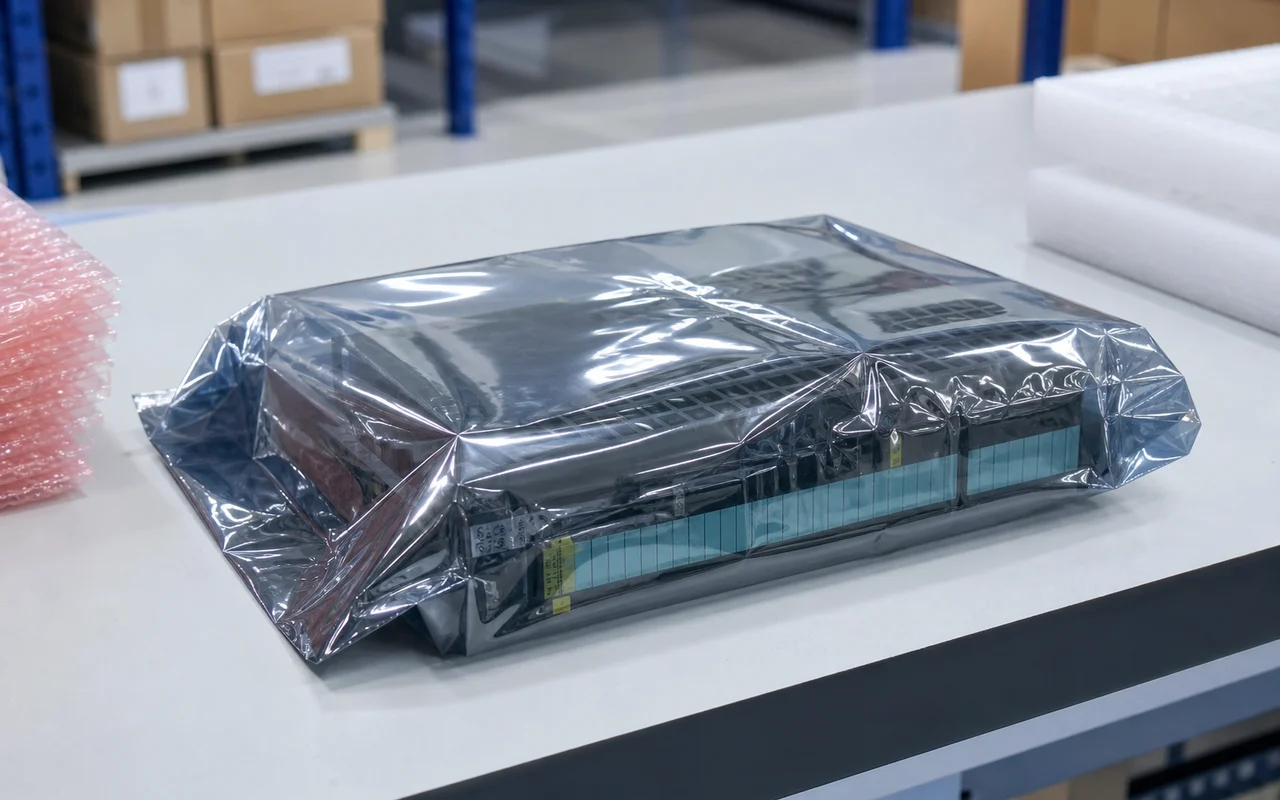 Anti-static Packaging
Modules are packed in anti-static bags to prevent electrostatic damage.
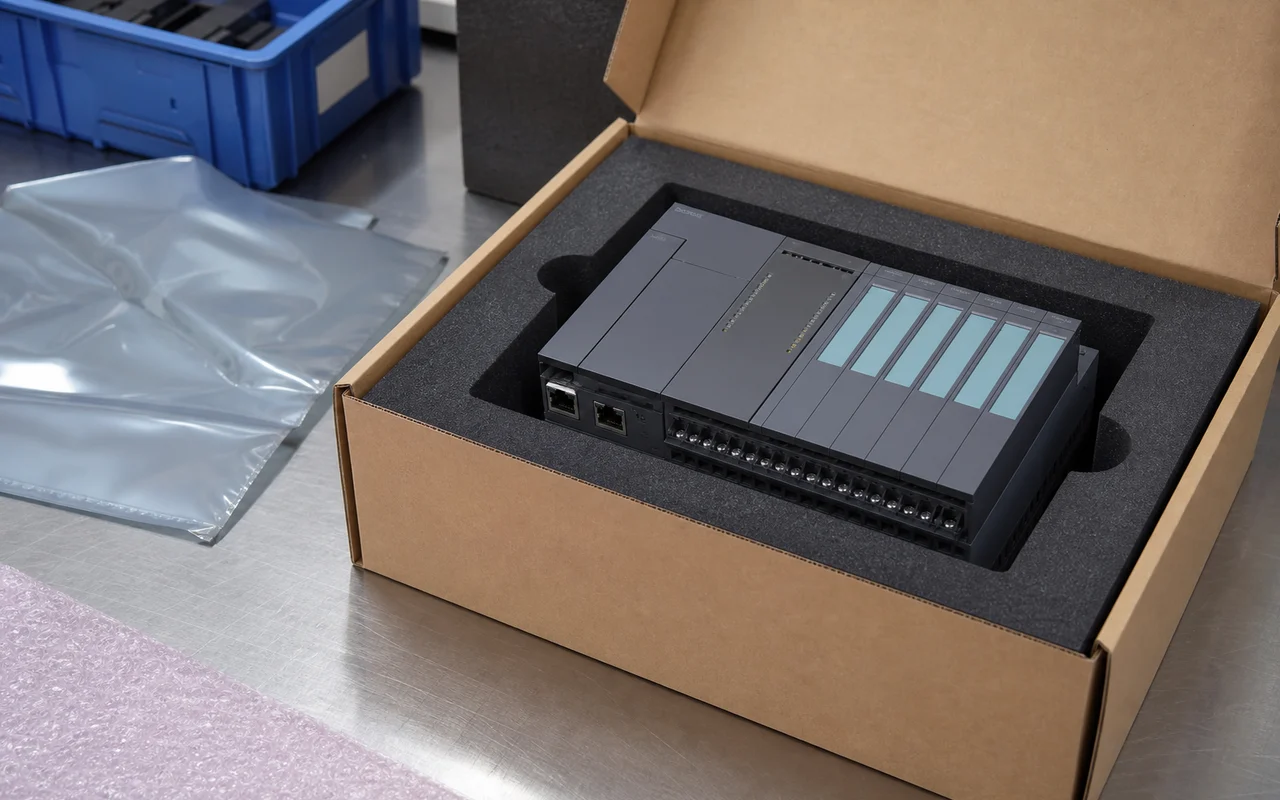 Secure Export Packing
Cushion protection and strong cartons ensure safe transportation.
 Worldwide Shipping
Global logistics network supports air, sea and express delivery.
 Documentation Check
Part number, revision and compatibility verified before shipment.
 After-sales Support
Professional technical support to help resolve your issues.