Functional Inspection
100% tested on professional platforms to ensure stable performance.
Mitsubishi Electric A2ASCPU is a NANKMOS industrial automation product record Listed under MELSEC-A series and Business & Industrial > Automation, Control & Flow Devices > Programmable Logic Controllers. Confirm condition, availability, lead time, compatibility and documentation by email inquiry.
Brand names are used for identification only.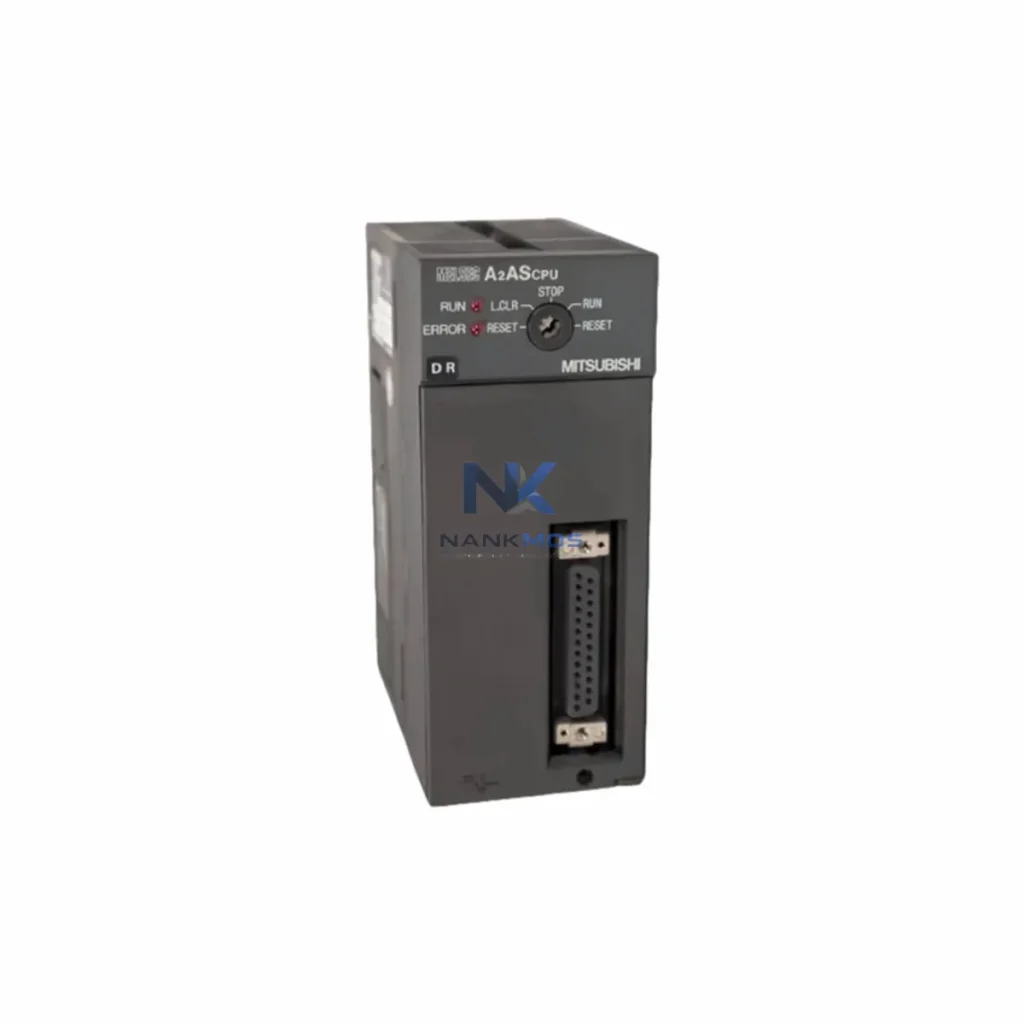
Mitsubishi Electric A2ASCPU is a NANKMOS industrial automation product record Listed under MELSEC-A series and Business & Industrial > Automation, Control & Flow Devices > Programmable Logic Controllers. Confirm condition, availability, lead time, compatibility and documentation by email inquiry.
| Manufacturer | Mitsubishi Electric |
|---|---|
| Application | Controller Processing & System Control |
| Part Number / Model | A2ASCPU |
| Compatible System | MELSEC-A |
| Series | MELSEC-A |
| Condition Options | To Confirm |
| Module Type | Controller / CPU Module |
| Warranty | 12 Months |
| Packaging | Anti-static Bag / Secure Box |
| Shipping Methods | DHL / FedEx / UPS / Air / Sea |
| Availability | To Confirm |
| Lead Time | To Confirm |
| Documentation | Part number and revision checked before quote |
The Mitsubishi Electric A2ASCPU is a high-reliability programmable logic controller CPU module engineered for the MELSEC-A Series platform — one of Mitsubishi Electric's most enduring and widely deployed control architectures in global industrial automation. Designed to serve as the computational core of a distributed or centralised control system, the A2ASCPU delivers deterministic scan-cycle execution, structured ladder and instruction-list programming, and robust I/O bus management across a full rack-based architecture. Its role within a complete automation platform extends far beyond standalone processing: the A2ASCPU functions as the orchestration layer that coordinates signal acquisition, logic resolution, communication arbitration, and output actuation across every tier of the control hierarchy.
In modern smart factory and process control deployments, the A2ASCPU is positioned at the control layer, interfacing downward to field-level I/O modules and upward to SCADA, HMI, and MES systems. Its instruction execution architecture supports both bit-level discrete control and word-level analogue processing, making it equally suited to high-speed packaging lines, continuous process loops in petrochemical plants, power distribution automation, and water treatment sequencing. The module's deterministic cycle time ensures that time-critical interlocks and safety sequences are executed with the precision demanded by IEC 61131-compliant control engineering.
The A2ASCPU does not operate in isolation — its full performance potential is realised only when it is deployed within a coherent, system-matched MELSEC-A architecture. At the power layer, the A1S61PN or A1S62PN power supply modules provide stable 5 VDC backplane power, ensuring that the CPU and all co-resident modules receive clean, regulated supply voltage even under fluctuating mains conditions. Proper power module selection is the first engineering decision in any A-Series rack build, as backplane current budgets must account for the aggregate draw of CPU, I/O, and communication modules.
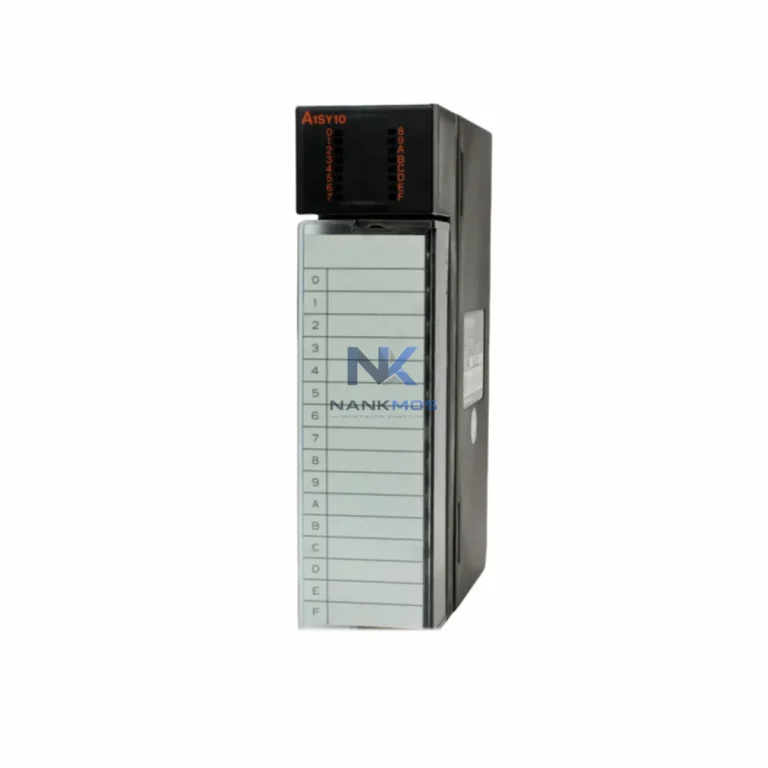
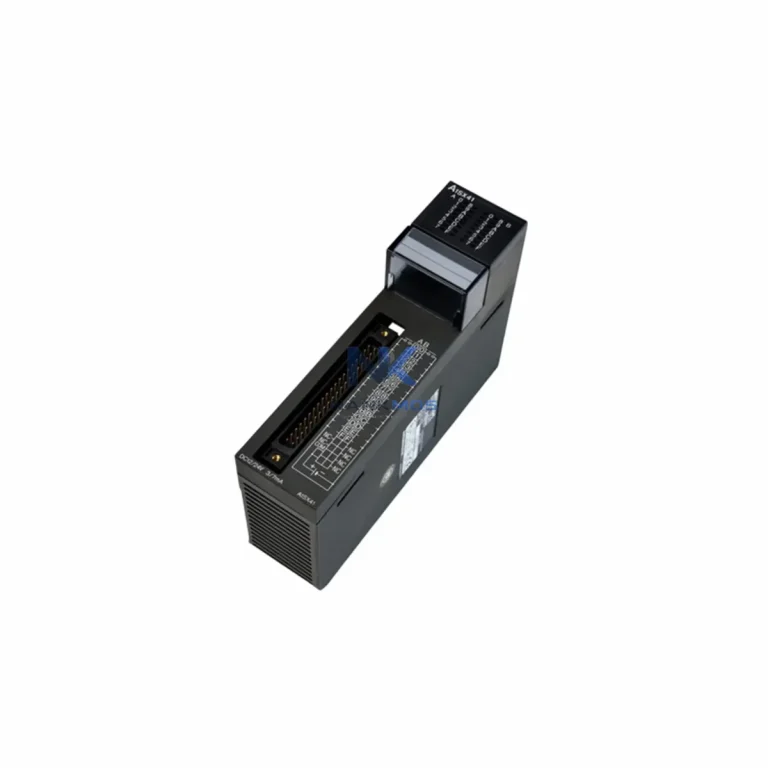
At the I/O layer, the A2ASCPU interfaces directly with discrete input modules such as the A1SX40 (32-point DC input) and discrete output modules such as the A1SY10 (16-point relay output) or A1SY40P (32-point transistor output). For analogue process control loops, the A1S68AD analogue input module and A1S62DA analogue output module extend the CPU's reach into temperature, pressure, flow, and level measurement — enabling closed-loop PID control directly within the MELSEC-A scan cycle. Signal integrity across these I/O modules is maintained by the A-Series backplane bus, which provides deterministic data transfer without the latency variability associated with fieldbus-based remote I/O.
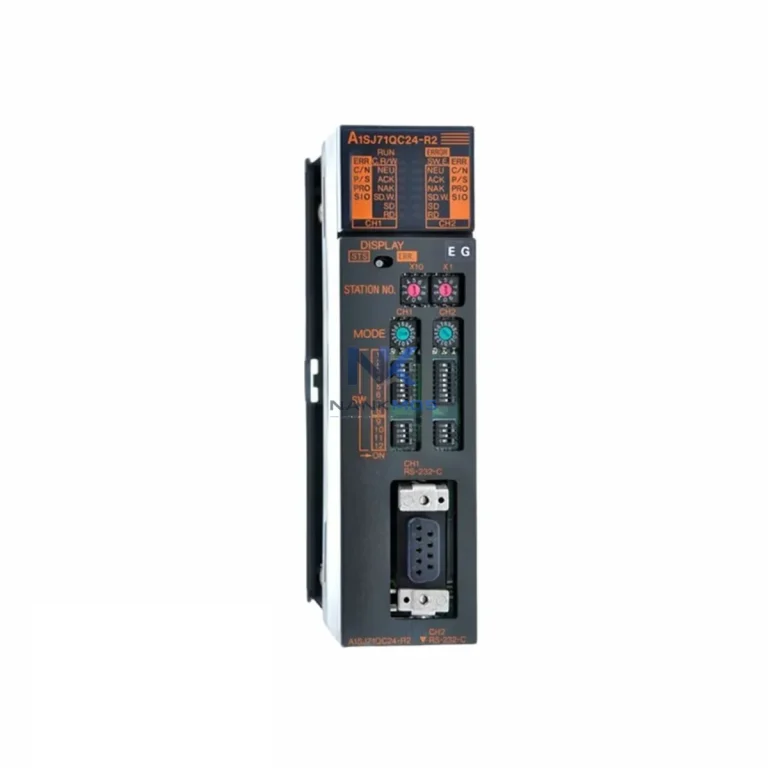
At the communication layer, the A1SJ71UC24-R2 serial communication module enables RS-232C and RS-422 connectivity to SCADA hosts, barcode readers, weighing terminals, and third-party instrumentation using the MC Protocol or Computer Link protocol. For facilities requiring network-level integration, the A1SJ71E71-B2 Ethernet interface module extends the A2ASCPU's data exchange capability to TCP/IP-based supervisory systems, historian servers, and MES platforms — bridging the gap between field-level control and enterprise-level data management without requiring a gateway PLC.
At the HMI layer, Mitsubishi Electric's GOT1000 Series graphic operation terminals (such as the GT1055-QSBD or GT1275-VNBA) connect to the A2ASCPU via RS-232C or RS-422, providing operators with real-time process visualisation, alarm management, trend displays, and recipe management. The GOT's direct CPU connection eliminates the need for an intermediate communication processor in single-CPU architectures, reducing both hardware cost and potential communication failure points.
For systems requiring expanded rack capacity, the A1S65B or A1S68B main base units accommodate up to 5 or 8 module slots respectively, while A1S55B extension base units — connected via the A1SC05B or A1SC12B extension cables — allow the I/O count to scale toward the 2,048-point maximum. This modular expansion architecture enables engineers to design systems that grow with production requirements without replacing the CPU or rewiring the control cabinet.
Manufacturing & Assembly Lines: In automotive body welding, engine assembly, and electronics manufacturing, the A2ASCPU manages multi-axis sequencing, conveyor interlocking, vision system triggers, and torque tool enable/disable signals. Its deterministic scan cycle ensures that safety interlocks — such as light curtain inputs and emergency stop relays — are processed within the required response time for CE and OSHA compliance.
Power Distribution & Electrical Substations: The A2ASCPU is deployed in medium-voltage switchgear automation, transformer protection relay coordination, and capacitor bank switching sequences. Its ability to handle high-density discrete I/O — combined with analogue modules for current and voltage measurement — makes it a reliable choice for utility-grade control panels where uptime is non-negotiable.
Petrochemical & Refinery Process Control: In distillation column control, heat exchanger bypass sequencing, and pump station automation, the A2ASCPU executes PID loops for temperature and pressure regulation while simultaneously managing discrete valve actuators and motor starters. Its operating temperature range and vibration resistance ratings meet the environmental demands of hazardous-area control rooms.
Water & Wastewater Treatment: Municipal water treatment facilities use the A2ASCPU to automate dosing pump sequencing, filter backwash cycles, UV disinfection control, and lift station level management. The module's long-term availability and stable firmware make it a preferred choice for infrastructure projects with 15–20 year operational lifespans.
Mining, Metallurgy & Heavy Industry: Conveyor belt management, crusher sequencing, furnace temperature profiling, and rolling mill speed control are representative applications where the A2ASCPU's robust I/O bus and high-current output modules handle the demanding electrical environment of heavy industrial sites. The module's resistance to conducted electrical noise is particularly valued in facilities with large variable-frequency drives and high-power motor starters operating in close proximity to control panels.
Packaging & Material Handling: High-speed filling lines, palletising systems, and stretch-wrap machines rely on the A2ASCPU's fast scan cycle to coordinate servo drive enable signals, encoder-based position feedback, and pneumatic actuator sequencing. Integration with Mitsubishi Electric MR-J Series servo amplifiers via pulse-train or analogue speed reference outputs is a common architecture in packaging OEM machine designs.
Q1: Is the A2ASCPU compatible with both MELSEC-A main base units and extension base units, and what is the maximum system configuration? The A2ASCPU is designed for installation in MELSEC-A Series main base units, including the A1S38B (3-slot), A1S55B (5-slot), A1S65B (5-slot with power), and A1S68B (8-slot). Extension base units such as the A1S55B and A1S68B can be connected via A1SC-series extension cables to expand the I/O capacity up to the 2,048-point maximum. Each extension rack requires its own power supply module. Engineers should verify the backplane current budget — summing the 5 VDC consumption of all installed modules — before finalising the rack configuration to avoid power supply overload.
Q2: What communication options are available for integrating the A2ASCPU with SCADA systems and modern Ethernet-based networks? The A2ASCPU's native RS-232C programming port supports direct connection to GX Developer or GX Works2 engineering workstations. For SCADA integration, the A1SJ71UC24-R2 serial communication module provides RS-232C and RS-422 MC Protocol connectivity, while the A1SJ71E71-B2 Ethernet module enables TCP/IP-based data exchange with SCADA servers, historian platforms, and MES systems. For facilities standardising on MELSECNET/10 or CC-Link, dedicated network interface modules can be added to the rack, allowing the A2ASCPU to participate in peer-to-peer data sharing with other MELSEC PLCs across the plant network.
Q3: What does the 12-Month Warranty cover, and what is the typical lead time and stock availability for the A2ASCPU? All A2ASCPU units supplied by NANKMOS are covered by a 12-Month Warranty from the date of shipment, covering manufacturing defects, component failure under normal operating conditions, and firmware integrity. Each unit undergoes pre-shipment functional testing — including program memory read/write verification, I/O bus communication check, and power-on self-test validation — before dispatch. Stock availability is maintained for prompt order fulfilment, with typical lead times confirmed at the time of enquiry. For urgent project requirements or large-volume orders, please contact our technical sales team directly to confirm allocation and expedited shipping options.
Functional Inspection100% tested on professional platforms to ensure stable performance.
 Anti-static Packaging
Modules are packed in anti-static bags to prevent electrostatic damage.
 Secure Export Packing
Cushion protection and strong cartons ensure safe transportation.
 Worldwide Shipping
Global logistics network supports air, sea and express delivery.
 Documentation Check
Part number, revision and compatibility verified before shipment.
 After-sales Support
Professional technical support to help resolve your issues.