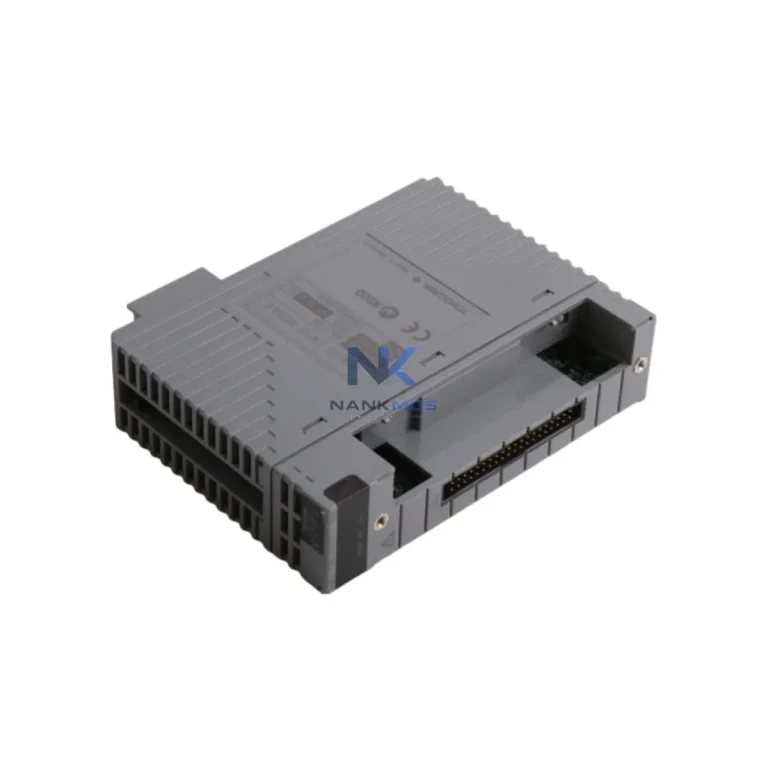
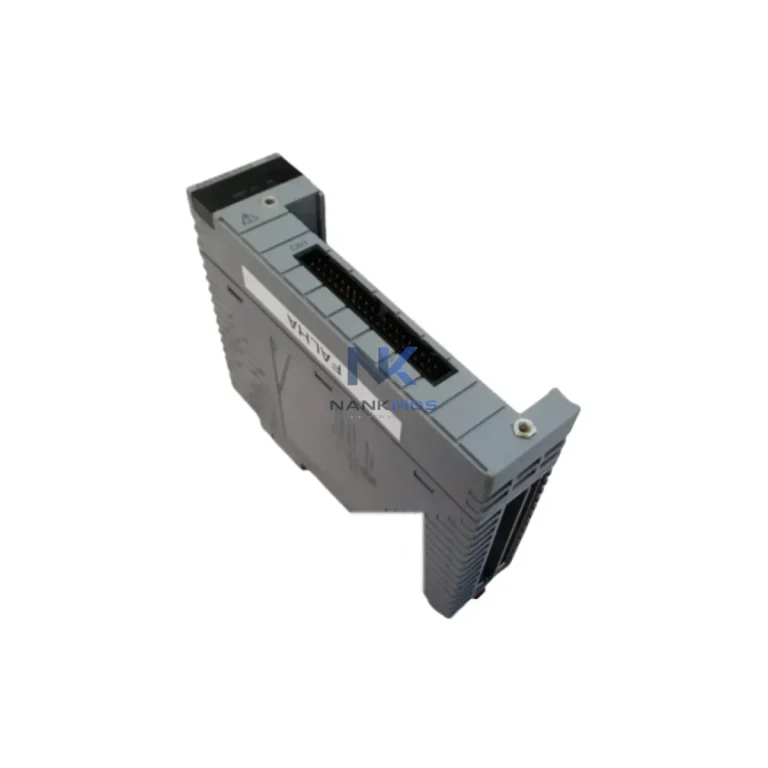
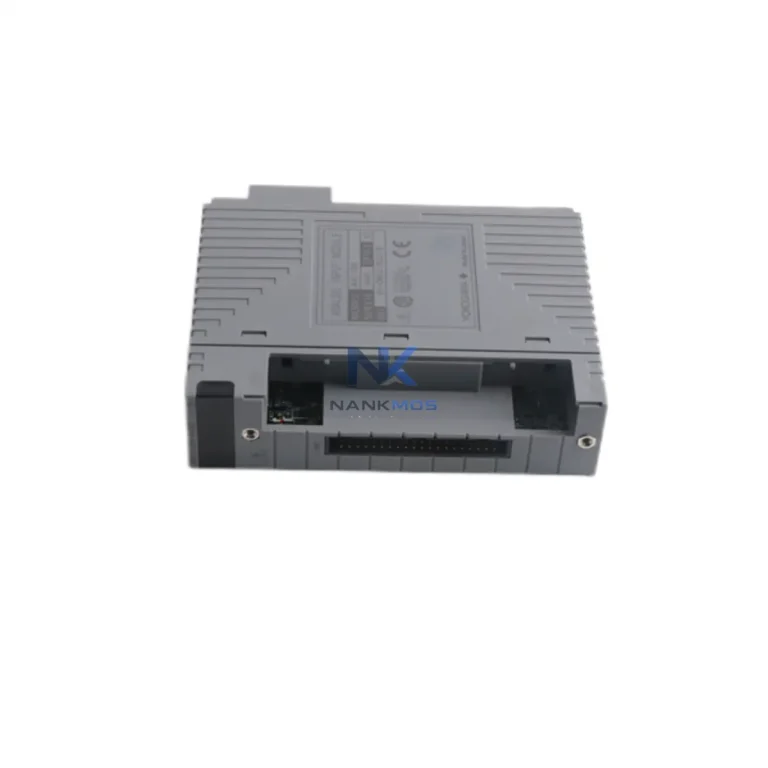
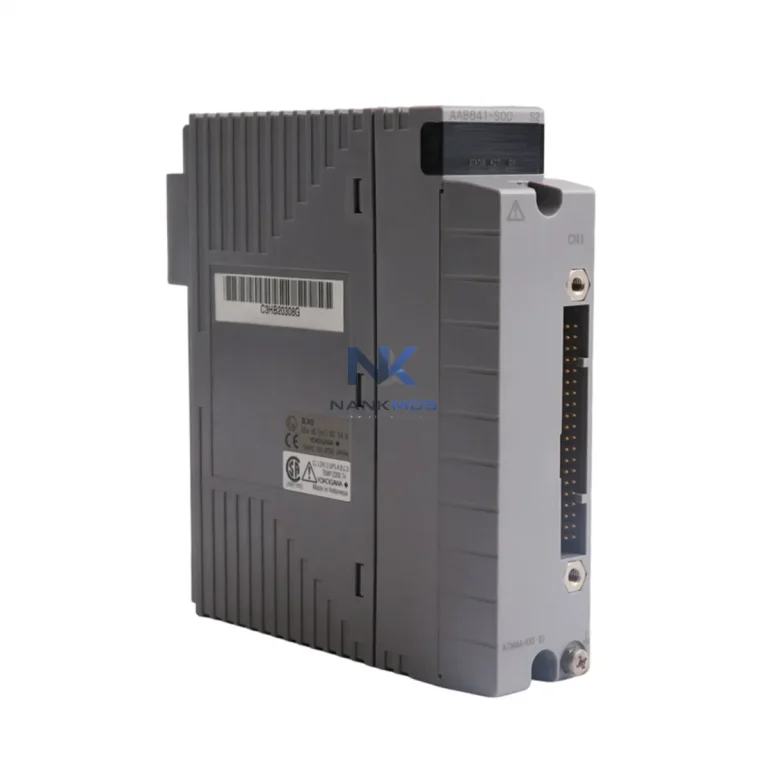
Functional Inspection
100% tested on professional platforms to ensure stable performance.
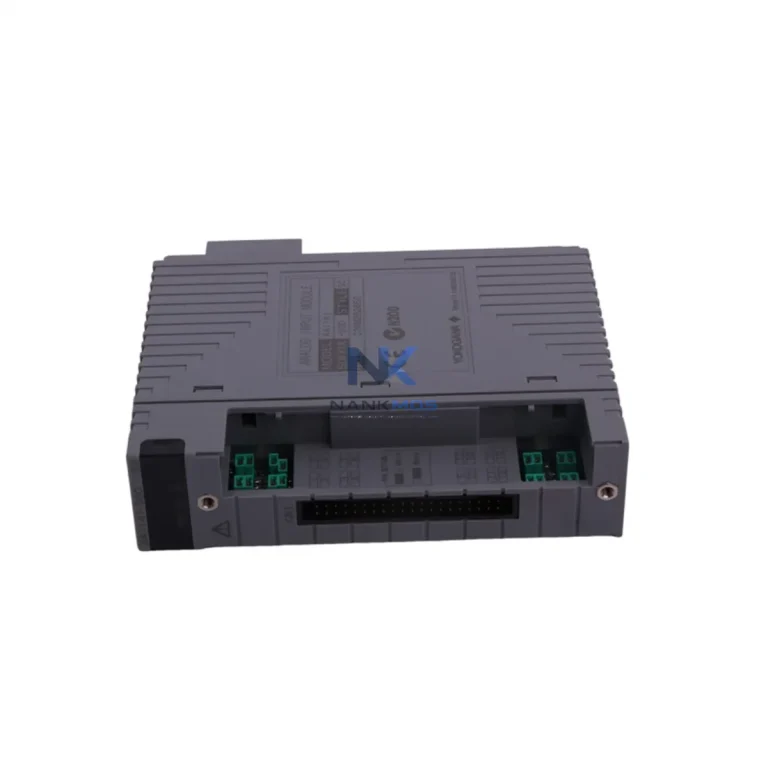
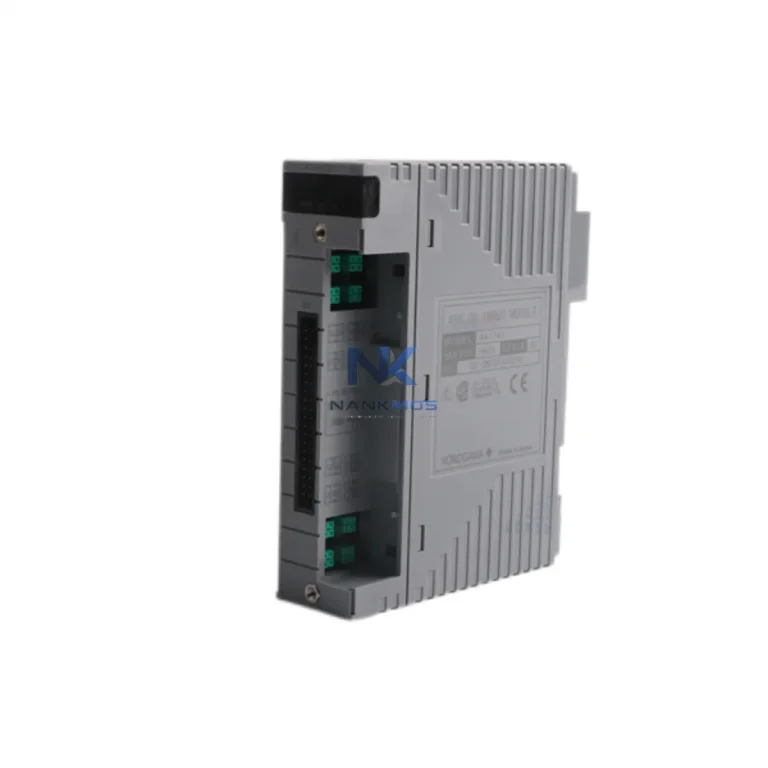
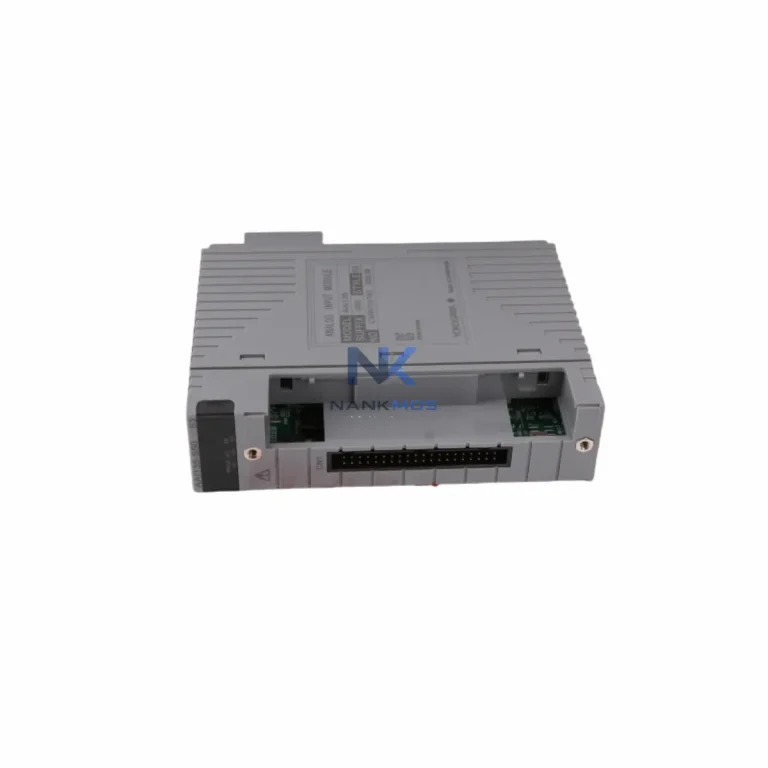
Yokogawa AAM10 is a NANKMOS industrial automation product record Listed under CENTUM VP series and Business & Industrial > Automation, Control & Flow Devices > Programmable Logic Controllers. Confirm condition, availability, lead time, compatibility and documentation by email inquiry.
Brand names are used for identification only.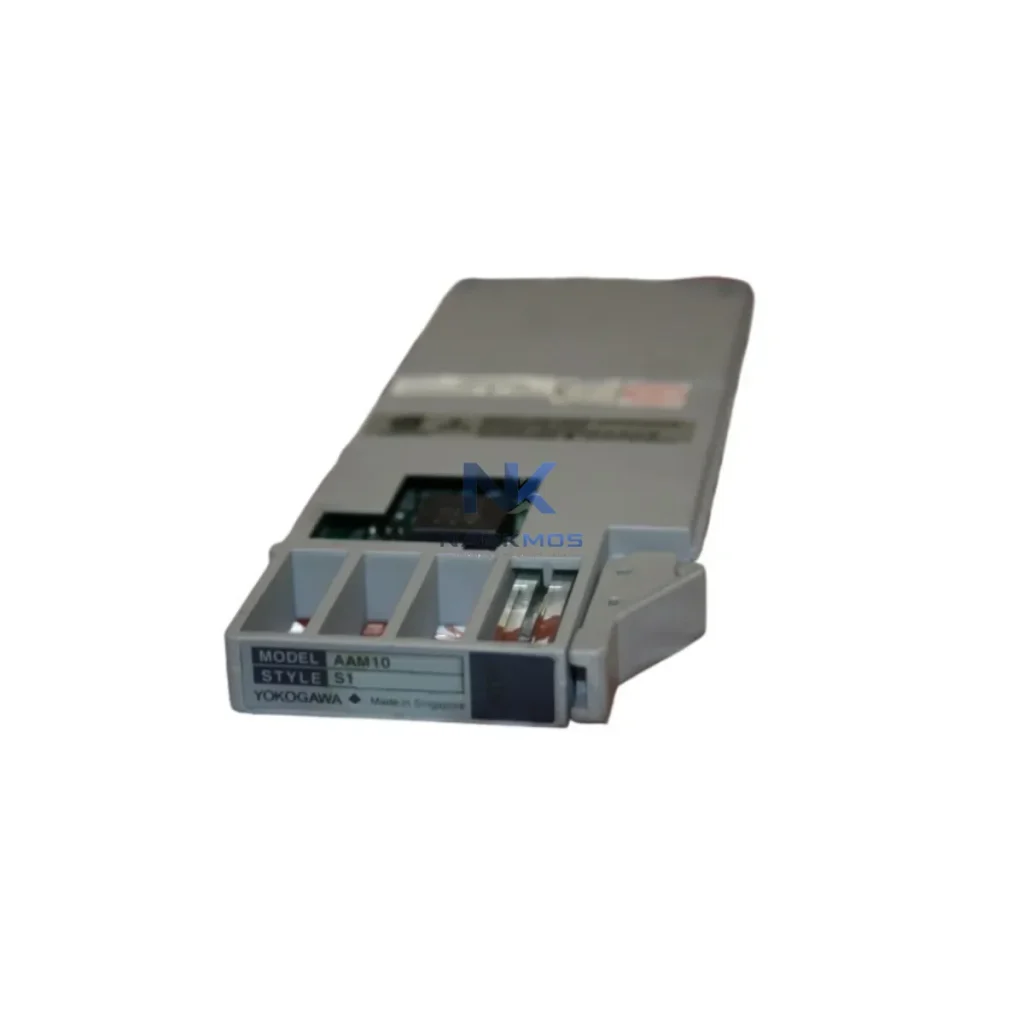
Yokogawa AAM10 is a NANKMOS industrial automation product record Listed under CENTUM VP series and Business & Industrial > Automation, Control & Flow Devices > Programmable Logic Controllers. Confirm condition, availability, lead time, compatibility and documentation by email inquiry.
| Manufacturer | Yokogawa |
|---|---|
| Application | Controller Processing & System Control |
| Part Number / Model | AAM10 |
| Compatible System | CENTUM VP |
| Series | CENTUM VP |
| Condition Options | To Confirm |
| Module Type | Controller / CPU Module |
| Warranty | 12 Months |
| Packaging | Anti-static Bag / Secure Box |
| Shipping Methods | DHL / FedEx / UPS / Air / Sea |
| Availability | To Confirm |
| Lead Time | To Confirm |
| Documentation | Part number and revision checked before quote |
The Yokogawa AAM10 is a precision analog input module engineered for seamless integration within the CENTUM VP and CENTUM CS3000 distributed control system platforms. Designed to operate at the I/O layer of a multi-tier control architecture, the AAM10 delivers stable, high-resolution signal acquisition from field transmitters, sensors, and transducers across demanding industrial environments. Its role within the CENTUM architecture extends beyond simple signal conversion — the AAM10 serves as a foundational element that ensures signal fidelity, loop integrity, and diagnostic transparency across the entire control hierarchy.
In a fully deployed CENTUM VP system, the AAM10 occupies a critical position between the field instrument layer and the controller processing layer. It receives 4–20 mA analog signals from pressure transmitters, flow meters, temperature sensors, and level instruments, converting them into digital values that the FCU (Field Control Unit) processes in real time. This tight integration with the FCU ensures that process variables are accurately represented in the control logic, enabling precise PID regulation, cascade control, and feedforward strategies without signal degradation or latency-induced instability.
The AAM10 is designed for installation within CENTUM VP I/O nest assemblies, where it operates alongside complementary modules such as the AAM11 (analog input with HART), AAM50 (analog output), ADM11 (digital input), ADM51 (digital output), and ALM11 (alarm input). This modular co-deployment within a shared I/O nest — connected to the FCU via the ESB (Extended Serial Backplane) bus — allows engineers to construct dense, scalable I/O configurations without compromising signal isolation or channel-to-channel independence. The AAM10's compatibility with the CENTUM VP node architecture also supports hot-swap capability, enabling module replacement during live system operation without process interruption.
From a system architecture perspective, the AAM10 contributes directly to redundancy design strategies. In high-availability process environments — such as refinery distillation columns, power plant boiler control loops, or LNG terminal metering systems — dual-redundant I/O configurations can be implemented using paired AAM10 modules across redundant I/O nests. This approach, combined with the CENTUM VP's built-in fault detection and automatic switchover logic, ensures that critical analog measurement loops remain operational even in the event of a single module failure. The FCU continuously monitors the health status of each AAM10 channel, reporting diagnostic data to the HIS (Human Interface Station) via the Vnet/IP control network.
Communication within the CENTUM VP architecture relies on the Vnet/IP Ethernet-based control network, which connects FCUs, HIS workstations, engineering workstations (EWS), and gateway components such as the AIP588 (Vnet/IP interface) and the BCV (Bus Converter). The AAM10 does not communicate directly on Vnet/IP — instead, it interfaces with the FCU through the local ESB backplane, while the FCU aggregates all I/O data and transmits it upstream over Vnet/IP. This architecture ensures deterministic scan cycle performance and protects the I/O layer from network-level disturbances. For HART-enabled field devices, the AAM11 variant provides a direct upgrade path while maintaining physical and electrical compatibility with the same I/O nest slots used by the AAM10.
Power distribution to the AAM10 and its co-installed I/O modules is managed through the CENTUM VP power supply units, typically the PW481 or PW482 series, which provide regulated 24 VDC to the I/O nest backplane. Redundant power supply configurations are supported, with automatic load transfer ensuring uninterrupted module operation during power supply maintenance or failure events. The AAM10's low power consumption profile makes it well-suited for high-density I/O nest configurations where thermal management and power budget constraints are engineering priorities.
Engineering and commissioning of the AAM10 is performed through the CENTUM VP engineering environment, where each channel is configured with range settings, engineering unit scaling, alarm thresholds, and diagnostic parameters. The system builder tool allows engineers to assign AAM10 channels to function blocks within the FCU's control database, establishing the signal path from field instrument to control logic without manual wiring of software connections. This structured engineering workflow reduces commissioning time, minimizes configuration errors, and produces a fully documented I/O assignment record that supports long-term maintenance and modification activities.
The AAM10 is applicable across a broad range of industrial sectors. In oil and gas upstream facilities, it monitors wellhead pressure and flow signals feeding into safety instrumented systems. In chemical processing plants, it handles temperature and concentration measurements critical to reaction control. In water treatment facilities, it acquires pH, turbidity, and flow signals for dosing control loops. In steel and metallurgical plants, it processes furnace temperature and cooling water flow signals. In marine and offshore applications, it integrates into vessel automation systems where space-efficient, high-reliability I/O is essential. In each of these environments, the AAM10's proven field reliability and compatibility with the CENTUM VP platform make it a preferred choice for both greenfield installations and brownfield system expansions.
The AAM10 achieves its full operational value when deployed as part of a cohesive CENTUM VP automation platform. A complete system architecture typically includes the FCU (Field Control Unit) as the primary processing node, with AAM10 modules populating the I/O nest alongside AAM11 (HART-capable analog input), AAM50 (analog output for control valve positioners), ADM11 (digital input for discrete field signals), and ADM51 (digital output for solenoid valves and motor starters). The I/O nest backplane connects all modules to the FCU via the ESB bus, ensuring synchronized scan cycles and deterministic data transfer.
At the HMI layer, the HIS (Human Interface Station) running CENTUM VP's integrated HMI software provides operators with real-time visualization of all AAM10-acquired process variables, trend displays, alarm management, and loop tuning interfaces. The engineering workstation (EWS) provides the configuration and maintenance environment for AAM10 channel assignments, function block wiring, and diagnostic review. For facilities requiring integration with enterprise-level systems, the Exaopc OPC server provides a standardized data interface between the CENTUM VP control network and MES or ERP platforms.
In redundant architecture designs, paired AAM10 modules in dual I/O nests — each connected to a redundant FCU pair — provide the signal acquisition reliability required for SIL-rated control loops and critical process measurements. The CENTUM VP's built-in self-diagnostics continuously verify AAM10 channel integrity, reporting faults to the HIS and triggering configurable alarm responses without operator intervention. This diagnostic architecture reduces mean time to repair (MTTR) and supports predictive maintenance strategies that extend overall system availability.
The Yokogawa AAM10 serves critical measurement roles across multiple industrial sectors. In petroleum refining, it acquires column temperature and pressure profiles feeding into advanced process control (APC) strategies managed by the CENTUM VP FCU. In power generation, it monitors boiler drum level, steam pressure, and feedwater flow signals essential to turbine protection and load control. In petrochemical complexes, it handles reactor temperature and pressure measurements where signal accuracy directly impacts product quality and process safety. In water and wastewater treatment, it acquires flow, pH, and dissolved oxygen signals for automated dosing and aeration control. In mining and mineral processing, it monitors slurry density, pump discharge pressure, and mill load signals within grinding circuit control loops. In LNG terminals and gas processing facilities, it provides the analog signal acquisition backbone for custody transfer metering and compressor control systems. In marine vessel automation, it integrates into compact I/O configurations managing engine room monitoring, ballast control, and cargo handling systems. In packaging and discrete manufacturing lines, it acquires tension, temperature, and speed signals for web control and thermal process regulation. Across all these applications, the AAM10's proven reliability within the CENTUM VP architecture ensures consistent measurement performance, reduced engineering risk, and long-term maintainability.
Q1: Is the AAM10 compatible with both CENTUM VP and CENTUM CS3000 systems? Yes. The AAM10 is designed for use within both the CENTUM VP and CENTUM CS3000 I/O architectures. It installs into the standard I/O nest and interfaces with the FCU via the ESB backplane in both platforms. Engineers migrating from CS3000 to CENTUM VP can retain existing AAM10 modules, reducing hardware replacement costs during system upgrades. Compatibility should always be verified against the specific FCU firmware version and I/O nest revision in use at the target installation.
Q2: Can the AAM10 be replaced during live system operation without shutting down the process? The CENTUM VP I/O architecture supports hot-swap module replacement, allowing the AAM10 to be removed and reinserted while the I/O nest remains powered and the FCU continues executing control logic. During the replacement interval, the FCU substitutes the last valid measured value or a configured fallback value for the affected channels, maintaining control loop stability. This capability is particularly valuable in continuous process industries where planned shutdowns for maintenance are operationally and economically costly. Post-replacement, the FCU automatically re-initializes communication with the new AAM10 and resumes normal channel scanning without requiring an engineering workstation intervention.
Q3: What warranty and supply assurance does NANKMOS provide for the AAM10? NANKMOS provides a 12-Month Warranty on all AAM10 modules supplied, covering manufacturing defects and functional failures under normal operating conditions. Each unit undergoes pre-shipment functional testing to verify channel accuracy, isolation integrity, and backplane communication performance before dispatch. NANKMOS maintains in-stock inventory of AAM10 modules to support urgent replacement requirements, scheduled maintenance outages, and system expansion projects. Global shipping is available with expedited logistics options for time-critical applications. For procurement inquiries, technical compatibility verification, or volume pricing, contact NANKMOS at [email protected] or +86 18359268345.
Functional Inspection100% tested on professional platforms to ensure stable performance.
 Anti-static Packaging
Modules are packed in anti-static bags to prevent electrostatic damage.
 Secure Export Packing
Cushion protection and strong cartons ensure safe transportation.
 Worldwide Shipping
Global logistics network supports air, sea and express delivery.
 Documentation Check
Part number, revision and compatibility verified before shipment.
 After-sales Support
Professional technical support to help resolve your issues.