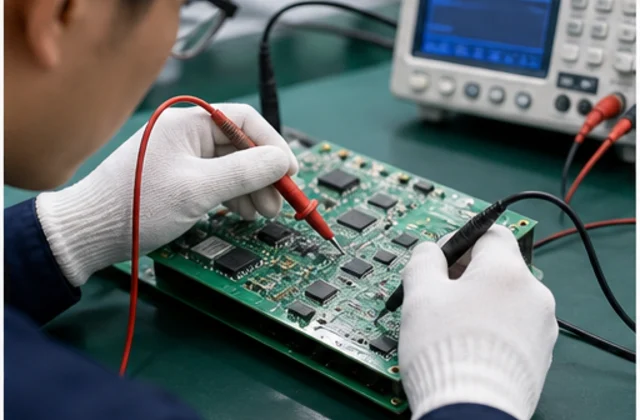
 Functional Inspection
100% tested on professional platforms to ensure stable performance.
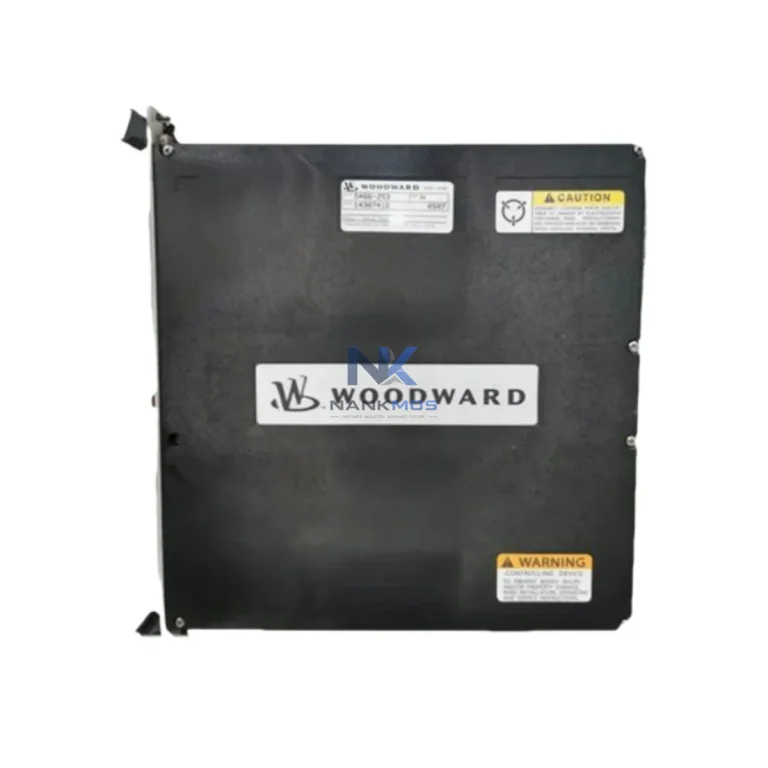
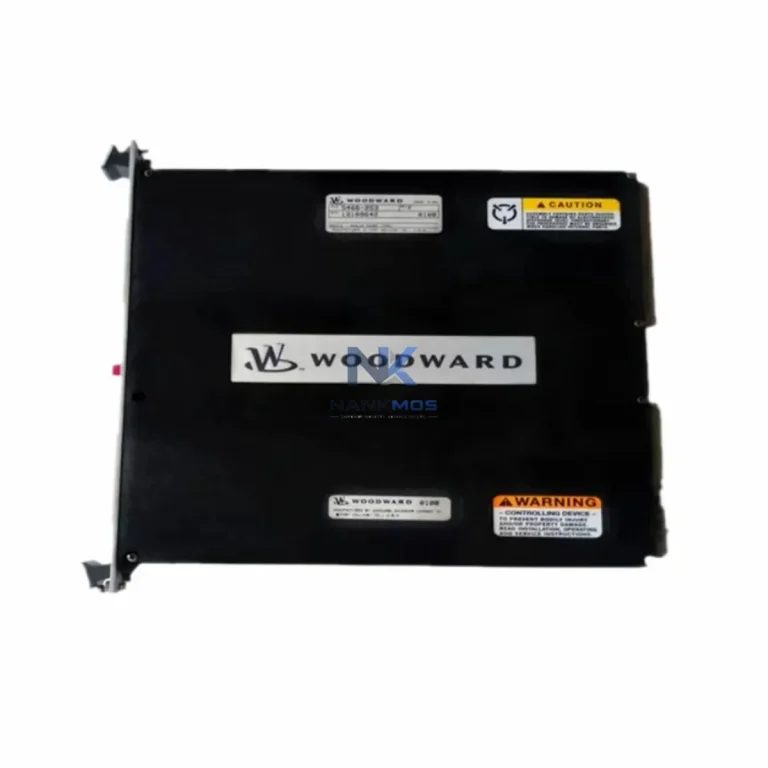
Woodward SST-ESR2-CLX is a NANKMOS industrial automation product record Listed under Other series series and Business & Industrial > Automation, Control & Flow Devices. Confirm condition, availability, lead time, compatibility and documentation by email inquiry.
Brand names are used for identification only.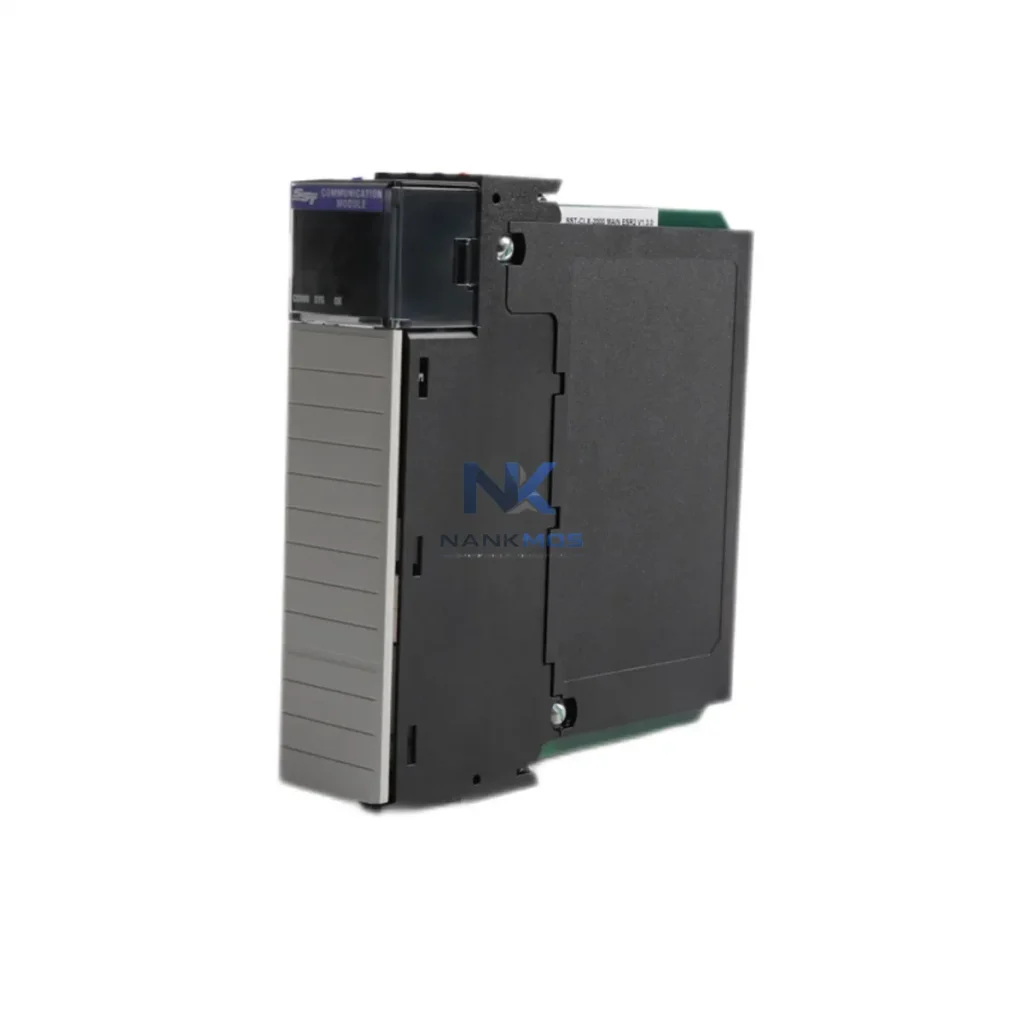
Woodward SST-ESR2-CLX is a NANKMOS industrial automation product record Listed under Other series series and Business & Industrial > Automation, Control & Flow Devices. Confirm condition, availability, lead time, compatibility and documentation by email inquiry.
| Manufacturer | Woodward |
|---|---|
| Application | Industrial Network Communication |
| Part Number / Model | SST-ESR2-CLX |
| Compatible System | Confirmed by inquiry |
| Condition Options | To Confirm |
| Module Type | Communication Module |
| Warranty | 12 Months |
| Packaging | Anti-static Bag / Secure Box |
| Shipping Methods | DHL / FedEx / UPS / Air / Sea |
| Availability | To Confirm |
| Lead Time | To Confirm |
| Documentation | Part number and revision checked before quote |
The WOODWARD SST-ESR2-CLX is a precision-engineered industrial network interface module designed to bridge synchronizer control systems with modern Ethernet-based automation architectures. In smart factory environments where real-time data visibility and deterministic communication are non-negotiable, the SST-ESR2-CLX delivers a robust TCP/IP communication pathway between field-level synchronizer devices and upper-layer control platforms including PLCs, SCADA systems, HMI panels, and MES infrastructure. Its compact, DIN-rail-compatible form factor and industrial-grade design make it a reliable drop-in connectivity solution for power generation, turbine control, and distributed energy management sites.
As industrial facilities transition toward fully networked production environments, the SST-ESR2-CLX serves as a critical data conduit — converting proprietary synchronizer serial signals into structured Ethernet packets that can be consumed by any standards-compliant supervisory system. Whether deployed in a gas turbine control room, a hydroelectric plant, or a distributed energy resource (DER) management site, this gateway ensures that synchronizer status, frequency data, phase angle measurements, and alarm states are continuously available to the control layer without manual polling or data loss.
In a fully integrated smart factory or power generation facility, the SST-ESR2-CLX occupies a pivotal position in the data flow chain. At the field level, WOODWARD synchronizer controllers — such as those in the SPM-A or EasyGen series — generate continuous streams of frequency, voltage, phase angle, and load-sharing data. Without a dedicated network interface, this data remains siloed within the synchronizer's local serial bus, invisible to the broader automation network.
The SST-ESR2-CLX resolves this by converting the synchronizer's native communication output into TCP/IP packets, making the data immediately accessible to Allen-Bradley ControlLogix or CompactLogix PLCs via standard Ethernet I/O. From the PLC layer, the data propagates upward to Rockwell Automation FactoryTalk View SCADA or Wonderware InTouch HMI panels, where operators gain real-time dashboards showing synchronizer status, grid frequency deviation, and breaker interlock states. Simultaneously, the same data stream can feed into remote I/O modules — such as WOODWARD's own digital I/O expansion units — enabling distributed alarm relay logic without additional wiring.
For facilities running Siemens S7-300 or S7-1500 PLCs alongside WOODWARD synchronizer systems, the SST-ESR2-CLX provides the protocol bridge that eliminates the need for custom OPC-UA middleware. Edge gateway devices — such as those running Kepware KEPServerEX or similar industrial data servers — can subscribe to the SST-ESR2-CLX's TCP data feed and republish it to cloud-based SCADA platforms or historian databases like OSIsoft PI, enabling long-term trend analysis and predictive maintenance workflows.
Variable frequency drives (VFDs) managing generator prime movers can also be integrated into this data loop. By correlating VFD speed feedback with synchronizer phase data through the SST-ESR2-CLX gateway, control engineers can implement closed-loop load-sharing algorithms that respond in milliseconds to grid disturbances. Industrial managed switches — such as those in the Hirschmann MICE or Phoenix Contact FL SWITCH series — provide the Layer 2 network backbone that carries all this data with deterministic latency, ensuring that the SST-ESR2-CLX's TCP packets arrive at the PLC and SCADA layers within the required scan cycle windows.
Power supply reliability is equally critical in this architecture. Industrial 24VDC DIN-rail power supplies from brands like MEAN WELL or Phoenix Contact QUINT series ensure that the SST-ESR2-CLX and its associated network infrastructure remain energized during grid disturbances — precisely the moments when synchronizer data is most critical. The complete data chain — from synchronizer field device through the SST-ESR2-CLX gateway, across the industrial Ethernet switch fabric, into the PLC, and up to the SCADA/HMI layer — forms the backbone of a transparent, remotely diagnosable power generation control system.
Many power generation and industrial automation sites still operate with legacy synchronizer systems that communicate exclusively over RS-232 or RS-485 serial links. These protocols are incompatible with modern Ethernet-based SCADA and PLC architectures, creating data islands where critical synchronizer telemetry — frequency deviation, phase angle, voltage matching status — never reaches the supervisory layer. Operators are forced to rely on local panel indicators, increasing the risk of missed alarms and delayed fault response.
The SST-ESR2-CLX directly addresses this protocol fragmentation by acting as a transparent serial-to-Ethernet gateway. Once installed, synchronizer data flows continuously into the plant's Ethernet network without requiring changes to the synchronizer's firmware or wiring. Remote monitoring becomes immediately feasible: control room engineers can observe synchronizer states from any SCADA workstation on the network, and remote diagnostic sessions via VPN-connected HMI clients can access live synchronizer data without dispatching field technicians.
For sites expanding their generation capacity — adding new generator sets, integrating renewable energy sources, or upgrading to IEC 61850-compliant substation automation — the SST-ESR2-CLX provides a scalable network entry point. Its standard TCP/IP interface means it can be added to existing network segments without reconfiguring the broader automation architecture. Alarm tracking is also significantly improved: with synchronizer alarm states now visible in the SCADA historian, engineers can perform root-cause analysis on past synchronization failures using timestamped event logs rather than relying on operator memory or paper records.
Q1: What communication latency can be expected from the SST-ESR2-CLX in a live SCADA environment? The SST-ESR2-CLX operates over standard TCP/IP Ethernet, and communication latency is primarily determined by the network infrastructure rather than the gateway itself. In a properly segmented industrial Ethernet network with managed switches and QoS configuration, end-to-end latency from synchronizer data update to SCADA display is typically well under 100ms — sufficient for supervisory monitoring and alarm management applications. For hard real-time control loops, the PLC layer handles deterministic execution independently of the SCADA data path.
Q2: Is the SST-ESR2-CLX compatible with both Rockwell Automation and Siemens PLC platforms? Yes. Because the SST-ESR2-CLX communicates over standard TCP/IP Ethernet, it is platform-agnostic at the network level. Integration with Allen-Bradley ControlLogix or CompactLogix systems is straightforward via Ethernet/IP or socket-based communication. For Siemens S7 platforms, the data can be accessed through OPC-DA/UA middleware or direct TCP socket programming in the PLC's SCL/STL environment. Kepware KEPServerEX and similar OPC servers further simplify multi-platform integration.
Q3: How does the SST-ESR2-CLX support remote diagnostics and predictive maintenance? Once the SST-ESR2-CLX is integrated into the plant network, all synchronizer telemetry — including frequency deviation trends, phase angle history, and alarm event logs — becomes available to remote diagnostic tools. Engineers can connect via VPN to the SCADA or historian platform and review historical synchronizer performance data without site visits. Anomaly patterns such as recurring phase mismatches or voltage instability events can be identified early, enabling scheduled maintenance before unplanned outages occur.
Q4: What does the 12-month warranty cover, and how are units tested before shipment? Every SST-ESR2-CLX unit supplied by NANKMOS undergoes pre-shipment functional testing to verify TCP/IP communication, port integrity, and power-up behavior. The 12-month warranty covers manufacturing defects and functional failures under normal operating conditions. Units are shipped in protective packaging with documentation. For warranty claims or technical support, contact [email protected] or call +86 18359268345. Replacement or repair is coordinated promptly to minimize site downtime.
Functional Inspection100% tested on professional platforms to ensure stable performance.
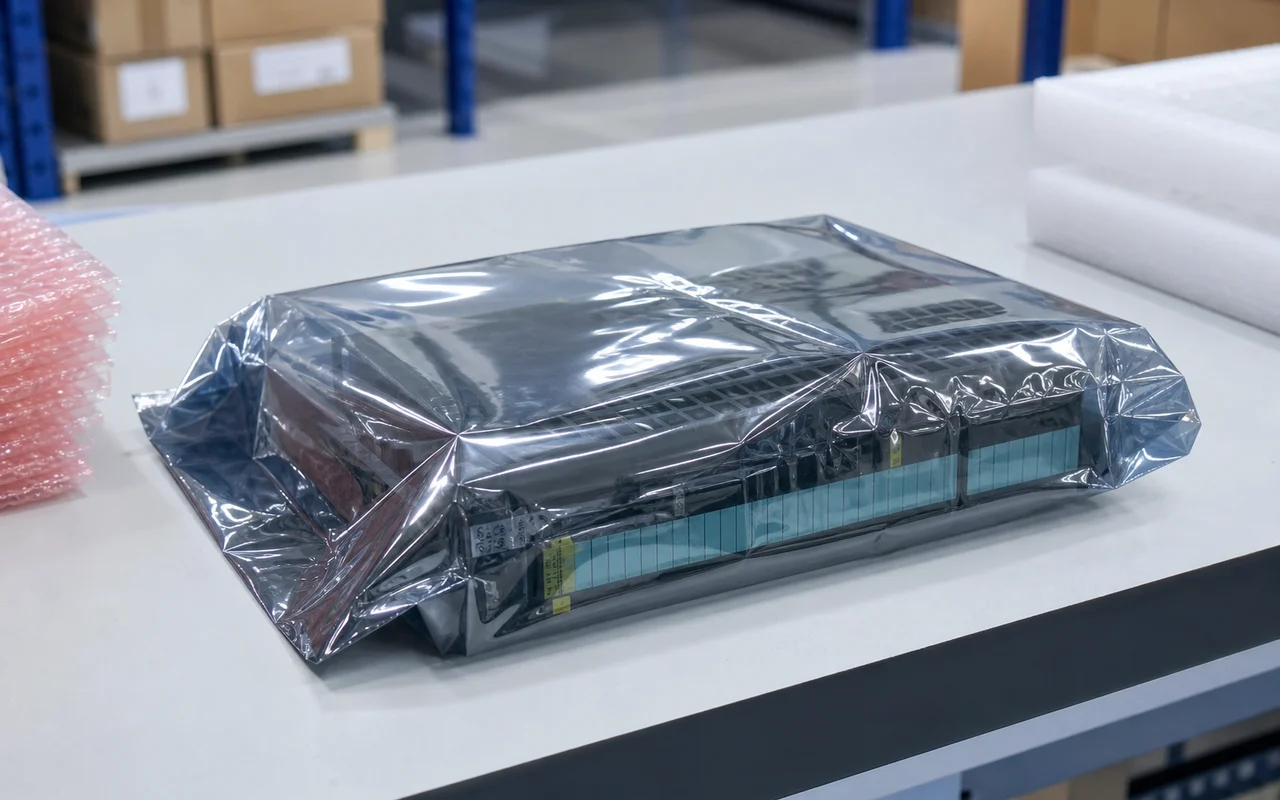 Anti-static Packaging
Modules are packed in anti-static bags to prevent electrostatic damage.
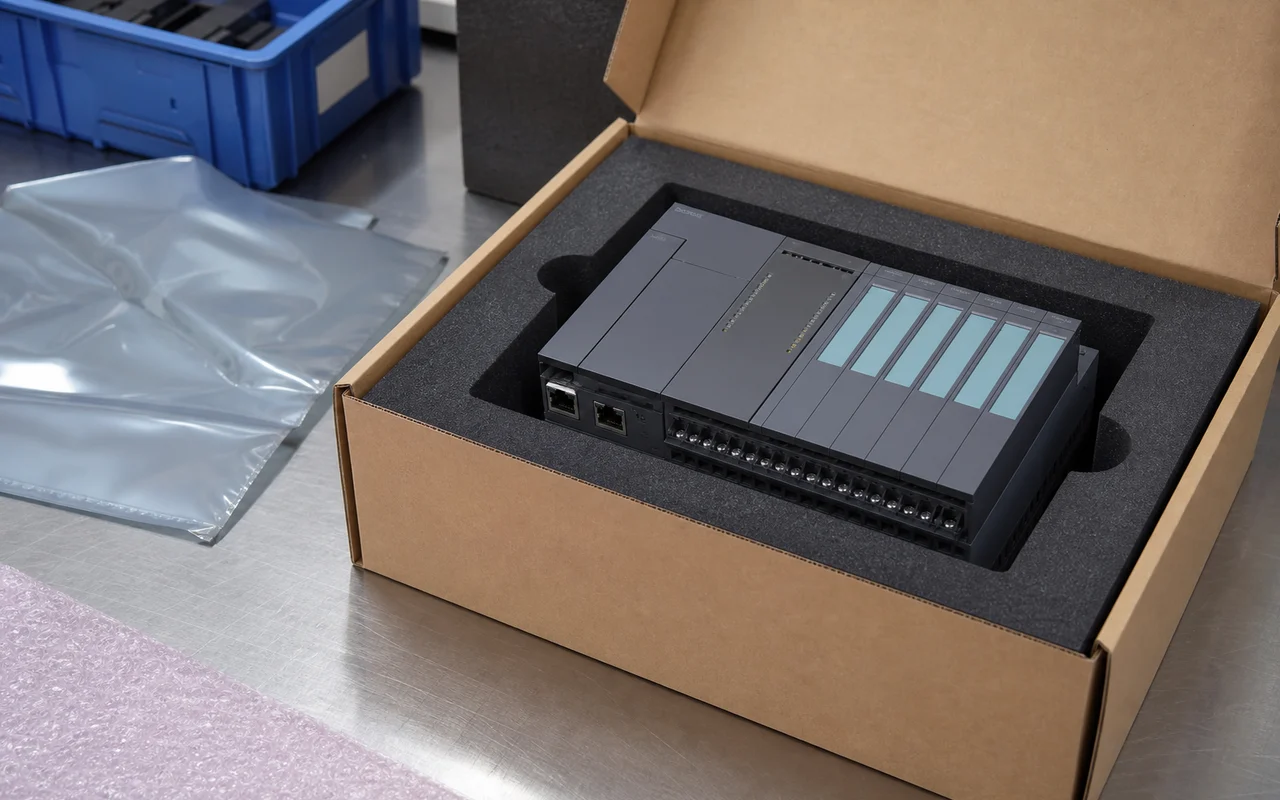 Secure Export Packing
Cushion protection and strong cartons ensure safe transportation.
 Worldwide Shipping
Global logistics network supports air, sea and express delivery.
 Documentation Check
Part number, revision and compatibility verified before shipment.
 After-sales Support
Professional technical support to help resolve your issues.