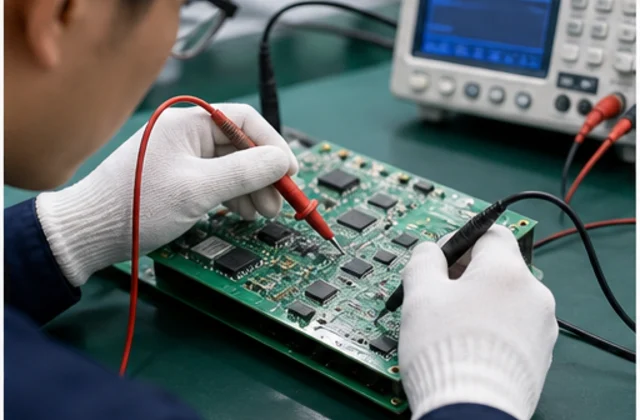
 Functional Inspection
100% tested on professional platforms to ensure stable performance.
Woodward SST-PFB3-PCI is a NANKMOS industrial automation product record Listed under Other series series and Business & Industrial > Automation, Control & Flow Devices. Confirm condition, availability, lead time, compatibility and documentation by email inquiry.
Brand names are used for identification only.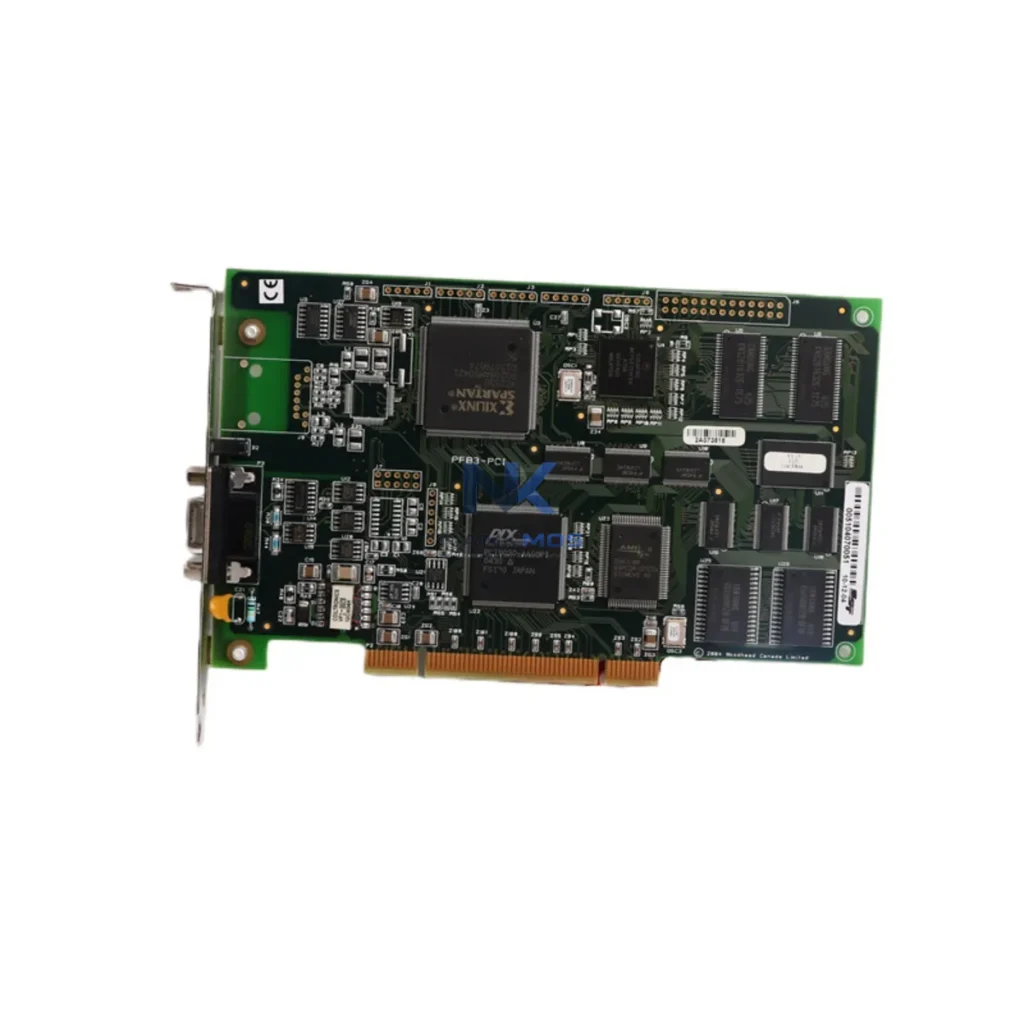
Woodward SST-PFB3-PCI is a NANKMOS industrial automation product record Listed under Other series series and Business & Industrial > Automation, Control & Flow Devices. Confirm condition, availability, lead time, compatibility and documentation by email inquiry.
| Manufacturer | Woodward |
|---|---|
| Application | Industrial Network Communication |
| Part Number / Model | SST-PFB3-PCI |
| Compatible System | Confirmed by inquiry |
| Condition Options | To Confirm |
| Module Type | Communication Module |
| Warranty | 12 Months |
| Packaging | Anti-static Bag / Secure Box |
| Shipping Methods | DHL / FedEx / UPS / Air / Sea |
| Availability | To Confirm |
| Lead Time | To Confirm |
| Documentation | Part number and revision checked before quote |
The WOODWARD SST-PFB3-PCI is a high-performance Profibus DP/FMS PCI communication interface card engineered for seamless integration between host PC-based control platforms and industrial fieldbus networks. Designed for demanding automation environments, the SST-PFB3-PCI bridges the gap between legacy Profibus DP/FMS field devices and modern SCADA, DCS, and MES architectures — enabling real-time data acquisition, protocol-transparent communication, and deterministic network performance across the full production data chain.
In smart factory deployments, the SST-PFB3-PCI functions as a critical node in the data flow from field-level sensors and actuators up through PLC controllers, remote I/O modules, HMI panels, and supervisory systems. Its PCI form factor allows direct installation into industrial PCs and embedded controllers, eliminating the need for external converters and reducing latency in time-critical control loops. Whether deployed in automotive assembly, energy management, chemical processing, or discrete manufacturing, this gateway delivers the connectivity backbone that modern industrial data architectures demand.
In a fully connected smart factory, the SST-PFB3-PCI sits at the heart of the Profibus segment, aggregating real-time process data from distributed field devices and delivering it to the supervisory layer with minimal overhead. Consider a typical production line architecture: field-level sensors — including pressure transmitters, flow meters, and temperature probes — communicate over Profibus DP to remote I/O modules such as the SST-DN3-PCI DeviceNet companion card or third-party Profibus I/O slaves. These I/O nodes feed structured process data upward through the SST-PFB3-PCI into the host industrial PC, where a WOODWARD easYgen or equivalent supervisory controller processes the data stream.
At the PLC layer, Siemens S7-300/S7-400 controllers or Allen-Bradley ControlLogix systems act as Profibus DP masters, coordinating motion control, valve actuation, and drive speed references. Variable frequency drives — such as those in the ABB ACS series or Siemens SINAMICS family — receive setpoints via Profibus DP, with the SST-PFB3-PCI enabling the host SCADA system to monitor drive status, fault codes, and energy consumption in real time. This bidirectional data path is essential for closed-loop energy optimization and predictive maintenance workflows.
Moving up the data chain, the SST-PFB3-PCI interfaces with HMI panels running on the same industrial PC platform, providing live process visualization without additional protocol conversion hardware. SCADA platforms such as Wonderware InTouch, Ignition by Inductive Automation, or Siemens WinCC connect directly to the SST-PFB3-PCI driver layer, enabling tag-based data acquisition at scan rates aligned with Profibus cycle times. For edge computing deployments, the card can feed structured data to an industrial edge gateway — such as the SST-PNIO-2P PROFINET gateway — which then forwards aggregated datasets to cloud analytics platforms or MES systems via OPC-UA or MQTT.
Remote I/O expansion is handled through Profibus DP slave modules distributed across the production floor. Each slave node — whether a digital I/O block, analog input module, or motor starter — reports its status cyclically to the SST-PFB3-PCI master, ensuring that the SCADA layer always has a current snapshot of field conditions. Alarm events generated at the field level propagate through the Profibus segment to the host system within one bus cycle, enabling sub-second alarm response and reducing mean time to repair (MTTR) in fault scenarios.
For installations requiring network redundancy, the SST-PFB3-PCI can be paired with an industrial managed switch — such as those in the Hirschmann MICE or Moxa EDS series — to create a ring topology that maintains communication continuity even during cable faults. This architecture is particularly valuable in continuous process industries where unplanned downtime carries significant financial and safety consequences. The combination of the SST-PFB3-PCI's deterministic Profibus timing and a managed switch's rapid spanning tree recovery delivers the network resilience that modern smart factory standards require.
Many industrial sites operate with a mix of legacy Profibus field devices and newer Ethernet-based control systems, creating protocol fragmentation that prevents unified data visibility. The SST-PFB3-PCI directly addresses this challenge by acting as a transparent Profibus master or slave within the host PC, allowing SCADA and MES applications to read and write Profibus process data using standard Windows or Linux API calls — without requiring custom protocol stacks or middleware.
Data silos are a persistent problem in multi-vendor automation environments. When a plant runs Siemens PLCs on one segment, Allen-Bradley controllers on another, and legacy DCS nodes on a third, the SST-PFB3-PCI provides the Profibus backbone that aggregates field data into a single host application. This unified data layer enables cross-system KPI dashboards, production reporting, and OEE (Overall Equipment Effectiveness) calculations that would otherwise require manual data reconciliation.
Remote monitoring and diagnostics are significantly enhanced by the SST-PFB3-PCI's ability to expose Profibus diagnostic data — including slave status, bus error counters, and communication cycle statistics — to the SCADA layer. Maintenance teams can identify degrading cable connections, failing slave modules, or bus timing conflicts from the control room, reducing the need for physical site inspections and enabling condition-based maintenance scheduling. Combined with a remote access solution such as a cellular industrial router, the SST-PFB3-PCI enables full Profibus network diagnostics from off-site locations.
Production line transparency is achieved through continuous data logging of all Profibus process variables, enabling trend analysis, batch reporting, and regulatory compliance documentation. Alarm tracking is fully supported, with the host SCADA system recording alarm timestamps, durations, and acknowledgment events for each Profibus node. System expansion is straightforward: additional Profibus slaves can be added to the segment up to the 126-node limit, with GSD file import handling device configuration automatically.
Q1: What is the maximum communication speed of the SST-PFB3-PCI, and does it affect real-time control performance?The SST-PFB3-PCI supports Profibus DP baud rates from 9.6 kbps up to 12 Mbps, with automatic baud rate detection. At 12 Mbps, bus cycle times for a typical 32-node segment are well under 10 ms, making it fully suitable for real-time motion control, drive coordination, and fast I/O scanning applications. The PCI bus interface ensures that data transfer between the card and the host CPU does not introduce additional latency into the control loop.
Q2: Is the SST-PFB3-PCI compatible with both Profibus DP and Profibus FMS protocols simultaneously?Yes. The SST-PFB3-PCI supports both Profibus DP (V0 and V1) and Profibus FMS on the same physical interface, with protocol selection managed through the driver configuration. This dual-protocol capability allows the card to operate in mixed environments where legacy FMS devices coexist with modern DP slaves, protecting existing field device investments while enabling incremental system upgrades.
Q3: How does the SST-PFB3-PCI support remote diagnostics and network health monitoring?The card exposes comprehensive Profibus diagnostic data through its driver API, including live bus status, slave communication state, error counters, and cycle time statistics. SCADA applications can poll this diagnostic data at configurable intervals, enabling real-time network health dashboards and automated alerting when bus errors exceed defined thresholds. This capability supports predictive maintenance workflows and reduces unplanned downtime by identifying network degradation before it causes a production stoppage.
Q4: What warranty and pre-shipment testing does the SST-PFB3-PCI include?Every SST-PFB3-PCI unit supplied by NANKMOS carries a 12-month warranty covering manufacturing defects and communication failures under normal operating conditions. Each unit undergoes functional communication testing prior to shipment, verifying Profibus DP master/slave operation, baud rate detection, and PCI bus enumeration. In-stock units are available for immediate dispatch, with lead time confirmation provided at the time of order.
Functional Inspection100% tested on professional platforms to ensure stable performance.
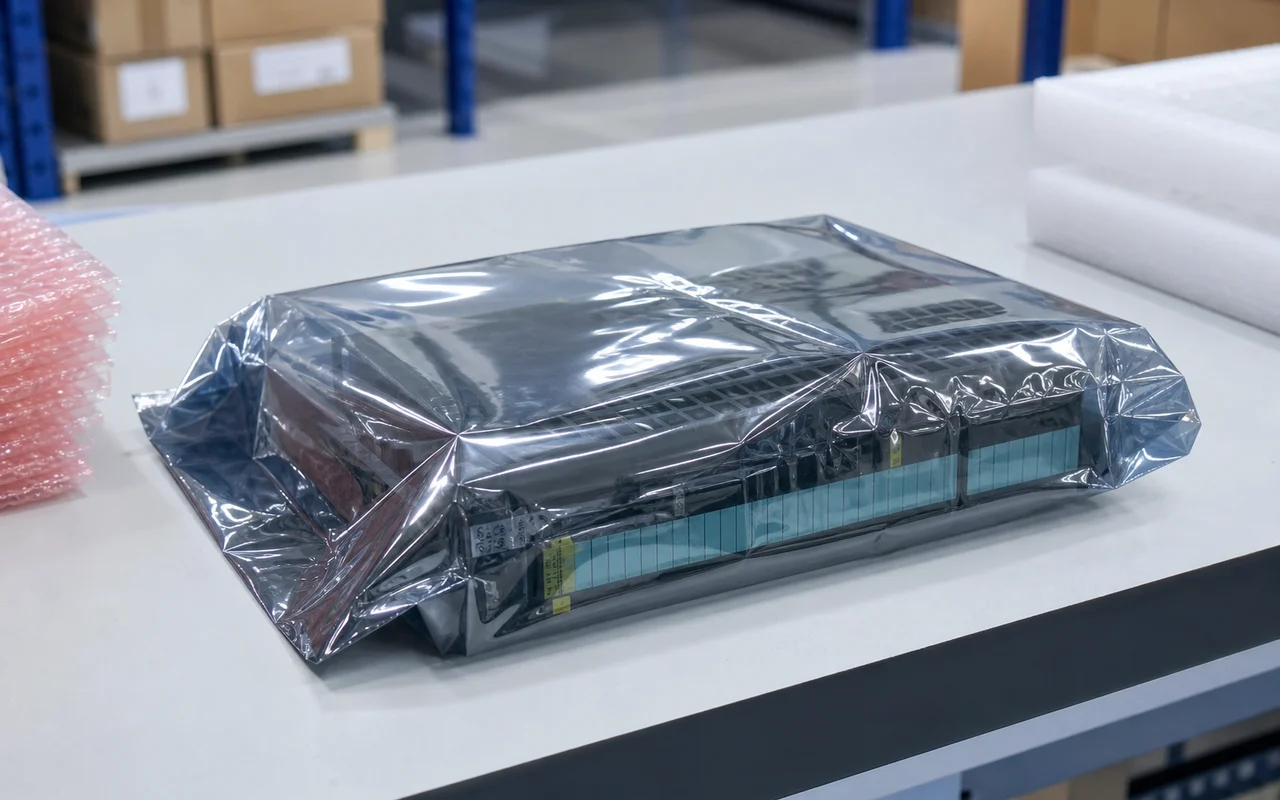 Anti-static Packaging
Modules are packed in anti-static bags to prevent electrostatic damage.
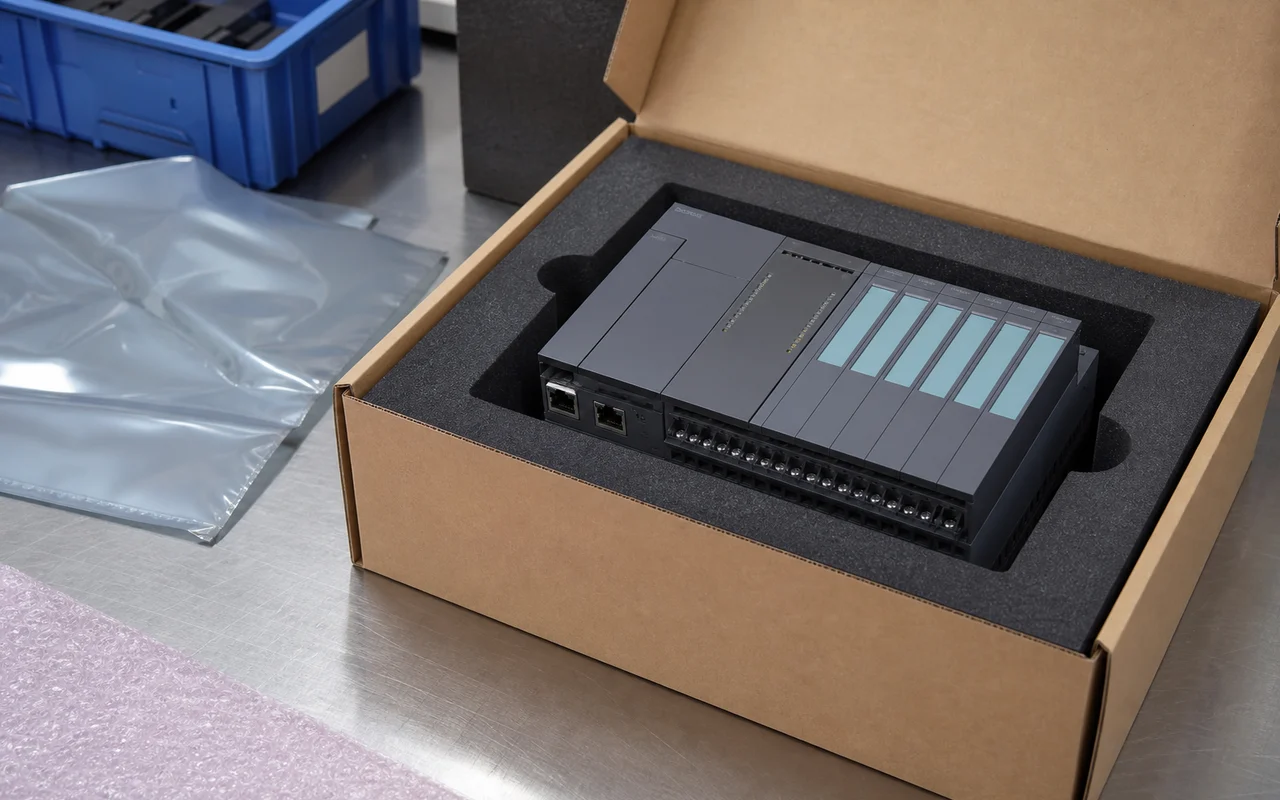 Secure Export Packing
Cushion protection and strong cartons ensure safe transportation.
 Worldwide Shipping
Global logistics network supports air, sea and express delivery.
 Documentation Check
Part number, revision and compatibility verified before shipment.
 After-sales Support
Professional technical support to help resolve your issues.