
Industry Applications
Physical AI in Manufacturing: What Control and Safety Teams Should Verify
Physical AI is moving industrial automation discussions beyond software models and into machines that see, decide and act in the real world. For maintenance and controls teams, the practical question is not whether every plant should adopt a new AI layer immediately. It is how to verify that new robotic and control workflows remain observable, […]
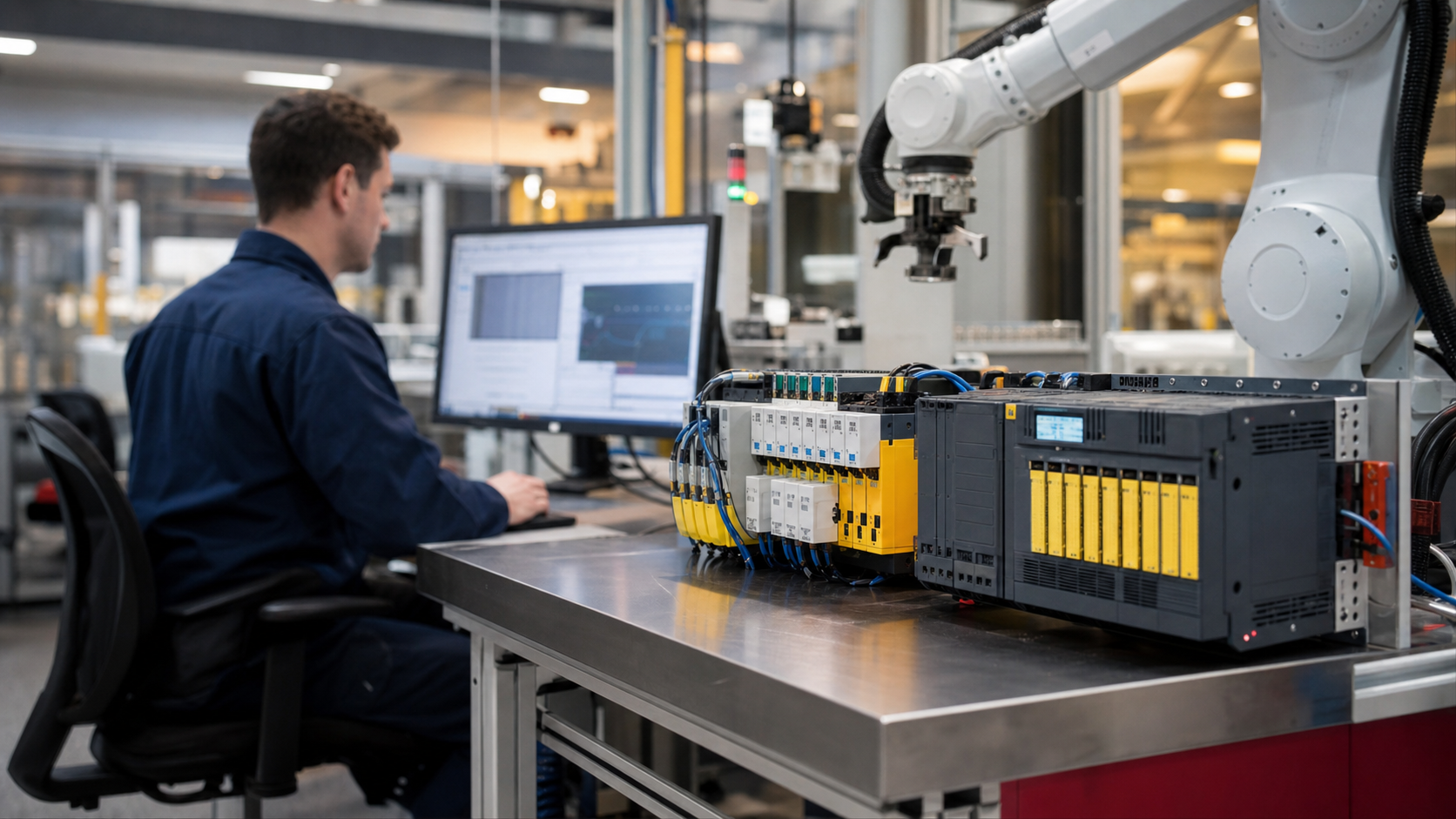
Physical AI is moving industrial automation discussions beyond software models and into machines that see, decide and act in the real world. For maintenance and controls teams, the practical question is not whether every plant should adopt a new AI layer immediately. It is how to verify that new robotic and control workflows remain observable, bounded and compatible with the systems already keeping production running.
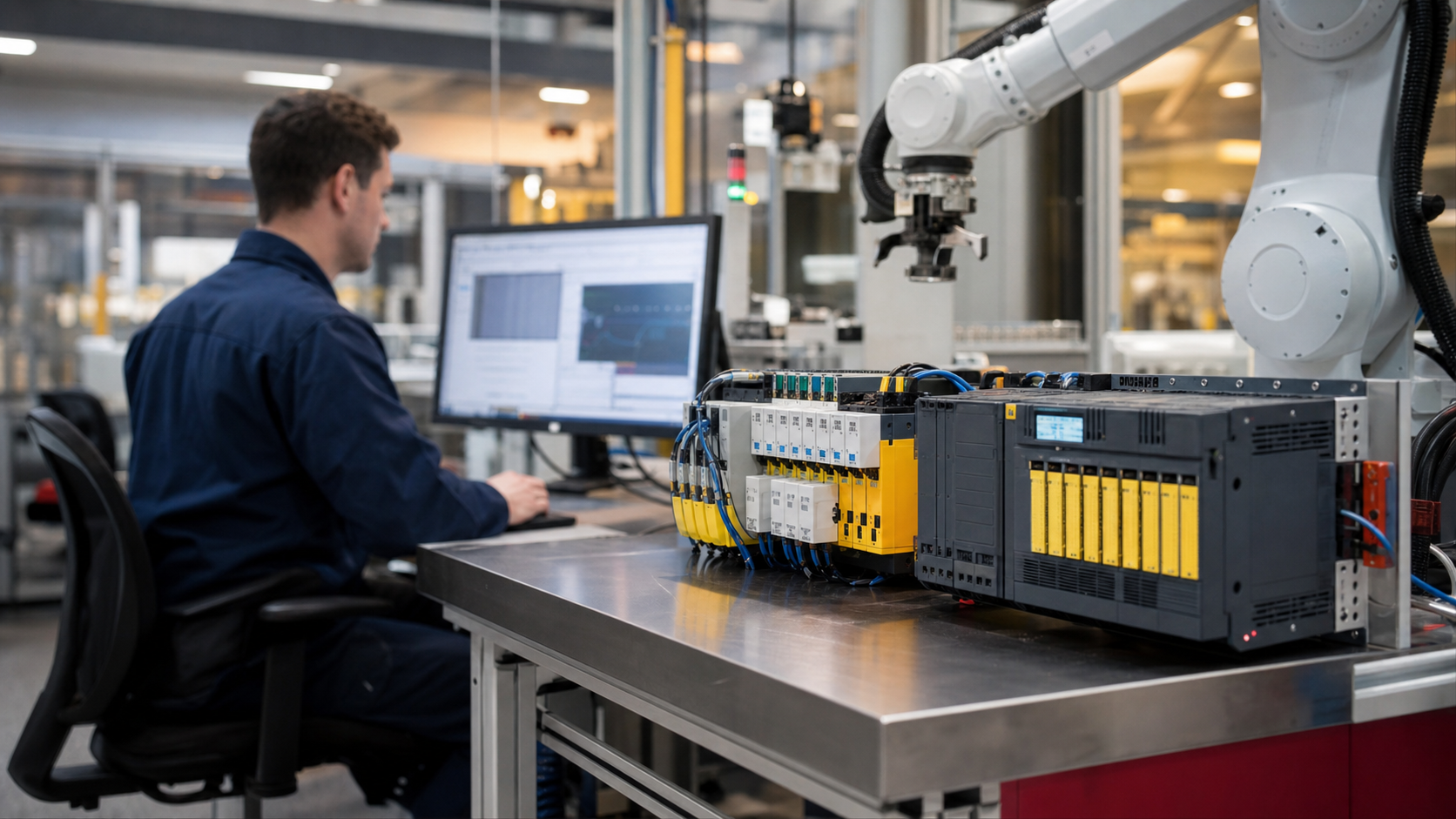
What the ABB and NVIDIA discussion highlights
An official ABB Robotics and NVIDIA discussion describes physical AI as a manufacturing opportunity that depends on robotic vision, digital engineering, reference architectures and validation. It also points to a need for continuous feedback between virtual engineering and the physical system. That direction matters because a model that performs well in a controlled demonstration still needs evidence that it behaves predictably around real equipment, people and changing production conditions.
The source is a technology direction and implementation discussion. It does not establish the availability, condition, certification or compatibility of any individual automation part. Those details still need to be confirmed for the specific system and application.
Five checks for control and maintenance teams
1. Define the operating boundary
Document what the AI-enabled cell is allowed to observe and control. Separate advisory outputs from commands that can affect motion, process values or a shutdown circuit. The boundary should be understandable to the maintenance team and visible in the control documentation.
2. Keep safety functions independently reviewable
Vision or planning software should not make the safety function opaque. Check how emergency stops, interlocks, safety I/O and safe-state behavior are represented, tested and handed back to the existing safety architecture. For legacy systems, record the interface points before any upgrade is proposed.
3. Verify the data path, not only the model output
Trace the path from sensor and network interface through the controller, operator interface and historian. Confirm timestamps, failure behavior, diagnostics and access permissions. A convincing screen is not enough if the underlying signal path cannot be diagnosed during a production incident.
4. Test changes against the installed platform
When a new robot, gateway or computing layer is introduced, identify the exact PLC, DCS, I/O, communication and safety modules that must remain compatible. Use the part number, revision, firmware context and application requirements in the review. Our product systems directory and supported brand directory can help organize the initial sourcing path, but availability and fit are confirmed by inquiry.
5. Preserve a human escalation path
Maintenance teams need a clear route when a component is obsolete, a revision is uncertain or the available documentation is incomplete. Capture the model number, nameplate photos, quantity, condition preference and destination before requesting a match. The quality and delivery process explains the information that supports a more useful review, and the inquiry team can confirm the next step by email.
What this means for legacy automation
Physical AI does not remove the need for disciplined parts identification. It makes that discipline more important. A new perception or orchestration layer may depend on communication modules, processors, power supplies, backplanes and safety interfaces that sit inside an older control system. Replacing one visible component without checking the surrounding system can create a new failure point rather than a practical upgrade.
A useful engineering review therefore starts with the installed base: what is running, what is documented, what is discontinued and what must remain untouched during the change. From there, teams can decide whether a new capability belongs in a simulation environment, a limited cell trial or a wider production deployment.
A practical inquiry package
For a part or subsystem related to an AI-enabled workcell, include the exact model or part number, manufacturer, quantity, clear nameplate photos, condition preference, current application and destination country. If the requirement is a replacement, include the installed system and revision where available. This gives the sourcing team enough context to check the part record and ask focused compatibility questions without assuming stock or authorization.
Source: ABB Robotics and NVIDIA: Physical AI in manufacturing.
Related guides
View all guides
Electrified Process Heating: Where Power Control Meets the Process Loop
A practical way to distinguish process measurement, control logic and electrical power boundaries when an industrial process heater shows a temperature deviation.
Read guide
DeltaV IQ Controller: How Server-Based Control Changes Spare Planning
Emerson’s DeltaV IQ announcement highlights server-based control. Here is how maintenance teams can distinguish host, software, redundancy and physical-controller support boundaries.
Read guide
Siemens and P&G Expand AI Inspection: What Keeps the Line Running
Siemens’ recent AI inspection announcement highlights an interconnected camera, edge-computing and PLC workflow. Here is how maintenance teams can trace faults before replacing hardware.
Read guide
Emerson’s Planned Qatar Service Center: What Flow-Instrument RFQs Still Need
Emerson has announced a planned Qatar automation service center. Here is what buyers should document in flow-instrument RFQs while its capabilities remain future plans.
Read guideSend your part number, photos or nameplate.
Our team will verify, check availability, and reply with options within 24 hours.
[email protected]+86 18359268345WhatsApp