
Quality & Delivery
Schneider Electric 800 VDC Arc Flash Research: Cabinet Records Before RFQ
Use Schneider Electric 800 VDC arc flash research as a prompt to improve cabinet records, safety context and RFQ details.
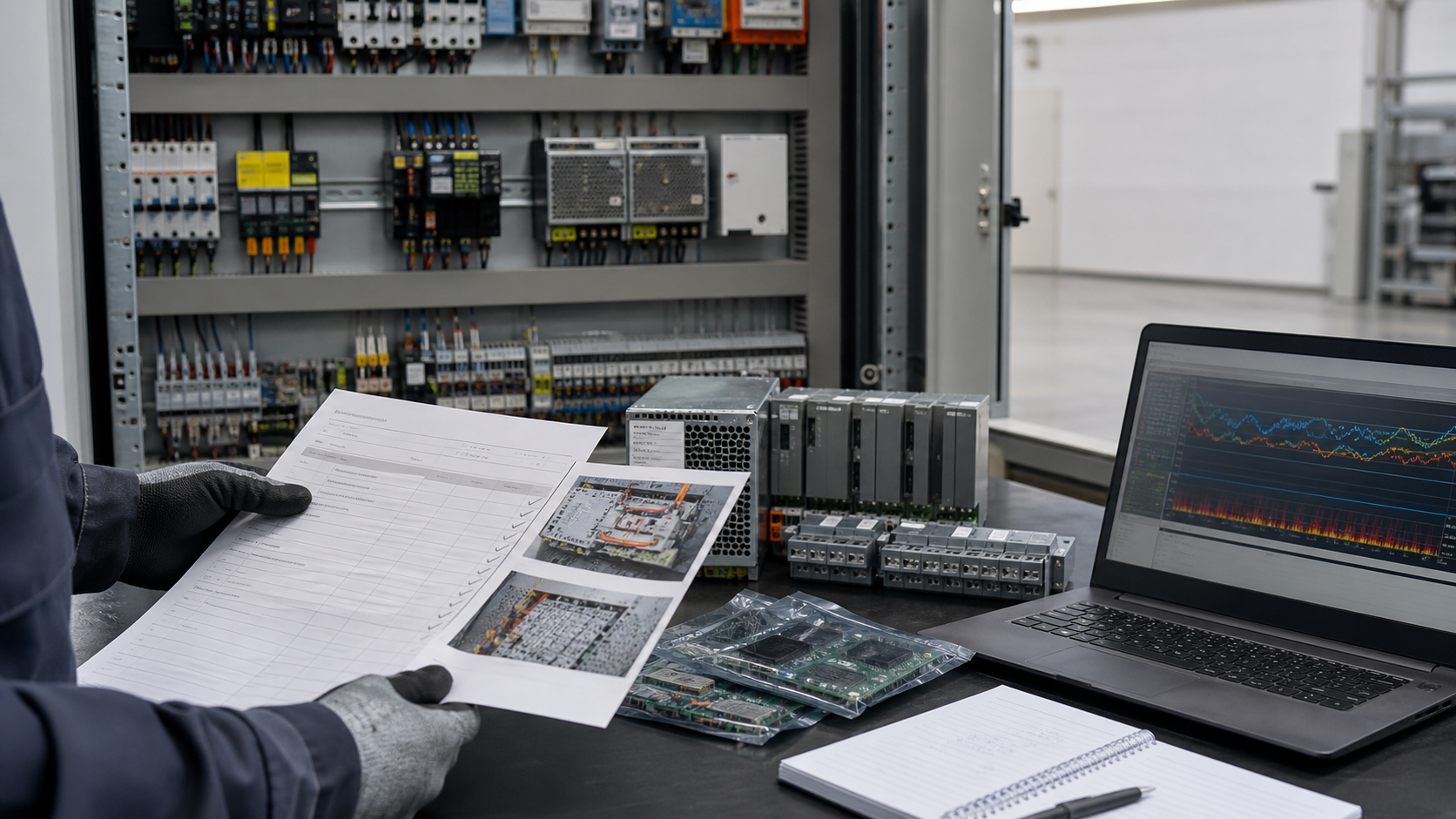
Schneider Electric published a recent newsroom update about research into 800 VDC arc flash risk in data centers. The topic is specific, but the maintenance lesson is wider: when power density, cabinet architecture, and control-system dependencies become more complex, spare-part and RFQ records need to capture more than a broad brand name or a loose cabinet description.
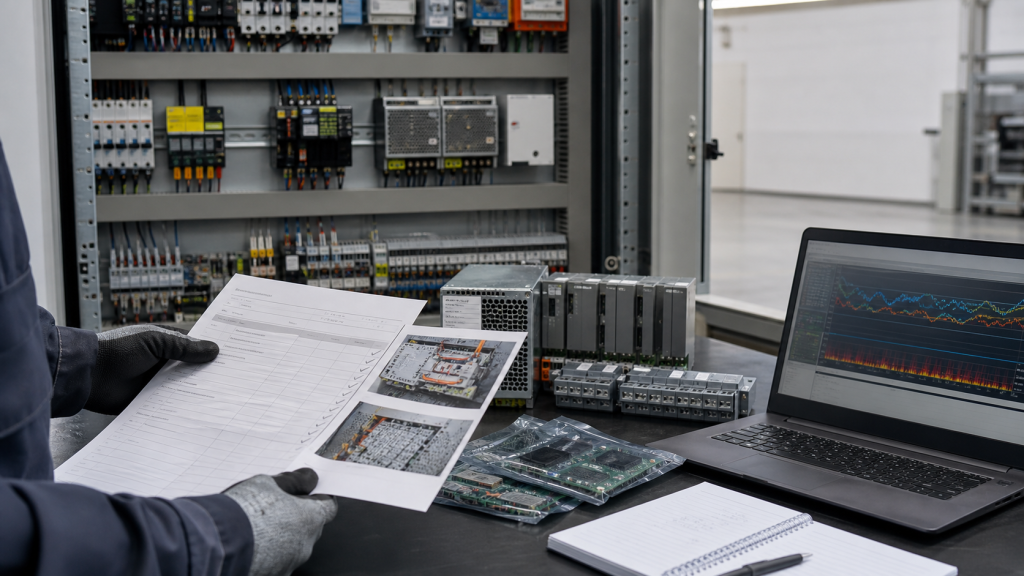
This article uses Schneider Electric’s 800 VDC research as industry context. It does not claim that a specific Schneider Electric, Modicon, TeSys, power-supply, relay, breaker, terminal, PLC, or communication module is available, original, authorized, newly supported, or covered by a fixed warranty. Those details must be confirmed for the exact item and destination involved in an inquiry.
What the Schneider Electric update is about
Schneider Electric’s official newsroom release discusses a study assessing arc flash risk in 800 VDC data center architectures. The company frames the work around future power architectures, safety analysis, and collaboration with hyperscale data center stakeholders.
Schneider Electric also publishes broader product and system information for low-voltage products and systems. Those pages are useful background for understanding electrical distribution and cabinet-level equipment, but they are not a replacement for checking the actual installed part number, cabinet layout, protection device, or control component.
Why cabinet context matters in a sourcing inquiry
A control cabinet is not just a place where modules are mounted. It is a system context. A PLC power supply, communication module, relay, terminal assembly, interface card, or protection device may be physically small, but its suitability depends on how it is installed, wired, powered, protected, and documented.
When an inquiry only says “Schneider module” or “cabinet power part,” the reviewer has to guess. That guess may be wrong if two parts share a similar appearance but differ in voltage rating, terminal layout, communication role, revision, mounting method, or system function. A stronger inquiry makes the installed context visible from the start.
Details to record before removing or replacing a cabinet part
Before sending an RFQ, maintenance teams should capture the part identity and cabinet context separately. The identity record should include the full catalog number, complete suffix, visible revision, serial or batch reference if relevant, and any separate label on the side or rear of the unit.
The cabinet context should include:
- Clear front-label and side-label photos.
- Installed cabinet photo showing neighboring devices.
- Voltage, power, or terminal context where it is safely available from documentation.
- Rack, rail, slot, or mounting location.
- Application role, such as power supply, relay, I/O, gateway, drive-related control, or protection device.
- Quantity, condition preference, destination country, and urgency.
These details help separate model identification from quotation confirmation. The first step is to understand what the item is. The second step is to confirm condition options, availability, documentation, packing, and delivery for that exact request.
Do not infer compatibility from voltage or brand alone
Voltage class, product family, and brand name are not enough to prove interchangeability. Two components can belong to the same broad family but differ in electrical rating, firmware relationship, terminal arrangement, communication protocol, certification context, or mechanical fit.
For safety-related or power-adjacent components, avoid shortcut assumptions. If the old record is incomplete, preserve it as a historical note and add fresh evidence: photos, label transcription, cabinet position, and application context. Do not silently rewrite old cabinet terminology into a newer product label unless the match has been checked.
How this applies to Schneider Electric and Modicon inquiries
Many maintenance records use a mix of Schneider Electric, Modicon, Telemecanique, Square D, TeSys, and other historical or platform references. That mix is normal in long-life automation systems. The key is to avoid flattening those references into one vague brand field.
Readers can review the NANKMOS Schneider Electric product records, filter published Schneider Electric parts, check the quality and delivery notes, or send a cabinet-related RFQ. For any request, NANKMOS should confirm the exact model, condition, compatibility context, available documentation, destination, and delivery options before making a sourcing recommendation.
A practical RFQ format
A useful cabinet RFQ does not have to be long. It should be precise. A good message might include the exact part number, brand or historical label, quantity, condition preference, destination country, and three photos: front label, side label, and installed cabinet context. If the part is associated with a power or safety function, say so without making unsupported technical assumptions.
For example, “Schneider Electric module from main control cabinet” is a weak request. “Schneider Electric / Modicon part number shown in attached label photo, installed beside power supply and terminal block in line 2 cabinet, quantity 1, open to new or refurbished, destination Mexico” is much easier to review.
Final takeaway
Schneider Electric’s 800 VDC arc flash research is a useful reminder that cabinet-level records matter. Even when a spare part is small, the surrounding electrical and control context can affect how the inquiry should be reviewed.
For industrial automation maintenance teams, the safest sourcing habit is evidence first: exact label, cabinet photo, application role, quantity, condition preference, and destination. The quotation can then confirm what is actually available and appropriate for that specific request.
Related guides
View all guides
Electrified Process Heating: Where Power Control Meets the Process Loop
A practical way to distinguish process measurement, control logic and electrical power boundaries when an industrial process heater shows a temperature deviation.
Read guide
DeltaV IQ Controller: How Server-Based Control Changes Spare Planning
Emerson’s DeltaV IQ announcement highlights server-based control. Here is how maintenance teams can distinguish host, software, redundancy and physical-controller support boundaries.
Read guide
Siemens and P&G Expand AI Inspection: What Keeps the Line Running
Siemens’ recent AI inspection announcement highlights an interconnected camera, edge-computing and PLC workflow. Here is how maintenance teams can trace faults before replacing hardware.
Read guide
Emerson’s Planned Qatar Service Center: What Flow-Instrument RFQs Still Need
Emerson has announced a planned Qatar automation service center. Here is what buyers should document in flow-instrument RFQs while its capabilities remain future plans.
Read guideSend your part number, photos or nameplate.
Our team will verify, check availability, and reply with options within 24 hours.
[email protected]+86 18359268345WhatsApp