
Product Systems
Microchip Edge AI Sensor Bridge: RFQ Records for Vision and Ethernet Modules
Use Microchip edge AI sensor-bridge news to improve RFQ records for vision systems, Ethernet modules and interface boards.
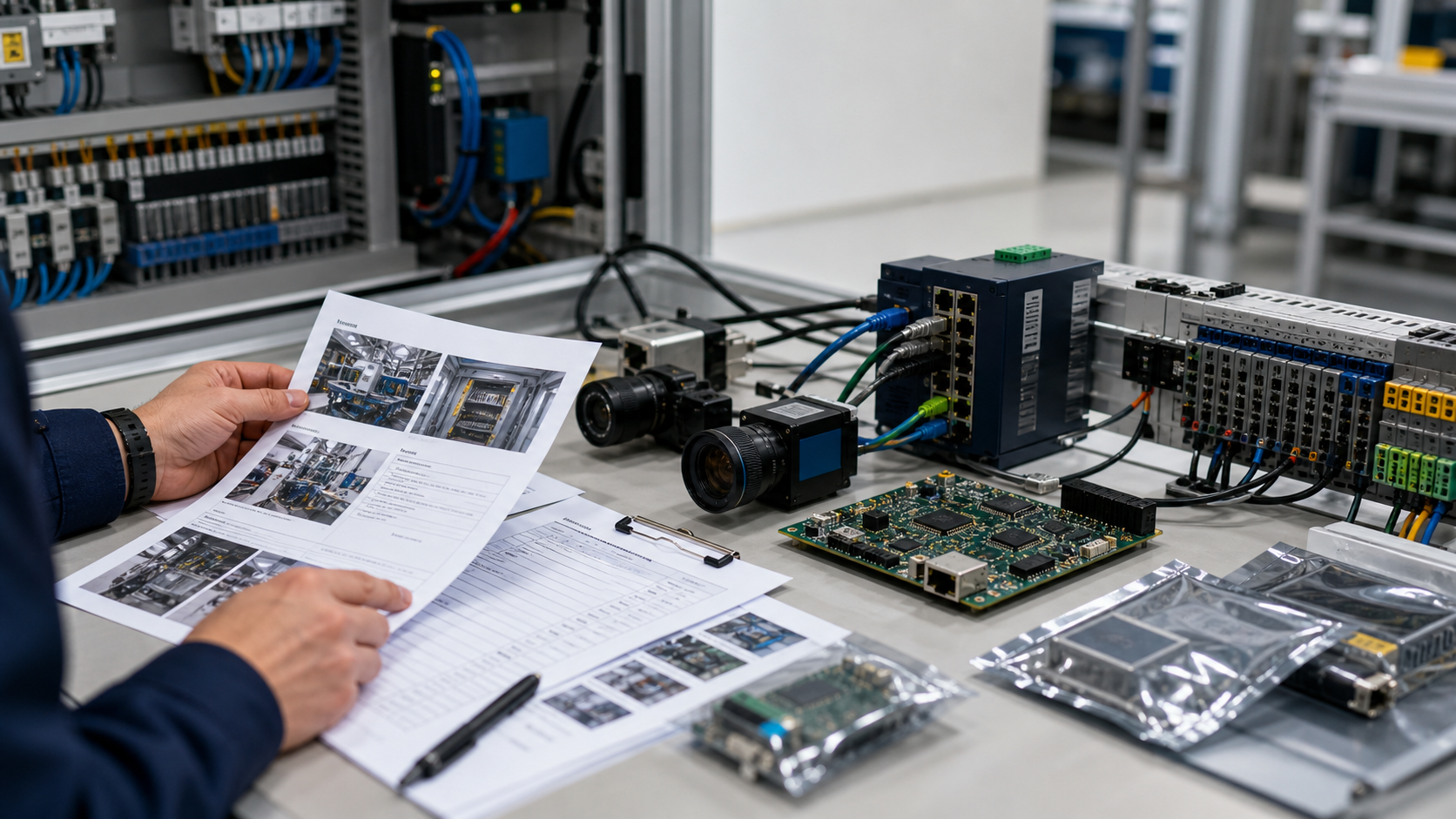
Microchip announced the PolarFire FPGA Ethernet Sensor Bridge Rev 2.0 for edge AI sensor connectivity. For industrial maintenance teams, the useful takeaway is not only about a development kit. It is a reminder that machine vision, industrial Ethernet, embedded control, and sensor-interface projects need clear records before a replacement or spare-part RFQ is sent.
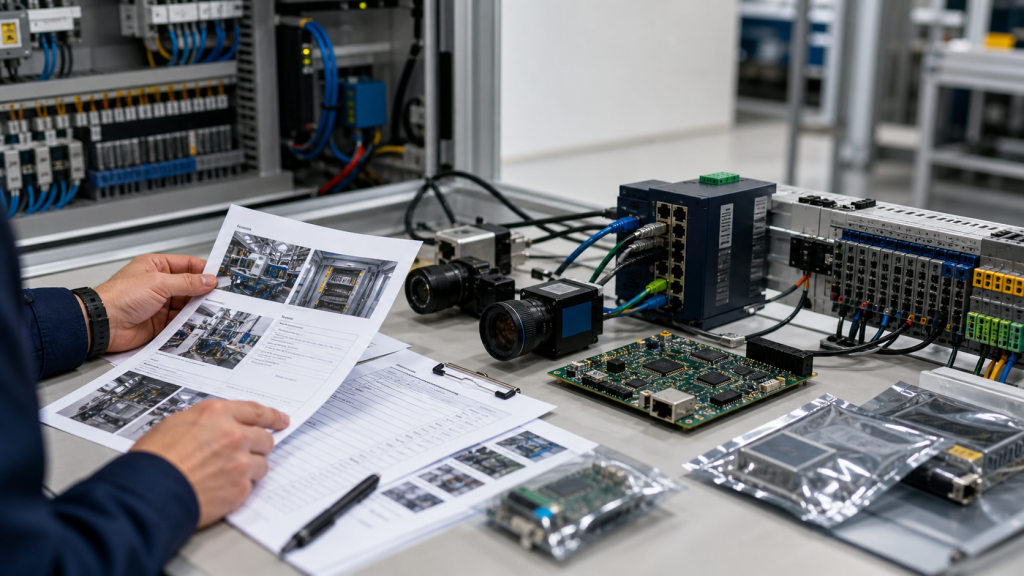
This article uses Microchip’s edge AI sensor-bridge update as industry context. It does not claim that a specific FPGA board, industrial PC, camera, Ethernet switch, I/O module, interface card, cable, or embedded controller is available, original, authorized, newly supported, or covered by a fixed warranty. Those details must be confirmed against the exact item and inquiry.
What the Microchip update is about
Microchip’s official release introduces the PolarFire FPGA Ethernet Sensor Bridge Rev 2.0 for connecting sensors in edge AI applications. The announcement discusses Ethernet-based sensor connectivity, FPGA processing, and machine-vision style use cases.
Microchip also publishes broader information for PolarFire FPGAs. Those pages provide useful background, but they do not identify the installed board, camera, cable, firmware, interface, or cabinet context in an existing automation system.
Why edge AI projects create RFQ ambiguity
Edge AI and vision systems often combine multiple layers: camera hardware, sensor bridges, Ethernet switches, embedded boards, industrial PCs, I/O modules, power supplies, and control software. A maintenance record may describe the system as “vision inspection” while the hardware labels identify several separate components.
If an RFQ only says “AI camera board” or “Ethernet sensor module,” the reviewer has too little evidence. The request should separate the exact item from the system function. That makes it clear whether the inquiry is for the same model, a spare interface board, a camera-related accessory, or a compatibility review.
Records to capture before requesting vision or sensor-interface parts
Start by photographing every label in the chain: camera, sensor bridge, Ethernet switch, embedded board, I/O module, power supply, and cabinet tag. Record complete part numbers, revision markings, cable or connector type, and the installed location.
A practical RFQ package should include:
- Complete model and revision for the requested board, camera, or module.
- Photos of the front label, side label, connector area, and installed cabinet context.
- Interface details, such as Ethernet, M12, RJ45, I/O, camera link, or other documented connection type.
- System role, such as vision inspection, sensor bridge, industrial PC, gateway, switch, or control interface.
- Quantity, condition preference, destination country, and timing.
- Whether the request is for identical replacement, possible equivalent, or engineering review.
Compatibility depends on more than the board name
A board name or product family is not enough to prove interchangeability. Firmware, interface timing, connector layout, power requirement, protocol support, camera compatibility, latency needs, and system software can all matter in a vision or edge AI installation.
If a maintenance team is looking for an equivalent part, the RFQ should show the original model and the proposed alternative separately. Include the application context and what still needs confirmation. This avoids turning a sourcing request into an unsupported compatibility claim.
How NANKMOS should handle edge AI and sensor-interface inquiries
NANKMOS should treat Microchip’s update as a signal that industrial vision and edge systems are becoming more connected and more component-dense. For sourcing, the answer is still exact evidence: part number, photos, interface context, cabinet context, condition preference, and destination.
Readers can search published industrial PC and interface records, review product-system sourcing notes, read RFQ sourcing tips, or send a sensor-interface RFQ. Availability, documentation, compatibility, and delivery should be confirmed for each exact inquiry.
Final takeaway
Edge AI and industrial vision systems make automation records more important, not less. The camera, board, Ethernet, power, and control layers all need to be visible in the RFQ.
A useful inquiry preserves the complete model code, revision, photos, cable and connector context, cabinet location, system role, quantity, condition preference, and destination. That gives the review enough information to identify the right item and explain the available options.
Related guides
View all guides
Electrified Process Heating: Where Power Control Meets the Process Loop
A practical way to distinguish process measurement, control logic and electrical power boundaries when an industrial process heater shows a temperature deviation.
Read guide
DeltaV IQ Controller: How Server-Based Control Changes Spare Planning
Emerson’s DeltaV IQ announcement highlights server-based control. Here is how maintenance teams can distinguish host, software, redundancy and physical-controller support boundaries.
Read guide
Siemens and P&G Expand AI Inspection: What Keeps the Line Running
Siemens’ recent AI inspection announcement highlights an interconnected camera, edge-computing and PLC workflow. Here is how maintenance teams can trace faults before replacing hardware.
Read guide
Emerson’s Planned Qatar Service Center: What Flow-Instrument RFQs Still Need
Emerson has announced a planned Qatar automation service center. Here is what buyers should document in flow-instrument RFQs while its capabilities remain future plans.
Read guideSend your part number, photos or nameplate.
Our team will verify, check availability, and reply with options within 24 hours.
[email protected]+86 18359268345WhatsApp