
Industry Applications
Grid Management Update: RFQ Records for Substation Automation Spares
Use Siemens grid-management news to improve RFQ records for substation automation, protection relay and communication spares.
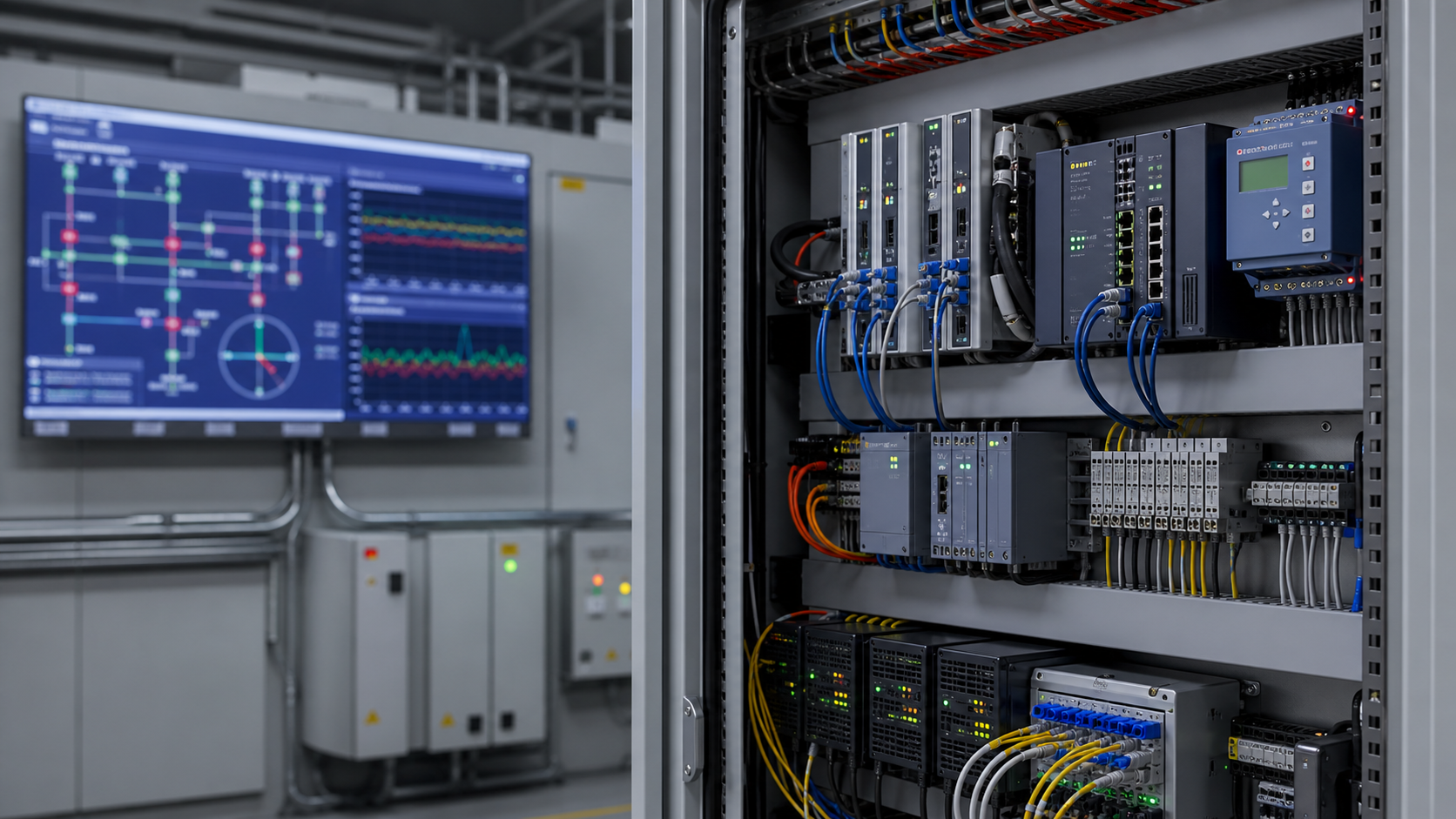
Siemens announced a partnership with Electric Power Group to enhance proactive grid management and wide-area grid visibility. For maintenance and sourcing teams, the practical issue is not only software analytics. Substation automation panels, protection relays, communication gateways, industrial Ethernet devices, power supplies and monitoring interfaces all need clear records before a spare-part RFQ is sent.
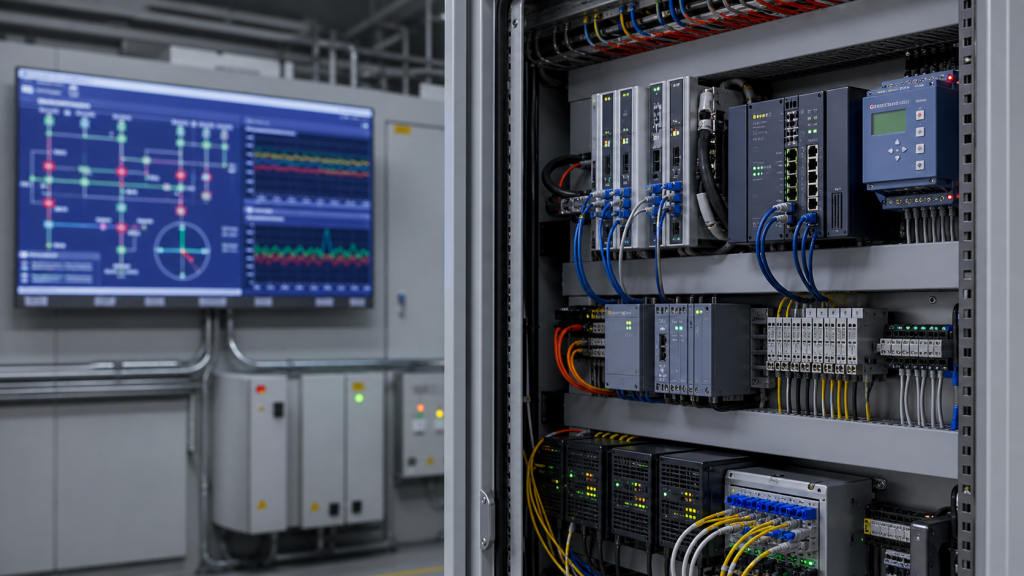
This article uses Siemens' grid-management announcement as industry context. It does not claim that any Siemens, Electric Power Group, protection relay, synchrophasor device, communication gateway, switch, power supply, controller, I/O module or spare part is available, original, authorized, newly supported or covered by a fixed warranty. Those details must be confirmed for each exact inquiry.
What Siemens announced
Siemens' official release says Siemens and Electric Power Group are partnering to enhance proactive grid management and situational awareness. The announcement discusses wide-area monitoring, synchrophasor-based visibility and tools for transmission-system operations.
Siemens also publishes broader information on grid software. Those pages are useful for understanding the operational context, but they do not identify the exact relay, gateway, cabinet device, communication module or spare part installed at a specific substation.
Why grid automation RFQs need equipment-level evidence
Grid monitoring and substation automation depend on many hardware layers: protection relays, phasor measurement devices, remote terminal units, gateways, switches, GPS or timing interfaces, power supplies, fiber/Ethernet links and control-room systems. A software or visibility project may still create a hardware RFQ when a site needs a spare, replacement or documentation review.
If an inquiry only says “grid monitoring module” or “substation communication spare,” the reviewer has too little evidence. The RFQ should separate the operational function from the exact installed item. That makes it clear whether the request is for a relay, gateway, network device, power component, I/O device, timing accessory or documentation confirmation.
Records to capture before requesting substation automation parts
A useful RFQ should show the requested device and the grid-automation context around it.
- Complete manufacturer, model, order code, revision and serial details from the installed device.
- Photos of the front label, side label, terminal area, communication ports and installed panel position.
- System role: protection relay, PMU, RTU, gateway, switch, power supply, controller, I/O module or monitoring accessory.
- Communication context, including fiber, Ethernet, serial, IEC 61850, DNP3, Modbus, time-sync or documented station protocol where available.
- Electrical and cabinet context, such as AC/DC supply, panel section, feeder/bay reference or single-line reference if allowed.
- Quantity, condition preference, destination country and required timing.
- Whether the inquiry is for identical replacement, possible equivalent review, maintenance stock or documentation confirmation.
Do not treat monitoring software context as replacement approval
Grid-management software and wide-area monitoring can identify operational needs, but they do not prove that a hardware item is interchangeable. Firmware, protocol support, timing requirements, station configuration, relay settings, cybersecurity rules, cabinet wiring and utility approval processes may all affect replacement decisions.
If a site wants an alternative part, the RFQ should list the installed original and the proposed item separately. Mark what is known, what is unknown and what needs engineering or utility-side confirmation. This keeps the sourcing discussion grounded in evidence.
How NANKMOS should handle grid automation inquiries
NANKMOS should treat grid-management news as a prompt to ask for structured hardware records. The response should remain tied to exact part numbers, photos, communication context, condition preference and destination.
Readers can search relay and automation product records, review industry application resources, read product-system guidance, or send a substation automation RFQ. Availability, documentation, compatibility and delivery should be confirmed for each exact item.
Final takeaway
Proactive grid management depends on both software visibility and reliable field hardware. RFQs for substation automation spares need to preserve the relay, gateway, communication, power and cabinet context.
A strong inquiry includes exact model data, revision, photos, port details, panel location, protocol context, quantity, condition preference and destination. That gives maintenance and sourcing teams a clearer basis for review without unsupported compatibility assumptions.
Related guides
View all guides
DeltaV IQ Controller: How Server-Based Control Changes Spare Planning
Emerson’s DeltaV IQ announcement highlights server-based control. Here is how maintenance teams can distinguish host, software, redundancy and physical-controller support boundaries.
Read guide
Siemens and P&G Expand AI Inspection: What Keeps the Line Running
Siemens’ recent AI inspection announcement highlights an interconnected camera, edge-computing and PLC workflow. Here is how maintenance teams can trace faults before replacing hardware.
Read guide
Emerson’s Planned Qatar Service Center: What Flow-Instrument RFQs Still Need
Emerson has announced a planned Qatar automation service center. Here is what buyers should document in flow-instrument RFQs while its capabilities remain future plans.
Read guide
ABB Infinitus and Data-Center DC Power: RFQ Records for Automation Spares
A practical RFQ framework for documenting power, automation, cooling and protection interfaces as data-center power architectures evolve toward DC and hybrid designs.
Read guideSend your part number, photos or nameplate.
Our team will verify, check availability, and reply with options within 24 hours.
[email protected]+86 18359268345WhatsApp