
Maintenance & RFQ Guides
Rockwell Autonomous Packaging RFQ: What to Record Before a Line Upgrade
A practical RFQ guide for packaging lines adding advanced control, robotics, digital twins or autonomous material movement, with the identifiers and interfaces to capture before quoting.

“Autonomous operations” is not a single replacement part. A packaging line may combine controllers, drives, I/O, safety devices, robotics, machine vision, production data, and mobile logistics. Before requesting a Rockwell Automation quotation or replacement review, the most useful work is to record how those layers connect.
This article uses Rockwell Automation’s 5 October 2026 PACK EXPO announcement as current background. Rockwell says its demonstration will bring together advanced control, software, AI, digital twins, robotics, and autonomous production logistics, while emphasizing that manufacturers can build on their existing automation foundation. The announcement is a technology direction, not a promise of stock, authorization, or compatibility for a particular site.
1. Draw the packaging cell boundary first
Separate the line into identifiable zones: infeed and accumulation, filling or processing, case packing, labeling or inspection, palletizing, warehouse handoff, and autonomous material movement. Record the machine-builder or integrator boundary for each zone, because a spare requested for a robot cell may have different ownership and commissioning dependencies from a spare in the line controller cabinet.
For each zone, note the controller cabinet, local I/O, safety circuit, drive or servo group, network connection, HMI or visualization point, and any external system that sends production orders or receives status. This prevents a broad “packaging line PLC spare” request from hiding several incompatible assemblies.
2. Capture exact control, drive, and I/O identifiers
- Catalog number, complete order code, hardware revision, firmware revision, and installed quantity
- Controller family, chassis or rack position, slot, power supply, and communication modules
- Drive or servo family, motor and feedback details, parameter backup, and safety option
- Point I/O or On-Machine I/O location, signal type, channel count, terminal base, and wiring layout
- Network topology, node or device name, IP or addressing record, and protocol role
- Safety controller, safety I/O, guard circuit, scanner or light-curtain interface, and validation requirements
If the project references Rockwell names such as Integrated Architecture, PowerFlex, PointMax, On-Machine, LogixEdge, FactoryTalk, or Emulate3D, record the exact installed identifier and software version separately. A product family name is a useful starting point, but it is not enough to establish a drop-in replacement.
3. Treat data and digital-twin dependencies as part of the RFQ
When a line adds digital-twin or production-data functions, document the data path rather than only the controller. Capture tag names, source controller, update rate, timestamp behavior, historian or edge destination, access method, and the model or simulation version used for testing.
For FactoryTalk Optix, Emulate3D, analytics, or orchestration layers, identify whether the requested item is hardware, software, license, configuration, connector, or engineering service. Also record what happens when the data source is unavailable. A spare controller that restores motion may not restore the data contract needed by the production or optimization layer.
4. Record the robotics and AMR handoffs
For robotic case packing or palletizing, include robot model, controller, end-of-arm tooling, safety zone, recipe interface, and recovery sequence. For autonomous mobile robots, record fleet manager or orchestration interface, station IDs, traffic or charging zone, map version, payload and handoff assumptions, and the safety signals exchanged with fixed equipment.
Ask the site team to identify which behavior is local to the machine and which is coordinated by a line-level or fleet-level system. This distinction matters when quoting a control module, safety device, communication interface, or replacement computer.
5. Build an evidence packet before requesting a quotation
- Clear nameplate and terminal photos for every requested assembly
- Cabinet or machine location, rack/slot position, and adjacent module photos
- Current electrical drawings, I/O list, network map, and safety documents where applicable
- Controller, drive, robot, HMI, and software version records
- Reason for replacement: failed unit, spare stock, expansion, retrofit, or migration
- Required delivery window, testing or documentation needs, and commissioning limits
Send one line per decision: like-for-like replacement, capacity expansion, migration, or integration support. For a product and identifier review, see our industrial automation products and technical resources. You can also review the earlier Rockwell ArmorStart RFQ guide or use the contact page to submit a specific RFQ.
Source
Rockwell Automation, “Rockwell Automation Showcases Practical Path Toward Autonomous Operations at PACK EXPO International,” 5 October 2026. The article uses the announcement as background; NANKMOS does not infer availability, authorization, warranty, or guaranteed compatibility from it.
Related guides
View all guides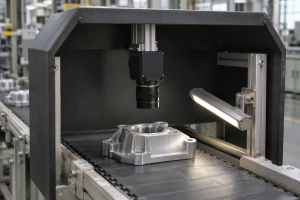
Machine Vision False Rejects: Check the Lighting Before the Camera
When a reflective part fails inspection, compare reference images before ordering a camera. Learn when to scope the light, controller or mounting instead.
Read guide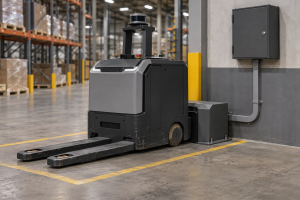
AMR Charging Faults: Is the Spare on the Robot or at the Dock?
When an AMR stops charging, distinguish the fixed dock from the vehicle battery. Use dock IDs and fleet events to scope the right replacement RFQ.
Read guide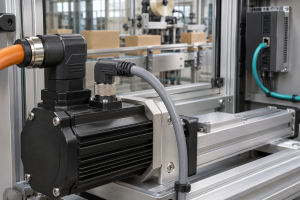
Servo Drive Spares: EtherCAT Is Not the Encoder Interface
An EtherCAT drive can still be the wrong spare. Learn how to verify the motor encoder protocol, feedback cable and exact drive variant before ordering.
Read guide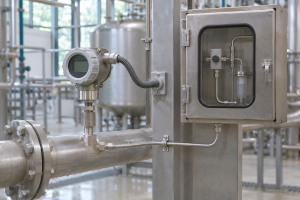
CENTUM R7.02: An Estimate Is Not a Field Measurement
Yokogawa’s CENTUM R7.02 adds AI Estimation. See how to distinguish model outputs, transmitter readings and laboratory results before ordering a spare.
Read guideSend your part number, photos or nameplate.
Our team will verify, check availability, and reply with options within 24 hours.
[email protected]+86 18359268345WhatsApp