
Industries & Applications
Honeywell Forge Cognition: Facility AI and DCS Boundaries
Honeywell Forge Cognition connects facility AI with existing systems. Understand building controls, plant utilities and DCS spare-part boundaries.
Honeywell Technologies announced Forge Cognition on 14 October 2026, describing an AI and simulation platform for buildings, campuses and industrial operations developed with NVIDIA and Dell Technologies. Its stated applications include building-alarm management, HVAC asset health and energy analysis, with operator-selected levels of autonomy.
For industrial maintenance and purchasing teams, the useful question is where that platform sits relative to installed controls. A facility AI project, a building-controller replacement and a process DCS spare are different requests even when Honeywell appears in all three conversations.
What the launch tells us
Honeywell says Forge Cognition adds capabilities to supported existing deployments, using equipment data and digital twins to interpret conditions and coordinate responses. The official announcement describes pilot deployments and capabilities that will expand over time.
It does not provide a universal hardware compatibility list for every Honeywell controller or I/O card. NANKMOS’ practical interpretation is to define the installed system and actual integration scope before inferring replacement suitability from the platform name. The announcement alone cannot approve a particular spare.
For an additional primary-source account, NVIDIA’s 13 October coverage of physical AI deployments also describes Forge Cognition connected to building systems. Neither account serves as a spare-part interchangeability statement.
Keep three equipment layers visible
| Layer | Question for the site team | Information needed for a parts decision |
|---|---|---|
| Facility AI and data services | Which assets and systems are connected, and what actions are permitted? | Installed platform version, supported connector, data source and assigned integration scope. |
| Building and utility controls | Which local controller operates the pump, air handler or cooling equipment? | Controller model, field interface, configuration and equipment location. |
| Process DCS and I/O | Which controller, module or channel performs the plant control function? | Exact part code, revision, carrier or terminal assembly and approved system baseline. |
The table organizes a maintenance discussion; it is not a statement that every site uses the same architecture. A utility package might have its own controls, report values to a building system and exchange status with a process system. Establish the real arrangement from the site’s drawings and configuration records.
A cooling problem can cross systems without making the hardware interchangeable
Consider an illustrative case: facility analytics flags unusual chilled-water behavior while a process area reports a cooling-related alarm. The information may concern the same utility, but it does not identify which component, if any, has failed. The pump controls, field instrument, acquisition path and process interface still need their own evidence.
Before turning that observation into a purchase request, have the responsible team identify the affected asset and the controller that owns its operation. Keep the analytics observation with the maintenance record, but describe a confirmed replacement target by its installed identifier. A software-generated recommendation is not a substitute for a module label or engineering review.
Read access and control authority are separate decisions
A data connection does not tell purchasing whether a platform merely observes equipment or can command it. Record the permitted operating mode, the responsible operator and the approved handoff between systems. If a proposal changes control authority, make that engineering scope explicit rather than hiding it inside a hardware quotation.
For a replacement gateway or computer, identify the installed software, configuration and interface requirements. For a building controller, identify its supported environment and field connections. For a DCS module, retain the specific revision and system compatibility requirements. These records describe different targets and should remain distinguishable in the RFQ.
Make the inquiry specific enough to review
Send the complete installed part number, clear nameplate photographs, revision, quantity and equipment role. State whether the request is for maintenance stock, a failed assembly or a planned integration project. Include the required delivery window and ask the proposed supplier to identify any assumptions about configuration or compatibility.
For identifiable automation components, use the NANKMOS RFQ contact page. Our industrial automation catalog and technical resources provide additional identification context. Availability, condition and suitability are confirmed for the specific item; an AI-platform announcement does not establish stock or authorization.
Source and image
Honeywell Technologies: Forge Cognition launch with NVIDIA and Dell Technologies, 14 October 2026; checked 18 October. This article separates the announced platform scope from NANKMOS’ general maintenance and procurement interpretation.
Additional source: NVIDIA, European Cities Deploy NVIDIA-Powered AI Agents to Run Smarter Urban Operations, 13 October 2026.
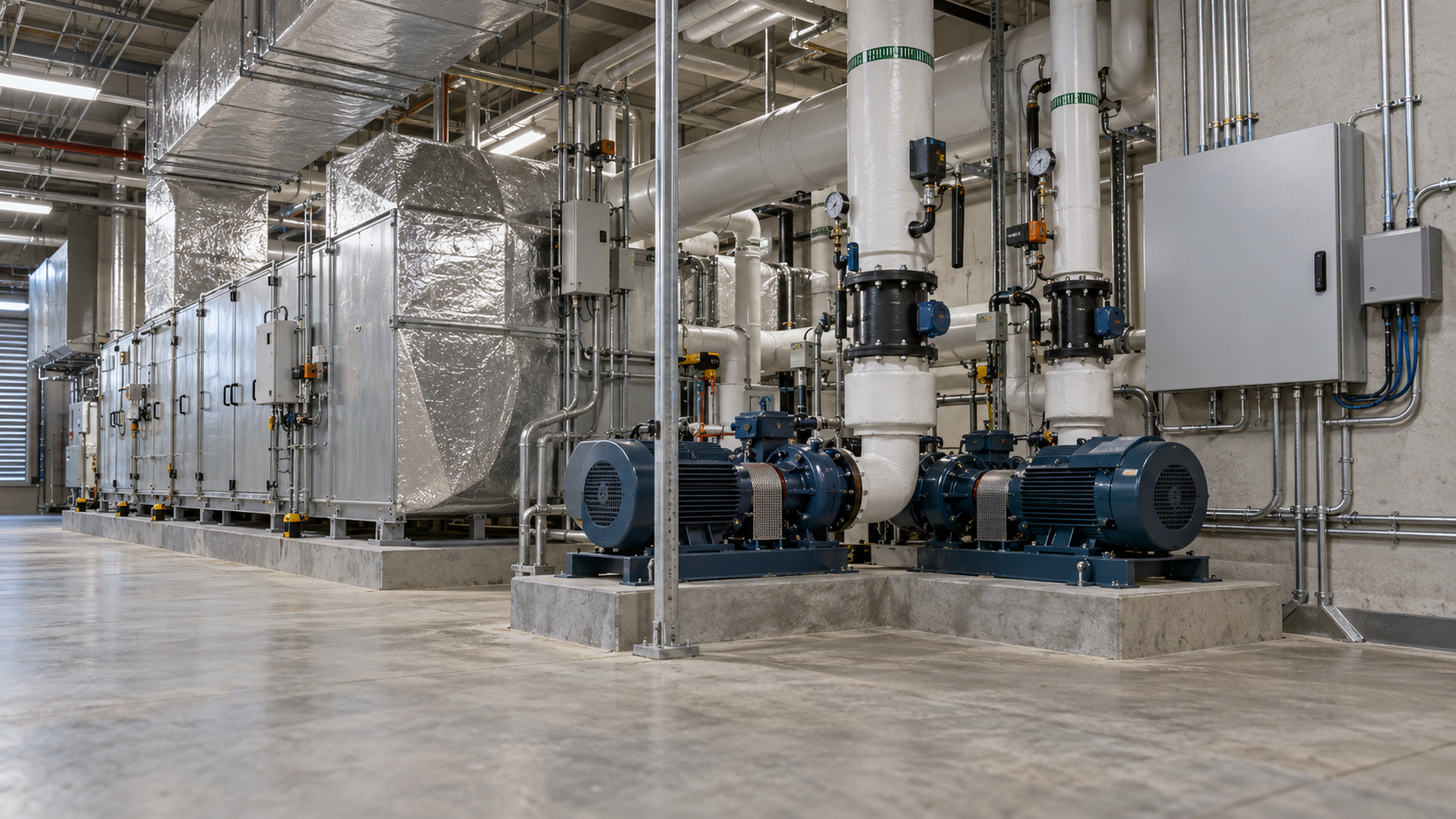
Featured image: AI-generated illustration of a generic HVAC utility room with chilled-water pumps, an air handling unit and facility controls. It is not a Honeywell product photograph or a named customer installation.
Related guides
View all guides
Machine Vision False Rejects: Check the Lighting Before the Camera
When a reflective part fails inspection, compare reference images before ordering a camera. Learn when to scope the light, controller or mounting instead.
Read guide
AMR Charging Faults: Is the Spare on the Robot or at the Dock?
When an AMR stops charging, distinguish the fixed dock from the vehicle battery. Use dock IDs and fleet events to scope the right replacement RFQ.
Read guide
Servo Drive Spares: EtherCAT Is Not the Encoder Interface
An EtherCAT drive can still be the wrong spare. Learn how to verify the motor encoder protocol, feedback cable and exact drive variant before ordering.
Read guide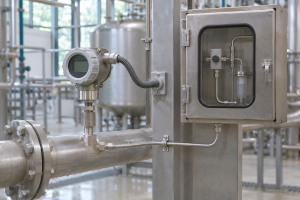
CENTUM R7.02: An Estimate Is Not a Field Measurement
Yokogawa’s CENTUM R7.02 adds AI Estimation. See how to distinguish model outputs, transmitter readings and laboratory results before ordering a spare.
Read guideSend your part number, photos or nameplate.
Our team will verify, check availability, and reply with options within 24 hours.
[email protected]+86 18359268345WhatsApp