
Industry Applications
Yokogawa Grid Research: Fast Response Is a System Question
Yokogawa's Energy Grid 3.0 research highlights a maintenance distinction: fast grid response is a system requirement, not a PLC scan-time or spare-card claim.
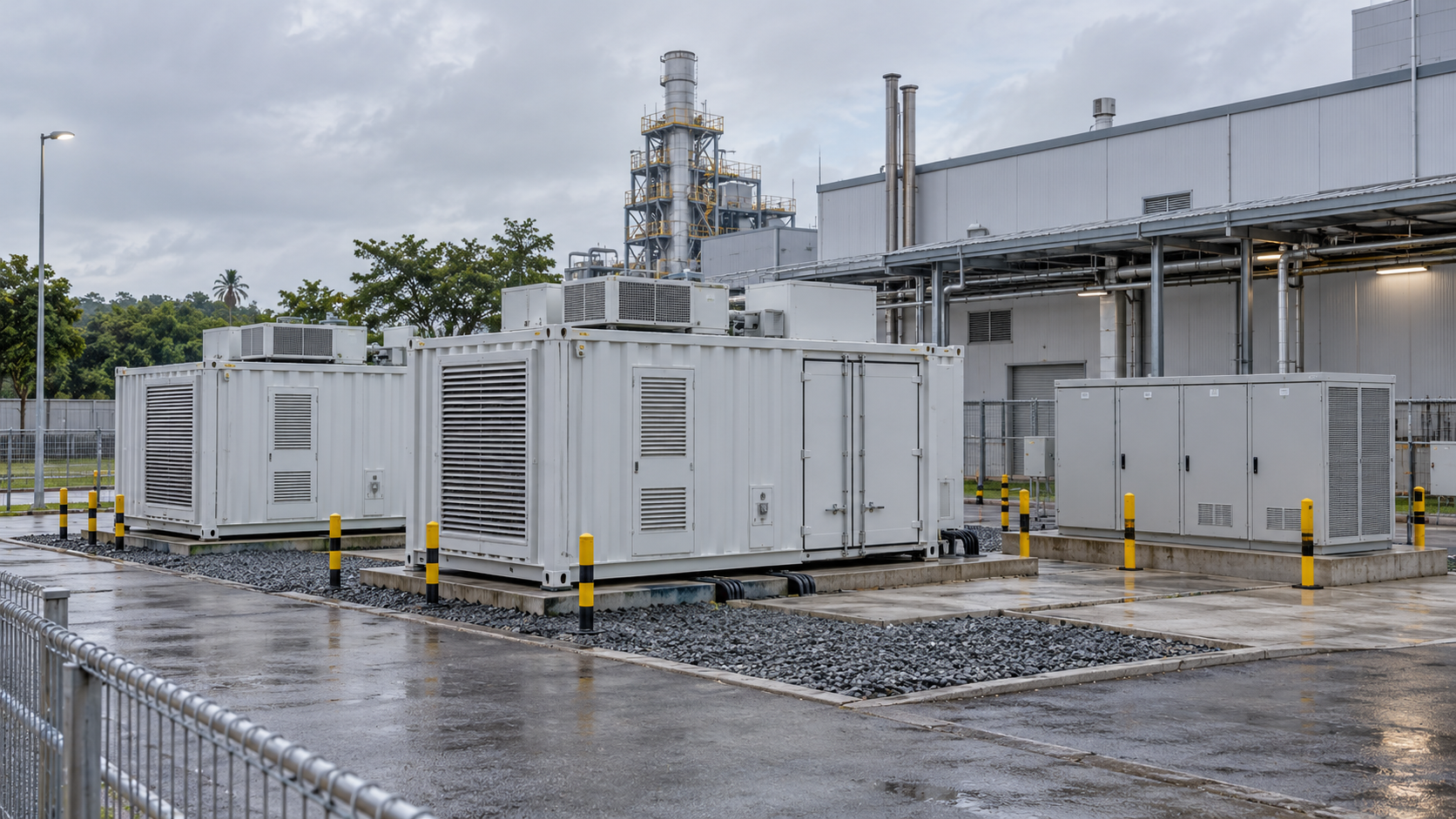
Yokogawa’s new Singapore grid-support research announcement puts industrial facilities into a wider operating picture: a plant may need to support the electricity system while continuing its own production duties. For maintenance teams, that raises a useful question. When a project calls for a fast response, what exactly is supposed to respond?
The verified news: funding for research and demonstration
In its 28 October 2026 announcement, Yokogawa Engineering Asia reports an S$4.2 million award under the Energy Grid 3.0 Grant Call. The project concerns distributed inertia from conventional and inverter-interfaced assets and includes a demonstration at RExus’s waste-to-energy plant. Yokogawa describes planned integration of BaxEnergy’s Convera Power Plant Controller with its OpreX Collaborative Information Server.
The Energy Market Authority’s 27 October release separately confirms the award. EMA says the research will explore coordination of resources including batteries, solar inverters, industrial loads and electric vehicles for fast-response grid support.
These are recent research-funding announcements, not evidence that the proposed services have completed deployment, that every listed asset is installed at the pilot, or that a particular PLC or DCS spare has acquired a new capability.
A performance word needs a measurement boundary
Our engineering takeaway is to make the endpoint explicit before comparing response claims. Does the requirement concern detecting an event, producing a control decision, receiving a command, or demonstrating a change at an agreed electrical measurement point? Those descriptions ask different questions. A timing number without its starting event and endpoint is difficult to use responsibly.
A controller’s published execution figure, where one exists for an exact model and configuration, should therefore not be presented as proof of the complete site’s grid-support performance. Neither news release provides a universal PLC scan-time target or a replacement-card selection rule.
For a project review, ask the system owner to identify the acceptance boundary and the evidence required. The purpose is not to guess a faster part; it is to prevent a component specification from being mistaken for a system result.
Coordination does not remove the plant’s primary job
Yokogawa explicitly describes studying how industrial sites can provide grid support while fulfilling their primary operating objectives. The maintenance implication is a responsibility question: who owns the permitted operating envelope, and where is that decision documented?
Keep the approved plant-control function, the proposed coordination function and the responsible reviewers distinguishable in project records. A maintenance request should not quietly become permission to change a production constraint, a protection setting or a safety-related function.
This article does not prescribe grid-control settings, response thresholds, wiring changes or live tests. Those decisions require the appropriate engineering authorities, exact manufacturer documentation and the site’s formal safety and change-control processes.
Keep spare-part evidence separate from project aspirations
Consider an inquiry for an installed communication or I/O module. A useful description identifies the existing assembly and its approved role, then states whether the request is for maintenance of that role or part of an engineer-defined modification. It should not simply add “grid ready” to the description because the brand is involved in a research programme.
For the installed base, our overview of DCS spares for power and chemical plants provides broader sourcing context. A catalogue match, a current project announcement and application approval remain three separate pieces of evidence.
When browsing industrial automation parts, retain the exact reference and the intended maintenance scope. Send those details through the NANKMOS inquiry form for unit-specific review. Availability, condition and suitability must be confirmed for the inquiry; this news does not establish stock, authorization, compatibility or a fixed warranty for any offered item.
Related guides
View all guides
Machine Vision False Rejects: Check the Lighting Before the Camera
When a reflective part fails inspection, compare reference images before ordering a camera. Learn when to scope the light, controller or mounting instead.
Read guide
AMR Charging Faults: Is the Spare on the Robot or at the Dock?
When an AMR stops charging, distinguish the fixed dock from the vehicle battery. Use dock IDs and fleet events to scope the right replacement RFQ.
Read guide
Servo Drive Spares: EtherCAT Is Not the Encoder Interface
An EtherCAT drive can still be the wrong spare. Learn how to verify the motor encoder protocol, feedback cable and exact drive variant before ordering.
Read guide
CENTUM R7.02: An Estimate Is Not a Field Measurement
Yokogawa’s CENTUM R7.02 adds AI Estimation. See how to distinguish model outputs, transmitter readings and laboratory results before ordering a spare.
Read guideSend your part number, photos or nameplate.
Our team will verify, check availability, and reply with options within 24 hours.
[email protected]+86 18359268345WhatsApp