
Maintenance & RFQ Guides
A Missing Voltage-Sag Duration Is Not a Clean Power Record
A blank sag-duration field may reflect lost meter power. Separate incomplete event records from PLC power-supply faults before ordering a replacement.
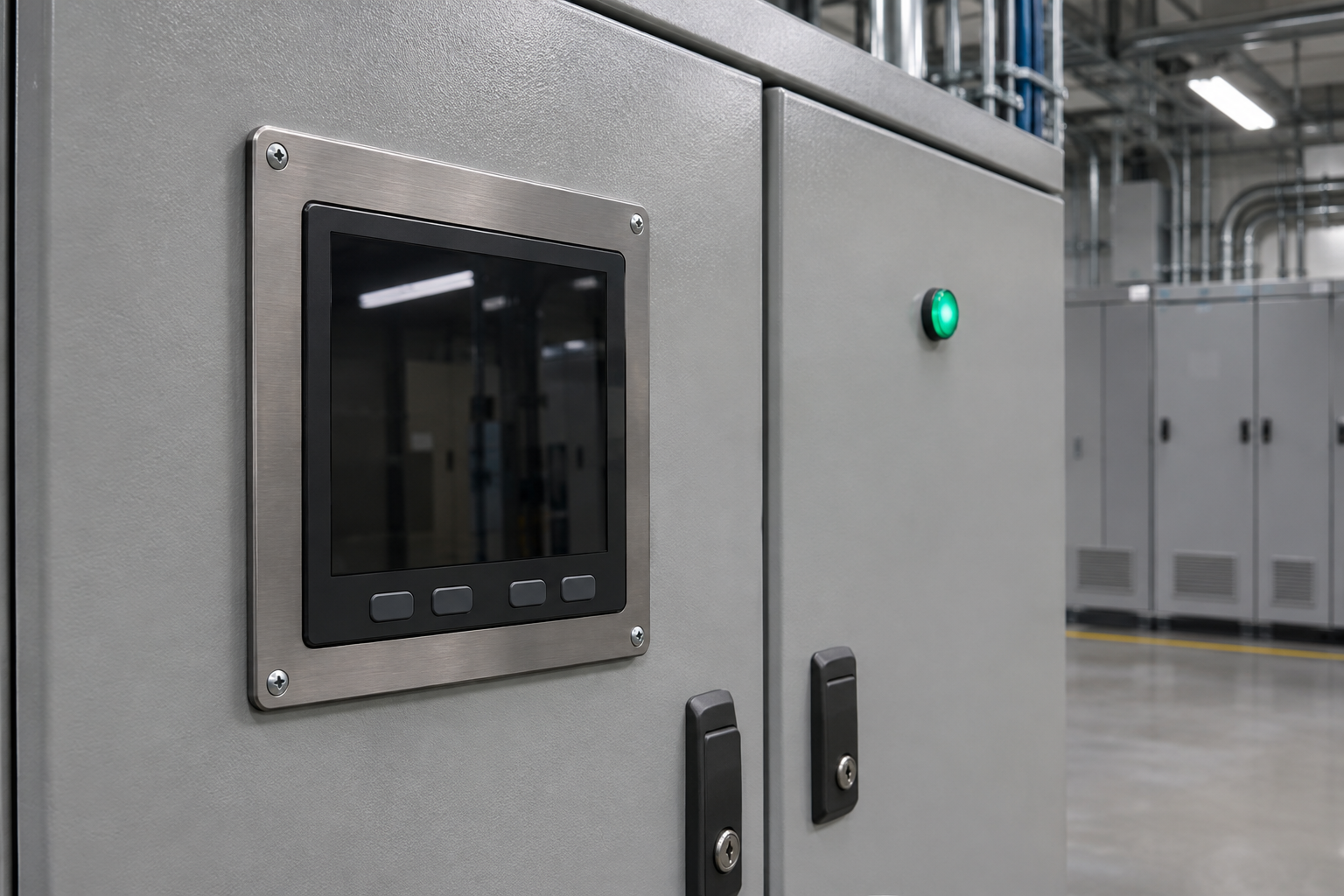
A production line stops, several devices restart, and the power-quality viewer shows a voltage-sag start with no duration. That blank field is easy to dismiss. It can also tempt a team to order a PLC power supply before the electrical event has been understood. Neither conclusion follows from the blank alone.
Power-quality monitoring is on this week’s agenda: Schneider Electric’s official Enlit Europe 2026 programme lists a power-quality and subsynchronous-oscillation monitoring session for November 11. The programme is current event context, not a report of session outcomes or a new product announcement. It prompts a practical maintenance question: was the recorder able to observe the whole disturbance?
The recorder may be part of the interruption
Schneider Electric’s technical FAQ FA312845 explains that PME calculates event duration from separate start and end timestamps. If a meter’s control power shares the affected voltage source, a sag can leave only the start recorded. This is an established technical reference, last modified in January 2026, not news from this week.
The implication is limited but important: incomplete observation is not evidence of an uneventful supply. It also does not prove the meter, controller or power supply is defective. The monitoring arrangement and the affected equipment need separate investigation.
Build a timeline, not a replacement verdict
Consider an illustrative case, not a reported customer incident. A meter records a sag start; a controller records a restart; an HMI later reports a communication loss. These entries could belong to one disturbance, but their displayed order is meaningful only if their clocks and recording behaviour are understood.
Keep the original exports before summarising them. Record time zones, known clock offsets, the source of each timestamp and whether an entry represents an event occurring or a message being received. If time synchronisation is unknown, describe the sequence as provisional. Do not manufacture millisecond precision by combining unrelated screenshots.
The manufacturer’s voltage-dip measurement note identifies per-phase minimum RMS voltage, sag duration and event time as recorded details. Where those records exist, they describe the disturbance more usefully than a single alarm label. Their absence should be documented rather than filled with assumptions.
What would change the maintenance decision?
A common restart across devices supplied from the same area makes the shared power path worth investigating; it does not identify the failed component. A recurring issue confined to one controller may point the investigation elsewhere, but still requires qualified assessment. These are investigation directions, not remote diagnoses.
Ask the responsible electrical or controls engineer to review the monitoring coverage, relevant supply paths and available device diagnostics against the installation documentation. This article is not an instruction to probe live circuits, alter meter wiring or bypass protection. Any measurement or modification needs the site’s approved safety procedures and qualified personnel.
Order a spare for an identified assembly
If the investigation supports replacing a particular module, move from event evidence to exact part identification. The alarm text is not an order code. Preserve the installed unit’s complete designation and variant information, and keep the technical approval separate from the commercial quotation.
Our Schneider Electric parts pages and wider industrial automation catalogue can help locate an enquiry starting point. Send the confirmed part reference, photographs and required quantity through NANKMOS Contact / RFQ. Availability, condition, lead time and any proposed alternative require confirmation for the individual enquiry.
The useful outcome is not simply a replacement order. It is a defensible distinction between a power disturbance, a gap in the recording, and an assembly that actually needs replacement.
Related guides
View all guides
Machine Vision False Rejects: Check the Lighting Before the Camera
When a reflective part fails inspection, compare reference images before ordering a camera. Learn when to scope the light, controller or mounting instead.
Read guide
AMR Charging Faults: Is the Spare on the Robot or at the Dock?
When an AMR stops charging, distinguish the fixed dock from the vehicle battery. Use dock IDs and fleet events to scope the right replacement RFQ.
Read guide
Servo Drive Spares: EtherCAT Is Not the Encoder Interface
An EtherCAT drive can still be the wrong spare. Learn how to verify the motor encoder protocol, feedback cable and exact drive variant before ordering.
Read guide
CENTUM R7.02: An Estimate Is Not a Field Measurement
Yokogawa’s CENTUM R7.02 adds AI Estimation. See how to distinguish model outputs, transmitter readings and laboratory results before ordering a spare.
Read guideSend your part number, photos or nameplate.
Our team will verify, check availability, and reply with options within 24 hours.
[email protected]+86 18359268345WhatsApp