
Product Systems
ABB UNIREC H2: Keeping Cooling in the Maintenance Record
Water-cooled rectifier maintenance: link the power cabinet, cooling equipment and auxiliary component records before defining a replacement requirement.
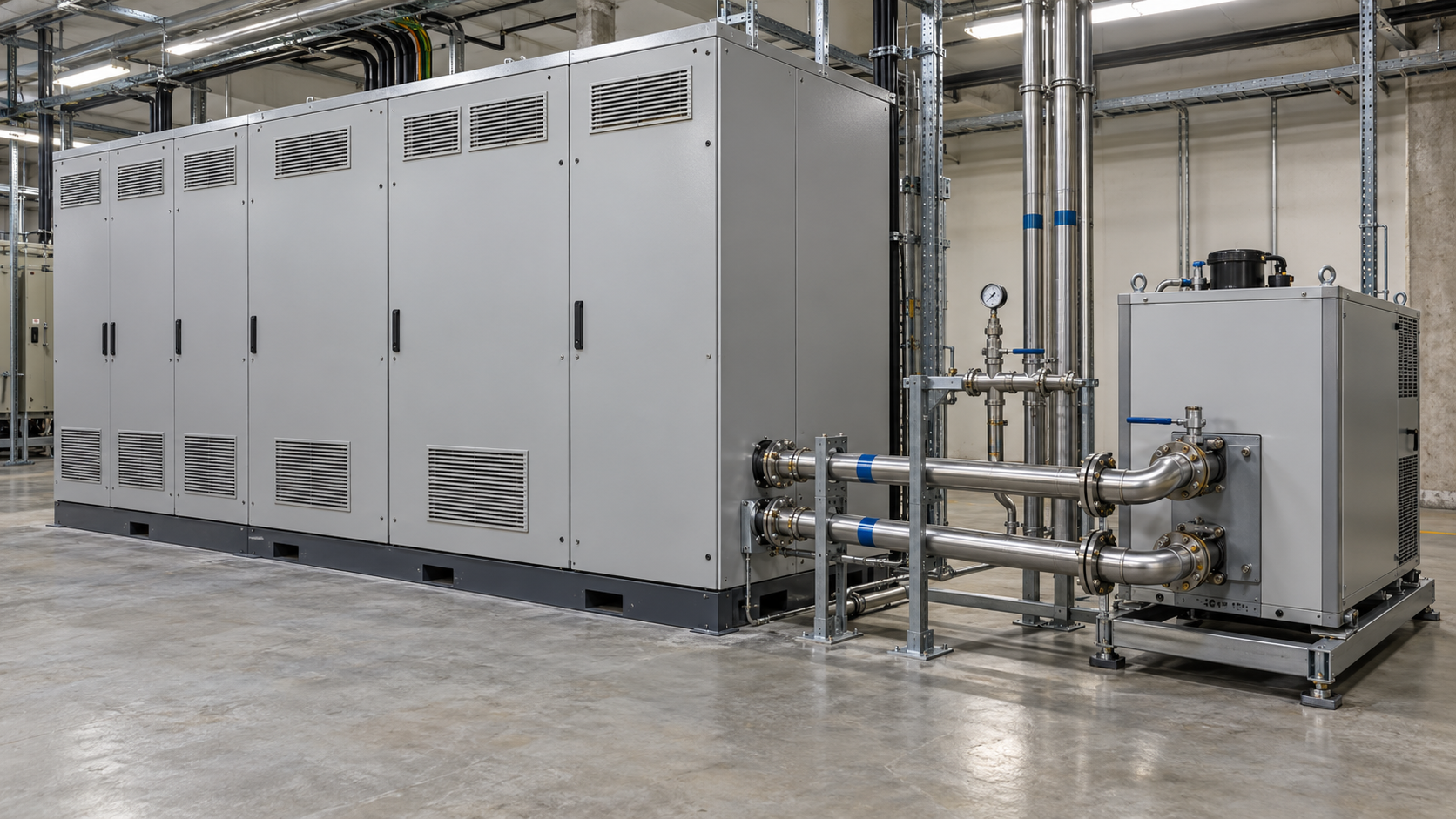
Water-cooled rectifier maintenance needs a record of the cooling arrangement as well as the power cabinet. A complete converter identifier is useful, but it does not describe every external dependency that must be understood when an auxiliary component needs attention.
ABB’s official trade-news listing dates a high-efficiency rectifier announcement to October 19, 2026. Used here as background, it brings attention to a practical maintenance topic: the relationship between power conversion and cooling. ABB’s current UNIREC H2 overview describes air- and water-cooled configurations; its water-cooled product page places that variant in industrial hydrogen production.
Those references do not define the as-built cooling circuit of every installation. The maintenance record must bridge the gap between a product-family description and the equipment actually connected at the site.
Draw the boundary around the connected system
Start with the approved drawings and equipment list. Identify what belongs to the rectifier package, what belongs to its cooling equipment and where the facility’s services begin. A dedicated cooling unit and a shared plant service create different responsibilities; neither should be assumed from a cabinet photograph.
For the applicable installation, retain the cooling-unit identity, relevant instrument references, connections and drawing revision alongside the converter record. Link any coolant requirements and permitted operating conditions to the current manufacturer documentation rather than copying an unexplained value into a stores description.
Also establish which ventilation duties apply to the cabinet and its auxiliary equipment. The term “water-cooled” alone does not tell a maintenance planner how every electronic compartment or surrounding room is cooled. That question belongs to the actual design.
This is a records exercise, not a proposal to redraw pipework or change the cooling arrangement. Any engineering change requires the appropriate review.
Keep an observation separate from a parts conclusion
Consider an illustrative work order that says only “rectifier temperature alarm—replace control board.” It has already named a component before documenting why that component is implicated. A more useful record retains the alarm identity, operating context and relevant observations available through approved monitoring systems.
The responsible technical team can then assess whether the issue concerns measurement, cooling services, auxiliary equipment or the converter itself. The alarm label alone does not prove a failed sensor, power stack or controller. Nor does replacing a module automatically demonstrate that the original cause has been resolved.
Do not collect readings from exposed live equipment simply to complete a record. Isolation, inspection and testing must follow site procedures and applicable manufacturer instructions. This article provides no coolant recipes, flow settings, electrical measurements or protection adjustments.
Make the replacement scope explicit
A request for a cooling sensor, an auxiliary power supply or an electronic control module describes a different item from a complete rectifier package. Establish the required scope before comparing offers. Include the full installed identifier and the document reference that ties the item to its application.
Where a component is supplied as part of an assembly, confirm which accessories and interfaces belong to that assembly. A matching connector or a similar housing does not establish suitability. Keep the approved application requirements separate from any general product-family description.
When reviewing the NANKMOS product catalogue, use the exact reference from the installed item. Through our contact and RFQ page, explain the required component, quantity and whether the request concerns an assessed replacement or a proposed change. Do not attach confidential drawings or credentials to an ordinary inquiry.
Availability, offered condition and supporting information are confirmed during quotation. A catalogue entry does not establish compatibility with a complete UNIREC system, and final suitability remains subject to the responsible technical review. Related maintenance reading is available in the resources library.
Sources checked October 26, 2026. The October 19 date comes from ABB’s official trade-news listing and is used as background; the product pages are current technical references without an inferred publication date. The record-keeping discussion is NANKMOS editorial guidance, not an ABB maintenance procedure. Featured image: AI-generated generic power cabinet and cooling installation, not an ABB product photograph or approved engineering drawing.
Related guides
View all guides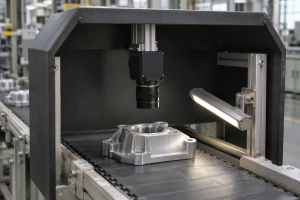
Machine Vision False Rejects: Check the Lighting Before the Camera
When a reflective part fails inspection, compare reference images before ordering a camera. Learn when to scope the light, controller or mounting instead.
Read guide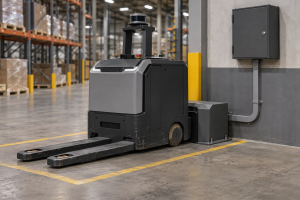
AMR Charging Faults: Is the Spare on the Robot or at the Dock?
When an AMR stops charging, distinguish the fixed dock from the vehicle battery. Use dock IDs and fleet events to scope the right replacement RFQ.
Read guide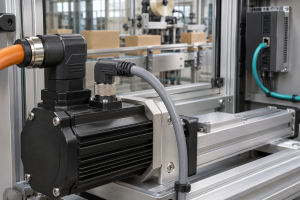
Servo Drive Spares: EtherCAT Is Not the Encoder Interface
An EtherCAT drive can still be the wrong spare. Learn how to verify the motor encoder protocol, feedback cable and exact drive variant before ordering.
Read guide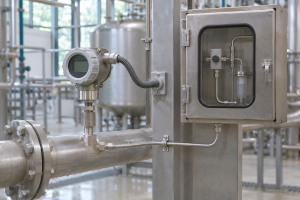
CENTUM R7.02: An Estimate Is Not a Field Measurement
Yokogawa’s CENTUM R7.02 adds AI Estimation. See how to distinguish model outputs, transmitter readings and laboratory results before ordering a spare.
Read guideSend your part number, photos or nameplate.
Our team will verify, check availability, and reply with options within 24 hours.
[email protected]+86 18359268345WhatsApp