
Industry Applications
Finding the Right Owner for a Cold-Rolling Mill Fault
Give cold-rolling mill maintenance a clear review owner across field equipment, control and drives, and history or analytics before requesting a spare.
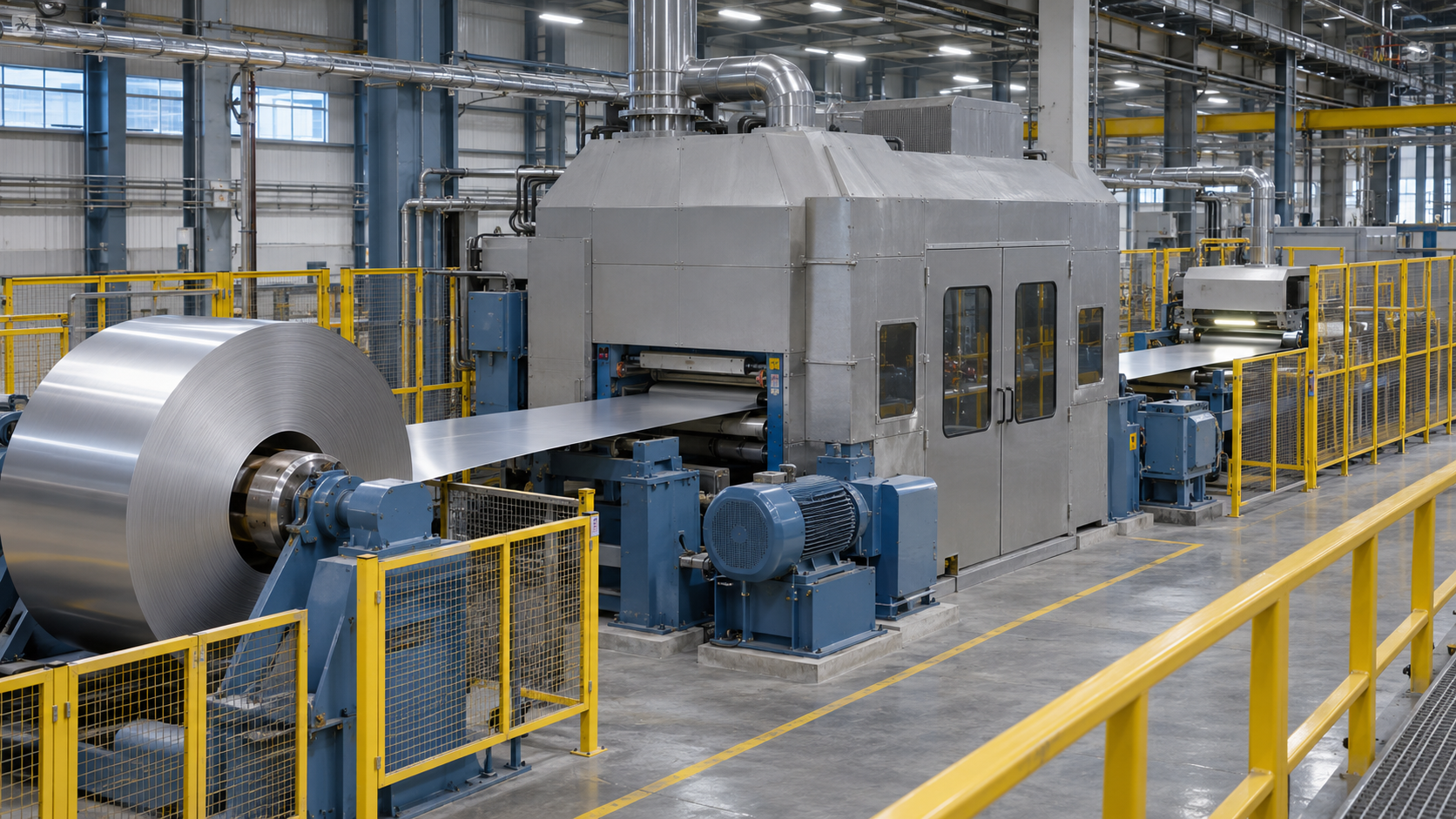
A cold-rolling line can show one production symptom across several screens. A quality deviation, a drive message and a dashboard notification may all arrive in the same handover, but they do not automatically identify the same fault—or the same maintenance owner.
The useful first question is often organizational: which team is responsible for reviewing the affected function, and what information does that team need before deciding the next action?
A current example of integrated mill automation
An ABB-attributed manufacturer release published by NewswireToday on 2 November 2026 describes two orders for Southwest Aluminum’s cold-rolling expansion. Its stated scope brings together System 800xA process control, drives, flatness control, sensing and measurement, plus digital analysis. The mills are expected to be fully commissioned and operational by the end of 2027, not already in service.
Aluminium International Today also reports the project. The story illustrates a maintenance challenge: integrated information can help teams work together, but a common display does not erase the boundaries between equipment, control functions and analytical services.
The routing approach below is NANKMOS’ practical documentation advice. It is not ABB’s diagnostic procedure or a report of a fault at Southwest Aluminum.
Describe the affected function before assigning a component
Start the handover with what the production team actually observed and where it occurred. “The line has an automation problem” is too broad to assign responsibly. A clearer description names the affected line section, the operating context known to the team and the original system message or approved record reference.
Do not turn the location of a message into a conclusion about its cause. A notification displayed on an operator station is not, by itself, evidence that the operator station needs replacing. Equally, an equipment name in a dashboard does not prove that the named device has failed.
Use three review owners rather than one generic escalation
Field and equipment review: identify the plant team responsible for the relevant measurement or physical equipment. Ask which existing record establishes the equipment identity and which approved findings are available. This is a request for responsible review, not permission to inspect moving equipment or disconnect a sensor.
Control and drive review: identify who owns the affected controller application, drive function and associated interface. The useful question is whether the available evidence supports an issue within that team’s scope. Do not assume every event involving a drive requires a drive spare, or every process deviation requires an I/O card.
History and analysis review: identify the owner of the trend, historian or condition-monitoring information being discussed. Ask that owner to establish which asset and period the record covers. Preserve the distinction between an observed production event and an analytical interpretation of it.
These are review responsibilities, not a mandatory troubleshooting sequence. A site’s approved architecture may allocate them differently; use the actual responsibility map rather than importing a generic organization chart.
Give the handover a useful stopping point
A hypothetical handover might end with “measurement team reviewing the original signal; no hardware replacement approved.” That is more actionable than a speculative shopping list. Where engineering has approved a component inquiry, link that decision to the exact installed reference and the defined scope.
Our ABB AC 800M inquiry guide provides controller-identification context; it is not proof that a particular controller model is included in the new rolling-mill projects.
Do not change process settings, bypass protection, reset equipment or approach a running mill on the basis of this article. Follow the site’s authorized operating, isolation and maintenance procedures.
For an approved sourcing requirement, review industrial automation parts and send the exact reference and requested condition through the NANKMOS contact form. Availability and suitability need inquiry-specific confirmation; a shared platform name is not replacement approval.
Related guides
View all guides
Machine Vision False Rejects: Check the Lighting Before the Camera
When a reflective part fails inspection, compare reference images before ordering a camera. Learn when to scope the light, controller or mounting instead.
Read guide
AMR Charging Faults: Is the Spare on the Robot or at the Dock?
When an AMR stops charging, distinguish the fixed dock from the vehicle battery. Use dock IDs and fleet events to scope the right replacement RFQ.
Read guide
Servo Drive Spares: EtherCAT Is Not the Encoder Interface
An EtherCAT drive can still be the wrong spare. Learn how to verify the motor encoder protocol, feedback cable and exact drive variant before ordering.
Read guide
CENTUM R7.02: An Estimate Is Not a Field Measurement
Yokogawa’s CENTUM R7.02 adds AI Estimation. See how to distinguish model outputs, transmitter readings and laboratory results before ordering a spare.
Read guideSend your part number, photos or nameplate.
Our team will verify, check availability, and reply with options within 24 hours.
[email protected]+86 18359268345WhatsApp