
Product Systems
An Open Recycle Valve Is Not a Controller Diagnosis
A compressor recycle valve can open for several control reasons. Learn why one valve indication is not enough to justify replacing an antisurge controller.
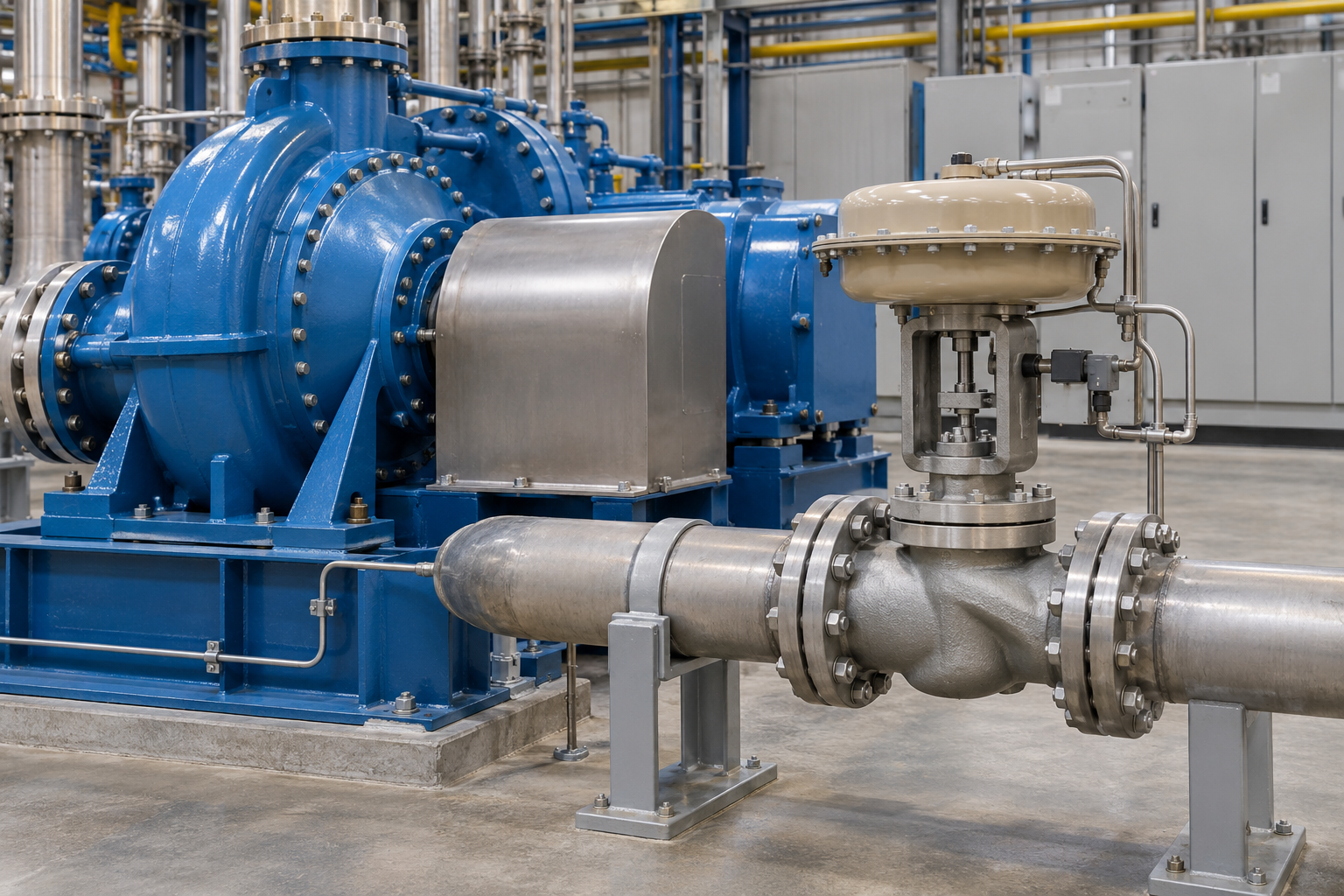
A compressor recycle valve opens unexpectedly, and a request arrives for a replacement controller. The observation may be real, but the diagnosis is still incomplete. A valve-opening command, the valve’s actual movement, and a fault inside a control module are different things. Treating them as one finding can put the wrong spare on the maintenance work order.
This week’s energy-industry context
In its October 30, 2026 official update, ADIPEC confirmed its November 2–5 event in Abu Dhabi and highlighted technical discussion of operational performance, reliability, and efficiency. Honeywell CCC’s event page also lists those dates. This is current event context, not evidence that a new antisurge controller has been launched or that any installed unit should be replaced.
For maintenance and sourcing teams, the useful question is narrower than the exhibition headlines: what does a particular compressor event actually establish about the hardware?
Why a controller may deliberately open the valve
Honeywell’s CCC antisurge application overview describes a control system using measurements such as pressure, temperature, and flow. The controller evaluates the operating point against the compressor’s surge boundary and acts through a recycle or blow-off valve. Its description includes several response mechanisms rather than a single on/off decision.
That means an opening command should be read in the context of the active control function. It is not, by itself, a diagnostic statement that an output card or processor has failed.
A useful technical example appears in the CCC paper hosted by Honeywell, reprinted from the August 2022 issue of Hydrocarbon Engineering. It explains that an antisurge valve can open even while the calculated deviation, DEV, remains positive. Examples include a process limit, a compressor stop or emergency-shutdown request, and recycle balancing between parallel trains. The paper also discusses a proactive response that can act before the operating point reaches the surge control line.
This is an established technical reference, not a November 2026 product announcement. Its examples do not prove which function is active on another installation, and a displayed DEV value is not permission to close the valve. The applicable configuration and approved machine documentation remain essential.
Separate the command, the movement, and the hardware finding
Before a parts request becomes a purchase decision, the responsible compressor-controls specialist should distinguish three questions. What requested the action? Did the valve respond as expected? What evidence identifies a fault in a particular replaceable item? Those questions concern related equipment, but they do not have interchangeable answers.
For example, evidence that a command was issued does not establish whether the valve reached its requested position. A reported mismatch is also not sufficient, on its own, to name the defective component. The diagnosis needs the authorized engineering review appropriate to that train, including the meaning and quality of the available indications.
Use the site’s approved, read-only event records and established escalation process to give that specialist context. Do not change tuning, force an output, inhibit a protective action, or operate a recycle valve to reproduce a symptom on the strength of this article. This is a maintenance-planning discussion, not a troubleshooting, commissioning, or operating procedure.
Turn a confirmed finding into a scoped parts enquiry
Once the engineering finding identifies the required hardware, the enquiry can focus on the complete part reference and revision, the installed platform, and the requested supply scope. Keep the engineering conclusion separate from the original symptom: “valve opened” should not silently become “controller defective.”
The NANKMOS Honeywell brand page and product catalogue can support part-reference enquiries. A shared brand name or similar front panel does not establish interchangeability between DCS equipment and a turbomachinery control platform. Catalogue presence is not confirmation that a particular CCC item is available.
Contact NANKMOS with the confirmed hardware requirement for an individual RFQ. Availability, condition, and commercial terms require enquiry-specific confirmation; parts sourcing does not replace the machine owner’s engineering acceptance.
Image: AI-generated illustration of generic compressor and control-valve hardware. It is not a Honeywell CCC installation, NANKMOS inventory photograph, or validated piping design.
Sources checked November 5, 2026. Event dates provide current context; the application overview and August 2022 paper provide technical background only.
Related guides
View all guides
Machine Vision False Rejects: Check the Lighting Before the Camera
When a reflective part fails inspection, compare reference images before ordering a camera. Learn when to scope the light, controller or mounting instead.
Read guide
AMR Charging Faults: Is the Spare on the Robot or at the Dock?
When an AMR stops charging, distinguish the fixed dock from the vehicle battery. Use dock IDs and fleet events to scope the right replacement RFQ.
Read guide
Servo Drive Spares: EtherCAT Is Not the Encoder Interface
An EtherCAT drive can still be the wrong spare. Learn how to verify the motor encoder protocol, feedback cable and exact drive variant before ordering.
Read guide
CENTUM R7.02: An Estimate Is Not a Field Measurement
Yokogawa’s CENTUM R7.02 adds AI Estimation. See how to distinguish model outputs, transmitter readings and laboratory results before ordering a spare.
Read guideSend your part number, photos or nameplate.
Our team will verify, check availability, and reply with options within 24 hours.
[email protected]+86 18359268345WhatsApp