
Industry Applications
Emerson DeltaV Data Center Automation: RFQ Checks for DCS Maintenance
Use Emerson DeltaV data center automation news as a prompt to improve DCS spare-part records, compatibility checks and RFQ details.
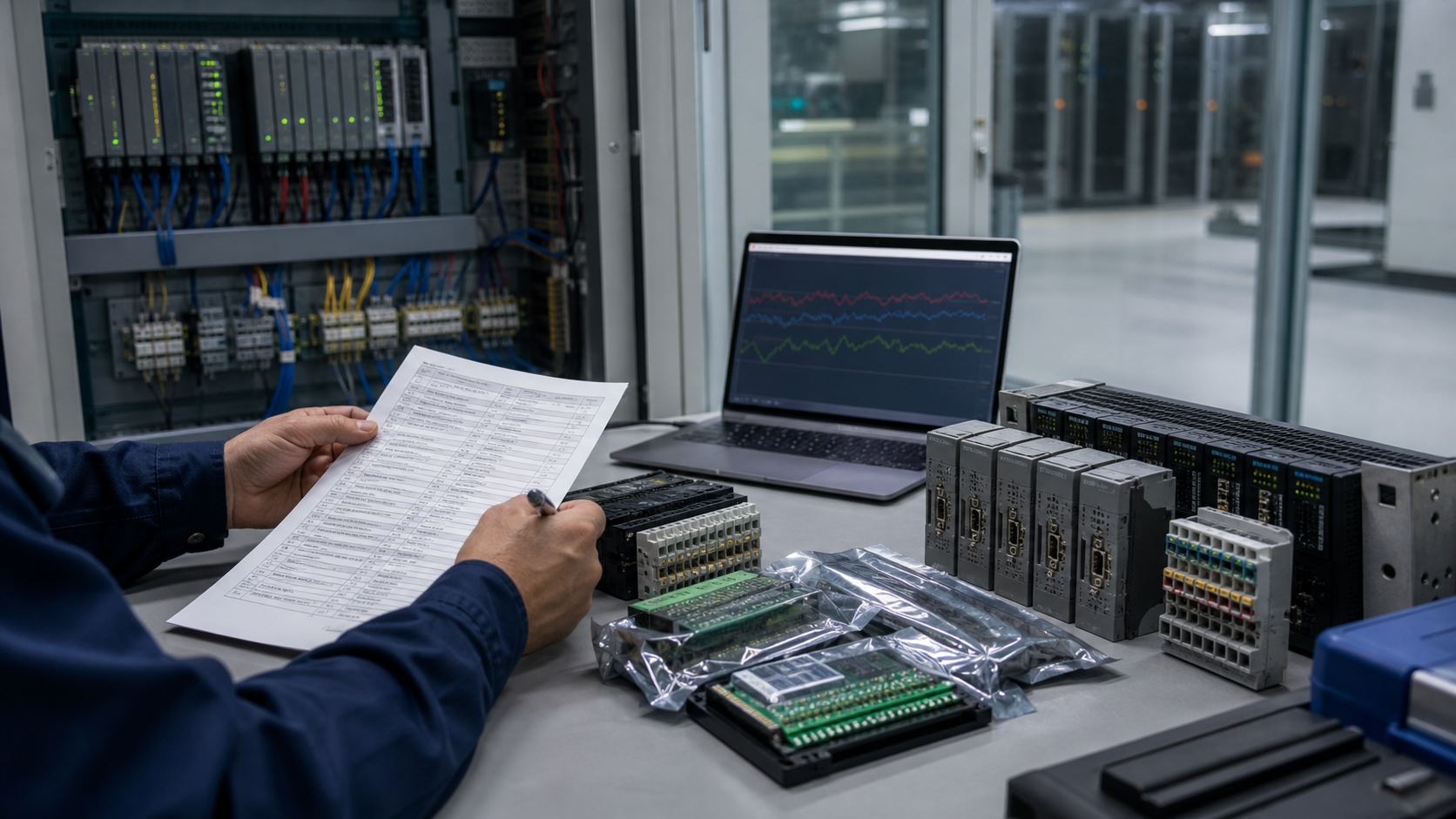
Emerson announced on August 3, 2026 that it is extending its integrated automation portfolio for AI-scale data centers, including wider use of the DeltaV distributed control system in critical infrastructure environments. For maintenance and MRO teams, the useful takeaway is practical: when automation platforms move into faster-growing infrastructure projects, spare-part records and replacement inquiries need to be more precise, not more generic.
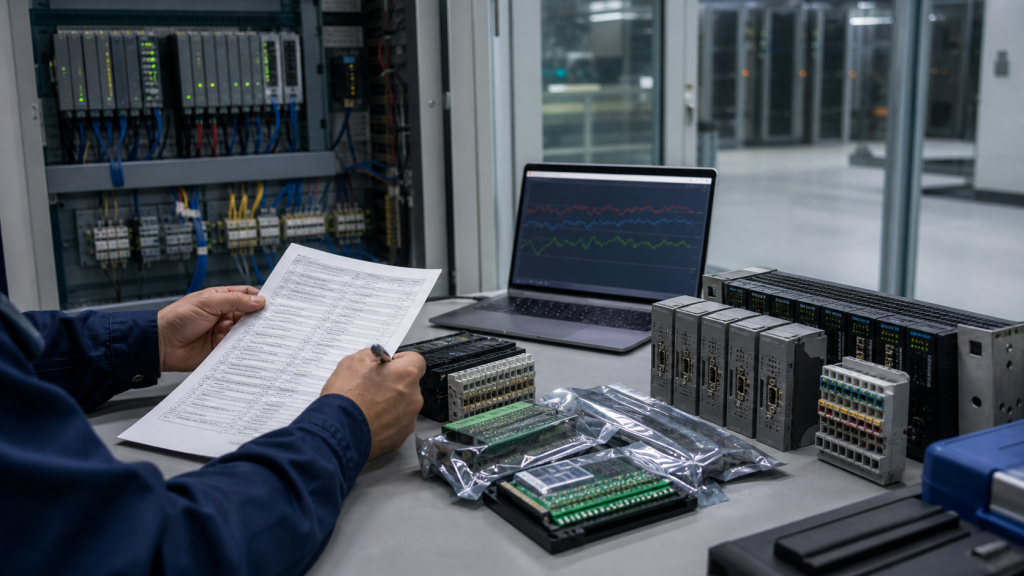
This article uses Emerson’s update as industry context. It does not mean that every DeltaV module, controller, I/O card, carrier, power supply, or communication component has changed status. Availability, condition, compatibility, documentation, and delivery still have to be confirmed against the exact part number and application involved in a specific inquiry.
What the Emerson update says
In its official announcement, Emerson describes data centers as a critical-infrastructure market and positions its integrated automation portfolio around faster deployment, uptime, energy efficiency, and operations support. The company also references DeltaV as part of that automation approach.
Emerson’s own DeltaV product information describes DeltaV as a distributed control system used to improve operations through control, I/O, software, and services. Those public pages help explain the platform context, but they are not a substitute for checking the exact installed item in a plant or facility.
Why this matters to spare-part records
Data-center and critical-infrastructure projects raise the visibility of reliability, uptime, and lifecycle planning. The same logic applies to process plants, power facilities, marine systems, and manufacturing lines that already depend on DCS and PLC hardware. A replacement request that says only “DeltaV card” or “Emerson module” leaves too much room for ambiguity.
A stronger maintenance record should preserve the full model number, visible revision, installed rack or carrier context, power and communication context, and any label photos. If the same system has been expanded or serviced over many years, the record should also keep older naming conventions rather than silently replacing them with newer marketing labels.
RFQ details to confirm before sending a DeltaV inquiry
Before asking for a quotation, separate the identity check from the sourcing check. Identity is about whether the requested item is truly the same model, revision family, and application context. Sourcing is about condition, availability, documentation, lead time, packing, and delivery options.
For a DCS inquiry, include these details where possible:
- Complete part number exactly as shown on the module or label.
- Brand and platform reference, such as Emerson or DeltaV, without dropping suffixes.
- Rack, carrier, terminal block, power, or communication context if visible.
- Quantity required and acceptable condition range.
- Destination country and any required delivery timing.
- Photos of the front label, side label, connector area, and installed cabinet context.
This level of detail helps a supplier avoid guessing between similar-looking I/O modules, interface cards, terminal assemblies, or controller accessories. It also makes it easier to explain what remains unconfirmed after the first review.
Compatibility should not be assumed from a family name
A product family name is useful for orientation, but it is not enough to prove compatibility. Different modules can share a platform name while differing in channel type, revision, terminal arrangement, power requirement, certification context, firmware relationship, or system role. A facility that treats a family name as a full replacement specification risks creating delays during maintenance planning.
When compatibility matters, send the application context with the inquiry. A photo of the existing unit, nearby modules, carrier, and label is often more useful than a long description written from memory. The aim is not to overcomplicate the request; it is to give the review enough evidence to avoid the wrong assumption.
How NANKMOS should handle this type of inquiry
NANKMOS should treat Emerson’s data-center automation update as a signal to keep DCS sourcing language precise. The update is relevant industry context, especially for teams maintaining systems where uptime and documentation matter. It should not be used as a claim that a specific part is in stock, original, authorized, newly supported, or guaranteed for a fixed warranty period.
Readers can browse the NANKMOS Emerson product records, search published DeltaV-related product records, review product-system sourcing notes, or send an RFQ with model details. Each inquiry should still be confirmed by exact model, condition, compatibility context, destination, and delivery requirement.
Final takeaway
Recent automation updates around data centers are a useful reminder that DCS platforms are not only a process-industry topic. They are part of broader critical-infrastructure reliability planning. For maintenance teams, the practical response is to improve spare-part evidence: exact part numbers, photos, installed context, quantity, condition preference, and destination.
A clear RFQ does not promise the answer in advance. It gives the sourcing review enough information to check the right item and explain the available options clearly.
Related guides
View all guides
DeltaV IQ Controller: How Server-Based Control Changes Spare Planning
Emerson’s DeltaV IQ announcement highlights server-based control. Here is how maintenance teams can distinguish host, software, redundancy and physical-controller support boundaries.
Read guide
Siemens and P&G Expand AI Inspection: What Keeps the Line Running
Siemens’ recent AI inspection announcement highlights an interconnected camera, edge-computing and PLC workflow. Here is how maintenance teams can trace faults before replacing hardware.
Read guide
Emerson’s Planned Qatar Service Center: What Flow-Instrument RFQs Still Need
Emerson has announced a planned Qatar automation service center. Here is what buyers should document in flow-instrument RFQs while its capabilities remain future plans.
Read guide
ABB Infinitus and Data-Center DC Power: RFQ Records for Automation Spares
A practical RFQ framework for documenting power, automation, cooling and protection interfaces as data-center power architectures evolve toward DC and hybrid designs.
Read guideSend your part number, photos or nameplate.
Our team will verify, check availability, and reply with options within 24 hours.
[email protected]+86 18359268345WhatsApp