
Industry Applications
Open Software-Defined Automation: Maintenance Checks Before a Control Platform Transition
Open, software-defined automation is becoming a more visible direction in industrial control. Schneider Electric used Automate 2026 to demonstrate an approach built around open automation, industrial AI and hardware-agnostic control, including the IEC 61499-based EcoStruxure Automation Expert environment. For maintenance teams, the important question is not whether a new architecture sounds modern. It is whether […]
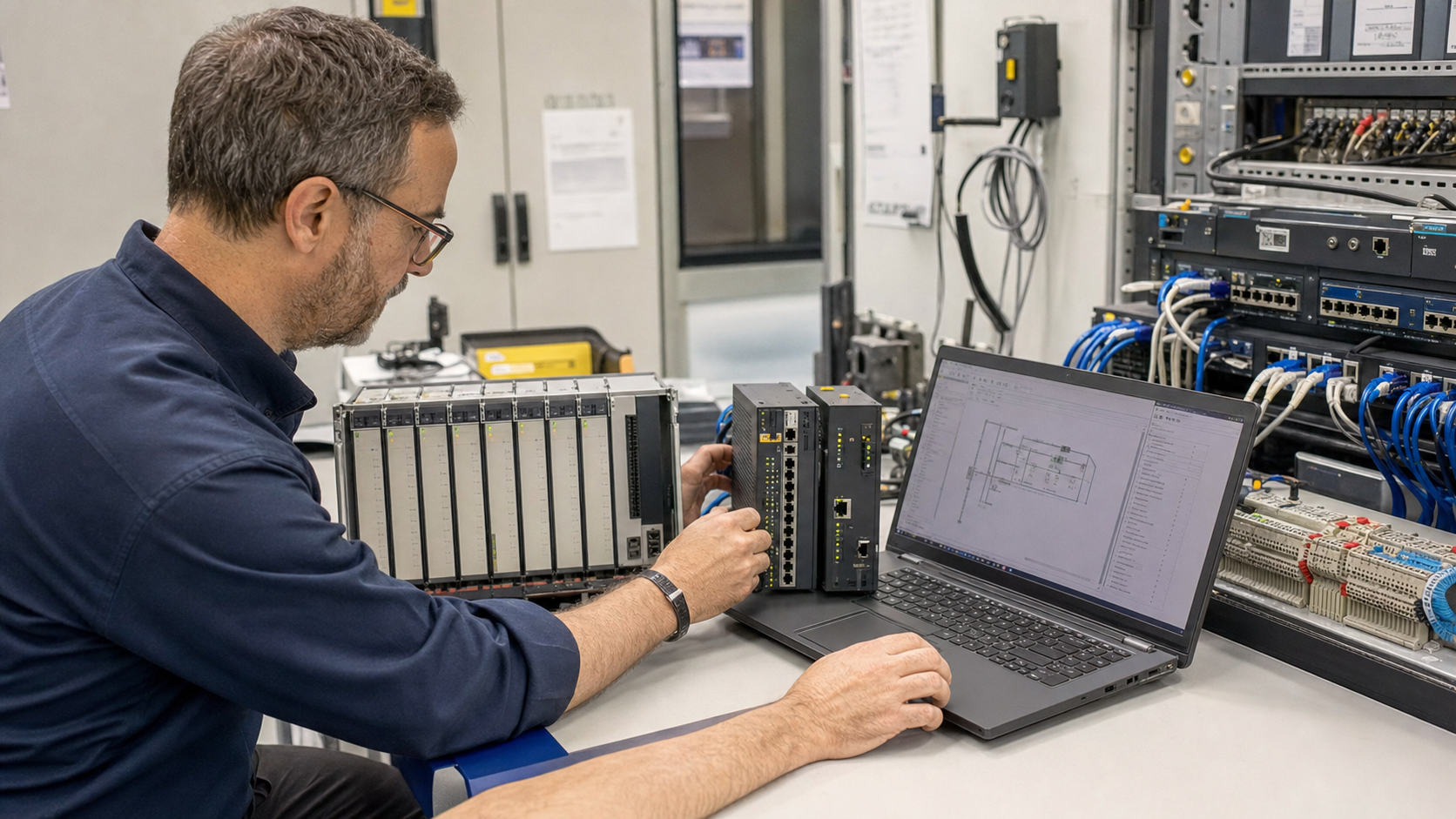
Open, software-defined automation is becoming a more visible direction in industrial control. Schneider Electric used Automate 2026 to demonstrate an approach built around open automation, industrial AI and hardware-agnostic control, including the IEC 61499-based EcoStruxure Automation Expert environment. For maintenance teams, the important question is not whether a new architecture sounds modern. It is whether the installed plant can be understood, connected and validated without losing control of the operating process.
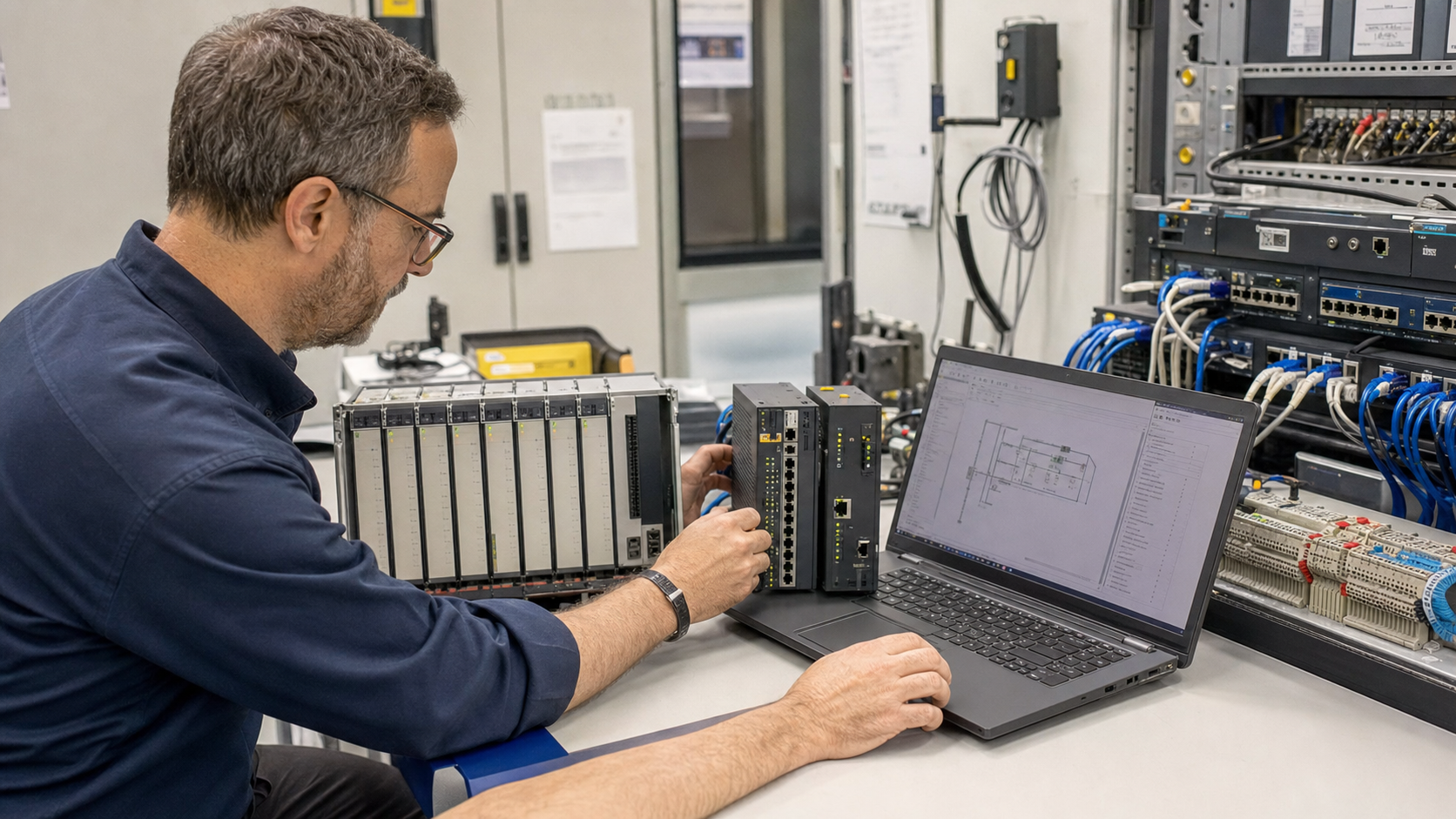
Schneider Electric’s Automate 2026 announcement describes open, software-defined automation as a way to combine control, software and ecosystem technologies across industrial applications. That announcement is an industry direction, not a site-specific compatibility statement. Every plant still needs to verify its own controller family, I/O, communications, engineering tools and change-control requirements.
Why this matters for legacy control systems
Many plants are not starting with a blank design. They have installed controllers, remote I/O, operator stations, drives, safety boundaries and network segments that must continue to work. A platform transition therefore has two dimensions: the new capability the plant wants to add, and the existing interfaces that must remain dependable while the change is introduced.
An open architecture can make those boundaries easier to discuss, but it does not remove the need for an evidence-based review. The maintenance team should be able to explain which module is installed, what function it performs, where it connects and what would happen if the modernization work were paused.
Five checks before discussing a platform transition
1. Record the installed control boundary
Start with the exact controller or processor model, chassis, backplane, I/O modules, communication cards, power modules and firmware or revision markings. Add the engineering workstation and operator interface details when they are part of the change. A broad platform name is useful for orientation, but it is not enough for a replacement or interface review.
2. Separate existing duties from proposed functions
Write down what must remain in service: control loops, alarm handling, historian links, operator graphics, safety interlocks and remote I/O paths. Then list the proposed addition, such as diagnostics, analytics, an edge gateway or a new software layer. This separation makes it easier to identify which modules are operationally critical and which can be tested in a staged environment.
3. Inspect the communication layer
Transitions often depend on communication cards, gateways, network switches, serial interfaces and protocol boundaries rather than the headline controller alone. Record connector types, port assignments, network topology and any redundancy arrangement that the maintenance team relies on. The product systems directory can help organize an initial search across PLC, DCS, I/O, power and communication functions.
4. Request a controlled validation plan
Ask how the proposed change will be checked before it reaches the operating process. Useful evidence may include a configuration comparison, interface map, test plan, rollback path and documentation for the installed modules. This is especially important when a site is considering used, refurbished or legacy equipment. Condition, availability, compatibility and warranty terms should be confirmed during the quotation review rather than assumed from a product family name.
5. Keep a maintenance fallback
A transition plan should identify the legacy parts and records needed if commissioning is delayed or a staged rollout is interrupted. Keep the exact model, revision, quantity, application and destination information together with clear nameplate and connector photos. The supported brand directory is a useful starting point when the model is known but the product family or vendor naming has changed over time.
What to include in a sourcing inquiry
For a control-platform review, send the installed brand and model, system or series, module position, revision information, quantity and condition preference. Include the application, destination country and any requirement that must remain in service. Photos should show the nameplate, front panel, connectors and rack context where possible.
For packaging, inspection and delivery questions, see the quality and delivery guidance. When the requirement spans several modules or the compatibility question is not yet clear, send the part numbers and photos by email so the request can be reviewed with the relevant context.
Use the announcement as a planning signal, not a shortcut
Schneider Electric’s open automation direction is useful because it puts architecture, software and ecosystem interoperability into the same conversation. For a maintenance team, however, the practical next step remains disciplined documentation: identify the installed boundary, map the interfaces, define the test evidence and protect the fallback path. Those checks make a modernization discussion more useful whether the final decision is an extension, a staged migration or continued support for the existing system.
Related guides
View all guides
DeltaV IQ Controller: How Server-Based Control Changes Spare Planning
Emerson’s DeltaV IQ announcement highlights server-based control. Here is how maintenance teams can distinguish host, software, redundancy and physical-controller support boundaries.
Read guide
Siemens and P&G Expand AI Inspection: What Keeps the Line Running
Siemens’ recent AI inspection announcement highlights an interconnected camera, edge-computing and PLC workflow. Here is how maintenance teams can trace faults before replacing hardware.
Read guide
Emerson’s Planned Qatar Service Center: What Flow-Instrument RFQs Still Need
Emerson has announced a planned Qatar automation service center. Here is what buyers should document in flow-instrument RFQs while its capabilities remain future plans.
Read guide
ABB Infinitus and Data-Center DC Power: RFQ Records for Automation Spares
A practical RFQ framework for documenting power, automation, cooling and protection interfaces as data-center power architectures evolve toward DC and hybrid designs.
Read guideSend your part number, photos or nameplate.
Our team will verify, check availability, and reply with options within 24 hours.
[email protected]+86 18359268345WhatsApp