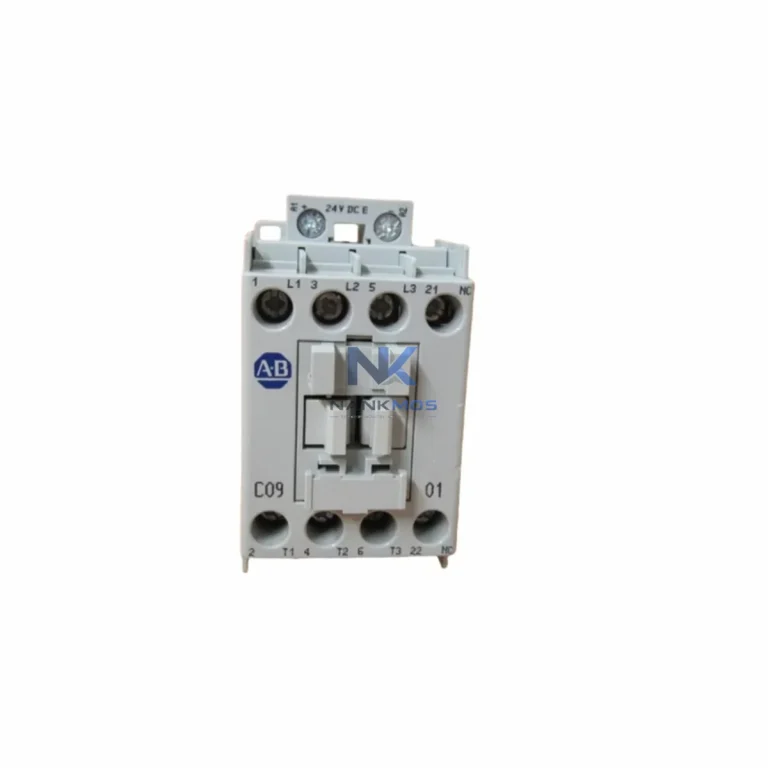
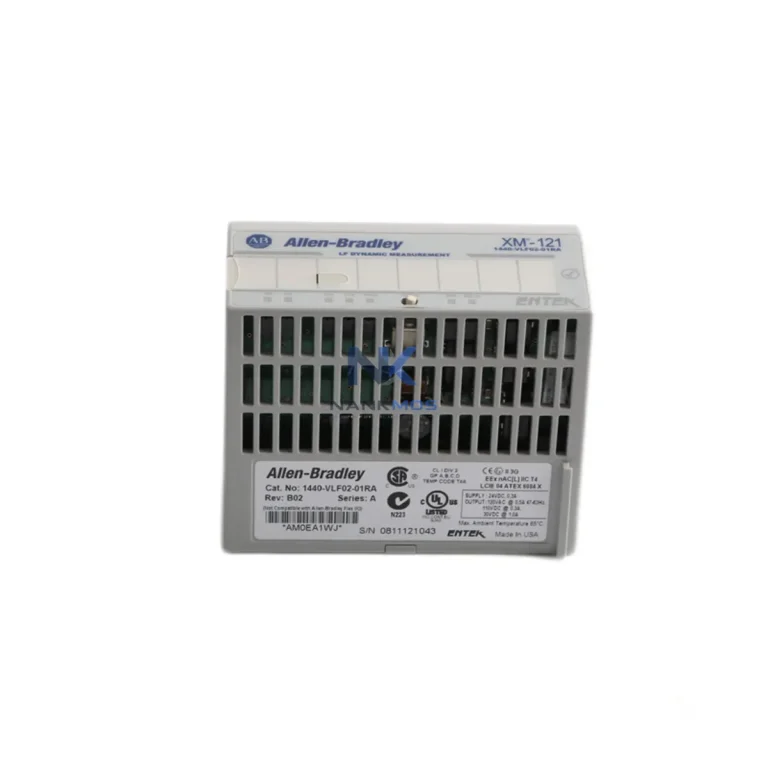
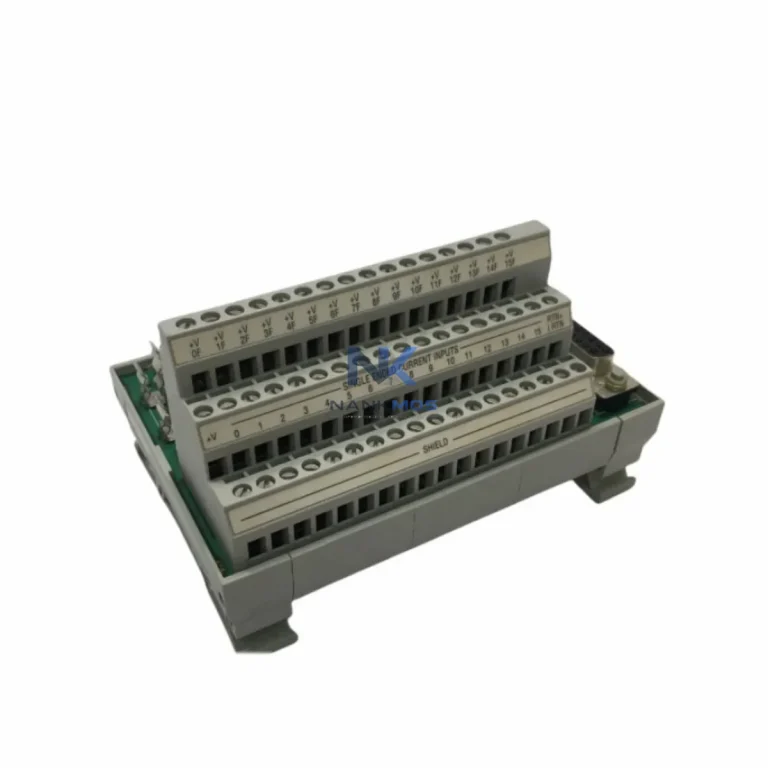
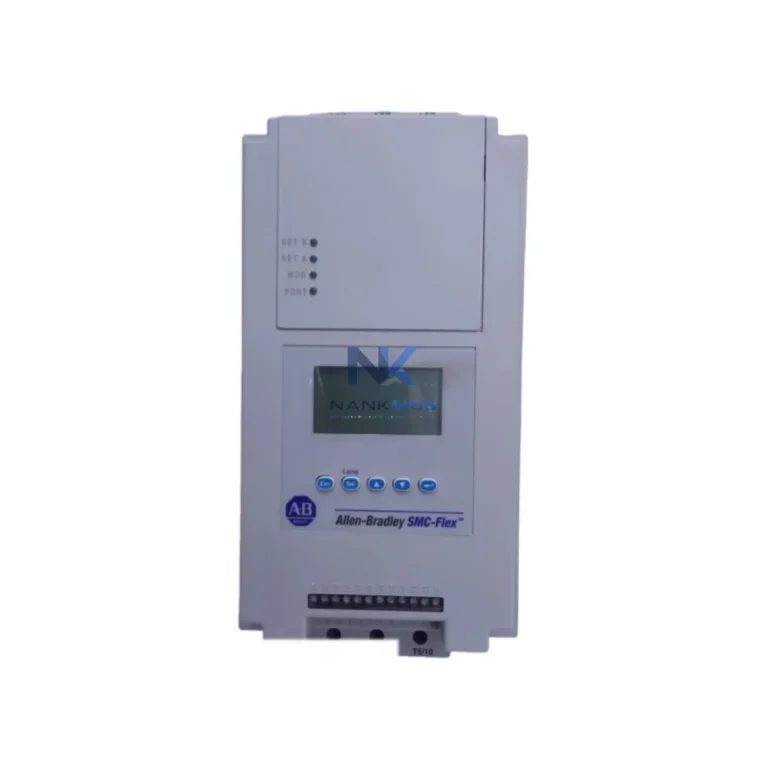
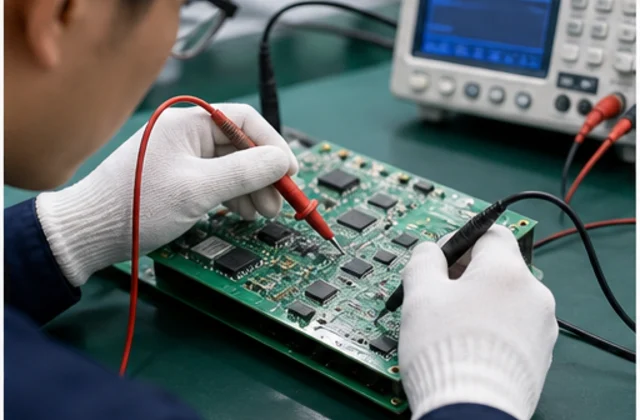
 Functional Inspection
100% tested on professional platforms to ensure stable performance.
Allen-Bradley 1783-BMS20CGL is a NANKMOS industrial automation product record Listed under Stratix series and Business & Industrial > Automation, Control & Flow Devices. Confirm condition, availability, lead time, compatibility and documentation by email inquiry.
Brand names are used for identification only.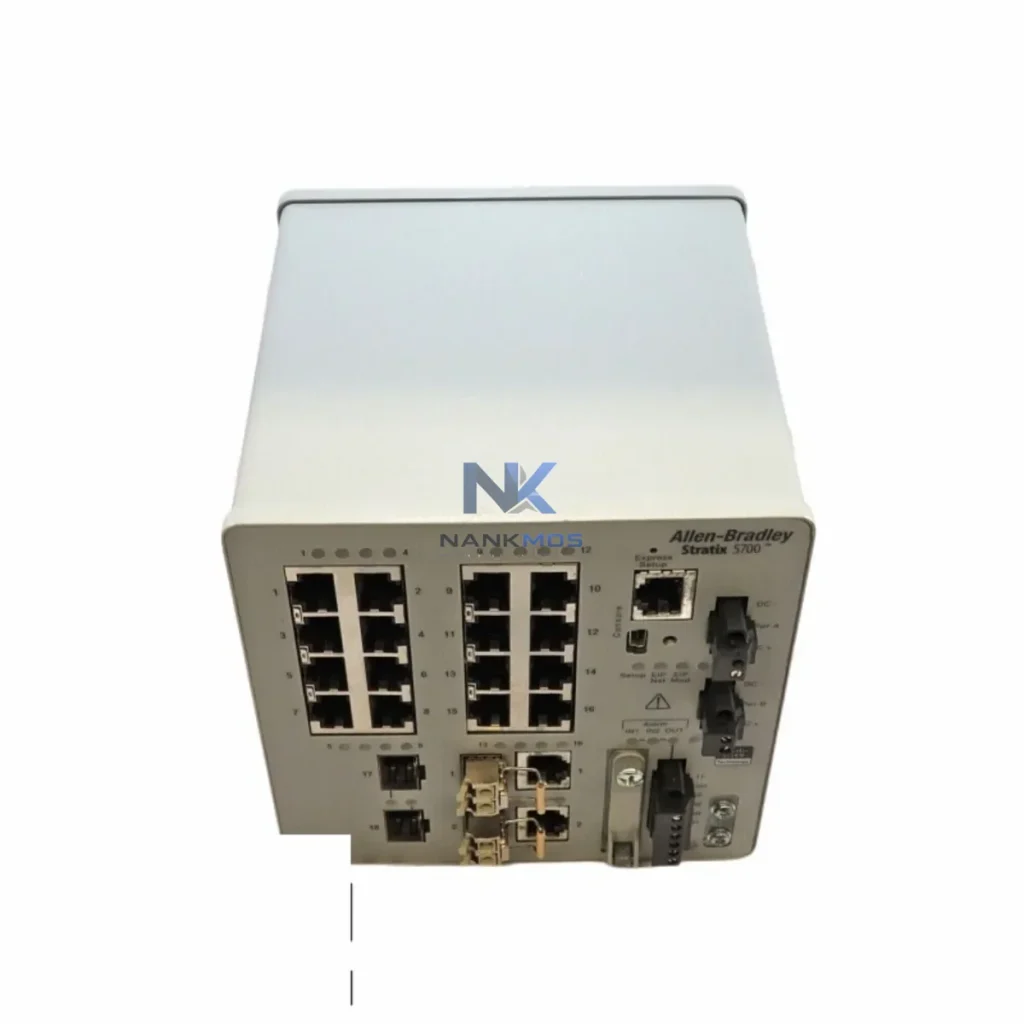
Allen-Bradley 1783-BMS20CGL is a NANKMOS industrial automation product record Listed under Stratix series and Business & Industrial > Automation, Control & Flow Devices. Confirm condition, availability, lead time, compatibility and documentation by email inquiry.
| Manufacturer | Allen-Bradley |
|---|---|
| Application | Industrial Network Communication |
| Part Number / Model | 1783-BMS20CGL |
| Compatible System | Stratix |
| Series | Stratix |
| Condition Options | To Confirm |
| Module Type | Communication Module |
| Warranty | 12 Months |
| Packaging | Anti-static Bag / Secure Box |
| Shipping Methods | DHL / FedEx / UPS / Air / Sea |
| Availability | To Confirm |
| Lead Time | To Confirm |
| Documentation | Part number and revision checked before quote |
The Allen-Bradley 1783-BMS20CGL is a managed industrial Ethernet switch from the Stratix 5700 series, engineered to deliver deterministic, energy-aware network communication across demanding automation environments. Designed for integration within EtherNet/IP-based control architectures, this switch supports intelligent traffic prioritization, port-level power management, and real-time diagnostics — all critical capabilities for factories pursuing measurable reductions in network-layer energy consumption and unplanned downtime.
In modern smart production lines, network infrastructure is no longer a passive conduit. The 1783-BMS20CGL actively participates in energy control strategy by enabling precise segmentation of control traffic, reducing broadcast storms that waste processing cycles on connected PLCs and I/O modules, and supporting Quality of Service (QoS) policies that ensure time-sensitive motion and safety data reaches servo drives and safety controllers without latency-induced retries. Every unnecessary retransmission represents wasted energy and degraded cycle time — the Stratix 5700 platform is built to eliminate these inefficiencies at the network layer.
The 1783-BMS20CGL is most effective when deployed as the network backbone connecting energy-intensive automation assets. In a typical smart production cell, a ControlLogix L7x or CompactLogix L3x PLC serves as the primary controller, issuing cyclic I/O commands to distributed 1734 POINT I/O modules and 1756 ControlLogix I/O racks. The Stratix 5700 switch ensures these control packets traverse the network with minimal jitter, preventing the controller from issuing redundant poll cycles that inflate CPU load and, by extension, power draw.
When paired with PowerFlex 755 or PowerFlex 525 variable frequency drives, the 1783-BMS20CGL enables real-time drive status feedback — speed reference, output current, fault codes — to flow back to the PLC and to FactoryTalk View SE HMI stations without network congestion. This closed-loop visibility allows operators to detect inefficient motor operating points (e.g., motors running at full speed under partial load) and issue corrective speed references through the drive, directly reducing motor energy consumption.
For energy monitoring, the switch integrates seamlessly with PowerMonitor 5000 or PowerMonitor 1000 power quality meters connected on the same EtherNet/IP segment. These meters stream real-time kWh, power factor, and harmonic distortion data to FactoryTalk Energy Manager or third-party SCADA platforms, enabling energy dashboards that correlate production throughput with electrical consumption. The 1783-BMS20CGL's IGMP snooping capability ensures multicast energy data streams are delivered only to subscribed nodes — preventing unnecessary traffic from reaching servo drives, safety controllers, or vision systems that do not require it.
Kinetix 5700 and Kinetix 5500 servo drives, which handle high-precision motion axes on assembly and packaging lines, benefit from the switch's QoS prioritization. Motion control traffic is assigned the highest queue priority, ensuring that position and torque commands arrive within the deterministic window required for coordinated multi-axis motion. This eliminates position errors caused by network latency, which would otherwise force the motion controller to reduce acceleration profiles — a hidden source of cycle time loss and energy inefficiency.
The switch also supports 1783-ETAP EtherNet/IP Tap modules for passive network diagnostics without interrupting live traffic, and integrates with Cisco IE 4000 or IE 5000 series switches in larger plant-wide network topologies where the Stratix 5700 handles cell-level switching while upstream managed switches handle inter-zone routing. This layered architecture ensures that energy monitoring data, safety I/O, and motion control traffic remain properly segmented, reducing the risk of a single high-bandwidth event — such as a firmware update broadcast — disrupting time-critical control loops.
Factory energy optimization begins at the network layer. Unmanaged or poorly configured switches allow broadcast storms, multicast flooding, and uncontrolled traffic bursts to consume bandwidth and force connected devices — PLCs, drives, I/O modules — into error-recovery states that consume additional processing power and extend cycle times. The 1783-BMS20CGL addresses this at the infrastructure level through VLAN segmentation, storm control, and port-based access control lists that enforce clean traffic boundaries between production zones.
In high-throughput discrete manufacturing environments — automotive body shops, electronics assembly lines, food and beverage packaging — the switch enables predictable network latency that allows production schedulers to tighten inter-station cycle times without buffer overruns. Tighter cycle times mean fewer idle periods for motors and actuators, reducing the energy wasted during unproductive dwell states. When integrated with a FactoryTalk Historian or OSIsoft PI data historian, the switch's port statistics and device health data become inputs to predictive maintenance models that identify degrading network links before they cause unplanned downtime.
Unplanned downtime is one of the largest sources of energy waste in industrial facilities — restarting production lines, reheating furnaces, re-pressurizing hydraulic systems, and re-synchronizing motion axes all consume significant energy without producing output. By maintaining network integrity and providing early warning of link degradation through SNMP traps and syslog alerts forwarded to SCADA, the 1783-BMS20CGL contributes directly to uptime stability and the energy efficiency that comes with sustained, uninterrupted production rhythm.
All units are tested prior to shipment, verified for port-level functionality, and backed by a 12-Month Warranty. In-stock availability ensures minimal lead time for maintenance replacements, reducing the duration of unplanned outages and the associated energy and productivity losses.
Q1: How does the 1783-BMS20CGL contribute to measurable energy savings on a production line? By enforcing VLAN segmentation and QoS traffic prioritization, the switch reduces unnecessary network retransmissions that force PLCs and drives into error-recovery cycles. Fewer retransmissions mean lower CPU utilization on connected controllers, reduced heat generation in network hardware, and more stable cycle times — all of which translate to lower energy consumption per unit of output. When combined with PowerMonitor energy meters on the same EtherNet/IP segment, operators gain the visibility needed to identify and eliminate specific energy waste sources.
Q2: Is the 1783-BMS20CGL compatible with both ControlLogix and CompactLogix control platforms? Yes. The Stratix 5700 series is natively integrated with Rockwell Automation's Studio 5000 Logix Designer environment, allowing the switch to be configured and monitored directly from the same software used to program ControlLogix L7x, CompactLogix L3x, and GuardLogix safety controllers. This eliminates the need for separate network management tools and reduces configuration errors that can introduce latency or traffic imbalances.
Q3: What is the recommended replacement or upgrade path for aging unmanaged switches in existing EtherNet/IP installations? For facilities currently running unmanaged switches in device-level ring or star topologies, the 1783-BMS20CGL is a direct upgrade that adds RSTP/MSTP ring redundancy, IGMP snooping, and port diagnostics without requiring changes to the existing IP addressing scheme. The 20-port configuration accommodates most cell-level device counts, and the combo SFP ports support fiber uplinks for longer cable runs between production zones or to plant-level network infrastructure.
Q4: What does the 12-Month Warranty cover, and how is the pre-shipment testing conducted? Every 1783-BMS20CGL unit undergoes functional testing of all copper and SFP ports, power input verification, and basic EtherNet/IP communication validation before shipment. The 12-Month Warranty covers hardware defects and port-level failures under normal industrial operating conditions. In-stock units are available for immediate dispatch, minimizing replacement lead time for maintenance teams managing critical production infrastructure.
Functional Inspection100% tested on professional platforms to ensure stable performance.
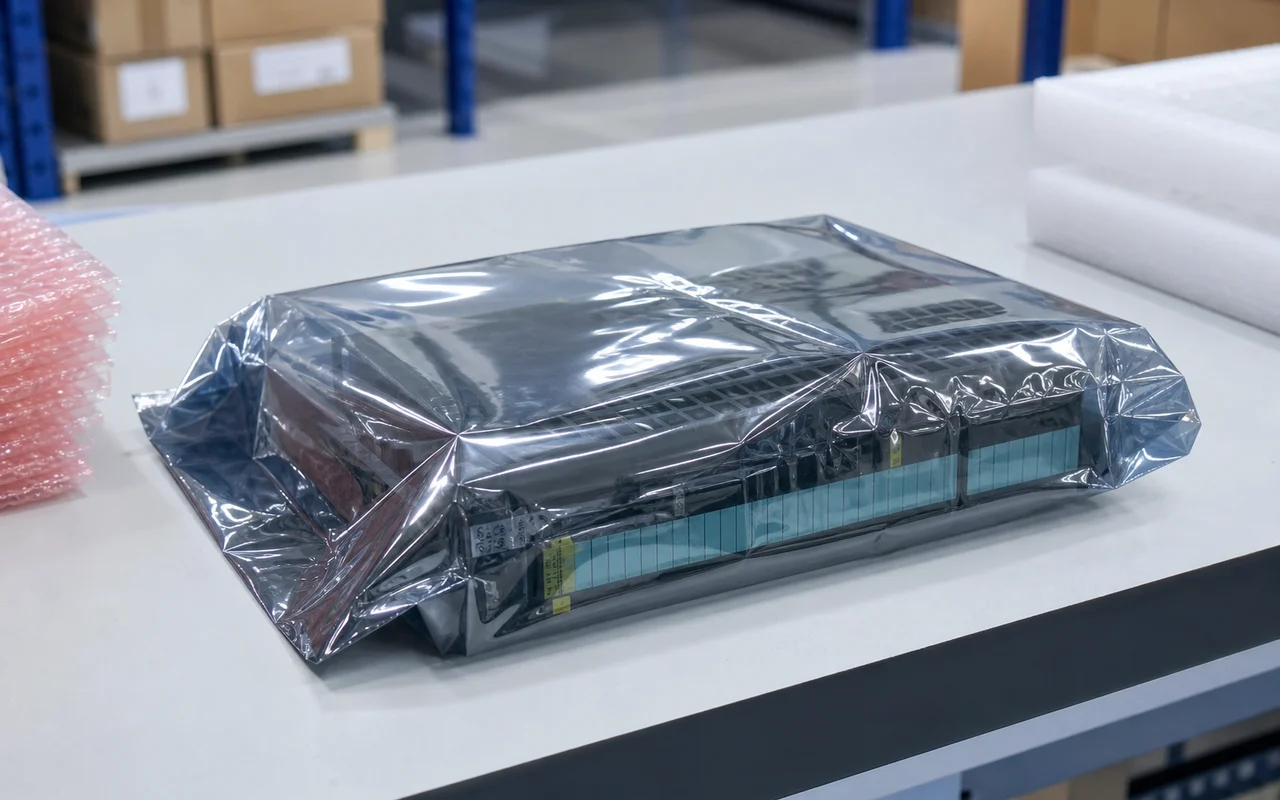 Anti-static Packaging
Modules are packed in anti-static bags to prevent electrostatic damage.
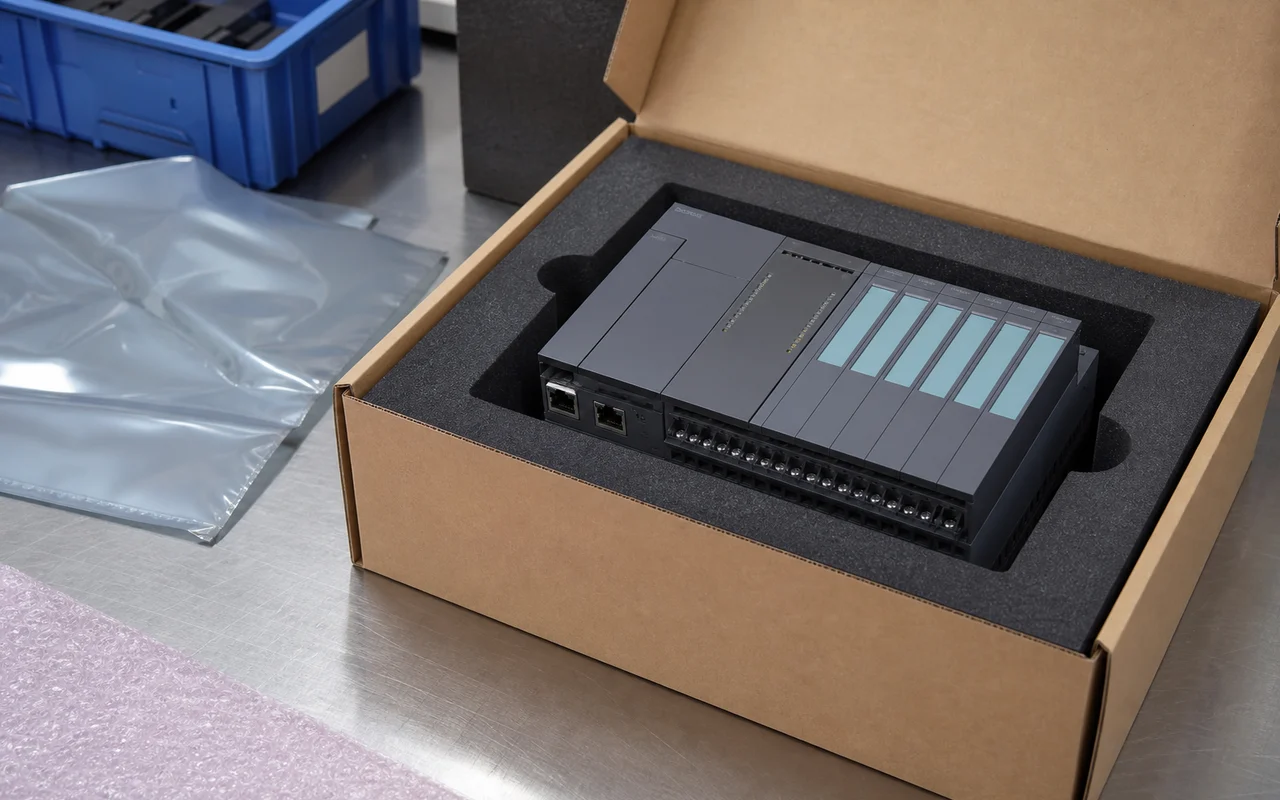 Secure Export Packing
Cushion protection and strong cartons ensure safe transportation.
 Worldwide Shipping
Global logistics network supports air, sea and express delivery.
 Documentation Check
Part number, revision and compatibility verified before shipment.
 After-sales Support
Professional technical support to help resolve your issues.