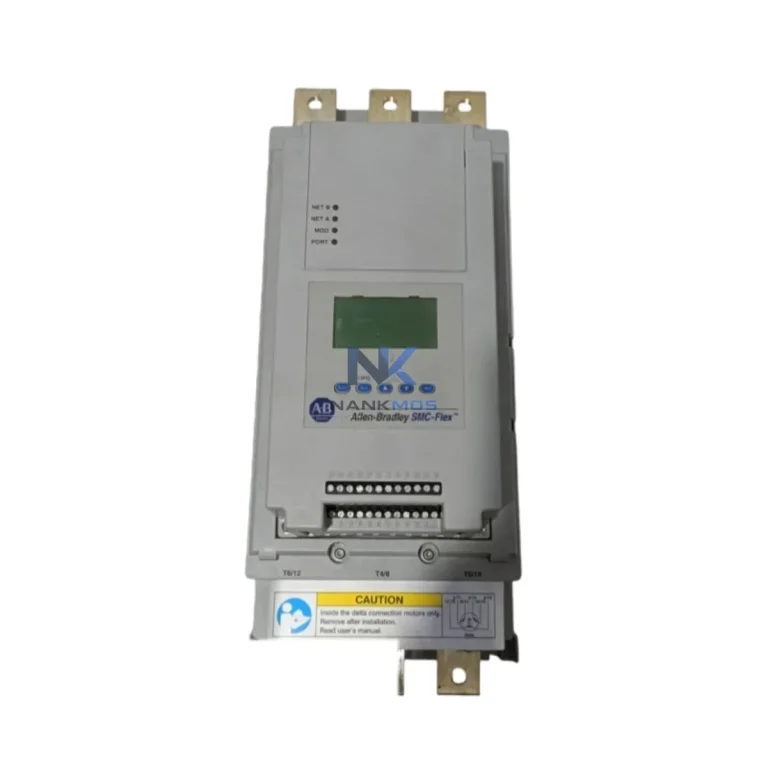
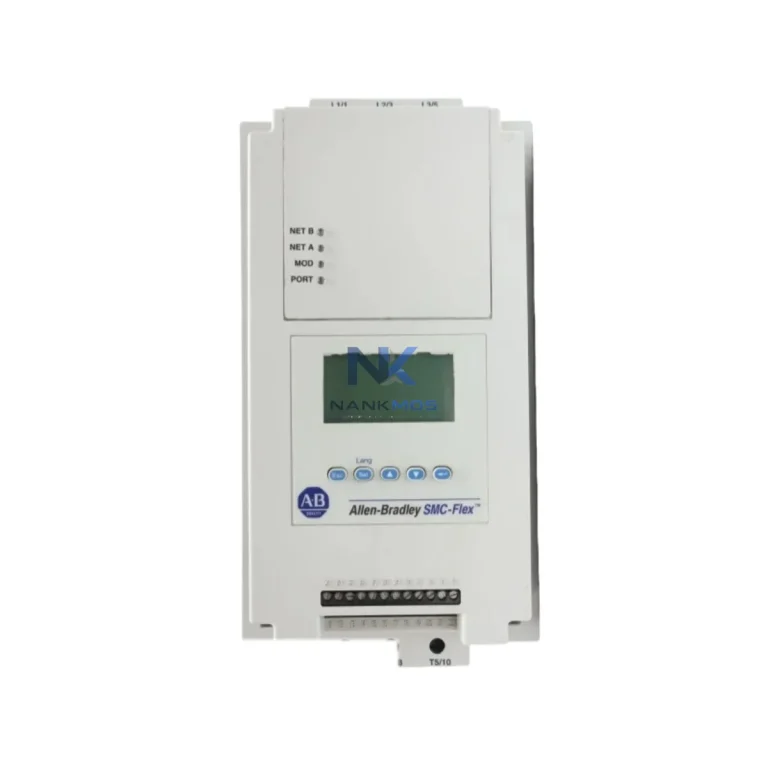
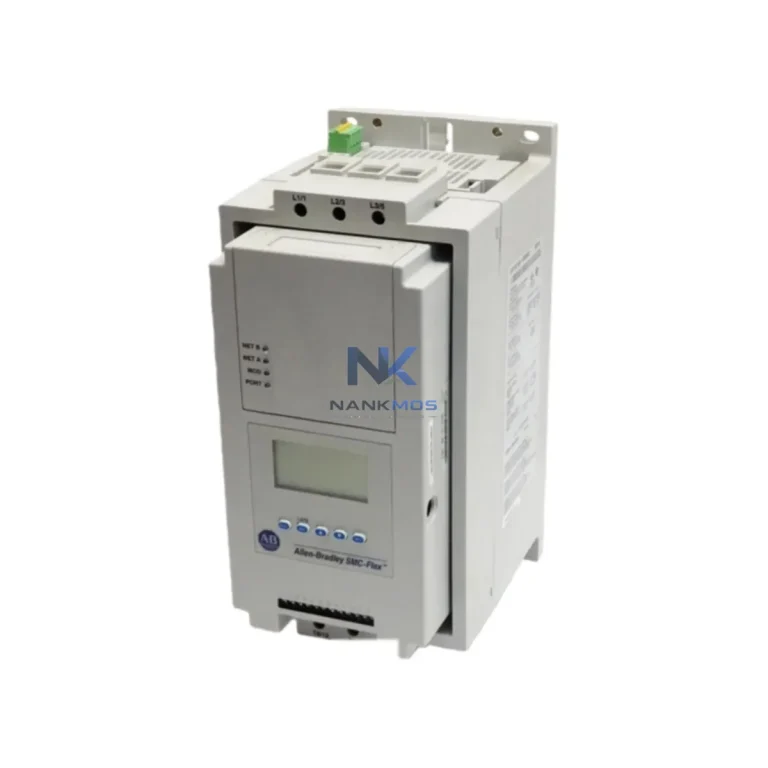
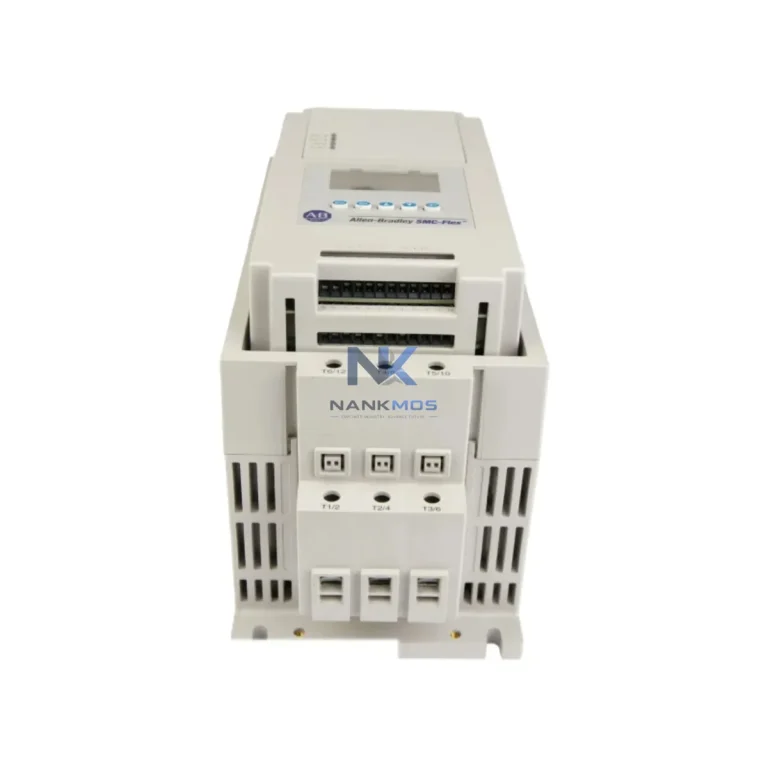
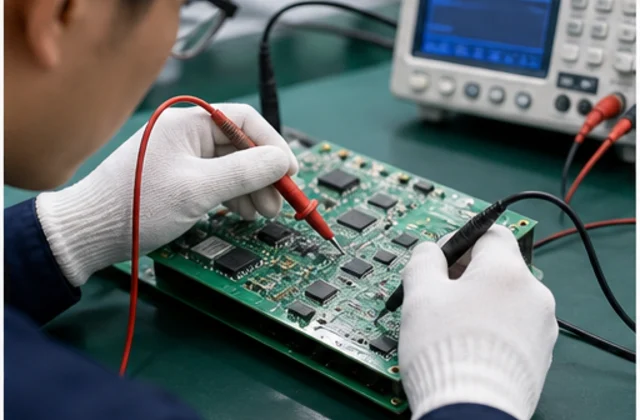
 Functional Inspection
100% tested on professional platforms to ensure stable performance.
Allen-Bradley 1794-IR8 is a NANKMOS industrial automation product record Listed under Flex I/O series and Business & Industrial > Automation, Control & Flow Devices > Programmable Logic Controllers. Confirm condition, availability, lead time, compatibility and documentation by email inquiry.
Brand names are used for identification only.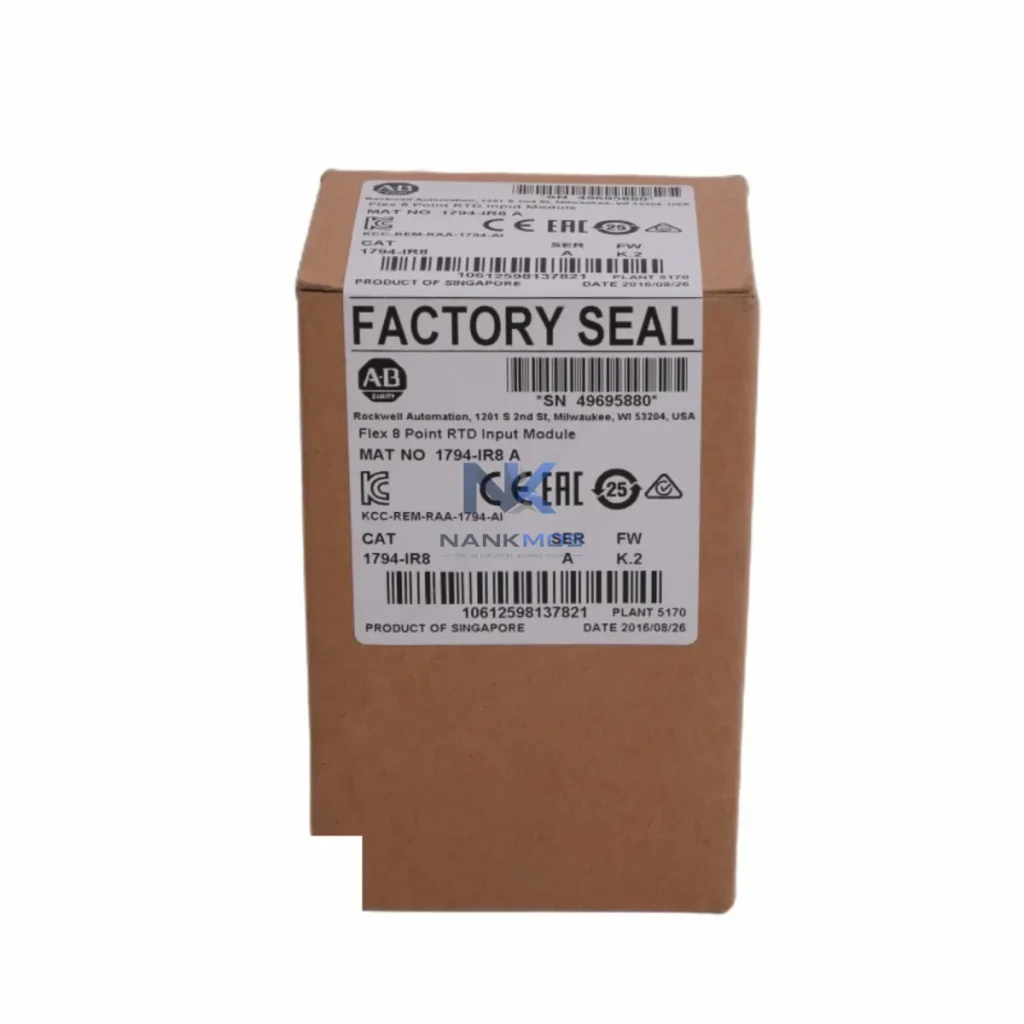
Allen-Bradley 1794-IR8 is a NANKMOS industrial automation product record Listed under Flex I/O series and Business & Industrial > Automation, Control & Flow Devices > Programmable Logic Controllers. Confirm condition, availability, lead time, compatibility and documentation by email inquiry.
| Manufacturer | Allen-Bradley |
|---|---|
| Application | Controller Processing & System Control |
| Part Number / Model | 1794-IR8 |
| Compatible System | Flex I/O |
| Series | Flex I/O |
| Condition Options | To Confirm |
| Module Type | Controller / CPU Module |
| Warranty | 12 Months |
| Packaging | Anti-static Bag / Secure Box |
| Shipping Methods | DHL / FedEx / UPS / Air / Sea |
| Availability | To Confirm |
| Lead Time | To Confirm |
| Documentation | Part number and revision checked before quote |
The Allen-Bradley 1794-IR8 is an 8-point RTD (Resistance Temperature Detector) input module engineered for the FLEX I/O platform — a modular, distributed I/O architecture purpose-built for industrial data acquisition and smart factory integration. Designed to operate seamlessly within EtherNet/IP and ControlNet network topologies, the 1794-IR8 delivers precision temperature data from field-level sensors directly into the plant's control and monitoring infrastructure, forming a critical link in the industrial data chain that connects physical process conditions to digital decision-making systems.
In a modern smart factory, temperature measurement is not merely a safety parameter — it is a real-time production quality signal. The 1794-IR8 captures RTD inputs from PT100, PT1000, Ni120, and other resistance-based sensors, converting analog thermal readings into structured digital data packets that travel across the EtherNet/IP backbone to upstream controllers, SCADA platforms, and HMI visualization layers. This signal-to-data conversion happens at the module level, eliminating the need for external signal conditioners and reducing wiring complexity across distributed automation cells.
The module mounts directly onto the 1794-TB3 or 1794-TB3S terminal base, integrating into the FLEX I/O backplane alongside complementary modules such as the 1794-OB16 digital output module, the 1794-IE8 analog input module, and the 1794-ACN15 ControlNet adapter. Together, these components form a cohesive remote I/O node that can be deployed at machine level, in junction boxes, or within distributed control panels — all while maintaining a unified data path back to the ControlLogix or CompactLogix PLC platform via the 1794-AENT EtherNet/IP adapter.
Within the data flow architecture of a connected factory, the 1794-IR8 sits at the signal acquisition layer. RTD sensors mounted on motors, heat exchangers, extruders, or process vessels feed temperature readings into the module. These readings are then transmitted over EtherNet/IP to a ControlLogix L7x or L8x controller, where ladder logic or function block programs process the data for alarm thresholds, PID control loops, or batch sequencing. The same data is simultaneously available to a FactoryTalk View SE HMI station for operator visualization and to a FactoryTalk Historian server for long-term trend analysis and OEE reporting.
For facilities integrating legacy serial devices or third-party instrumentation, the 1794-IR8 can operate alongside protocol gateway modules — such as the ProSoft Technology MVI56E-MCM Modbus Communication Module — enabling Modbus RTU or Modbus TCP data to be normalized and merged with EtherNet/IP process data streams within the same ControlLogix chassis. This multi-protocol coexistence is essential in brownfield automation upgrades where new FLEX I/O nodes must interoperate with existing Modbus-based PLCs, variable frequency drives, or energy meters without disrupting production continuity.
Remote diagnostics capability is a defining advantage of the 1794-IR8 within an EtherNet/IP architecture. Maintenance engineers can interrogate module health, channel-level fault status, and communication diagnostics from any networked workstation running Studio 5000 Logix Designer or FactoryTalk AssetCentre — without physical access to the field panel. This remote visibility reduces mean time to repair (MTTR) and supports predictive maintenance strategies by flagging sensor drift, open-circuit faults, or out-of-range readings before they escalate into unplanned downtime events.
The 1794-IR8 is equally suited for integration with SCADA systems via OPC-UA or OPC-DA data servers, where temperature data from multiple FLEX I/O nodes across a plant floor is aggregated into a unified process dashboard. Operators monitoring a Wonderware System Platform or Ignition SCADA environment can view real-time RTD values, configure alarm setpoints, and generate compliance reports — all driven by the structured data originating from the 1794-IR8 at the field level.
Every 1794-IR8 unit supplied by NANKMOS undergoes pre-shipment functional testing, verifying channel accuracy, network communication handshake, and module identification within a live EtherNet/IP environment. Stock availability is maintained to support urgent project timelines, MRO replacement cycles, and system expansion requirements. All units are covered by a 12-Month Warranty, ensuring operational confidence from commissioning through the first year of production service.
The 1794-IR8 anchors the temperature sensing layer of a distributed FLEX I/O network. At the field level, RTD sensors embedded in process equipment — furnaces, cooling circuits, injection molds, or conveyor drives — feed resistance signals into the module's eight differential input channels. The 1794-IR8 digitizes these signals and places structured data onto the EtherNet/IP network via the 1794-AENT adapter, which manages the module's network identity and cyclic data exchange with the upstream ControlLogix L72 or L83 controller.
Within the controller chassis, the temperature data is processed alongside inputs from the 1794-IE8 analog voltage/current input module and discrete signals from the 1794-IB16 digital input module, creating a composite process picture that drives PID control outputs through the 1794-OB16 digital output module or analog setpoint commands to connected variable frequency drives. The entire FLEX I/O node communicates over a managed industrial Ethernet switch — such as the Stratix 5700 — which enforces VLAN segmentation, QoS prioritization, and ring redundancy to ensure deterministic data delivery even under high network load.
At the supervisory layer, FactoryTalk View SE HMI stations display real-time temperature trends from all 1794-IR8 channels, with configurable alarm banners that alert operators to thermal excursions. The same data stream feeds a FactoryTalk Historian server, where temperature records are time-stamped and stored for SPC analysis, batch traceability, and regulatory compliance reporting. For multi-site operations, an edge gateway — such as the Cisco IE-4000 industrial router — tunnels encrypted EtherNet/IP data to a cloud SCADA or MES platform, enabling remote plant managers to monitor temperature KPIs without VPN complexity.
In hybrid automation environments, the ProSoft Technology MVI56E-MCM module bridges Modbus RTU devices — legacy energy meters, third-party transmitters, or older VFDs — into the same ControlLogix data namespace as the 1794-IR8, enabling unified alarming and reporting across mixed-protocol assets. This architecture eliminates data silos and gives the SCADA layer a single, consistent view of all process variables regardless of their originating protocol.
Industrial facilities operating mixed-generation equipment frequently encounter protocol fragmentation — RTD data locked in proprietary formats, temperature alarms that never reach the SCADA layer, and maintenance teams relying on manual rounds rather than real-time network data. The 1794-IR8 resolves these gaps by standardizing RTD acquisition within the EtherNet/IP ecosystem, making temperature data immediately available to any networked system that speaks CIP (Common Industrial Protocol).
Data island elimination is achieved through the module's native integration with the ControlLogix tag database. Every RTD channel maps to a named controller tag, which is automatically discoverable by OPC servers, FactoryTalk Historian, and third-party SCADA platforms — no custom driver development required. Alarm transparency is enhanced by the module's channel-level fault reporting: open-circuit, short-circuit, and out-of-range conditions generate discrete fault bits that can trigger HMI pop-ups, email notifications via FactoryTalk Alarms and Events, or automated work orders in a CMMS system.
For system expansion, the FLEX I/O platform's modular architecture allows additional 1794-IR8 modules to be added to an existing node without controller reprogramming — the 1794-AENT adapter auto-discovers new modules and updates the I/O configuration map. This scalability supports phased factory upgrades where temperature monitoring is extended to new process areas without disrupting existing production networks.
Remote diagnostics via Studio 5000 Logix Designer allow engineers to perform channel calibration verification, review module event logs, and confirm network communication health from a central engineering workstation — reducing the need for on-site visits to remote or hazardous panel locations and supporting lean maintenance models in large-footprint industrial facilities.
Q: What communication protocols does the 1794-IR8 support, and how does it integrate with existing plant networks?A: The 1794-IR8 communicates via EtherNet/IP (using the 1794-AENT adapter) and ControlNet (using the 1794-ACN15 adapter). Both protocols are CIP-native, ensuring seamless integration with ControlLogix and CompactLogix controllers, as well as OPC-UA/DA servers and SCADA platforms such as FactoryTalk, Wonderware, and Ignition without additional protocol conversion middleware.
Q: How does the 1794-IR8 support remote diagnostics and predictive maintenance?A: Each channel provides real-time fault status bits — including open-circuit, short-circuit, and over-range detection — accessible remotely via Studio 5000 Logix Designer or FactoryTalk AssetCentre. Maintenance teams can monitor module health, review event logs, and verify calibration status from any networked engineering workstation, enabling condition-based maintenance without physical panel access.
Q: Can the 1794-IR8 be added to an existing FLEX I/O node without disrupting current operations?A: Yes. The FLEX I/O platform supports hot-swap module insertion on select adapter configurations, and the 1794-AENT adapter auto-discovers newly added modules. System expansion can be planned and executed during scheduled maintenance windows with minimal impact on running processes, making the 1794-IR8 well-suited for phased smart factory upgrade programs.
Q: What warranty and pre-shipment testing does NANKMOS provide for the 1794-IR8?A: Every 1794-IR8 unit is covered by a 12-Month Warranty from the date of shipment. Prior to dispatch, each module undergoes functional testing that verifies channel accuracy, EtherNet/IP communication handshake, and module identification within a live network environment. Stock is maintained for immediate dispatch to support MRO replacement, project commissioning, and emergency breakdown requirements.
Functional Inspection100% tested on professional platforms to ensure stable performance.
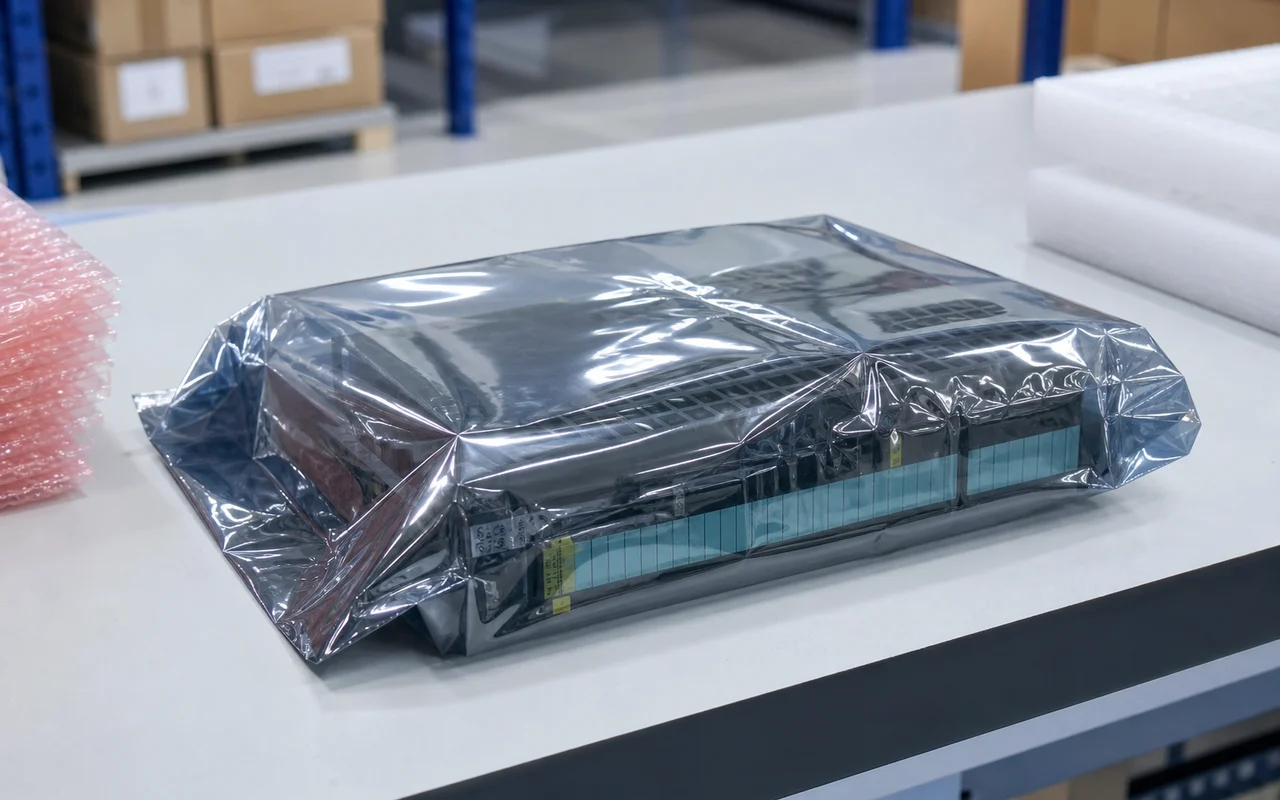 Anti-static Packaging
Modules are packed in anti-static bags to prevent electrostatic damage.
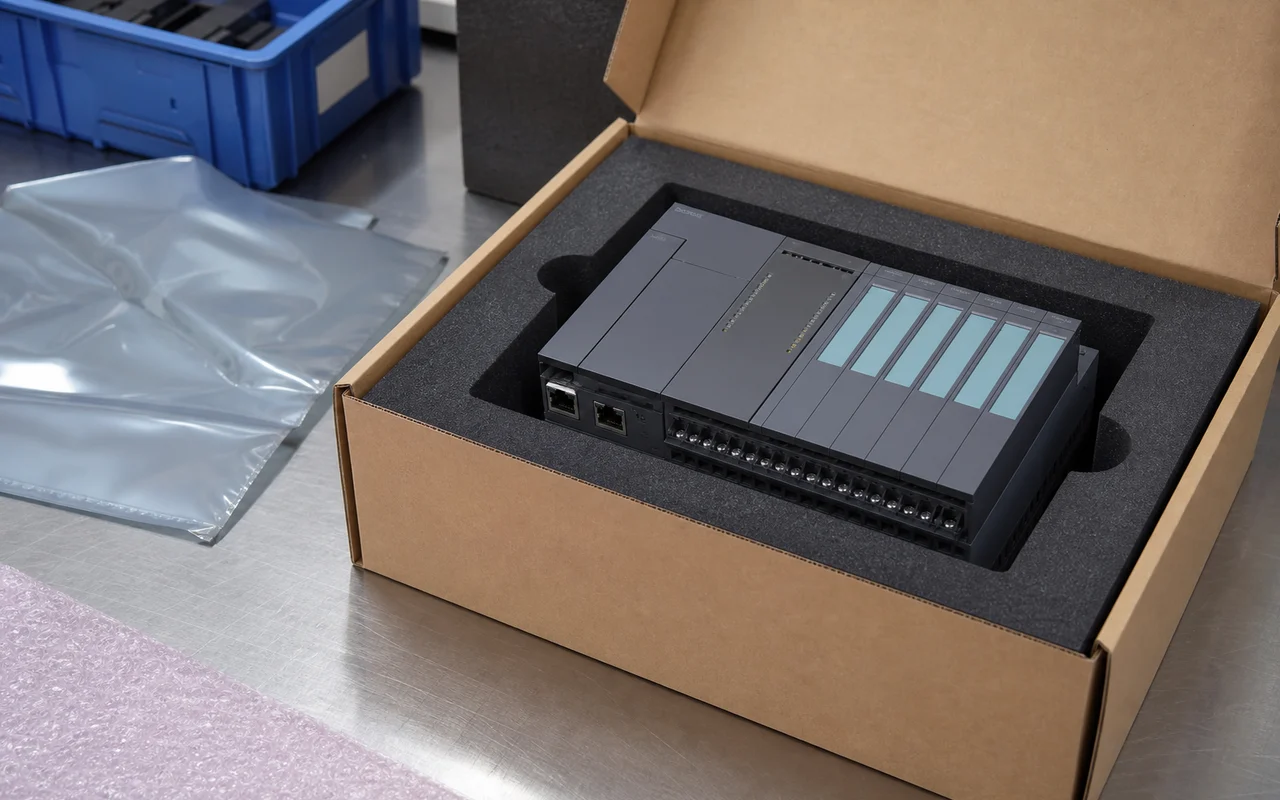 Secure Export Packing
Cushion protection and strong cartons ensure safe transportation.
 Worldwide Shipping
Global logistics network supports air, sea and express delivery.
 Documentation Check
Part number, revision and compatibility verified before shipment.
 After-sales Support
Professional technical support to help resolve your issues.