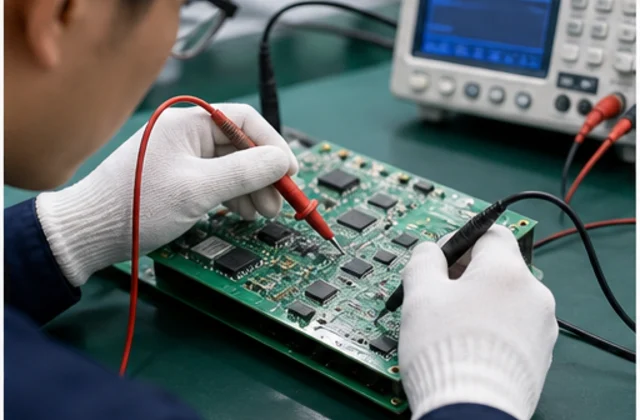
 Functional Inspection
100% tested on professional platforms to ensure stable performance.
Bachmann AIO288 is a NANKMOS industrial automation product record Listed under Other series series and Business & Industrial > Automation, Control & Flow Devices > Programmable Logic Controllers. Confirm condition, availability, lead time, compatibility and documentation by email inquiry.
Brand names are used for identification only.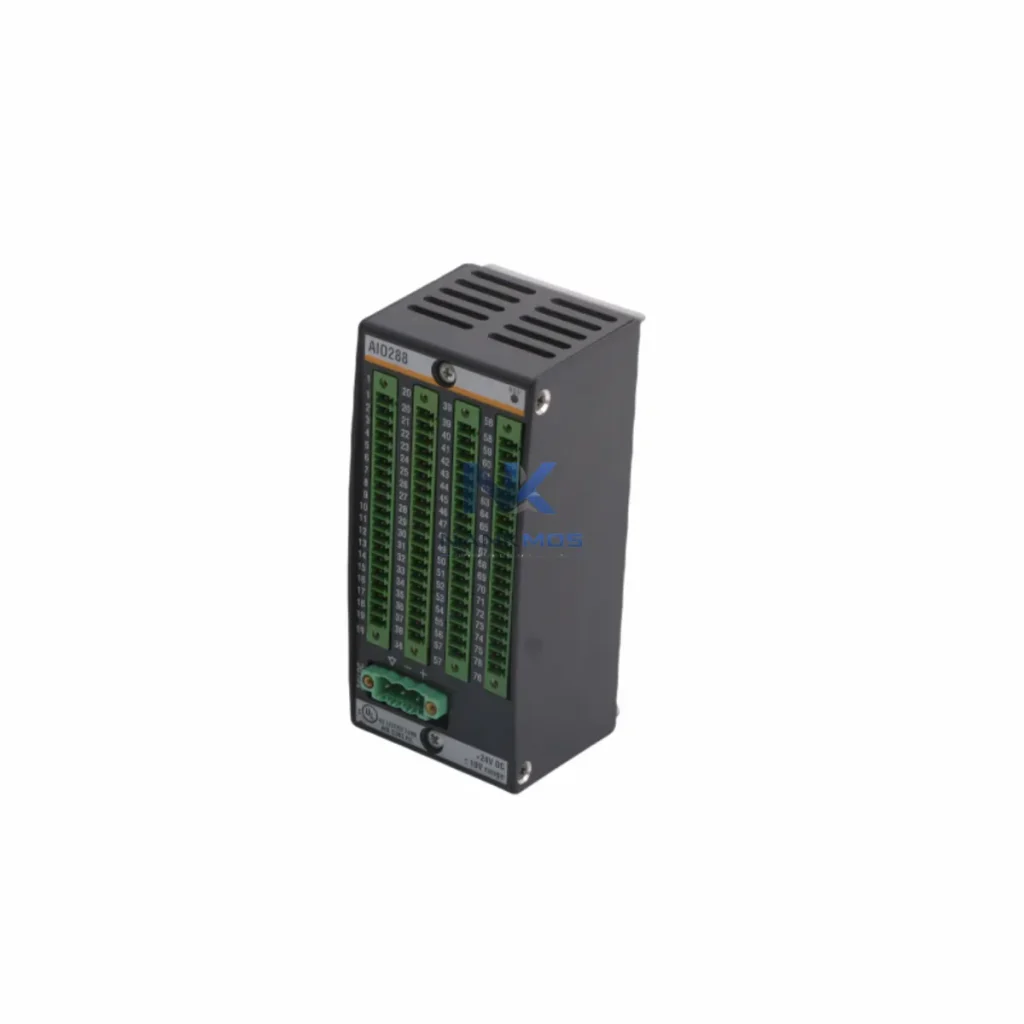
Bachmann AIO288 is a NANKMOS industrial automation product record Listed under Other series series and Business & Industrial > Automation, Control & Flow Devices > Programmable Logic Controllers. Confirm condition, availability, lead time, compatibility and documentation by email inquiry.
| Manufacturer | Bachmann |
|---|---|
| Application | Controller Processing & System Control |
| Part Number / Model | AIO288 |
| Compatible System | Confirmed by inquiry |
| Condition Options | none_detected |
| Module Type | Controller / CPU Module |
| Warranty | 12 Months |
| Packaging | Anti-static Bag / Secure Box |
| Shipping Methods | DHL / FedEx / UPS / Air / Sea |
| Availability | To Confirm |
| Lead Time | To Confirm |
| Documentation | Part number and revision checked before quote |
In modern smart factory environments, the integrity of the analog signal chain is the foundation of every data-driven decision. The Bachmann AIO288 is a high-density analog I/O module engineered for the Bachmann M1 automation platform, delivering precise multi-channel signal acquisition and output across the full spectrum of industrial process variables — from 4–20 mA current loops and ±10 V voltage signals to thermocouple and RTD inputs. Designed to operate at the intersection of field instrumentation and upper-level control networks, the AIO288 closes the data gap between physical process signals and the digital intelligence layer of the smart factory.
Where legacy analog systems create isolated data islands, the AIO288 integrates directly into the Bachmann M1 backplane, enabling seamless communication with the M1 CPU modules — such as the MPC240 and MPC265 — over the high-speed internal bus. This tight coupling eliminates conversion latency and ensures that analog values are available to the control logic, historian, and SCADA layer within a single scan cycle. For plant engineers managing distributed process loops across compressors, heat exchangers, flow meters, and pressure transmitters, this real-time data availability is not a convenience — it is a prerequisite for closed-loop control and predictive maintenance.
The AIO288 sits at the first layer of the smart factory data chain: signal acquisition. Field sensors — including pressure transmitters, flow meters, temperature probes, and level sensors — feed their 4–20 mA or voltage outputs directly into the AIO288's input channels. From there, the digitized values are passed over the M1 backplane to the Bachmann M1 CPU module (e.g., MPC240 or MPC265), where IEC 61131-3 control logic processes the data in real time.
For sites requiring protocol bridging to plant-wide networks, the M1 system's communication modules — such as the Bachmann MBT212 Modbus TCP gateway or the Bachmann CAN232 CANopen interface — translate the internal bus data into standard industrial protocols. This allows the AIO288's analog values to be consumed by Siemens SIMATIC WinCC or Ignition SCADA platforms over Modbus TCP, or by Beckhoff TwinCAT systems via EtherCAT when the appropriate M1 gateway is installed. The result is a unified data stream from field instrument to SCADA historian without manual data entry or protocol mismatch.
At the network transport layer, industrial managed Ethernet switches — such as those from the Hirschmann MICE or Phoenix Contact FL SWITCH families — provide the ring topology redundancy and VLAN segmentation needed to isolate control traffic from IT networks. The AIO288's data, once on the M1 Ethernet backbone, travels through these switches to reach HMI panels (e.g., Bachmann-compatible touch panels or third-party Weintek cMT series displays) for operator visualization, and to edge gateway devices for cloud forwarding or OPC UA publication.
For remote I/O expansion beyond the local M1 rack, the architecture can incorporate Bachmann remote I/O nodes or third-party distributed I/O stations connected via PROFIBUS DP or CANopen, with the AIO288 continuing to serve as the analog front-end for local high-precision channels. Variable frequency drives — such as those from the ABB ACS880 or Danfoss FC302 series — can receive analog setpoints directly from the AIO288 output channels, closing the speed or torque control loop without requiring a separate DAC module.
Power integrity for the entire M1 rack is maintained by Bachmann-compatible 24 VDC power supply modules, ensuring that analog measurement accuracy is not compromised by supply ripple. The complete data path — from sensor signal to SCADA dashboard — is designed for deterministic, low-latency operation, making the AIO288 a reliable anchor point in any smart factory data architecture.
Protocol fragmentation is one of the most persistent challenges in brownfield automation upgrades. Sites that have accumulated equipment from multiple vendors — running Modbus RTU on legacy PLCs, PROFIBUS on older drives, and Ethernet/IP on newer controllers — face the risk of data silos where critical process values never reach the SCADA or MES layer. The AIO288, deployed within the Bachmann M1 system, addresses this by providing a single, high-accuracy analog acquisition point that feeds into the M1's flexible communication stack. A single M1 rack with the AIO288 and an appropriate gateway module can bridge analog field signals into any of the major industrial protocols, eliminating the need for standalone protocol converters that introduce additional failure points.
Remote monitoring and diagnostics are equally critical for sites where on-site intervention is costly or time-consuming — offshore platforms, remote substations, and unmanned pump stations. The AIO288's integration with the M1 system enables OPC UA publication of all analog channel values, alarm states, and module diagnostics to cloud-based monitoring platforms or on-premise SCADA servers. Operators can track sensor drift, channel faults, and out-of-range conditions from a central control room, triggering maintenance workflows before a process upset occurs.
Production line transparency is achieved when every analog variable — flow rate, temperature, pressure, level — is timestamped, logged, and available for trend analysis. The AIO288 supports this by delivering consistent, high-resolution analog data to the M1 historian function, which can feed downstream data visualization tools such as Grafana dashboards or Ignition Perspective screens. Alarm tracking becomes systematic rather than reactive, and system expansion is straightforward: additional AIO288 modules can be added to the M1 rack as process requirements grow, without changes to the communication architecture.
Q1: What communication protocols does the Bachmann AIO288 support for SCADA integration? The AIO288 itself communicates over the Bachmann M1 internal backplane bus. SCADA integration is achieved through the M1 CPU and its associated communication modules, which support Modbus TCP/RTU, PROFIBUS DP, CANopen, EtherCAT, and OPC UA. This means the AIO288's analog data can be published to virtually any SCADA or DCS platform without additional hardware converters.
Q2: How does the AIO288 perform in terms of communication latency and data update rates? Because the AIO288 communicates over the M1 high-speed internal bus rather than a fieldbus, analog values are updated within the M1 CPU scan cycle — typically in the range of 1–10 ms depending on system configuration. This deterministic update rate makes the AIO288 suitable for closed-loop control applications where analog feedback latency directly affects process stability.
Q3: Can the AIO288 be integrated into an existing network alongside third-party PLCs and HMIs? Yes. The Bachmann M1 system's gateway modules enable the AIO288's data to be shared with third-party PLCs (e.g., Siemens S7, Allen-Bradley ControlLogix) and HMI systems via standard industrial protocols. The M1 acts as a protocol bridge, so the AIO288 does not need to be replaced when integrating into a mixed-vendor automation environment.
Q4: What does the 12-Month Warranty cover, and how are units tested before shipment? Every Bachmann AIO288 unit supplied by NANKMOS is covered by a 12-Month Warranty against manufacturing defects and functional failures. All units undergo pre-shipment functional testing to verify channel accuracy, signal range compliance, and backplane communication integrity. In-stock units are available for immediate dispatch, and our technical team can provide configuration guidance and remote diagnostic support post-installation.
Functional Inspection100% tested on professional platforms to ensure stable performance.
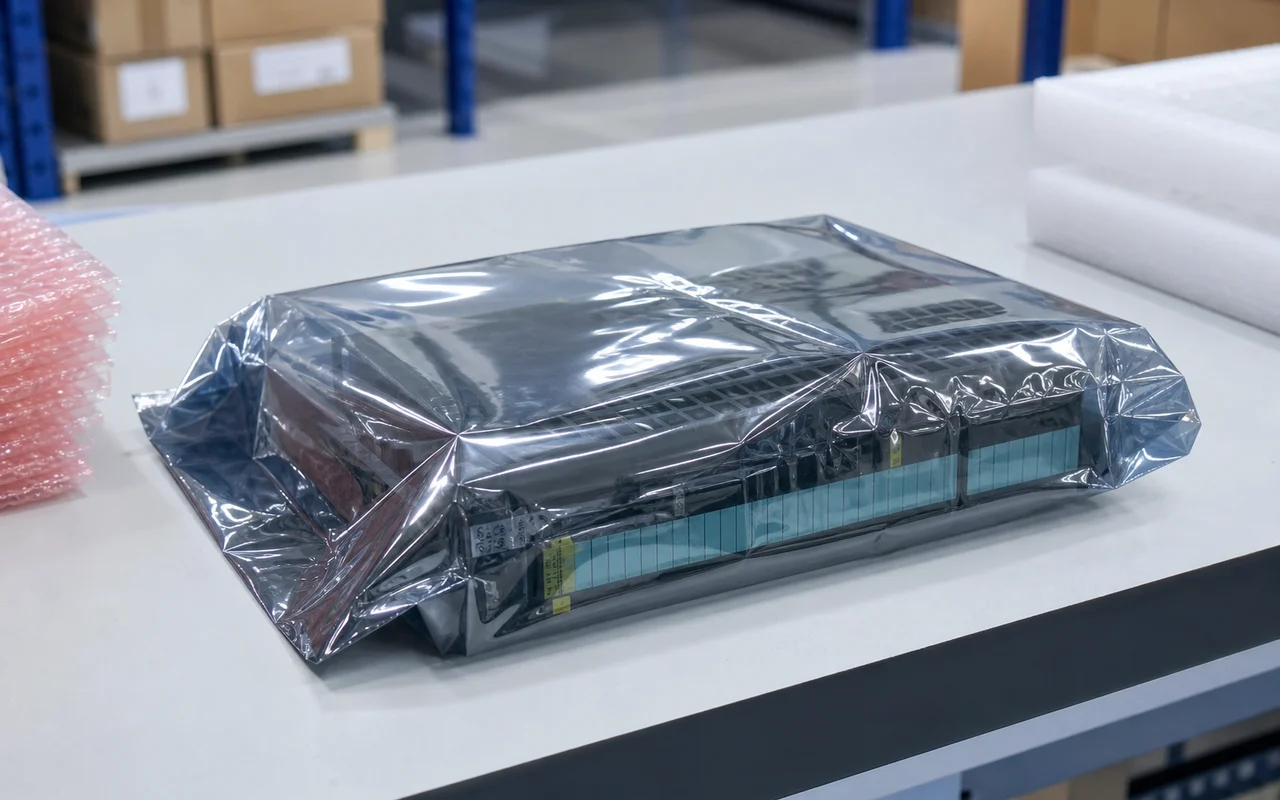 Anti-static Packaging
Modules are packed in anti-static bags to prevent electrostatic damage.
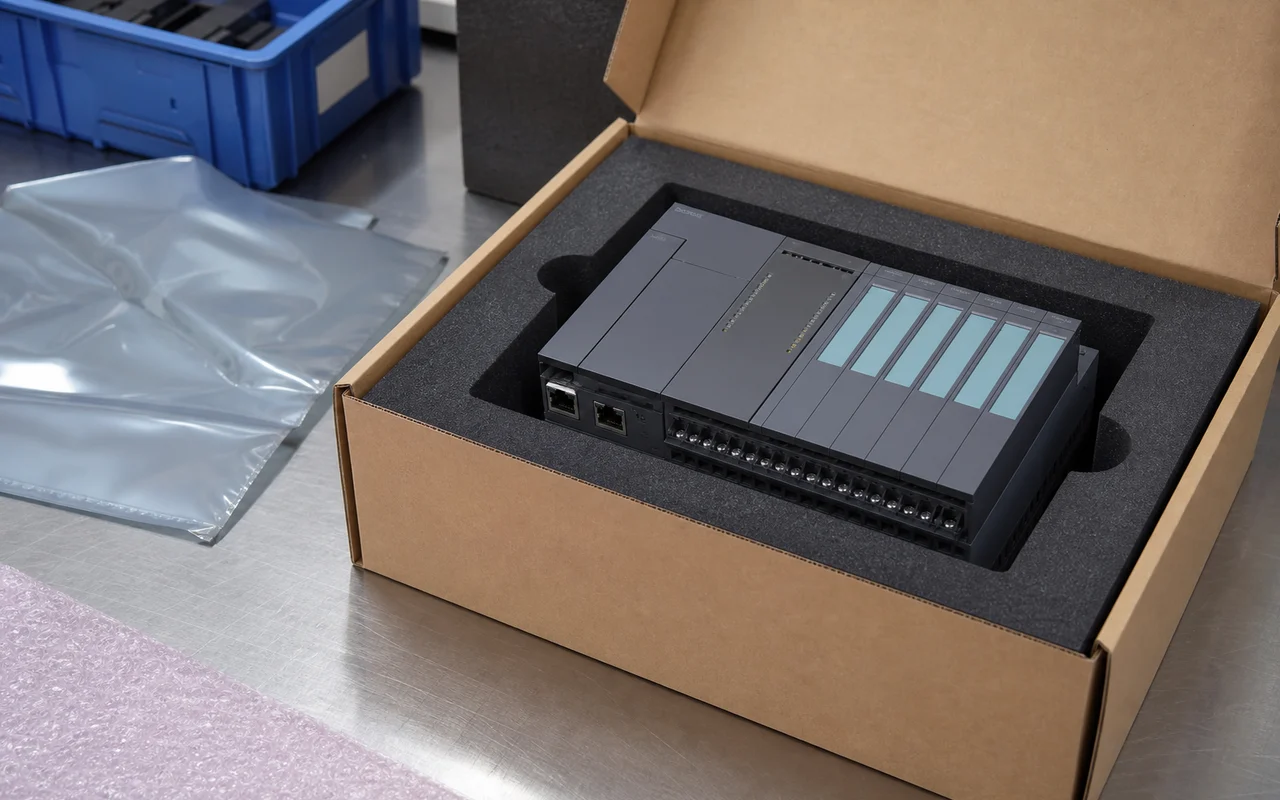 Secure Export Packing
Cushion protection and strong cartons ensure safe transportation.
 Worldwide Shipping
Global logistics network supports air, sea and express delivery.
 Documentation Check
Part number, revision and compatibility verified before shipment.
 After-sales Support
Professional technical support to help resolve your issues.