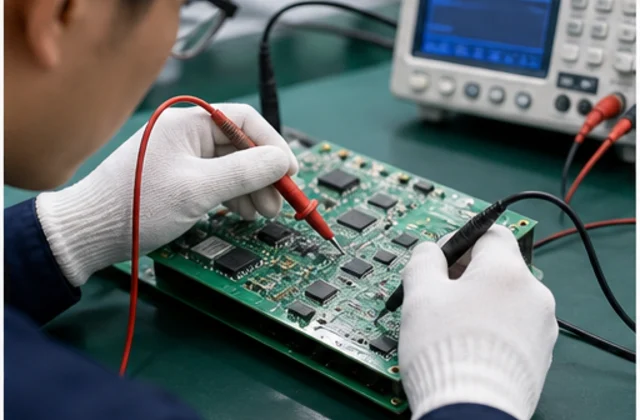
 Functional Inspection
100% tested on professional platforms to ensure stable performance.
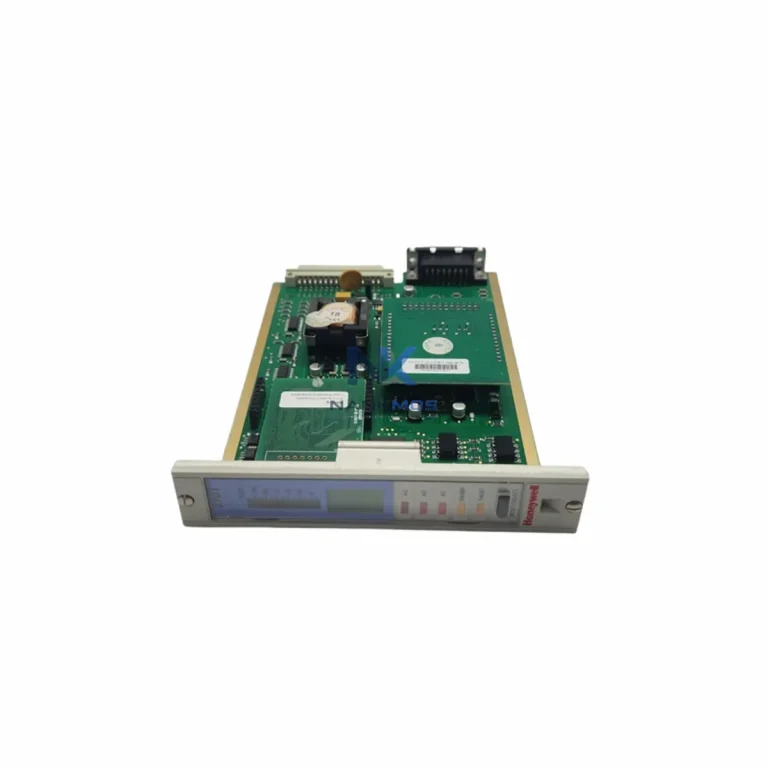
Honeywell FS-UCOM-HSE is a NANKMOS industrial automation product record Listed under Safety Manager series and Business & Industrial > Automation, Control & Flow Devices > Programmable Logic Controllers. Confirm condition, availability, lead time, compatibility and documentation by email inquiry.
Brand names are used for identification only.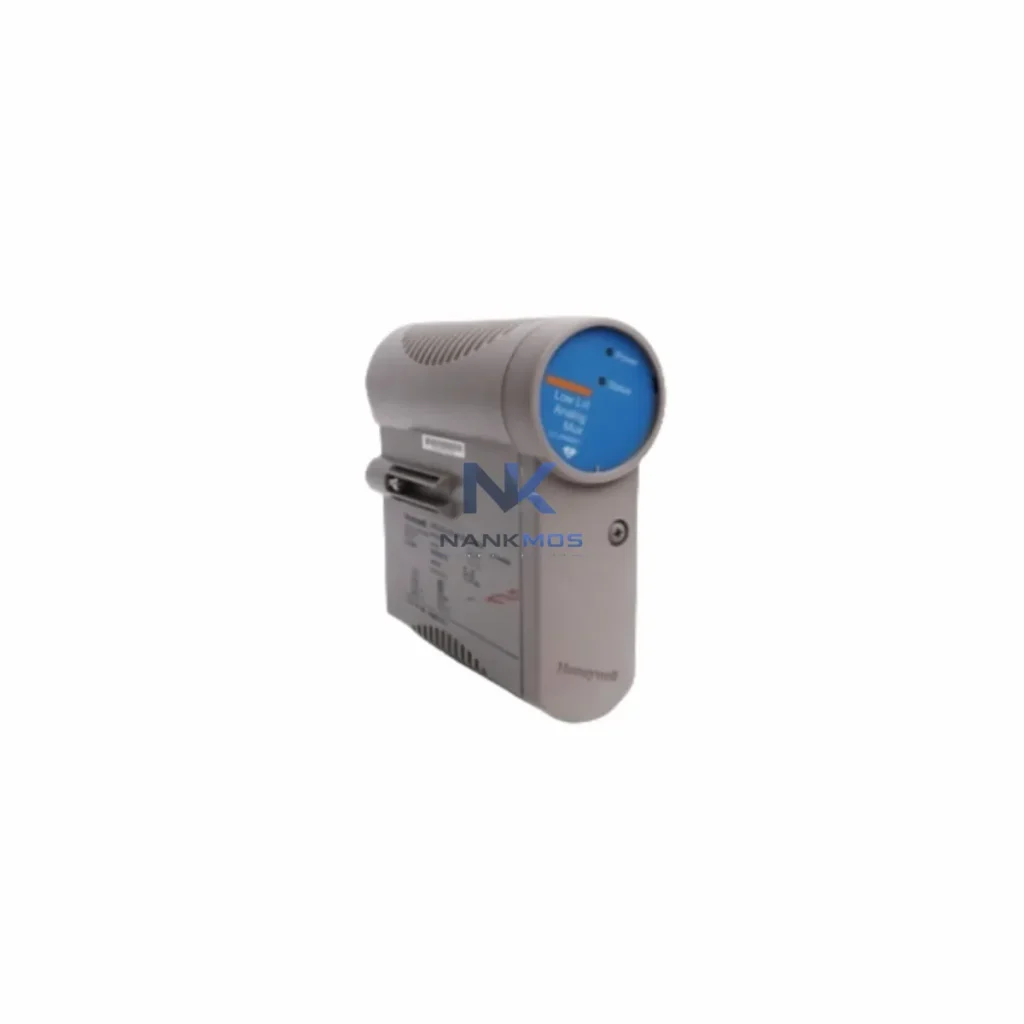
Honeywell FS-UCOM-HSE is a NANKMOS industrial automation product record Listed under Safety Manager series and Business & Industrial > Automation, Control & Flow Devices > Programmable Logic Controllers. Confirm condition, availability, lead time, compatibility and documentation by email inquiry.
| Manufacturer | Honeywell |
|---|---|
| Application | Controller Processing & System Control |
| Part Number / Model | FS-UCOM-HSE |
| Compatible System | Safety Manager |
| Series | Safety Manager |
| Condition Options | To Confirm |
| Module Type | Controller / CPU Module |
| Warranty | 12 Months |
| Packaging | Anti-static Bag / Secure Box |
| Shipping Methods | DHL / FedEx / UPS / Air / Sea |
| Availability | To Confirm |
| Lead Time | To Confirm |
| Documentation | Part number and revision checked before quote |
The Honeywell FS-UCOM-HSE is a high-speed HSE (High Speed Ethernet) communication module engineered for the Honeywell Safety Manager platform — one of the most widely deployed safety instrumented systems in process industries, energy facilities, and advanced manufacturing environments. Designed to operate within IEC 61508 SIL 2/3-certified architectures, the FS-UCOM-HSE serves as the critical communication backbone that links safety logic solvers to supervisory control layers, enabling real-time data exchange while actively contributing to plant-wide energy optimization and load management strategies.
In modern industrial facilities where energy costs represent a significant share of operational expenditure, the ability to monitor, control, and respond to energy consumption data in real time is no longer optional — it is a competitive necessity. The FS-UCOM-HSE enables this by providing deterministic, low-latency HSE network communication between the Safety Manager controller and upstream systems including Honeywell Experion PKS DCS, SCADA platforms, and energy management systems (EMS). This tight integration allows plant operators to correlate safety states with energy consumption profiles, enabling smarter load shedding, demand response, and predictive shutdown sequencing that reduces unnecessary energy draw during non-critical operating windows.
The FS-UCOM-HSE does not operate in isolation — its value is fully realized when integrated within a coordinated automation architecture. In a typical smart production line deployment, the module interfaces directly with the Honeywell Safety Manager SC controller, which handles safety logic execution while the FS-UCOM-HSE manages all upstream HSE network traffic. This separation of safety logic and communication processing ensures that neither function degrades the other, maintaining both safety integrity and communication throughput even under peak load conditions.
On the energy management side, the FS-UCOM-HSE enables the Safety Manager to publish real-time process safety states — such as emergency shutdown (ESD) status, partial stroke test results, and valve position feedback — directly to the Honeywell Experion PKS distributed control system. The DCS can then use this data to dynamically adjust setpoints on associated variable frequency drives (VFDs) controlling pumps, compressors, and fans, reducing motor speed and energy consumption during safe operating windows without compromising process integrity.
Integration with Honeywell HC900 process controllers or third-party PLCs via gateway modules allows the FS-UCOM-HSE to participate in broader plant-wide energy monitoring schemes. Power measurement data from Honeywell ENERCON power monitoring modules or compatible third-party power analyzers can be routed through the HSE network, giving the EMS a consolidated view of energy consumption across safety-critical and non-safety process zones. This consolidated visibility is essential for identifying energy waste hotspots — such as motors running at full speed during low-demand periods or heating elements cycling unnecessarily — and for implementing corrective control actions in real time.
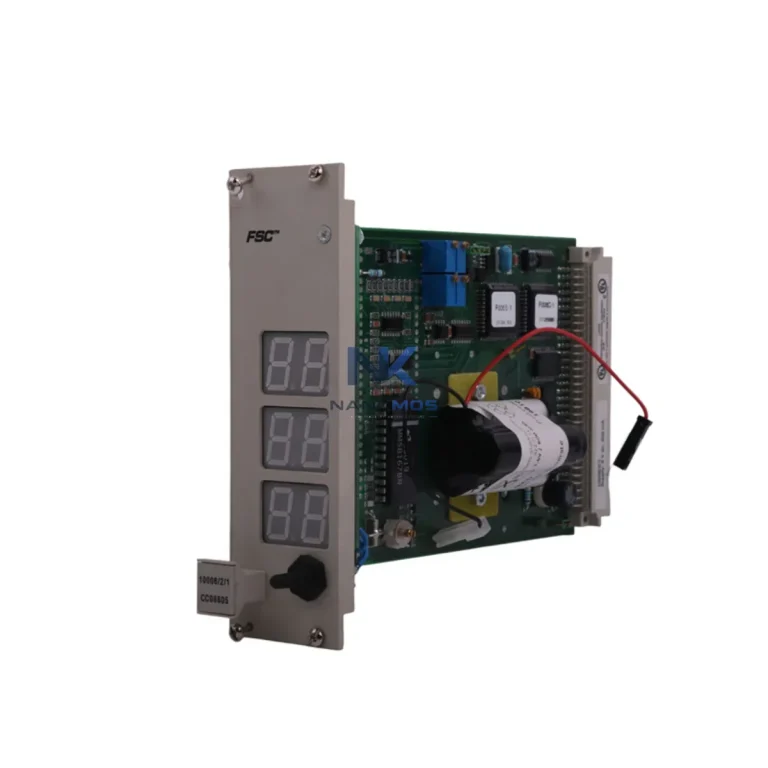
The module also plays a key role in coordinating with Honeywell FSC (Fail-Safe Controller) legacy systems during phased modernization projects, where older safety PLCs are being upgraded to Safety Manager while maintaining HSE network continuity. During such transitions, the FS-UCOM-HSE ensures uninterrupted communication between legacy and modern control layers, preventing the energy and production losses that typically accompany system cutover events.
For facilities using Profibus DP or HART field devices — such as smart transmitters, positioners, and flow meters — the FS-UCOM-HSE works in conjunction with Honeywell FSC I/O modules and field interface units to aggregate device health and energy-relevant process data (flow rates, pressure differentials, temperature gradients) into the HSE network. This data feeds directly into predictive maintenance algorithms and energy optimization models running on the SCADA or EMS layer, enabling proactive interventions before inefficiencies escalate into costly failures or unplanned shutdowns.
One of the most significant — yet often overlooked — contributors to industrial energy waste is the gap between safety system response times and process control reaction times. When a safety event occurs and an ESD sequence is triggered, the speed and precision with which the safety system communicates that event to the broader control infrastructure determines how quickly energy-consuming equipment can be safely ramped down, isolated, or placed in standby mode. Slow or unreliable communication at this critical juncture results in equipment continuing to consume energy unnecessarily — sometimes for minutes or even hours — while operators manually verify system states and issue control commands.
The FS-UCOM-HSE eliminates this latency gap. Its deterministic HSE communication ensures that ESD events, process deviations, and equipment status changes are transmitted to the DCS, SCADA, and EMS layers within milliseconds. This enables automated energy response sequences — such as ramping down VFD-controlled motors, switching off non-essential heating circuits, or placing redundant compressors in standby — to execute immediately upon safety state changes, without waiting for operator intervention. The result is a measurable reduction in energy consumption during upset conditions, which in high-throughput facilities can translate to significant cost savings over the course of a year.
Beyond upset management, the FS-UCOM-HSE supports continuous production line optimization through its role in enabling real-time safety state visibility at the EMS level. When the EMS can see not just energy consumption data but also the safety states of associated equipment — whether a valve is open or closed, whether a motor is in normal operation or in a tested safe state — it can make far more intelligent energy dispatch decisions. For example, during periods of low production demand, the EMS can coordinate with the Safety Manager to schedule partial stroke tests on critical valves during planned low-energy windows, avoiding the energy spikes that would otherwise occur if tests were run during peak production periods.
Thermal load management is another area where the FS-UCOM-HSE delivers measurable value. In process facilities, heat generation from motors, drives, and control panels represents both an energy cost and a reliability risk. By enabling tighter integration between the Safety Manager and the plant's thermal management systems — including HVAC controllers, cooling water systems, and heat exchanger control loops — the FS-UCOM-HSE helps ensure that cooling resources are allocated dynamically based on actual thermal loads rather than worst-case assumptions. This reduces the energy consumed by cooling systems while also extending the operational life of heat-sensitive components such as power supplies, I/O modules, and communication cards.
Predictive maintenance capabilities are further enhanced by the FS-UCOM-HSE's role in aggregating and transmitting equipment health data across the HSE network. Vibration data from smart sensors on rotating equipment, insulation resistance trends from motor protection relays, and cycle count data from solenoid valves can all be routed through the Safety Manager and transmitted via the FS-UCOM-HSE to the plant's asset management system. Early detection of degradation trends allows maintenance teams to schedule interventions during planned downtime windows, avoiding the energy-intensive restart sequences and production losses associated with unplanned failures.
All units supplied by NANKMOS undergo rigorous pre-shipment testing, including communication integrity verification, HSE network handshake testing, and functional safety response validation. Each FS-UCOM-HSE is backed by a 12-month warranty and is available from in-stock inventory for immediate dispatch, minimizing the procurement lead times that can delay energy optimization projects and production line upgrades.
Q1: How does the FS-UCOM-HSE contribute to energy savings in a process plant? The FS-UCOM-HSE enables real-time, deterministic communication between the Honeywell Safety Manager and upstream energy management systems, DCS platforms, and SCADA. This allows automated energy response sequences — such as motor ramp-down, standby switching, and load shedding — to execute immediately upon safety state changes, eliminating the energy waste that occurs during delayed manual responses to process upsets. Over a full operating year, this can represent substantial reductions in energy expenditure for high-throughput facilities.
Q2: Is the FS-UCOM-HSE compatible with third-party DCS and SCADA systems, or only Honeywell platforms? The FS-UCOM-HSE uses the HSE (High Speed Ethernet) protocol defined under IEC 61784, which is an open standard. While it is natively optimized for integration with Honeywell Experion PKS and Safety Manager architectures, it can communicate with any HSE-compliant control system or gateway device. For integration with non-HSE SCADA or DCS platforms, a protocol gateway (e.g., HSE-to-Modbus TCP or HSE-to-OPC DA/UA) is typically used. NANKMOS can advise on compatible gateway solutions based on your specific control architecture.
Q3: What is the recommended replacement or upgrade path for facilities currently using older Honeywell FSC communication modules? For facilities running legacy Honeywell FSC systems, the FS-UCOM-HSE is the recommended upgrade path for HSE network communication within a Safety Manager migration project. The module is designed to maintain HSE network continuity during phased cutover, allowing legacy and modern safety systems to coexist on the same network during the transition period. NANKMOS recommends conducting a full system compatibility assessment prior to module replacement to ensure firmware versions, network topology, and I/O configurations are aligned.
Q4: What pre-shipment testing does NANKMOS perform, and what does the 12-month warranty cover? Every FS-UCOM-HSE unit shipped by NANKMOS undergoes a comprehensive pre-shipment test protocol that includes HSE communication handshake verification, power-up self-diagnostic confirmation, network port integrity testing, and functional response validation. The 12-month warranty covers manufacturing defects, communication failures under normal operating conditions, and component-level faults identified during the warranty period. Warranty claims are processed with priority support, and replacement units are dispatched from in-stock inventory to minimize downtime.
Functional Inspection100% tested on professional platforms to ensure stable performance.
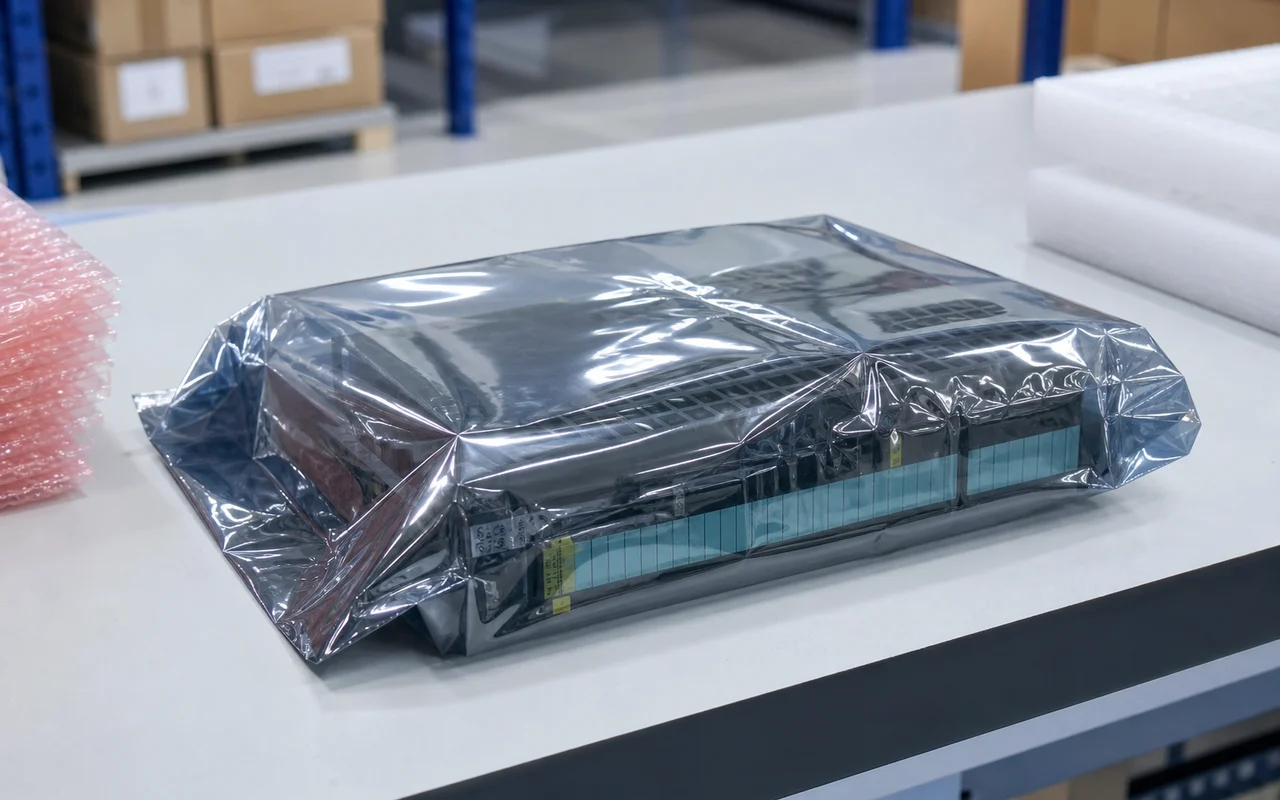 Anti-static Packaging
Modules are packed in anti-static bags to prevent electrostatic damage.
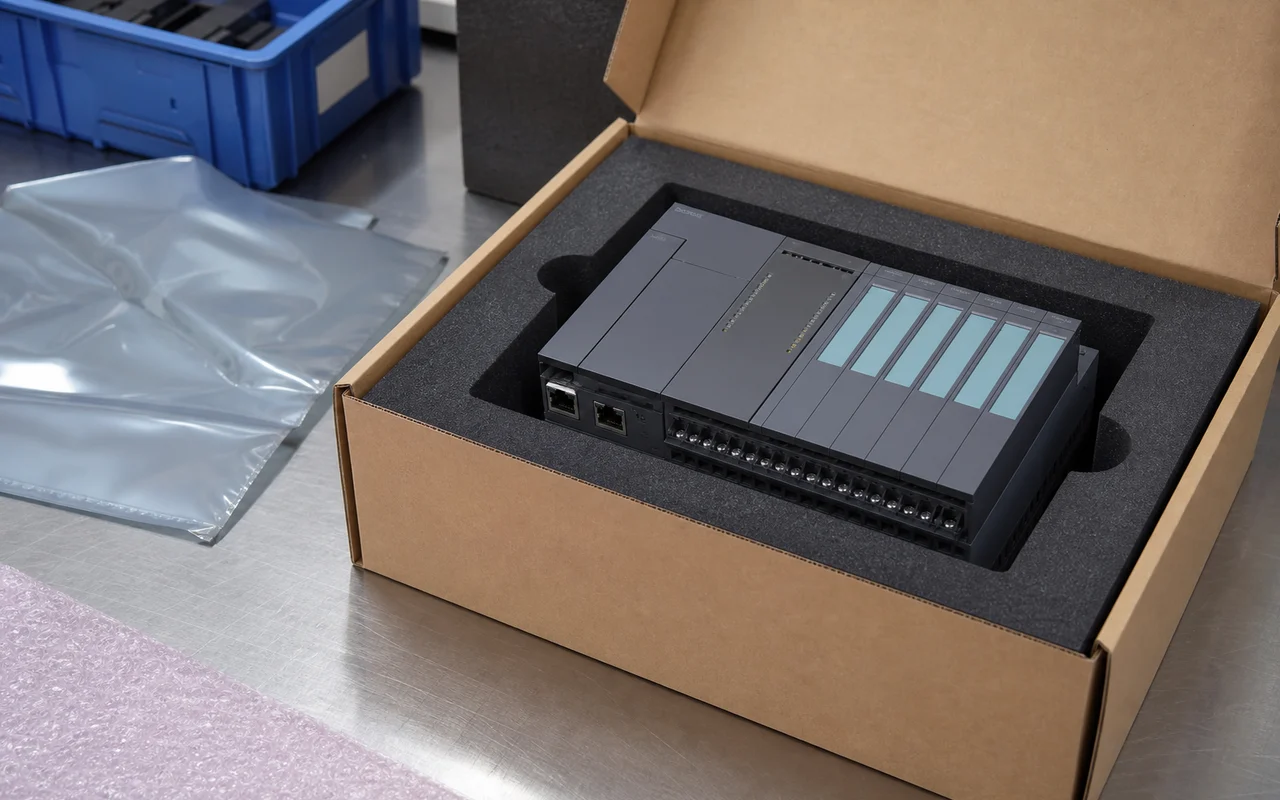 Secure Export Packing
Cushion protection and strong cartons ensure safe transportation.
 Worldwide Shipping
Global logistics network supports air, sea and express delivery.
 Documentation Check
Part number, revision and compatibility verified before shipment.
 After-sales Support
Professional technical support to help resolve your issues.