Functional Inspection
100% tested on professional platforms to ensure stable performance.
Mitsubishi Electric A2USHCPU-S1 is a NANKMOS industrial automation product record Listed under MELSEC-A series and Business & Industrial > Automation, Control & Flow Devices > Programmable Logic Controllers. Confirm condition, availability, lead time, compatibility and documentation by email inquiry.
Brand names are used for identification only.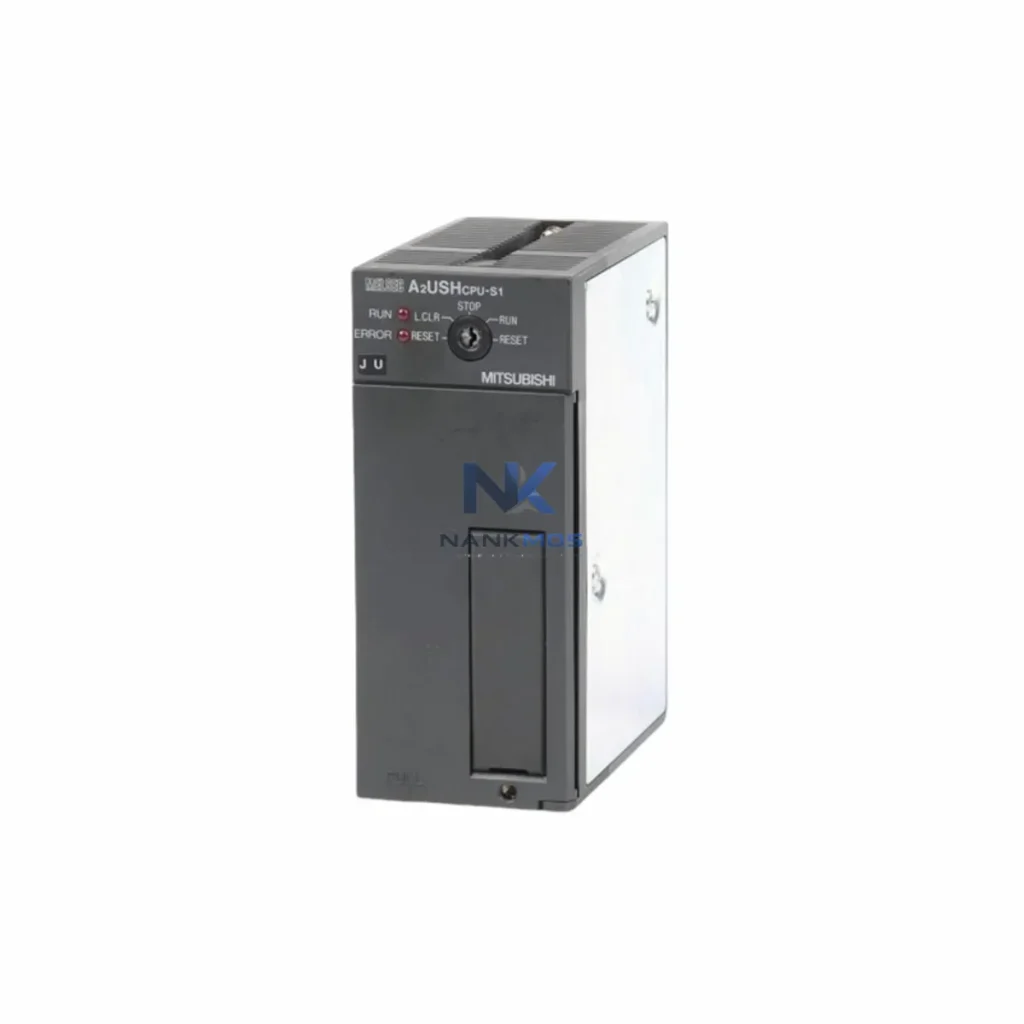
Mitsubishi Electric A2USHCPU-S1 is a NANKMOS industrial automation product record Listed under MELSEC-A series and Business & Industrial > Automation, Control & Flow Devices > Programmable Logic Controllers. Confirm condition, availability, lead time, compatibility and documentation by email inquiry.
| Manufacturer | Mitsubishi Electric |
|---|---|
| Application | Controller Processing & System Control |
| Part Number / Model | A2USHCPU-S1 |
| Compatible System | MELSEC-A |
| Series | MELSEC-A |
| Condition Options | To Confirm |
| Module Type | Controller / CPU Module |
| Warranty | 12 Months |
| Packaging | Anti-static Bag / Secure Box |
| Shipping Methods | DHL / FedEx / UPS / Air / Sea |
| Availability | To Confirm |
| Lead Time | To Confirm |
| Documentation | Part number and revision checked before quote |
The Mitsubishi Electric A2USHCPU-S1 is a high-performance CPU module within the MELSEC-A series, engineered to deliver precise energy control, deterministic cycle execution, and reliable load management across demanding industrial production environments. Designed for smart factory integration, the A2USHCPU-S1 serves as the central intelligence layer that coordinates energy-aware automation strategies — reducing unnecessary power draw, minimising thermal load, and sustaining optimal production line throughput.
As energy costs and sustainability targets become central to manufacturing operations, the A2USHCPU-S1 provides the processing backbone required to implement real-time energy monitoring, adaptive load scheduling, and predictive maintenance routines. Its deterministic scan cycle ensures that energy-intensive actuators, drives, and motors are commanded with precision timing, eliminating wasteful overlap and reducing peak demand events on the plant floor.
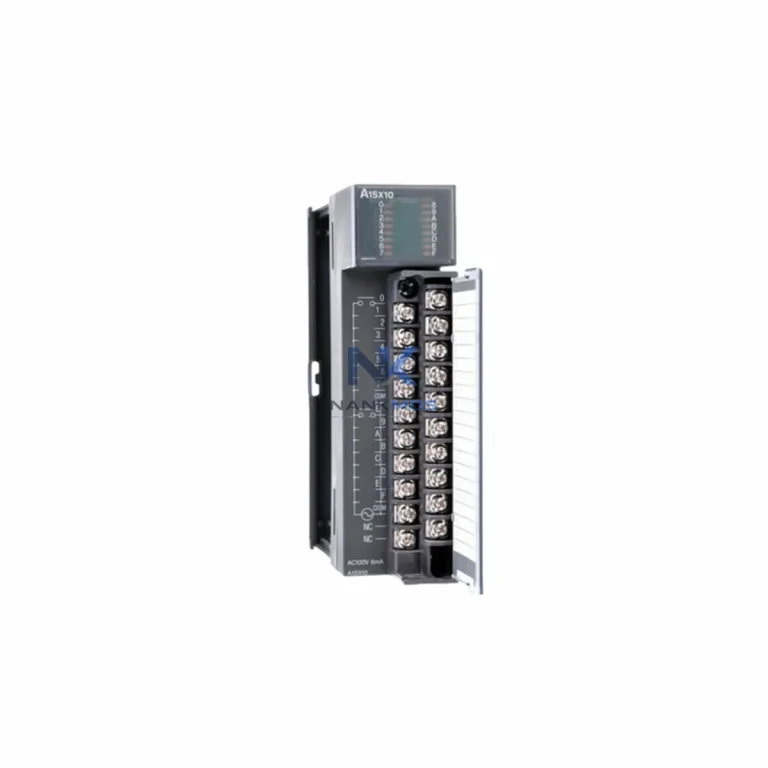
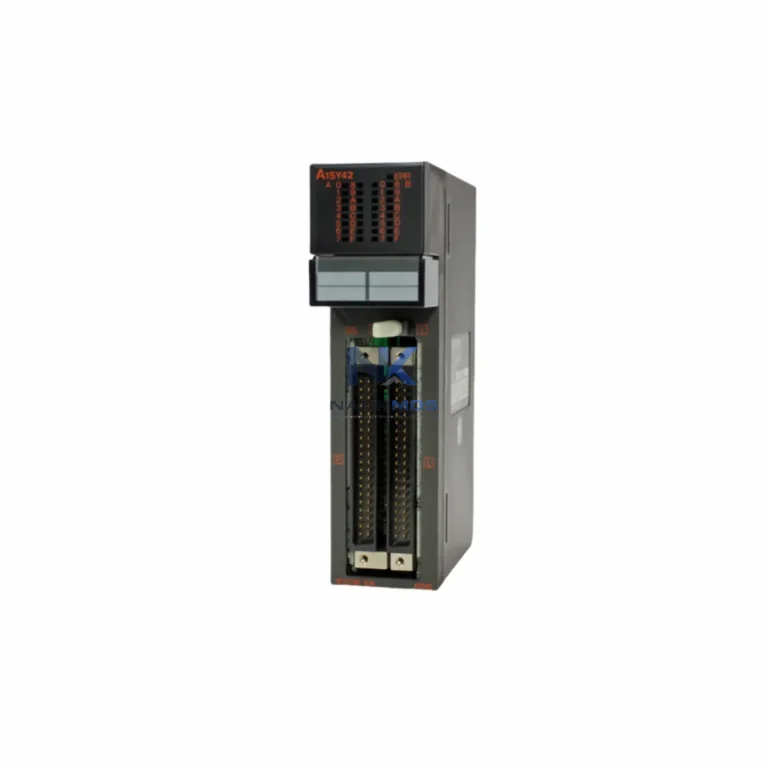
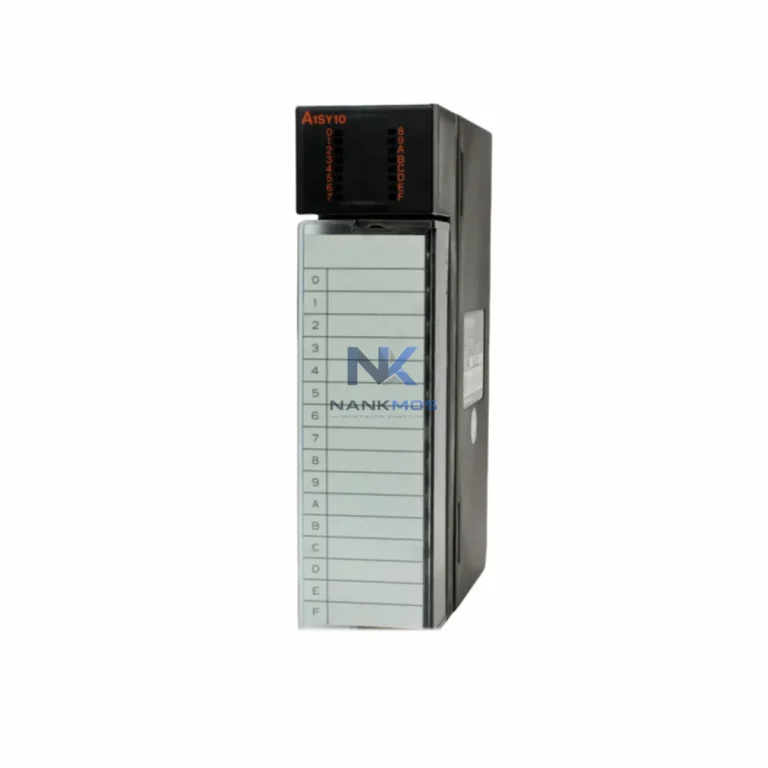
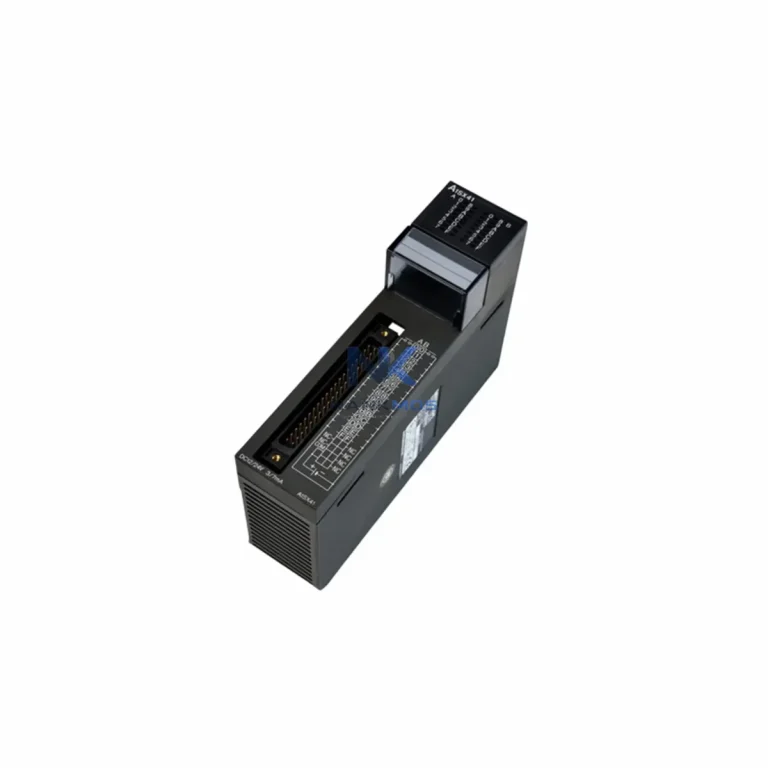
The A2USHCPU-S1 operates at the centre of a tightly integrated automation architecture. In a typical smart production line, it interfaces directly with Mitsubishi A1SX40 and A1SY10 I/O modules to collect real-time digital signals from field devices — enabling the CPU to make energy-aware switching decisions at the millisecond level. When paired with a Mitsubishi FR-A700 series variable frequency drive, the A2USHCPU-S1 can issue speed-reference commands that match motor output precisely to load demand, eliminating the energy waste associated with fixed-speed motor operation.
For servo-driven axes, the A2USHCPU-S1 coordinates with Mitsubishi MR-J2S servo amplifiers through the MELSEC motion controller interface, ensuring that servo torque and positioning commands are executed only when mechanically required — reducing regenerative braking losses and thermal stress on drive components. The CPU's high-speed interrupt processing also supports integration with Mitsubishi A1SD71 positioning modules, enabling synchronised multi-axis control that avoids energy-intensive acceleration conflicts between adjacent production stations.
Power monitoring is achieved by connecting the A2USHCPU-S1 to Mitsubishi A1S68AD analogue input modules, which receive 4–20 mA signals from clamp-on current transformers or dedicated power transducers installed at motor control centres. This data feeds directly into energy-tracking ladder logic routines within the CPU, enabling real-time kWh accumulation, load factor calculation, and threshold-based demand alerts — all without requiring a separate energy management gateway.
On the communication side, the A2USHCPU-S1 supports MELSEC-NET/10 networking via the A1SJ71AP23Q network module, allowing energy and production data to be shared across multiple PLCs on the same plant network. This peer-to-peer data exchange enables coordinated load-shedding strategies across production zones — for example, staggering conveyor start sequences to prevent simultaneous inrush current spikes. Integration with GOT2000 series HMI panels provides operators with live energy dashboards, alarm management, and manual override capability without interrupting the CPU's scan cycle.
For SCADA connectivity, the A2USHCPU-S1 communicates via the A1SJ71UC24-R4 serial communication module using MELSEC protocol, enabling upstream data collection by SCADA platforms such as Citect or iFIX. This allows plant energy managers to correlate PLC-level load data with production output metrics, identifying inefficient operating windows and scheduling preventive maintenance during low-demand periods.
Deploying the Mitsubishi A2USHCPU-S1 as the primary CPU in a production line delivers measurable improvements across four key energy optimisation dimensions: idle-state power reduction, peak demand management, thermal load control, and production cycle efficiency.
Idle-State Power Reduction: The A2USHCPU-S1 supports conditional output logic that automatically de-energises non-essential actuators, solenoids, and conveyor segments during planned micro-stops or shift changeovers. By programming time-based and event-triggered power-down sequences in ladder or structured text, engineers can reduce standby energy consumption at the machine level without manual operator intervention.
Peak Demand Management: Through coordinated start sequencing logic, the A2USHCPU-S1 staggers the activation of high-inrush loads — such as large motors, heating elements, and pneumatic compressors — across a defined time window. This flattens the demand curve seen by the facility's power infrastructure, reducing peak kVA charges and lowering the risk of voltage sag events that can disrupt sensitive instrumentation.
Thermal Load Control: By precisely matching drive speed references and servo torque limits to actual production requirements, the A2USHCPU-S1 reduces the heat generated by over-driven motors and drives. Lower thermal output translates directly into extended component lifespan, reduced cooling system load in control panels, and fewer unplanned shutdowns caused by thermal protection trips.
Production Cycle Efficiency: The deterministic scan cycle of the A2USHCPU-S1 ensures that production line timing — conveyor indexing, robot trigger signals, press cycle initiation — is executed with consistent repeatability. Eliminating scan jitter prevents the accumulation of micro-delays that, over a full production shift, can reduce effective output by several percentage points. Stable cycle times also simplify OEE (Overall Equipment Effectiveness) calculation and support data-driven line balancing initiatives.
All units supplied by NANKMOS are sourced from verified distribution channels, undergo functional power-on testing and communication verification prior to shipment, and are covered by a 12-Month Warranty. In-stock inventory ensures short lead times for maintenance replacement and project commissioning schedules.
Q1: What energy-saving benefits does the A2USHCPU-S1 provide compared to a standard PLC CPU? The A2USHCPU-S1 enables energy savings through precise load scheduling, conditional output control, and real-time power monitoring integration. When combined with variable frequency drives such as the Mitsubishi FR-A700 and analogue I/O modules for current measurement, it supports demand-response logic that actively reduces energy consumption during low-production periods — capabilities not available in basic relay-based or fixed-scan controllers.
Q2: Is the A2USHCPU-S1 compatible with modern SCADA and HMI systems? Yes. The A2USHCPU-S1 communicates via MELSEC protocol over RS-232C and MELSEC-NET/10, making it compatible with GOT2000 HMI panels and SCADA platforms that support MELSEC driver integration. For facilities requiring Ethernet connectivity, an A1SJ71E71 Ethernet module can be added to the same base rack to enable TCP/IP-based data exchange with supervisory systems.
Q3: Can the A2USHCPU-S1 replace an existing MELSEC-A CPU without rewiring the I/O rack? In most cases, yes. The A2USHCPU-S1 is designed for the MELSEC-A series base unit and is mechanically and electrically compatible with standard A-series expansion racks and I/O modules. Programme migration from other A-series CPUs is supported via GX Developer or GX Works2 with appropriate conversion utilities. It is recommended to verify the programme step count and I/O point allocation against the A2USHCPU-S1 specifications before replacement.
Q4: What does the 12-Month Warranty cover, and what is the supply lead time? The 12-Month Warranty covers manufacturing defects and functional failures under normal operating conditions from the date of shipment. Each unit is tested for power-on operation and communication response before dispatch. NANKMOS maintains in-stock inventory of the A2USHCPU-S1 to support urgent maintenance replacements and new project deployments, with typical order processing and shipment within 1–3 business days. For volume orders or project-specific lead time requirements, contact the NANKMOS sales team directly.
Functional Inspection100% tested on professional platforms to ensure stable performance.
 Anti-static Packaging
Modules are packed in anti-static bags to prevent electrostatic damage.
 Secure Export Packing
Cushion protection and strong cartons ensure safe transportation.
 Worldwide Shipping
Global logistics network supports air, sea and express delivery.
 Documentation Check
Part number, revision and compatibility verified before shipment.
 After-sales Support
Professional technical support to help resolve your issues.