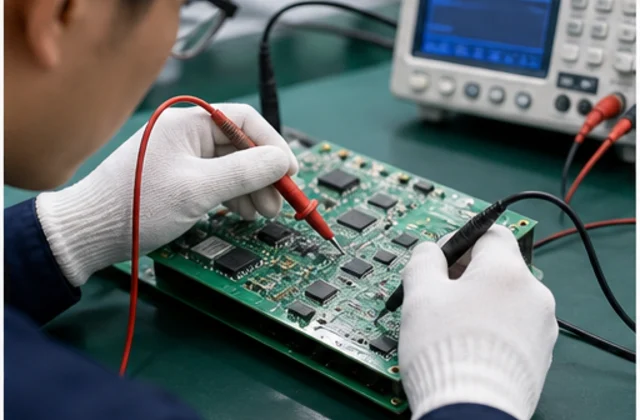
 Functional Inspection
100% tested on professional platforms to ensure stable performance.
MITSUBISHI WP4051 is a NANKMOS industrial automation product record Listed under Other series series and HMI Panels. Confirm condition, availability, lead time, compatibility and documentation by email inquiry.
Brand names are used for identification only.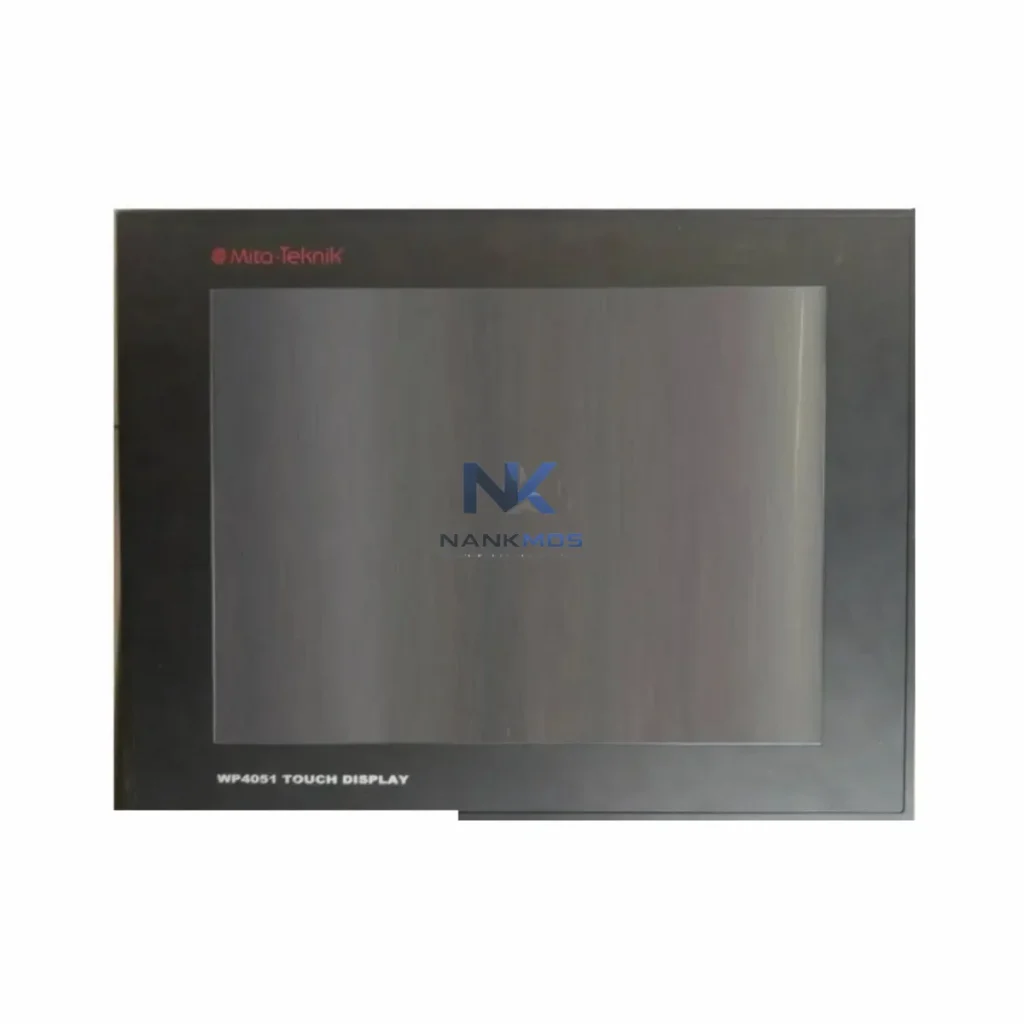
MITSUBISHI WP4051 is a NANKMOS industrial automation product record Listed under Other series series and HMI Panels. Confirm condition, availability, lead time, compatibility and documentation by email inquiry.
| Manufacturer | MITSUBISHI |
|---|---|
| Application | Industrial Automation Maintenance |
| Part Number / Model | WP4051 |
| Compatible System | Confirmed by inquiry |
| Condition Options | To Confirm |
| Module Type | HMI Panels |
| Warranty | 12 Months |
| Packaging | Anti-static Bag / Secure Box |
| Shipping Methods | DHL / FedEx / UPS / Air / Sea |
| Availability | To Confirm |
| Lead Time | To Confirm |
| Documentation | Part number and revision checked before quote |
The Mitsubishi WP4051 is a purpose-engineered HMI Touch Panel designed for seamless contextual integration within WP-Series PLC-based control architectures. As a front-end visualization and operator interaction node, the WP4051 bridges the HMI layer with the control layer, enabling real-time process monitoring, alarm management, and parameter adjustment across multi-tier industrial automation platforms. Its system-matched design ensures signal consistency, display fidelity, and long-term operational reliability in demanding industrial environments including manufacturing, energy, petrochemical, and water treatment facilities.
Every WP4051 unit supplied by NANKMOS undergoes pre-shipment functional testing and ships with a 12-Month Warranty, backed by verified inventory and rapid global dispatch capability.
The WP4051 is not a standalone display — it is a system-coherent HMI node that derives its full value from tight integration across every layer of the automation stack. In a typical WP-Series control cabinet, the WP4051 interfaces directly with Mitsubishi MELSEC Q-Series CPUs such as the Q06UDEHCPU or Q13UDHCPU, receiving real-time process data via the MELSEC communication protocol over RS-422 or RS-485 serial links. This direct CPU-to-HMI data path eliminates intermediate protocol conversion latency, ensuring that operator displays reflect live plant states with minimal lag.
On the power layer, the WP4051 operates on DC 24V, making it directly compatible with Mitsubishi Q61P or Q62P power supply modules that feed the same control rack. This shared power architecture simplifies cabinet wiring, reduces the number of discrete PSU units required, and ensures voltage stability across both the CPU and HMI subsystems during load transients.
For I/O integration, the WP4051 can display and interact with data sourced from Mitsubishi QX41 digital input modules and QY41P digital output modules mounted on the same Q-Series base unit. Alarm states, digital signal statuses, and output command confirmations can be mapped directly to WP4051 screen objects, giving operators a unified view of field-level I/O without requiring a separate SCADA layer.
In communication-intensive architectures, the WP4051 complements Mitsubishi QJ71E71-100 Ethernet interface modules and QJ71BR11 MELSECNET/H network modules. While these modules handle peer-to-peer PLC communication and network-level data exchange, the WP4051 serves as the local operator touchpoint — displaying aggregated system states, enabling parameter writes, and providing alarm acknowledgment at the machine or panel level. This layered communication design ensures that HMI traffic does not compete with PLC-to-PLC network bandwidth.
For motion and drive integration, the WP4051 can be configured to display speed references, torque feedback, and fault codes from Mitsubishi FR-A800 series inverters connected to the same control network. Operators can monitor drive states and initiate controlled start/stop sequences directly from the WP4051 interface, reducing the need for dedicated drive keypads on the panel door.
In redundant control architectures, the WP4051 pairs with Mitsubishi Q12PRHCPU redundant CPU systems, where it provides a consistent operator interface regardless of which CPU unit is currently active. The HMI's communication layer automatically maintains its data connection through CPU switchover events, ensuring uninterrupted operator visibility during redundancy transitions — a critical requirement in continuous process industries such as petrochemical refining and power generation.
Terminal block modules such as the Mitsubishi A6TBXY36 and signal isolators used in conjunction with QX/QY I/O modules further extend the WP4051's contextual integration reach, allowing it to display conditioned analog and digital signals from field instruments including pressure transmitters, flow meters, and temperature sensors — all within a single unified HMI screen layout.
Manufacturing & Assembly Lines: The WP4051 serves as the primary operator interface on automated assembly lines, displaying conveyor speeds, station cycle times, reject counts, and production totals. Its IP65-rated front panel withstands coolant splash and dust ingress common in machining and stamping environments. Integration with Q-Series CPUs enables recipe management and shift-based production reporting directly from the HMI.
Power Generation & Energy Utilities: In power plant auxiliary systems — including boiler feed pump control, cooling water management, and transformer protection panels — the WP4051 provides operators with real-time electrical parameter displays and interlock status visualization. Its compatibility with MELSEC communication protocols allows direct integration with protection relay data aggregated through the PLC layer.
Petrochemical & Refinery Process Control: The WP4051 is deployed in local control panels for pump skids, compressor stations, and heat exchanger control loops. Its ability to display PID loop parameters, valve positions, and process variable trends makes it a practical front-end for distributed control architectures where a full DCS HMI is not warranted at every field panel location.
Water & Wastewater Treatment: Municipal and industrial water treatment facilities use the WP4051 to monitor dosing pump rates, filter differential pressures, and tank levels. The panel's robust construction and wide operating temperature range support outdoor equipment enclosures and remote pump station installations.
Mining & Metallurgy: In ore processing and smelting operations, the WP4051 provides operator control interfaces for conveyor drive systems, crusher controls, and furnace temperature management. Its integration with FR-A800 inverters via the PLC communication layer enables speed control and fault monitoring from a single panel-mounted interface.
Packaging & Material Handling: High-speed packaging lines use the WP4051 for format changeover management, speed synchronization display, and fault diagnostics. Recipe-based parameter loading from the connected Q-Series CPU reduces changeover time and minimizes operator error during product transitions.
Q1: Is the Mitsubishi WP4051 compatible with MELSEC Q-Series and FX-Series PLCs in the same control architecture? Yes. The WP4051 communicates via RS-232C, RS-422, and RS-485 serial interfaces using the MELSEC communication protocol, making it compatible with both Q-Series and FX-Series PLCs. In mixed-architecture panels where an FX3U or FX5U CPU handles local machine control while a Q-Series CPU manages supervisory functions, the WP4051 can be configured to communicate with either CPU, providing a unified operator interface across both control tiers. Confirm the specific communication port and baud rate settings during commissioning to ensure protocol alignment.
Q2: How does the WP4051 maintain display continuity in a redundant Q12PRHCPU architecture during a CPU switchover event? The WP4051's serial communication link to the active CPU is maintained through the switchover process because the redundant CPU system presents a consistent communication address to connected peripherals. Upon switchover, the standby CPU assumes the active role and continues responding to WP4051 data requests without requiring HMI reconfiguration. Operators may observe a brief display refresh cycle during the switchover transition, but alarm states and process variable displays are restored within the normal communication scan cycle. This behavior makes the WP4051 suitable for continuous process applications where operator visibility must be maintained through redundancy events.
Q3: What does the 12-Month Warranty cover for the WP4051, and what is the typical lead time for replacement units? NANKMOS provides a 12-Month Warranty on all WP4051 units covering manufacturing defects, component failures, and functional non-conformance identified under normal operating conditions. Each unit undergoes pre-shipment functional testing prior to dispatch to verify display operation, touch response, and communication port integrity. In the event of a warranty claim, NANKMOS maintains verified inventory of WP4051 units to support rapid replacement dispatch, minimizing control system downtime. Typical lead time for replacement units is confirmed at the time of order based on current stock levels. Contact [email protected] or +86 18359268345 for warranty claims and inventory availability inquiries.
Functional Inspection100% tested on professional platforms to ensure stable performance.
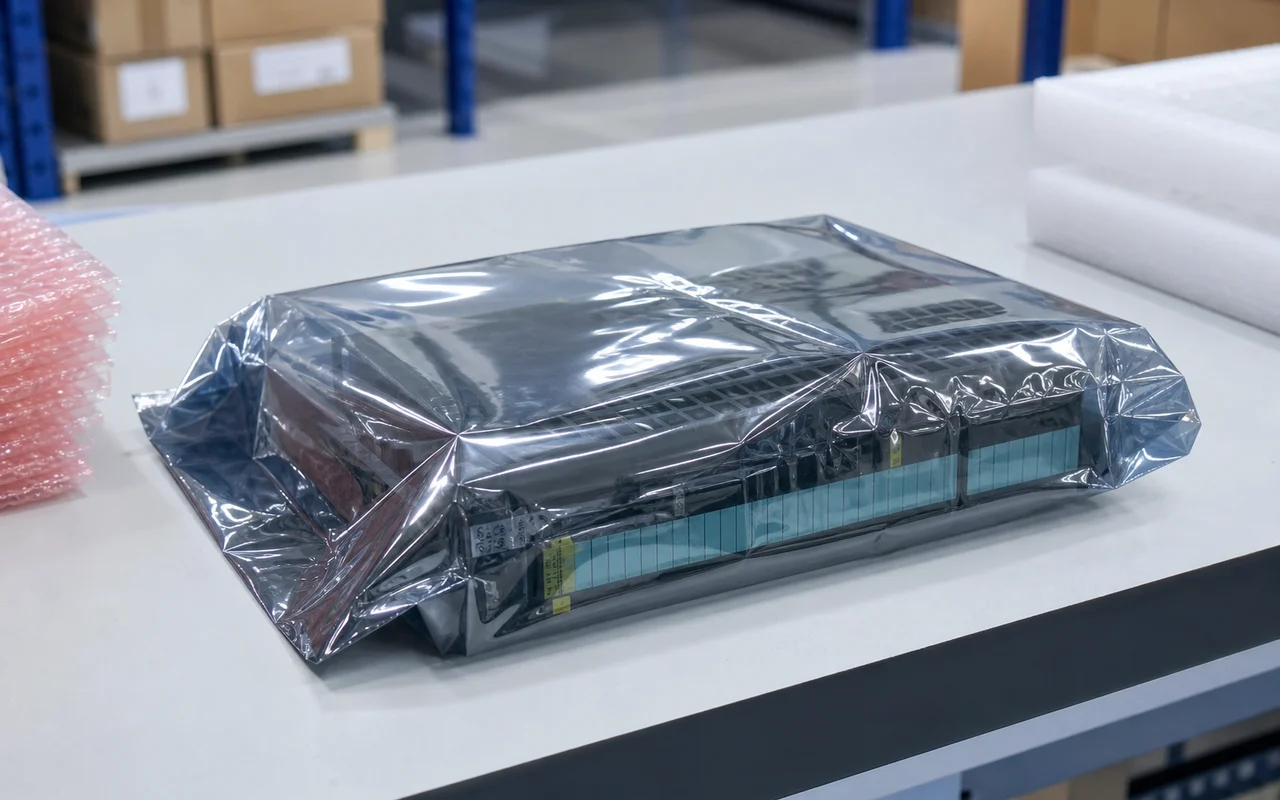 Anti-static Packaging
Modules are packed in anti-static bags to prevent electrostatic damage.
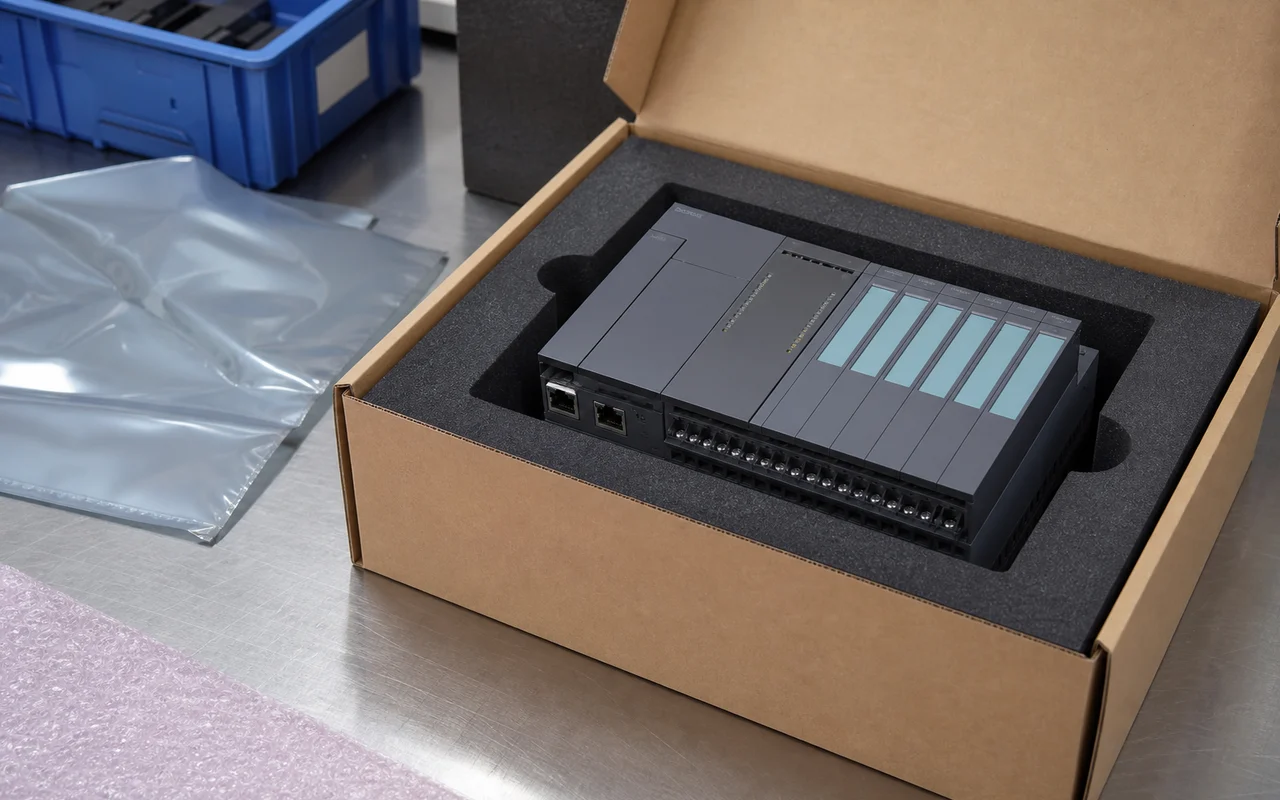 Secure Export Packing
Cushion protection and strong cartons ensure safe transportation.
 Worldwide Shipping
Global logistics network supports air, sea and express delivery.
 Documentation Check
Part number, revision and compatibility verified before shipment.
 After-sales Support
Professional technical support to help resolve your issues.