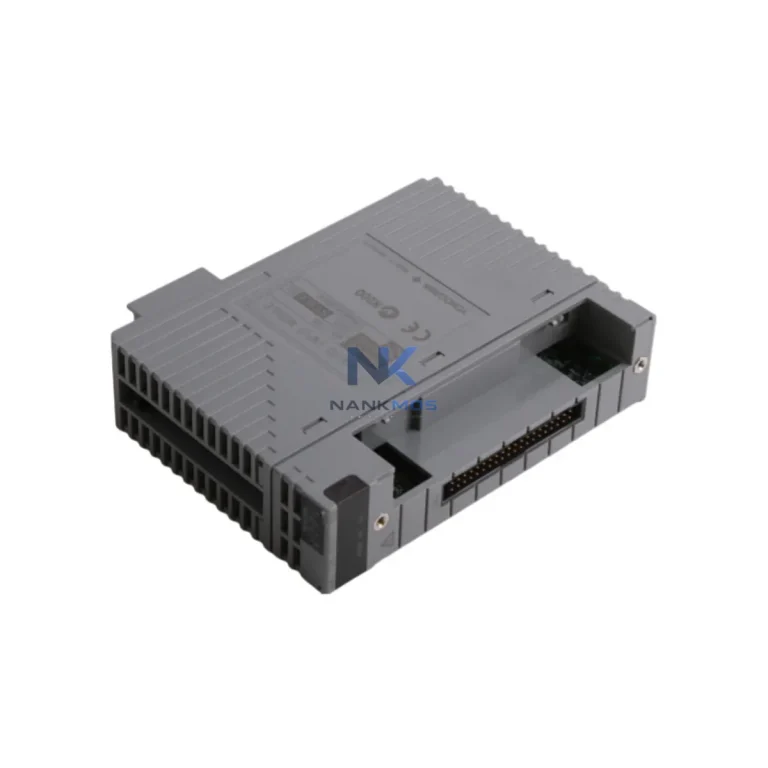
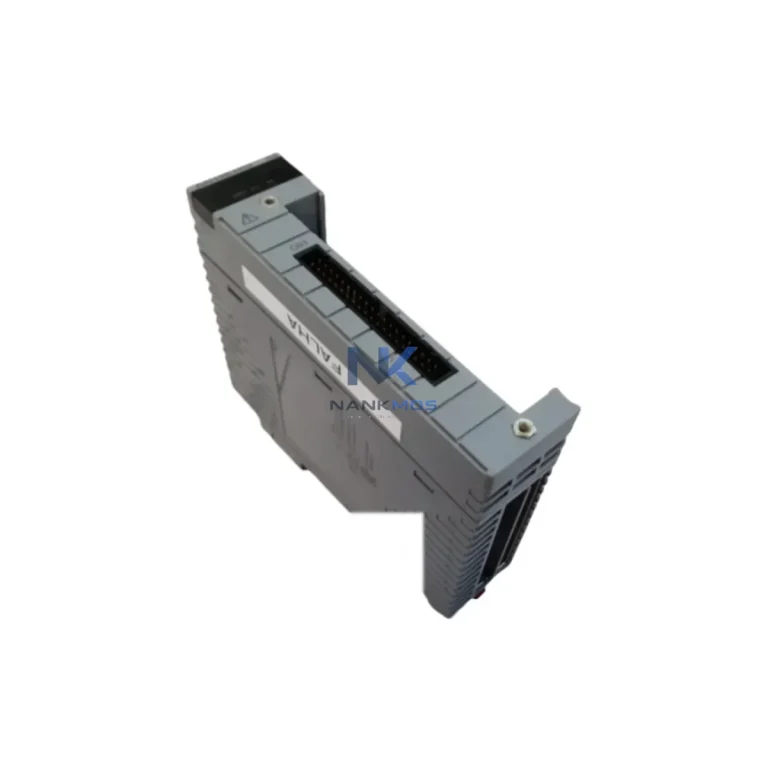
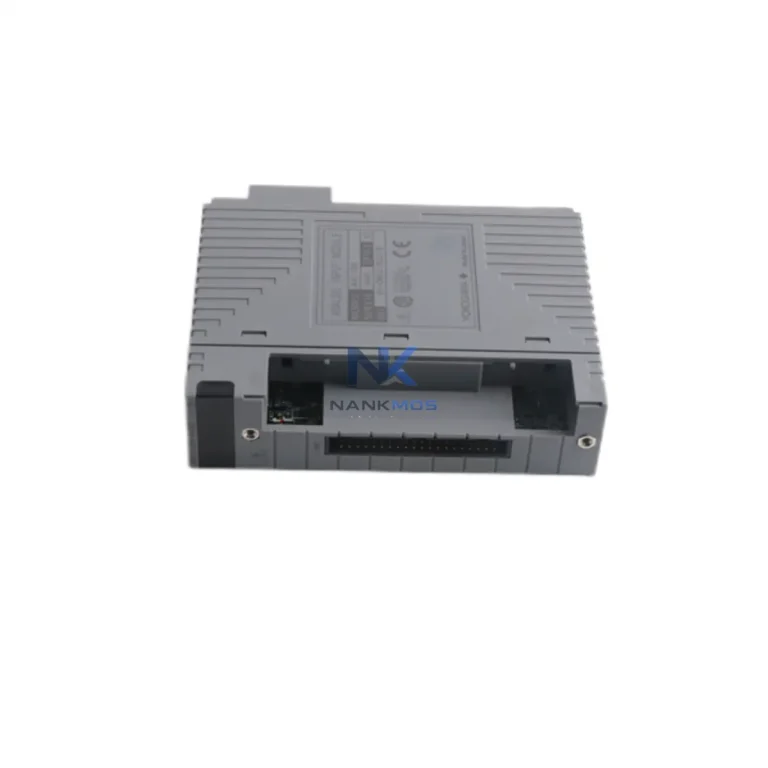
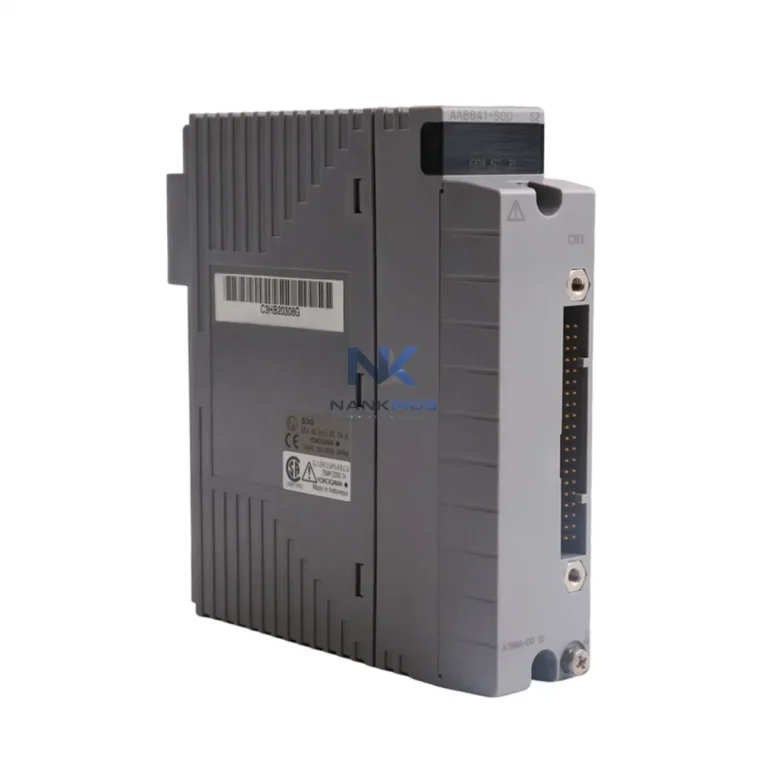
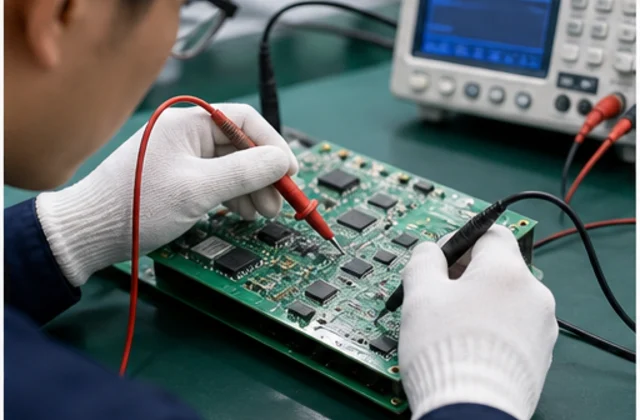
 Functional Inspection
100% tested on professional platforms to ensure stable performance.
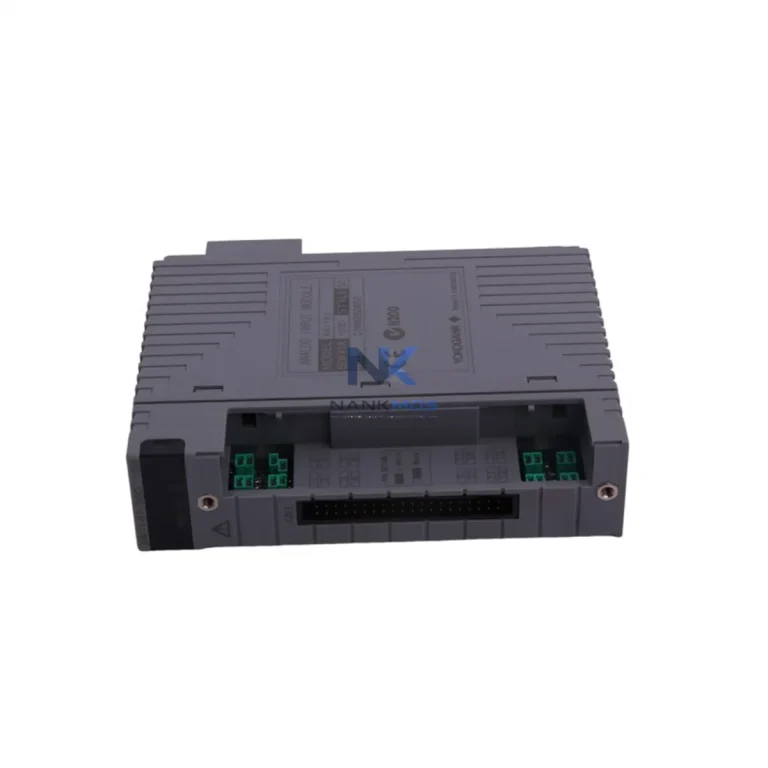
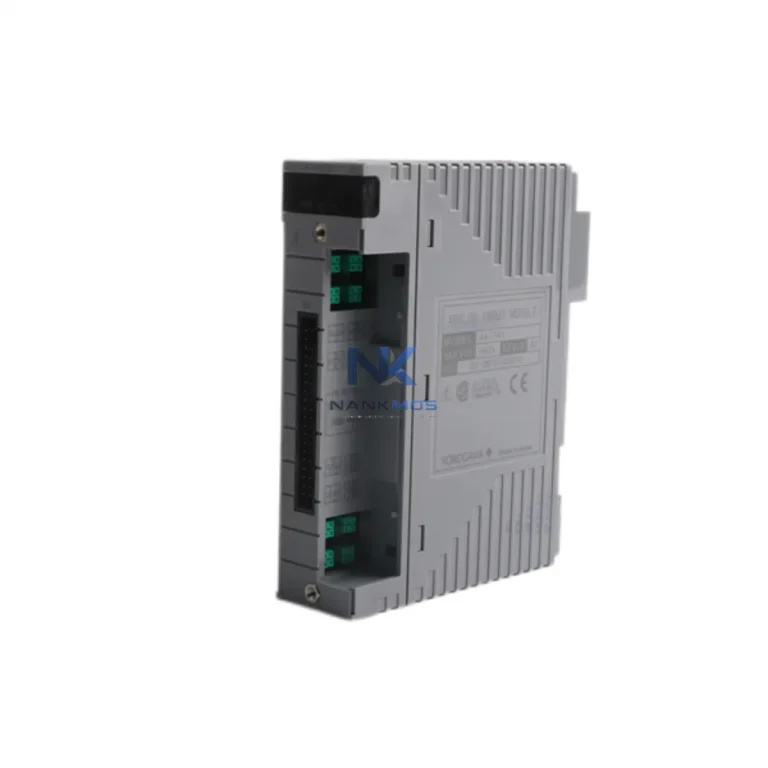
Yokogawa AAR145-S03 S1 is a NANKMOS industrial automation product record Listed under CENTUM VP series and Business & Industrial > Automation, Control & Flow Devices > Programmable Logic Controllers. Confirm condition, availability, lead time, compatibility and documentation by email inquiry.
Brand names are used for identification only.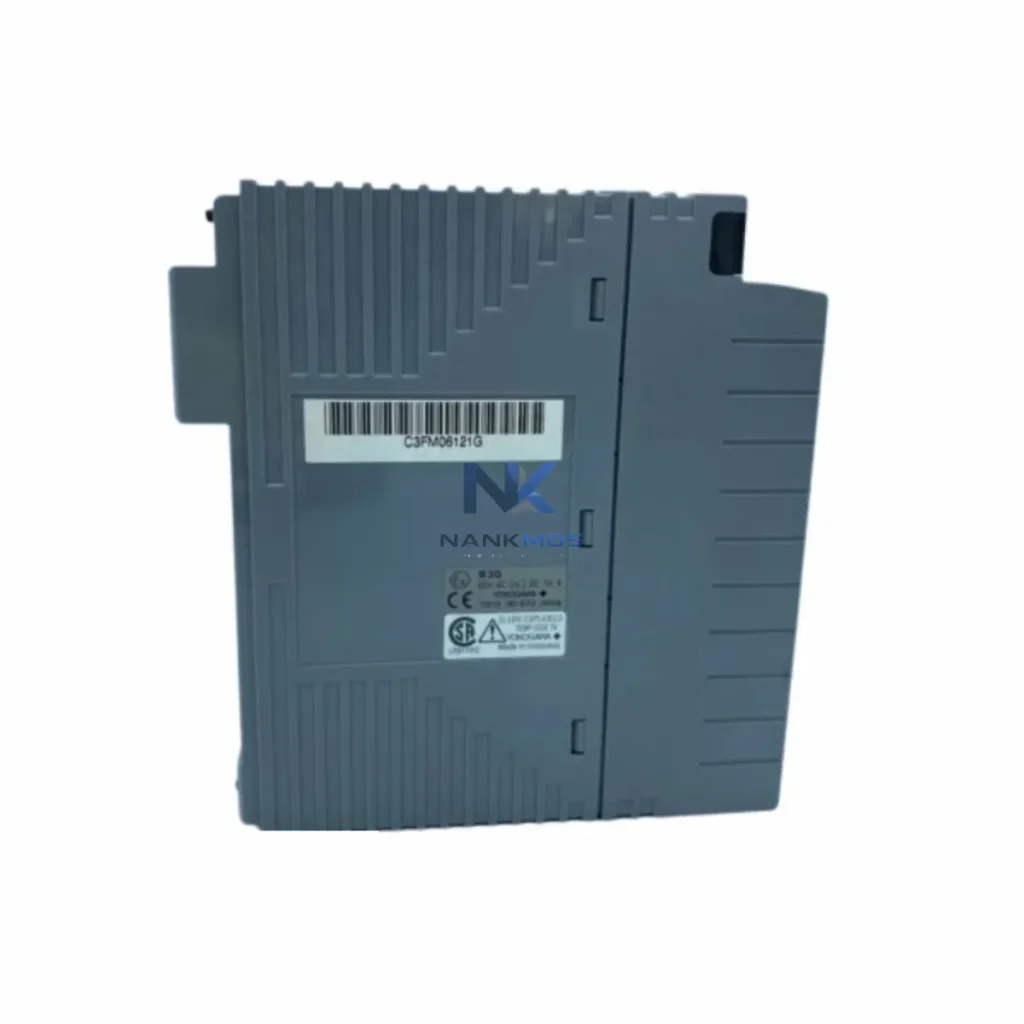
Yokogawa AAR145-S03 S1 is a NANKMOS industrial automation product record Listed under CENTUM VP series and Business & Industrial > Automation, Control & Flow Devices > Programmable Logic Controllers. Confirm condition, availability, lead time, compatibility and documentation by email inquiry.
| Manufacturer | Yokogawa |
|---|---|
| Application | Controller Processing & System Control |
| Part Number / Model | AAR145-S03 S1 |
| Compatible System | CENTUM VP |
| Series | CENTUM VP |
| Condition Options | To Confirm |
| Module Type | Controller / CPU Module |
| Warranty | 12 Months |
| Packaging | Anti-static Bag / Secure Box |
| Shipping Methods | DHL / FedEx / UPS / Air / Sea |
| Availability | To Confirm |
| Lead Time | To Confirm |
| Documentation | Part number and revision checked before quote |
The Yokogawa AAR145-S03/S1 is a high-precision RTD and potentiometer input module engineered for the CENTUM VP Distributed Control System (DCS) platform. Designed to serve as a critical node in the industrial data chain, this module bridges field-level temperature and resistance sensors directly into the process control network, enabling real-time data acquisition, protocol-consistent signal transmission, and seamless integration with SCADA, HMI, and upper-level management systems. In smart factory environments where data continuity and measurement accuracy are non-negotiable, the AAR145-S03/S1 delivers the signal fidelity and network compatibility required to sustain uninterrupted automation workflows across energy, chemical, refining, and advanced manufacturing sectors.
At the heart of modern industrial connectivity lies the ability to convert raw field signals into structured, protocol-ready data streams. The AAR145-S03/S1 accepts RTD inputs — including Pt100, Pt1000, JPt100, and potentiometer types — and conditions these signals for transmission through the CENTUM VP field control bus. This bus architecture ensures deterministic, low-latency data delivery to the Field Control Station (FCS), where values are processed, alarmed, and forwarded to the CENTUM VP HIS (Human Interface Station) for operator visualization. The module's tight integration with the CENTUM VP I/O bus eliminates the need for external signal converters or protocol gateways at the field level, reducing network complexity and improving overall system reliability.
In a connected factory data flow, the AAR145-S03/S1 operates as the upstream data source for a layered automation architecture. Field-mounted RTD sensors — measuring temperatures in reactors, heat exchangers, pipelines, and motor windings — feed directly into the module's input channels. Conditioned values are then transmitted via the CENTUM VP node bus to the FCS, which executes PID control loops, interlock logic, and alarm management. The FCS communicates upstream with the CENTUM VP Vnet/IP Ethernet backbone, where data is made available to the Exaopc OPC DA/UA server. This OPC interface allows third-party SCADA platforms — such as Yokogawa FAST/TOOLS, Wonderware, or Ignition — to subscribe to live process values, enabling plant-wide data visualization, historian logging, and KPI dashboards. Alongside the AAR145-S03/S1, complementary I/O modules such as the AAI141 analog input module, the AAI543 analog output module, and the ADV151 digital input module populate the same I/O nest, forming a unified, high-density I/O subsystem that feeds the FCS with multi-variable process data.
Remote diagnostics and predictive maintenance capabilities are further enhanced through the CENTUM VP's built-in field device management tools. The module supports hardware self-diagnostics, and its status is continuously monitored by the FCS. Fault conditions — including open-circuit RTD detection, out-of-range signals, and module communication errors — are automatically escalated as alarms to the HIS operator console and forwarded to the plant's alarm management system. For facilities deploying Yokogawa's PRM (Plant Resource Manager), the AAR145-S03/S1's diagnostic data can be aggregated alongside HART-enabled field instruments, providing a unified asset health view across the entire process loop. This integration supports condition-based maintenance strategies, reducing unplanned downtime and extending equipment service intervals.
The AAR145-S03/S1 is equally well-suited for hybrid automation architectures where CENTUM VP coexists with other control platforms. In facilities running Yokogawa ProSafe-RS Safety Instrumented Systems (SIS), the DCS and SIS share a common Vnet/IP network layer, allowing safety-critical temperature measurements to be cross-referenced between the AAR145-S03/S1 and the ProSafe-RS I/O modules without additional protocol conversion. For sites integrating edge computing nodes — such as the Yokogawa OpreX Edge Controller or third-party edge gateways — the OPC UA data published by the Exaopc server can be consumed directly, enabling local analytics, machine learning inference, and cloud forwarding to platforms such as Yokogawa's Collaborative Information Server (CIS) or industrial IoT clouds. This edge-to-cloud data pathway transforms the AAR145-S03/S1 from a simple input module into a foundational element of the plant's digital transformation strategy.
Network stability is a core design principle of the CENTUM VP I/O architecture. The AAR145-S03/S1 operates within a redundant I/O bus configuration, where dual-redundant FCS controllers and redundant power supply modules — such as the Yokogawa AVR4D power supply unit — ensure continuous operation even during single-point hardware failures. The module's hot-swap capability allows field replacement without process interruption, a critical feature for continuous-process industries where scheduled shutdowns are costly. Combined with the CENTUM VP's built-in network diagnostics and the Yokogawa CENTUM VP R6 engineering environment, maintenance engineers can perform online module configuration, calibration verification, and firmware status checks without taking the control loop offline.
From a system expansion perspective, the AAR145-S03/S1 is fully compatible with the CENTUM VP modular I/O nest architecture, supporting up to 16 I/O modules per nest and multiple nests per FCS node. This scalability allows facilities to incrementally expand their measurement infrastructure as production capacity grows, adding RTD input channels alongside analog output modules, pulse input modules, and communication interface cards within the same physical enclosure. The module's compatibility with the CENTUM VP R5 and R6 software environments ensures long-term investment protection, with Yokogawa's established lifecycle support policy providing spare parts availability and software updates for extended operational periods.
In a fully networked smart factory deployment, the AAR145-S03/S1 anchors the temperature measurement layer of the process data chain. Field RTD sensors installed on critical assets — heat exchangers, distillation columns, compressor bearings, and furnace zones — connect directly to the module's input terminals. The conditioned signals traverse the CENTUM VP I/O node bus to the FCS, where the AAI141 analog input module handles 4–20 mA process variables in parallel, and the ADV151 digital input module captures discrete status signals from motor starters and valve position switches. Together, these modules provide the FCS with a comprehensive, multi-variable process picture.
The FCS executes regulatory control — PID loops, cascade control, and ratio control — and publishes results to the Vnet/IP Ethernet backbone. The AAI543 analog output module translates FCS control commands into 4–20 mA signals driving control valves and variable frequency drives (VFDs), closing the control loop between measurement and actuation. Upstream, the Exaopc OPC UA server aggregates all FCS data and exposes it to the plant's SCADA layer, where FAST/TOOLS trend displays and alarm summary screens give operators real-time visibility into temperature profiles, deviation alarms, and control loop performance. The Yokogawa CENTUM VP HIS workstation serves as the primary operator interface, displaying P&ID-based process graphics with live AAR145-S03/S1 temperature values overlaid on equipment symbols.
For facilities with edge computing requirements, an OpreX Edge Controller or third-party industrial edge gateway subscribes to the OPC UA data stream, performing local analytics — such as thermal runaway detection or bearing temperature trending — and forwarding aggregated results to cloud-based asset management platforms. Industrial Ethernet switches with managed VLAN configurations segment the Vnet/IP backbone from the corporate IT network, ensuring deterministic control traffic is isolated from business data flows. The Yokogawa AVR4D redundant power supply module ensures uninterrupted power to the I/O nest, while the CENTUM VP's built-in network health monitoring continuously validates communication integrity across all nodes.
Many industrial facilities face persistent data gaps that undermine operational efficiency: temperature measurements trapped in isolated DCS nodes with no path to SCADA, protocol mismatches between legacy RTD transmitters and modern OPC UA-based systems, and remote monitoring limitations that force engineers to physically inspect field panels for diagnostic information. The AAR145-S03/S1 addresses these challenges by operating natively within the CENTUM VP's unified data architecture, where every input channel is automatically discoverable by the Exaopc OPC server and accessible to any OPC-compliant SCADA or historian platform.
For sites struggling with alarm management and production transparency, the module's built-in open-circuit and out-of-range detection generates structured alarm records that flow through the CENTUM VP alarm management system, providing timestamped, prioritized fault notifications to operators and maintenance teams. Remote diagnostics are supported through the CENTUM VP engineering environment, allowing control engineers to verify module calibration status, review channel health, and perform online configuration changes from the engineering workstation without field access. System expansion is straightforward: additional AAR145-S03/S1 modules can be added to existing I/O nests without FCS reconfiguration, and the CENTUM VP's modular architecture supports incremental capacity growth aligned with production expansion plans.
Q1: What communication protocols does the AAR145-S03/S1 support for SCADA integration? The AAR145-S03/S1 communicates natively over the CENTUM VP field control bus and Vnet/IP Ethernet backbone. Process values are exposed to SCADA systems via the Exaopc OPC DA/UA server, enabling integration with any OPC-compliant platform including FAST/TOOLS, Wonderware, and Ignition without additional protocol gateways.
Q2: Can the AAR145-S03/S1 be replaced online without shutting down the control loop? Yes. The module supports hot-swap replacement within the CENTUM VP I/O nest. The redundant FCS architecture maintains control loop continuity during module replacement, and the engineering environment allows online re-commissioning of the replacement module without process interruption.
Q3: How does the module support remote diagnostics and predictive maintenance? The AAR145-S03/S1 performs continuous self-diagnostics, detecting open-circuit RTD faults, out-of-range signals, and communication errors. Diagnostic data is forwarded to the CENTUM VP alarm system and, for sites using Yokogawa PRM, aggregated into the plant-wide asset health dashboard for condition-based maintenance planning.
Q4: What is the warranty and stock availability for the AAR145-S03/S1? All AAR145-S03/S1 units supplied by NANKMOS carry a 12-Month Warranty covering hardware defects and operational failures under normal use conditions. Units are sourced from global inventory with prompt shipment capability. Pre-shipment functional testing is performed on all modules. Contact [email protected] or +86 18359268345 for stock confirmation and lead time.
Functional Inspection100% tested on professional platforms to ensure stable performance.
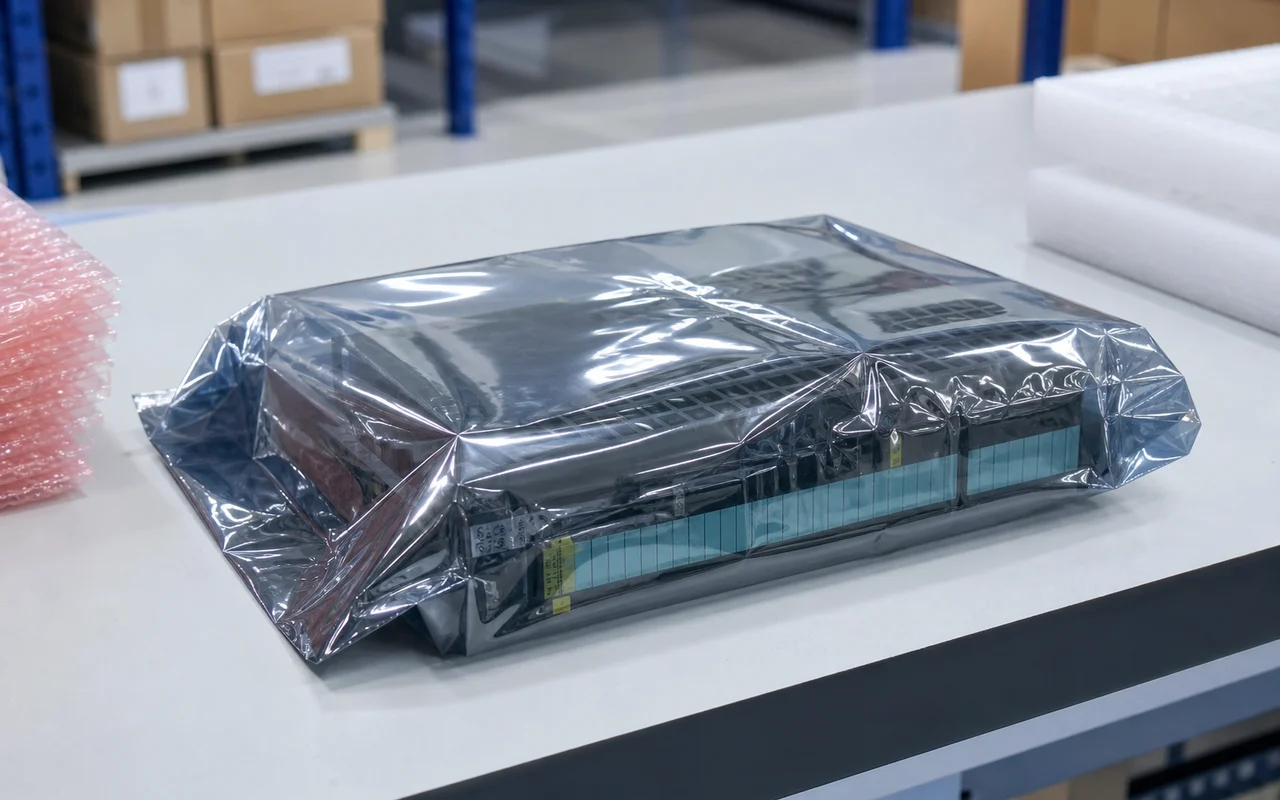 Anti-static Packaging
Modules are packed in anti-static bags to prevent electrostatic damage.
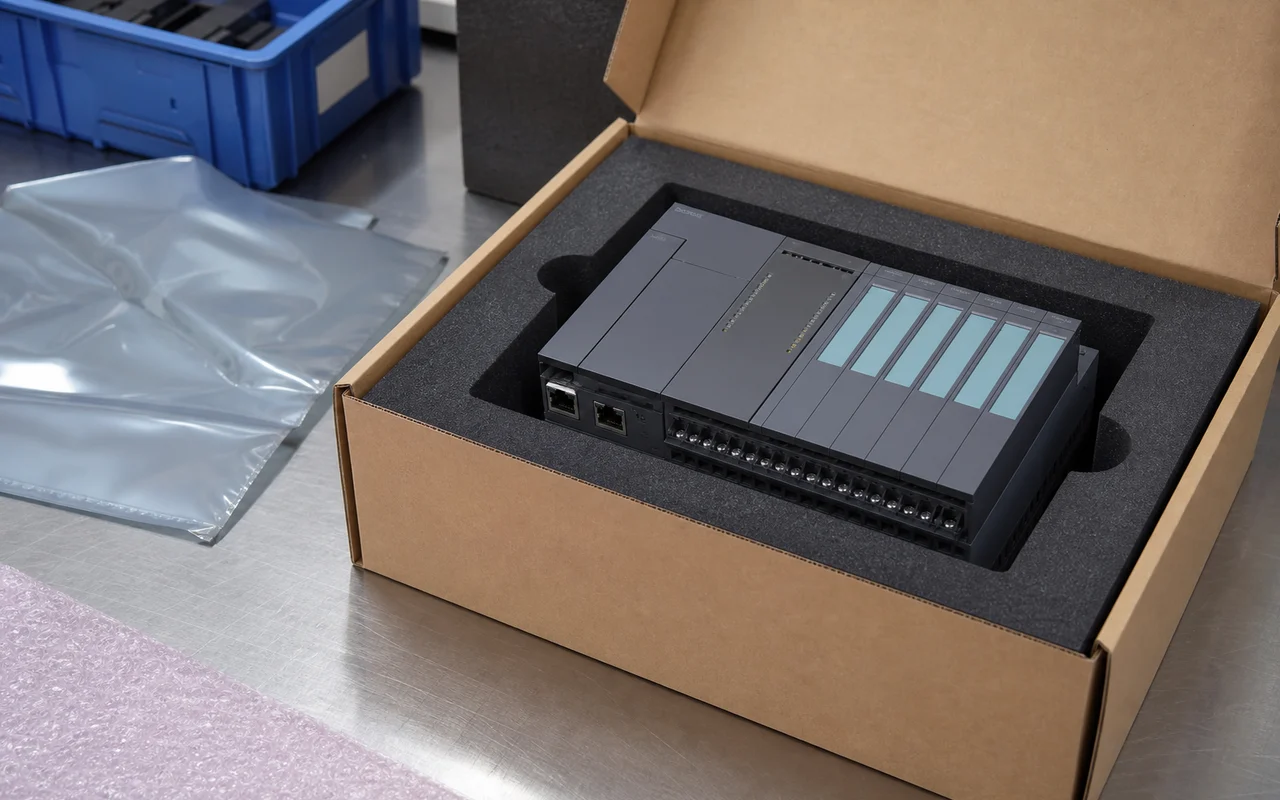 Secure Export Packing
Cushion protection and strong cartons ensure safe transportation.
 Worldwide Shipping
Global logistics network supports air, sea and express delivery.
 Documentation Check
Part number, revision and compatibility verified before shipment.
 After-sales Support
Professional technical support to help resolve your issues.