
Quality & Delivery
Rockwell VisionAI Quality Update: RFQ Records for Inspection Cells
Use Rockwell Automation's VisionAI and Plex QMS update to improve RFQ records for machine-vision inspection cells.
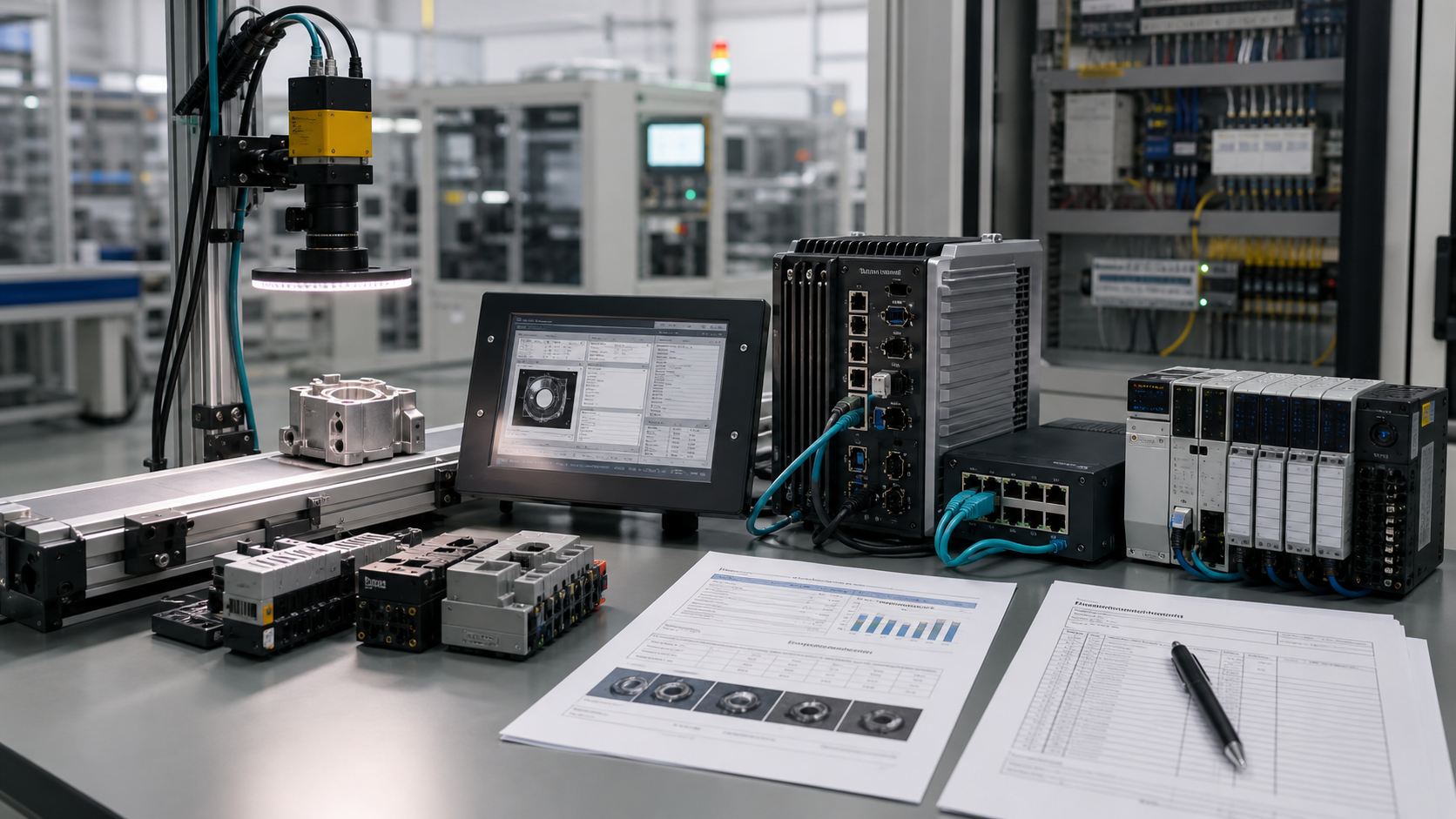
Rockwell Automation announced an integration between Plex QMS and FactoryTalk Analytics VisionAI for AI-supported quality inspection. For maintenance and sourcing teams, the useful point is not only software. Machine-vision quality cells depend on cameras, lighting, industrial PCs, HMI panels, PLC or I/O hardware, Ethernet devices and cabinet records that should be clear before an RFQ is sent.
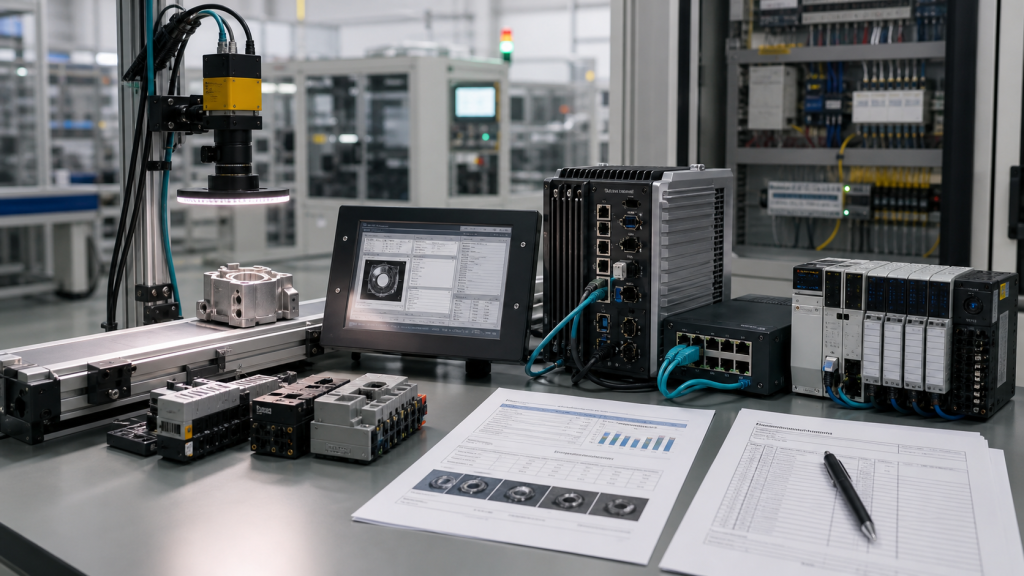
This article uses Rockwell Automation's quality-inspection update as industry context. It does not claim that any Rockwell Automation, Allen-Bradley, FactoryTalk, Plex, camera, IPC, HMI, PLC, I/O module, switch, cable or spare part is available, original, authorized, newly supported or covered by a fixed warranty. Those details must be confirmed for each exact inquiry.
What Rockwell announced
Rockwell Automation's official release describes an integration between Plex Quality Management System and FactoryTalk Analytics VisionAI. The announcement positions the integration around AI-driven visual inspection, automated quality data and manufacturing quality workflows.
Rockwell also maintains broader information for FactoryTalk software. Those pages are useful context for software and production systems, but they do not identify the installed camera, HMI, controller, industrial PC, network switch or cabinet hardware in a specific plant.
Why quality-inspection cells create sourcing ambiguity
A vision inspection cell often looks like one system, but it is built from many replaceable layers. The camera may be separate from the lens, lighting, trigger sensor, IPC, HMI, PLC, I/O block, Ethernet switch, power supply and cabinet accessories. A quality issue may be recorded in software while the physical replacement request is for hardware.
If an RFQ only says “vision system spare” or “inspection PC,” the reviewer has too little evidence. The request should separate the exact item from the inspection function. This helps avoid confusion between a camera accessory, an industrial computer, an HMI terminal, a PLC module, a network device or a software-related support question.
Records to capture before requesting inspection-cell parts
A useful machine-vision RFQ should combine visual inspection context with normal automation spare-part evidence.
- Complete model, order code, revision and serial details from the requested item.
- Photos of the front label, side label, connector area, lens or port area and installed cabinet position.
- System role: camera, lens, light, HMI, IPC, PLC, I/O, trigger sensor, switch, gateway or power module.
- Interface details such as Ethernet, USB, I/O, M12, RJ45, encoder, trigger or documented fieldbus connection.
- Software or project context if visible in maintenance records, without exposing confidential plant data.
- Quantity, condition preference, destination country and required timing.
- Whether the inquiry is for identical replacement, possible equivalent review or documentation confirmation.
Compatibility depends on more than the camera name
Machine-vision compatibility can depend on lens mount, lighting geometry, exposure timing, trigger wiring, network configuration, software version, IPC performance, cabinet power and validation rules. Similar-looking hardware may not behave the same in a production inspection cell.
If a site wants an equivalent part, the RFQ should list the installed original and the proposed alternative separately. Mark what is known, what is unknown and whether engineering validation is required. This keeps sourcing discussion useful without turning it into an unsupported compatibility guarantee.
How NANKMOS should handle quality-inspection RFQs
NANKMOS should treat AI and quality-inspection updates as a signal that automation inquiries are becoming more system-connected. The response should still remain tied to exact part numbers, photos, installed context, condition preference and destination.
Readers can search HMI and interface product records, review quality and delivery notes, read product-system sourcing guidance, or send an inspection-cell RFQ. Availability, documentation, compatibility and delivery should be confirmed for each exact item.
Final takeaway
AI-supported quality inspection makes plant records more important, not less. The camera, lighting, HMI, IPC, PLC, I/O, Ethernet and software layers should be visible in the inquiry.
A strong RFQ includes the complete model code, revision, photos, connector context, installed role, quantity, condition preference, destination and any known software context. That gives maintenance and sourcing teams a clearer basis for review.
Related guides
View all guides
DeltaV IQ Controller: How Server-Based Control Changes Spare Planning
Emerson’s DeltaV IQ announcement highlights server-based control. Here is how maintenance teams can distinguish host, software, redundancy and physical-controller support boundaries.
Read guide
Siemens and P&G Expand AI Inspection: What Keeps the Line Running
Siemens’ recent AI inspection announcement highlights an interconnected camera, edge-computing and PLC workflow. Here is how maintenance teams can trace faults before replacing hardware.
Read guide
Emerson’s Planned Qatar Service Center: What Flow-Instrument RFQs Still Need
Emerson has announced a planned Qatar automation service center. Here is what buyers should document in flow-instrument RFQs while its capabilities remain future plans.
Read guide
ABB Infinitus and Data-Center DC Power: RFQ Records for Automation Spares
A practical RFQ framework for documenting power, automation, cooling and protection interfaces as data-center power architectures evolve toward DC and hybrid designs.
Read guideSend your part number, photos or nameplate.
Our team will verify, check availability, and reply with options within 24 hours.
[email protected]+86 18359268345WhatsApp