
Maintenance & RFQ Guides
Rosemount QX1400 RFQ Guide: Hazardous-Area Gas Analyzer Checks
Emerson has announced the Rosemount QX1400, a hybrid gas analyzer designed for multicomponent measurement in applications that include continuous emissions monitoring, natural gas quality and other regulated process services. For a buyer, the announcement is a useful starting point, but it is not a substitute for a configuration-level review. The right RFQ must connect the […]
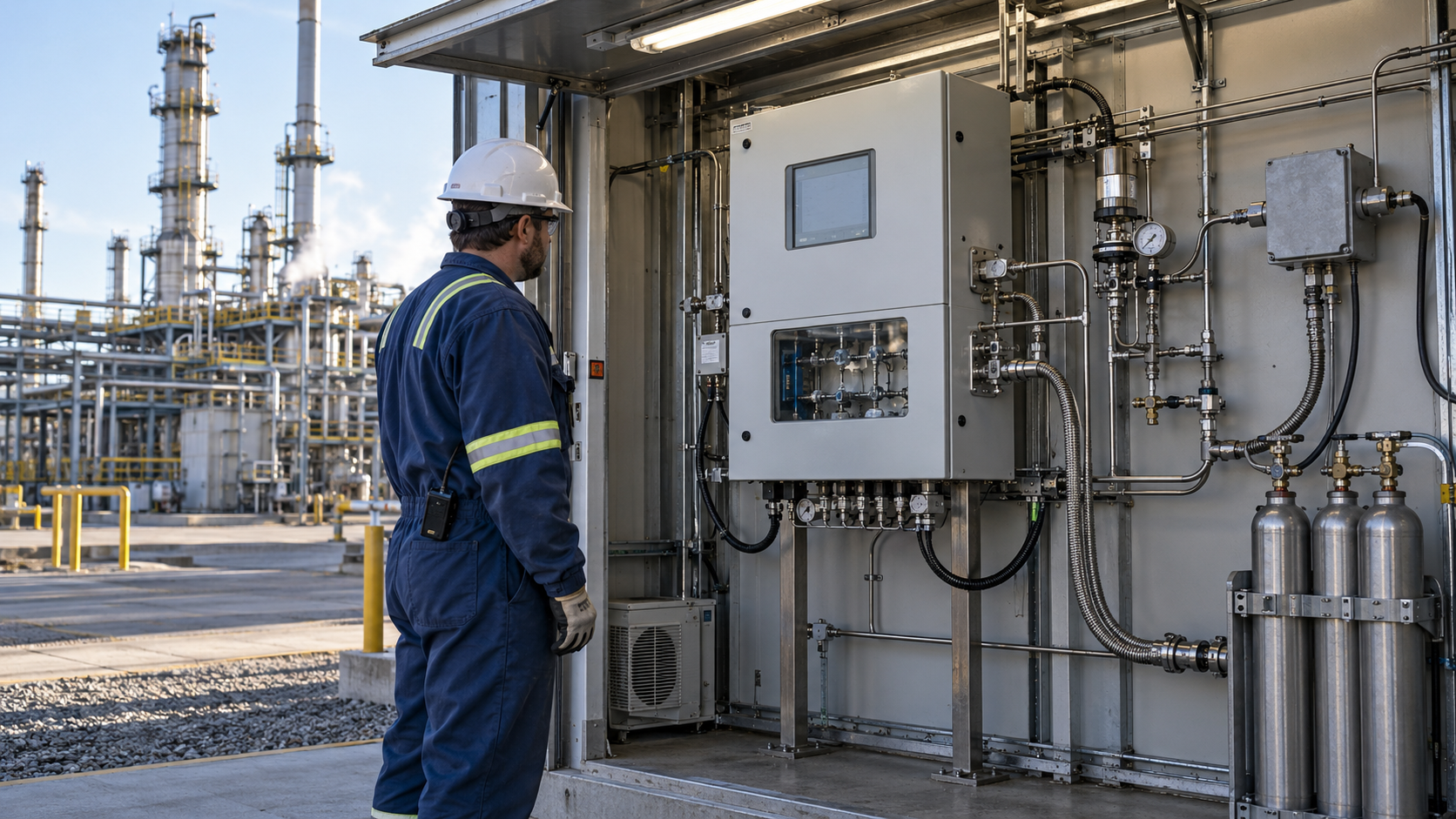
Emerson has announced the Rosemount QX1400, a hybrid gas analyzer designed for multicomponent measurement in applications that include continuous emissions monitoring, natural gas quality and other regulated process services. For a buyer, the announcement is a useful starting point, but it is not a substitute for a configuration-level review. The right RFQ must connect the analyzer model to the gas service, hazardous-area classification, sample system and site integration requirements.
This guide turns the public product announcement into a practical information checklist. It does not confirm stock, delivery, certification for a particular site or compatibility with an existing analyzer cabinet. Those points should be verified against the exact unit and project conditions.
What the public announcement confirms
Emerson describes the Rosemount QX1400 as a multicomponent gas analyzer for continuous emissions monitoring, natural gas quality and other mission-critical regulated applications. The announcement also identifies hazardous-area certification as a key product characteristic. These statements establish the product direction, but an RFQ still needs the exact variant, certificate scope and measurement configuration.
For the official announcement, see Emerson Newsroom. Treat the release as product background and request the current datasheet, installation manual and certification documents before making a replacement or project decision.
1. Define the gas service before naming a replacement
Start with the process rather than the catalog name. List each component to be measured, the normal and upset concentration range, expected background gases, moisture level, pressure, temperature and flow conditions. Emissions measurement, natural-gas quality and process-gas monitoring can place very different demands on the analyzer and its sample conditioning system.
- Measured components and engineering units
- Normal, alarm and maximum expected ranges
- Interfering gases, particulates, moisture and corrosive compounds
- Sample pressure, temperature, flow and required response time
- Required accuracy, repeatability, detection limit and availability target
Do not assume that a similar-looking analyzer with the same number of channels can perform the same measurement task. The gas matrix and sample treatment often determine whether a proposed configuration is technically usable.
2. Verify hazardous-area certification and installation boundary
Hazardous-area suitability is not a single yes-or-no feature. Your RFQ should state the site classification and ask the supplier to confirm the exact certification for the offered configuration, enclosure and accessories. Request the certificate number, applicable gas group, temperature class, protection concept, ambient limits and any installation restrictions.
Also separate the analyzer from the surrounding sample system. Heated lines, filters, regulators, calibration-gas panels, junction boxes and purge equipment may each have their own certification or installation requirements. A certified analyzer does not automatically make every connected component suitable for the same zone.
3. Describe the complete sample-conditioning system
Many analyzer problems are caused by the sample path rather than the sensing unit. Include the existing probe, transport distance, heated sections, filters, drains, pressure reduction, flow control and calibration-gas arrangement in the inquiry. Provide drawings or photographs only when they are cleared for sharing, and identify connection sizes and materials where known.
Ask the supplier to mark which items are part of the analyzer package and which remain the responsibility of the site or system integrator. This boundary helps avoid a quote that covers the cabinet but leaves critical sample preparation components undefined.
4. Confirm control-room and maintenance integration
Record the available power supply, cabinet dimensions, environmental conditions, signal list and control-system interface. Ask for the supported analog and digital outputs, communication options, alarm handling, time synchronization and required software or licensing. Do not assume that an existing cable schedule or protocol mapping can be reused without checking the new configuration.
For maintenance planning, request the recommended calibration method, consumables, service intervals, diagnostic information, firmware or software dependencies and the spare-part list. If the unit is intended to replace an installed analyzer, include the existing model, serial number, cabinet drawing and recent alarm history in the RFQ.
5. RFQ information that reduces clarification rounds
A concise inquiry can include the following attachments and fields:
- Exact requested model or proposed model reference
- Measurement application and gas component list
- Hazardous-area zone and required certification
- Sample pressure, temperature, flow and line length
- Power, outputs, communications and control-system details
- Installation country and applicable documentation language
- Photos of the nameplate, analyzer cabinet and sample system
- Required manuals, certificates, calibration records and spare recommendations
When the original nameplate is unclear, send the readable characters exactly as seen and separate confirmed information from assumptions. This gives the supplier a clean starting point for checking identifiers without turning a guess into a specification.
Related NANKMOS resources
For Emerson equipment, see the Emerson brand page and the current industrial automation product catalog. More inquiry guidance is available in Resources. If you have an analyzer identifier, sample-system description or parts list, you can send an RFQ to NANKMOS for a configuration-focused review.
Conclusion
The Rosemount QX1400 announcement is relevant to teams reviewing gas-analysis equipment, but a dependable RFQ must go beyond the product family name. Confirm the gas service, hazardous-area boundary, sample conditioning, control integration and maintenance evidence before comparing offers. NANKMOS can use the information you provide to separate verified identifiers from open technical questions and route the inquiry for further review.
Source: Emerson Newsroom, “Emerson’s New Gas Analyzer Offers World’s First Hybrid Device Certified for Hazardous Areas,” published October 1, 2026. Product scope, certification and availability should be confirmed with current manufacturer documentation for the requested configuration.
Related guides
View all guides
Machine Vision False Rejects: Check the Lighting Before the Camera
When a reflective part fails inspection, compare reference images before ordering a camera. Learn when to scope the light, controller or mounting instead.
Read guide
AMR Charging Faults: Is the Spare on the Robot or at the Dock?
When an AMR stops charging, distinguish the fixed dock from the vehicle battery. Use dock IDs and fleet events to scope the right replacement RFQ.
Read guide
Servo Drive Spares: EtherCAT Is Not the Encoder Interface
An EtherCAT drive can still be the wrong spare. Learn how to verify the motor encoder protocol, feedback cable and exact drive variant before ordering.
Read guide
CENTUM R7.02: An Estimate Is Not a Field Measurement
Yokogawa’s CENTUM R7.02 adds AI Estimation. See how to distinguish model outputs, transmitter readings and laboratory results before ordering a spare.
Read guideSend your part number, photos or nameplate.
Our team will verify, check availability, and reply with options within 24 hours.
[email protected]+86 18359268345WhatsApp