
Product Systems
Siemens 800 VDC Data Center Power: RFQ Records for Automation Spares
Use Siemens and Reinhausen 800 VDC data-center power news to improve RFQ records for power, protection, control and monitoring spares.
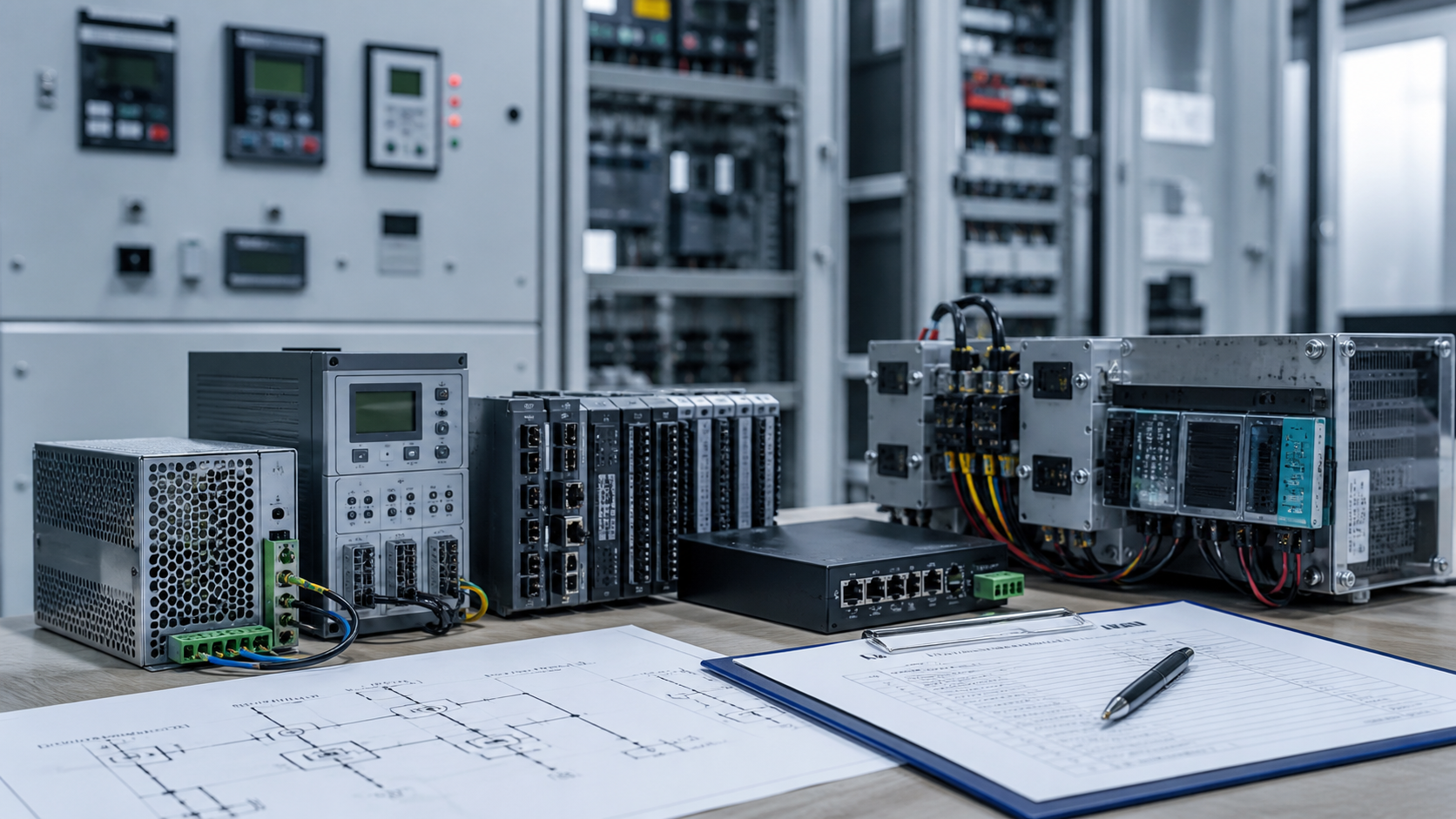
Siemens and Maschinenfabrik Reinhausen announced work on an 800 VDC solid-state transformer approach for AI data centers. For maintenance and sourcing teams, the practical takeaway is not to treat a new power architecture as a simple part swap. Power electronics, protection devices, control modules, communication hardware and monitoring records all need to be clear before an RFQ is sent.
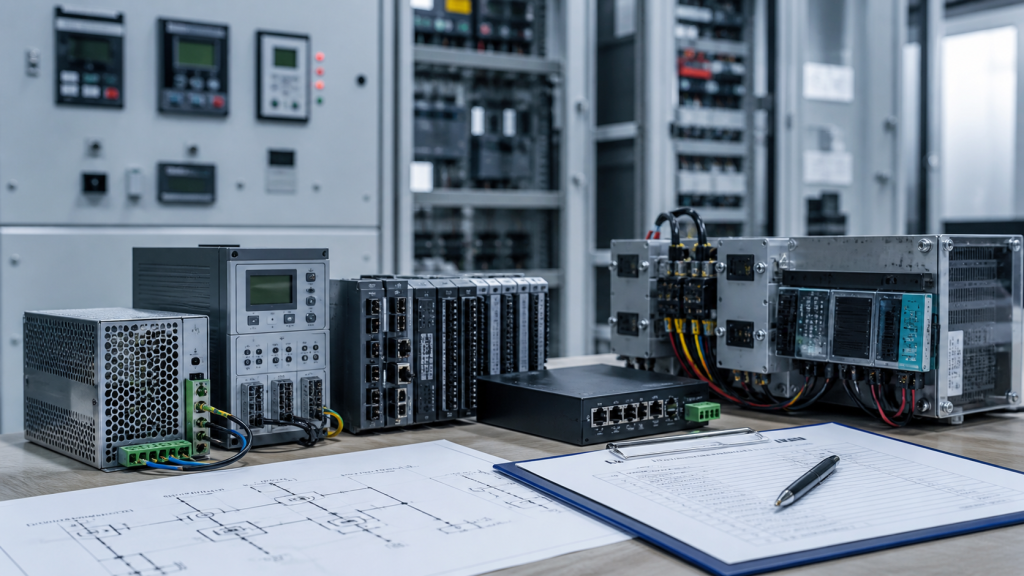
This article uses Siemens' 800 VDC data-center power update as industry context. It does not claim that any Siemens, Reinhausen, protection relay, power supply, controller, communication module, I/O card, monitoring unit, transformer-related component or spare part is available, original, authorized, newly supported or covered by a fixed warranty. Those details must be confirmed for each exact inquiry.
What Siemens announced
Siemens' official release says Siemens and Reinhausen are developing an 800 VDC solid-state transformer solution for AI data centers. The announcement describes a medium-voltage to 800 VDC approach intended to reduce conversion stages and improve efficiency in data-center power distribution.
Reinhausen also published its own release on the same development. These sources are useful for understanding the direction of data-center electrical infrastructure, but installed-site spare-part decisions still depend on exact hardware labels, drawings and maintenance records.
Why 800 VDC and power electronics create RFQ ambiguity
Electrical automation requests for power systems often involve several layers: medium-voltage equipment, protection, power conversion, cabinet control, monitoring, communication, auxiliary power and thermal management. A maintenance ticket may describe a high-level power issue while the actual RFQ is for a board, relay, module, terminal unit or communication component.
If the inquiry only says “data center power module” or “800 VDC control part,” the reviewer has too little evidence. The request should separate the system architecture from the exact replaceable item. This prevents confusion between a power component, protection device, PLC or I/O module, Ethernet device, monitoring accessory or documentation request.
Records to capture before requesting power-control spares
A useful RFQ should show both the installed item and the electrical context around it. That matters more as power systems become more integrated and software-monitored.
- Complete manufacturer, model, order code, revision and serial details from the requested item.
- Photos of the front label, side label, terminal area, ports and installed cabinet position.
- System role: protection relay, controller, I/O module, power supply, communication gateway, monitoring unit, drive or power-conversion accessory.
- Electrical context such as AC/DC side, voltage rating, power supply, cabinet section and documented single-line reference.
- Network or communication context, including Ethernet, fieldbus, serial link or monitoring system where available.
- Quantity, condition preference, destination country and required timing.
- Whether the request is for identical replacement, possible equivalent review or documentation confirmation.
Do not confuse architecture news with replacement approval
A new power-distribution concept may influence future systems, but it does not prove interchangeability for existing installed equipment. Voltage rating, firmware, wiring, cabinet layout, cooling, protection coordination, site approval and safety validation can all affect whether a component is suitable.
If a site wants an alternative, the RFQ should show the installed original and the proposed item separately. Mark what is known, what is unknown and what requires engineering confirmation. This keeps the sourcing discussion grounded in evidence rather than assumptions.
How NANKMOS should handle data-center power automation RFQs
NANKMOS should treat data-center power updates as a reason to ask for structured records. For power, protection, control and monitoring parts, the response should remain tied to exact model information, customer photos, system context, condition preference and destination.
Readers can search power supply and control product records, review product-system sourcing guidance, read industry application resources, or send a data-center automation RFQ. Availability, documentation, compatibility and delivery should be confirmed for each exact item.
Final takeaway
AI data-center power systems are pushing electrical automation toward tighter integration between power electronics, protection, monitoring and control. RFQ records need to reflect that boundary.
A strong inquiry includes the exact model, revision, photos, cabinet location, electrical context, communication context, quantity, condition preference and destination. That gives maintenance and sourcing teams a clearer basis for review without making unsupported compatibility claims.
Related guides
View all guides
DeltaV IQ Controller: How Server-Based Control Changes Spare Planning
Emerson’s DeltaV IQ announcement highlights server-based control. Here is how maintenance teams can distinguish host, software, redundancy and physical-controller support boundaries.
Read guide
Siemens and P&G Expand AI Inspection: What Keeps the Line Running
Siemens’ recent AI inspection announcement highlights an interconnected camera, edge-computing and PLC workflow. Here is how maintenance teams can trace faults before replacing hardware.
Read guide
Emerson’s Planned Qatar Service Center: What Flow-Instrument RFQs Still Need
Emerson has announced a planned Qatar automation service center. Here is what buyers should document in flow-instrument RFQs while its capabilities remain future plans.
Read guide
ABB Infinitus and Data-Center DC Power: RFQ Records for Automation Spares
A practical RFQ framework for documenting power, automation, cooling and protection interfaces as data-center power architectures evolve toward DC and hybrid designs.
Read guideSend your part number, photos or nameplate.
Our team will verify, check availability, and reply with options within 24 hours.
[email protected]+86 18359268345WhatsApp