
Brand Guides
Siemens Automation Unit: RFQ Records Across PLC, Motion and Process Systems
Use Siemens Automation organization news to improve RFQ records across PLC, motion, process and service boundaries.
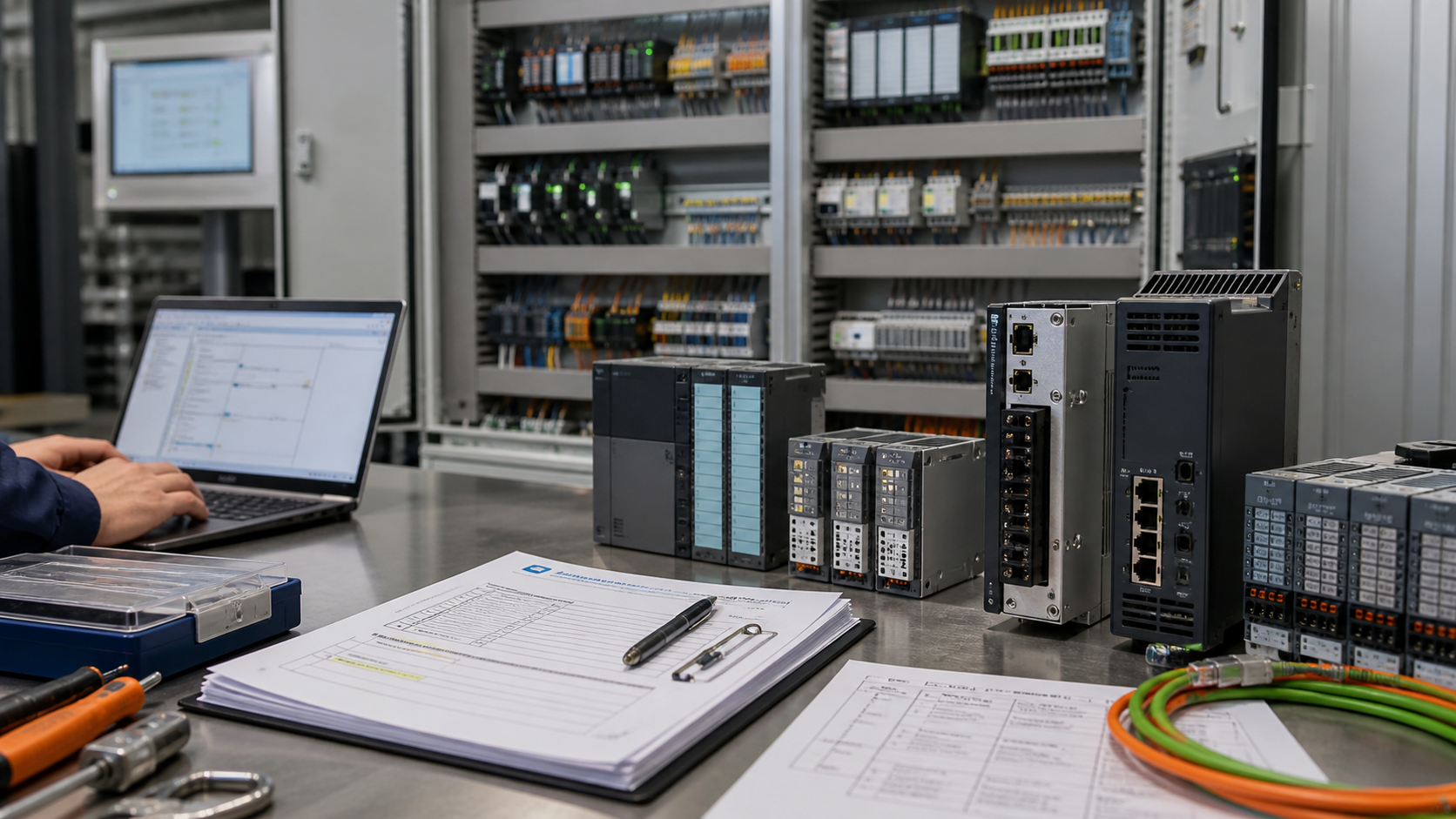
Siemens announced that it will bring Customer Services, Factory Automation, Motion Control and Process Automation into one dedicated Automation organization. For plant maintenance and sourcing teams, the practical lesson is simple: RFQ records should show where a requested part sits in the wider automation boundary, not only the model number on one module.
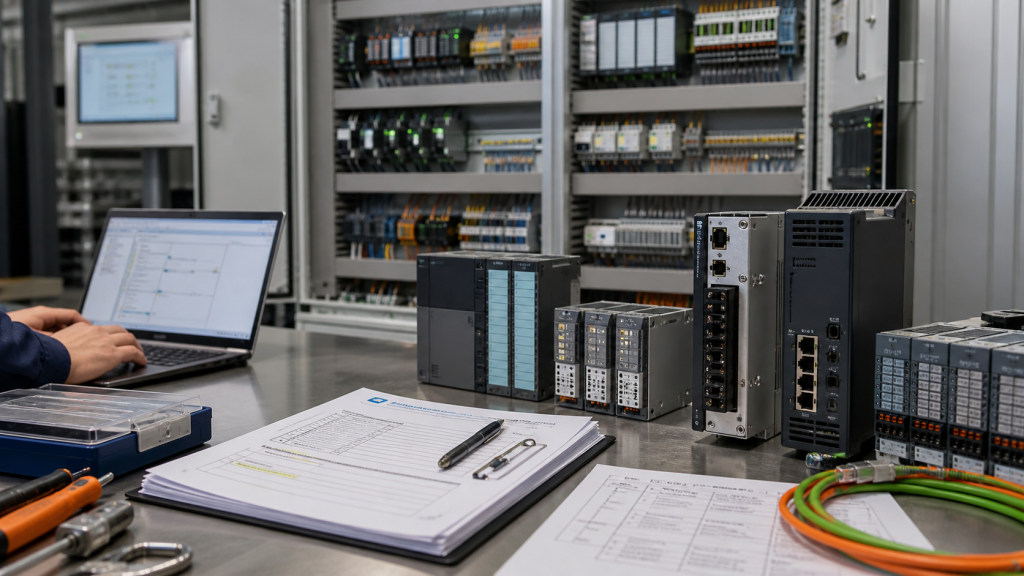
This article uses Siemens' organization update as industry context. It does not claim that any Siemens PLC, SIMATIC module, SINAMICS drive, process automation card, HMI, communication processor, power supply or spare part is available, original, authorized, newly supported or covered by a fixed warranty. Those details must be confirmed against each exact inquiry.
What Siemens announced
In its official press release, Siemens said Rainer Brehm will lead the newly established Automation unit from October 1, 2026. The release says the new organization will consolidate Customer Services, Factory Automation, Motion Control and Process Automation into one unified Automation business.
Siemens' recent third-quarter update also reported growth in its Digital Industries business. For maintenance teams, these corporate updates are not replacement instructions, but they do reflect how automation, software, service and control hardware are increasingly reviewed together.
Why this matters for spare-part inquiries
Many industrial sites still describe requests by the department that owns the problem: PLC, drive, DCS, instrument, panel, service or production line. In practice, one failure may cross several layers. A drive module may depend on a PLC program, a network card, a cabinet power supply and a safety interlock. A process I/O card may depend on the controller version, redundancy setup and field wiring.
When an RFQ does not show these boundaries, the sourcing review becomes slower. The model number may be correct, but the application context may still be incomplete. That is where wrong assumptions usually enter: similar-looking modules, different firmware, different bus interfaces, different voltage ranges or different cabinet generations.
Records to capture across PLC, motion and process systems
A useful Siemens-related inquiry should separate the exact requested item from the system where it is installed. Start with the part label, then add the cabinet and control context around it.
- Complete part number, order number, revision and serial information from the label.
- Clear photos of the front, side label, terminal area and installed cabinet position.
- System role: PLC CPU, I/O, communication module, drive, motor control, HMI, process controller or power module.
- Network or bus context, such as PROFINET, PROFIBUS, Ethernet, serial, fieldbus or documented plant standard.
- Software or firmware note if visible in maintenance records.
- Quantity, preferred condition, destination country and required timing.
- Whether the request is for identical replacement, optional equivalent review or documentation confirmation.
Do not mix service, motion and process assumptions
The new Automation unit may bring related capabilities into one Siemens organization, but installed plants still have precise technical boundaries. Factory automation, motion control and process automation parts are not interchangeable just because they sit under a broader automation umbrella.
For RFQ purposes, a maintenance team should avoid broad descriptions such as “Siemens automation card” or “drive controller” when the installed label is available. The inquiry should preserve the exact installed evidence and state what is still unknown. That gives the supplier or technical reviewer enough information to identify the item without making unsupported compatibility claims.
How NANKMOS should handle Siemens automation RFQs
NANKMOS should treat Siemens' update as a reminder to ask for structured evidence. A Siemens inquiry may involve PLC modules, motion components, process control cards, industrial communication parts or cabinet power components, but the response should remain tied to the exact part number and customer evidence.
Readers can search published Siemens-related product records, review brand sourcing notes, read product-system guidance, or send an automation RFQ. Availability, documentation, compatibility and delivery should be confirmed per exact item.
Final takeaway
Corporate automation updates are useful signals, but plant maintenance decisions still depend on installed evidence. The best RFQ is specific: model, revision, photos, cabinet location, control layer, network context, software note, quantity and destination.
That level of detail helps prevent confusion between PLC, motion and process automation components, especially when older cabinets, mixed generations and urgent maintenance schedules are involved.
Related guides
View all guides
DeltaV IQ Controller: How Server-Based Control Changes Spare Planning
Emerson’s DeltaV IQ announcement highlights server-based control. Here is how maintenance teams can distinguish host, software, redundancy and physical-controller support boundaries.
Read guide
Siemens and P&G Expand AI Inspection: What Keeps the Line Running
Siemens’ recent AI inspection announcement highlights an interconnected camera, edge-computing and PLC workflow. Here is how maintenance teams can trace faults before replacing hardware.
Read guide
Emerson’s Planned Qatar Service Center: What Flow-Instrument RFQs Still Need
Emerson has announced a planned Qatar automation service center. Here is what buyers should document in flow-instrument RFQs while its capabilities remain future plans.
Read guide
ABB Infinitus and Data-Center DC Power: RFQ Records for Automation Spares
A practical RFQ framework for documenting power, automation, cooling and protection interfaces as data-center power architectures evolve toward DC and hybrid designs.
Read guideSend your part number, photos or nameplate.
Our team will verify, check availability, and reply with options within 24 hours.
[email protected]+86 18359268345WhatsApp