
Industry Applications
Yokogawa Samarco: Turning I/O Scope into Asset Records
Yokogawa's Samarco project includes physical and communication I/O. Learn how to move from a headline point total to traceable installed-equipment records.

Yokogawa’s November 12, 2026 announcement describes an automation order for Samarco’s Germano mining complex and Ubu pellet-production facilities in Brazil. The scope includes distributed control systems, safety instrumented systems, field instruments and related services. Existing control systems will be partially replaced, rather than the release describing a wholesale replacement of everything at both sites.
One detail deserves particular attention: the new systems will comprise more than 50,000 I/O points, including both physical and communication points. That is a measure of project scope. It is not a published count of I/O cards, terminal blocks or spare assemblies.
Read the counting boundary before the headline number
The announcement combines two categories in one total but does not publish their individual allocation. It therefore provides no basis for dividing the headline number by an assumed number of channels per card and treating the result as a hardware requirement.
Nor does the total reveal which installed assembly serves a particular maintenance need. The discussion below is NANKMOS’s analysis of how to read a public project announcement, not an account of Samarco’s internal engineering documents or a prediction of its purchasing plans.
Turn a point reference into an equipment location
For a generic maintenance investigation, the useful next question is where the named point belongs. Ask the responsible engineering team whether it is associated with a physical channel or a communications exchange, and which approved records identify the relevant equipment.
A traceable reference should lead through the site and process area to the relevant system and assembly. Depending on the installation, the supporting record may then identify a cabinet, node, slot or interface. These are ways to organise the investigation, not a claim that this particular project uses a specified cabinet architecture.
The distinction makes an enquiry actionable. A point description can explain the process concern; an exact installed assembly reference explains what a supplier is being asked to identify. Both have value, but they answer different questions.
Preserve the boundary between retained and replaced equipment
Partial modernisation creates an important records question: which information describes the retained installation, and which describes the approved replacement? An old drawing should not silently become the authority for new equipment simply because it is easier to locate.
Keep document revision and installation status visible when handing records from a project team to maintenance. Proposed, supplied, installed and accepted are different states. This is a general handover recommendation; the public announcement does not establish the status of individual assemblies at Samarco.
Keep control and safety decisions distinct
The order includes both DCS and SIS. Their inclusion in the same project does not establish that their modules, application records or replacement approvals are interchangeable. Any safety-related work remains subject to the site’s responsible engineers and approved procedures.
Our product-system resources and Yokogawa parts pages can support an identification enquiry, not substitute for that engineering authority. Through NANKMOS Contact / RFQ, provide the confirmed part reference, revision details where applicable and quantity. Do not send credentials or confidential safety logic. Availability, condition, lead time and alternatives require individual confirmation; project scale alone establishes none of those commercial details.
Related guides
View all guides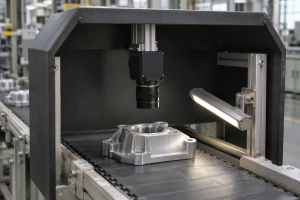
Machine Vision False Rejects: Check the Lighting Before the Camera
When a reflective part fails inspection, compare reference images before ordering a camera. Learn when to scope the light, controller or mounting instead.
Read guide
AMR Charging Faults: Is the Spare on the Robot or at the Dock?
When an AMR stops charging, distinguish the fixed dock from the vehicle battery. Use dock IDs and fleet events to scope the right replacement RFQ.
Read guide
Servo Drive Spares: EtherCAT Is Not the Encoder Interface
An EtherCAT drive can still be the wrong spare. Learn how to verify the motor encoder protocol, feedback cable and exact drive variant before ordering.
Read guide
CENTUM R7.02: An Estimate Is Not a Field Measurement
Yokogawa’s CENTUM R7.02 adds AI Estimation. See how to distinguish model outputs, transmitter readings and laboratory results before ordering a spare.
Read guideSend your part number, photos or nameplate.
Our team will verify, check availability, and reply with options within 24 hours.
[email protected]+86 18359268345WhatsApp