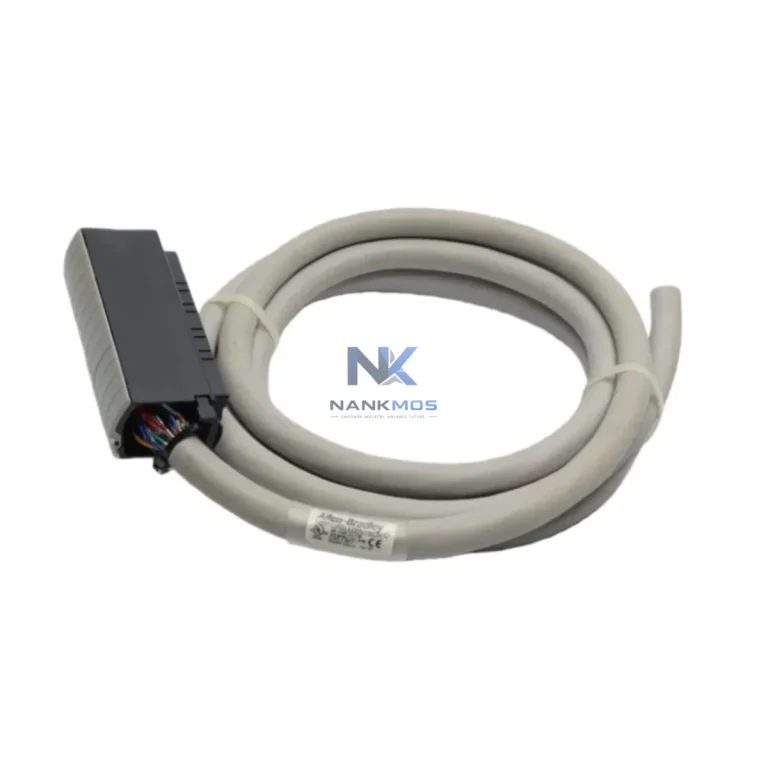
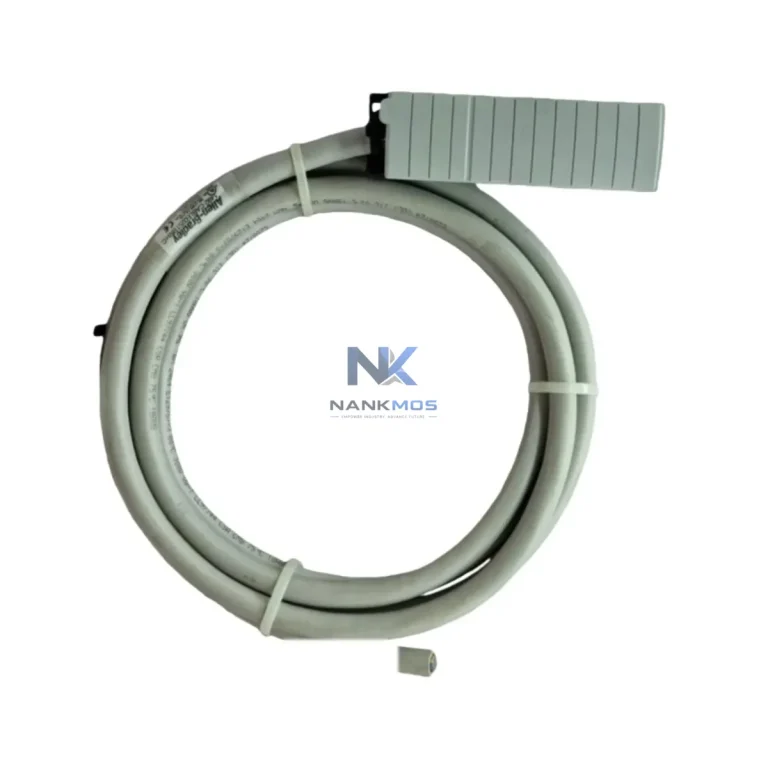
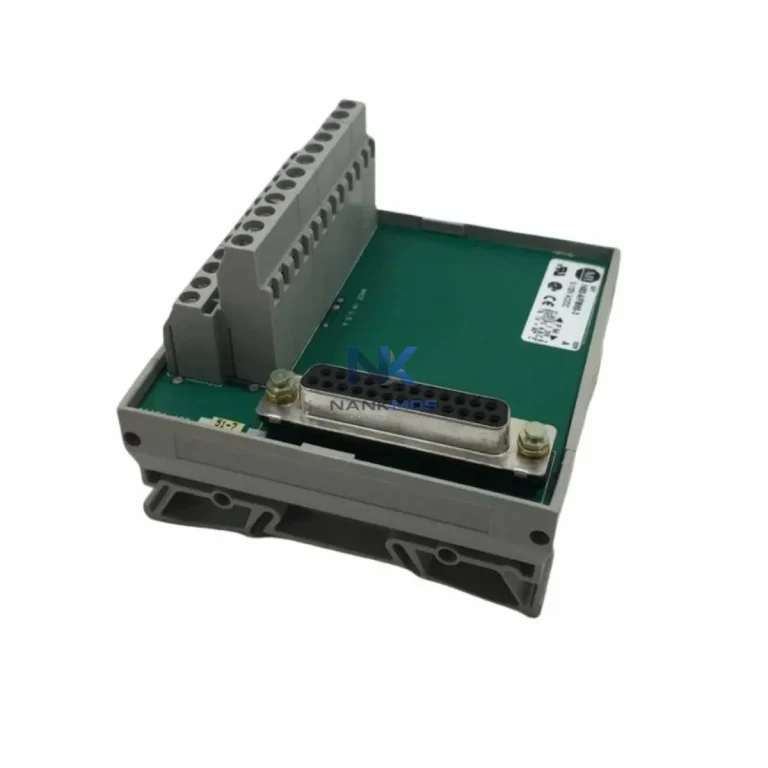
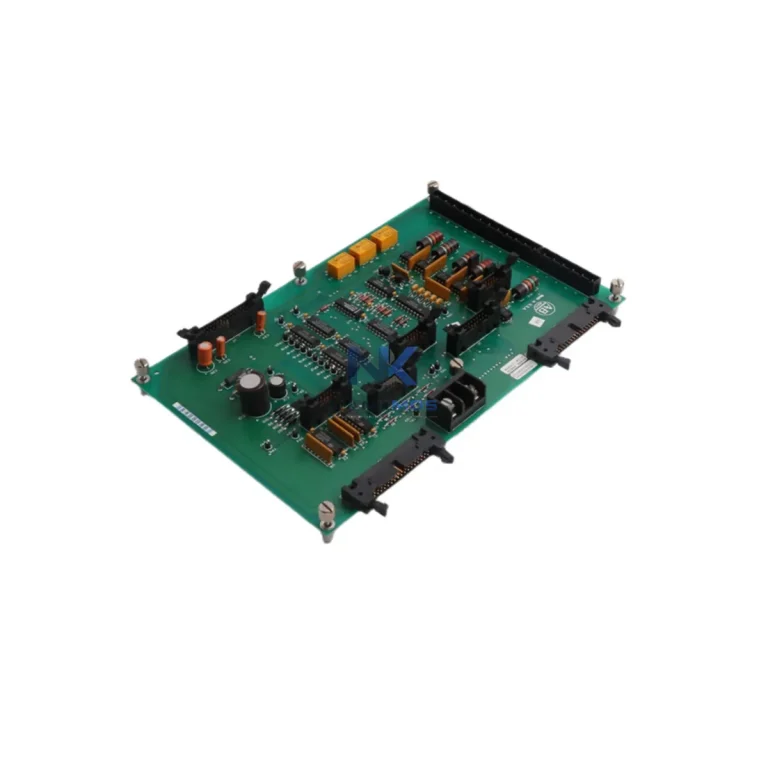
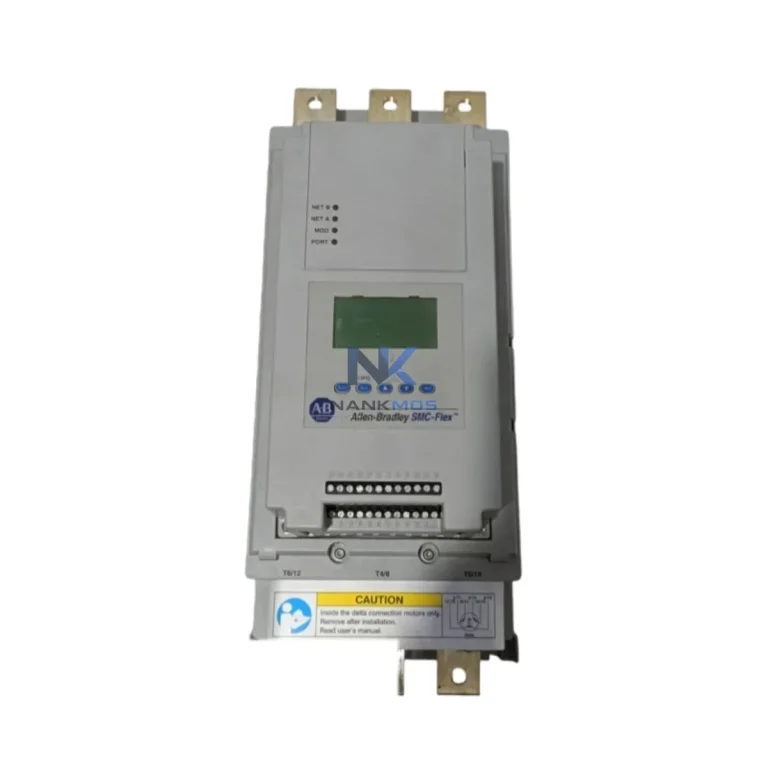
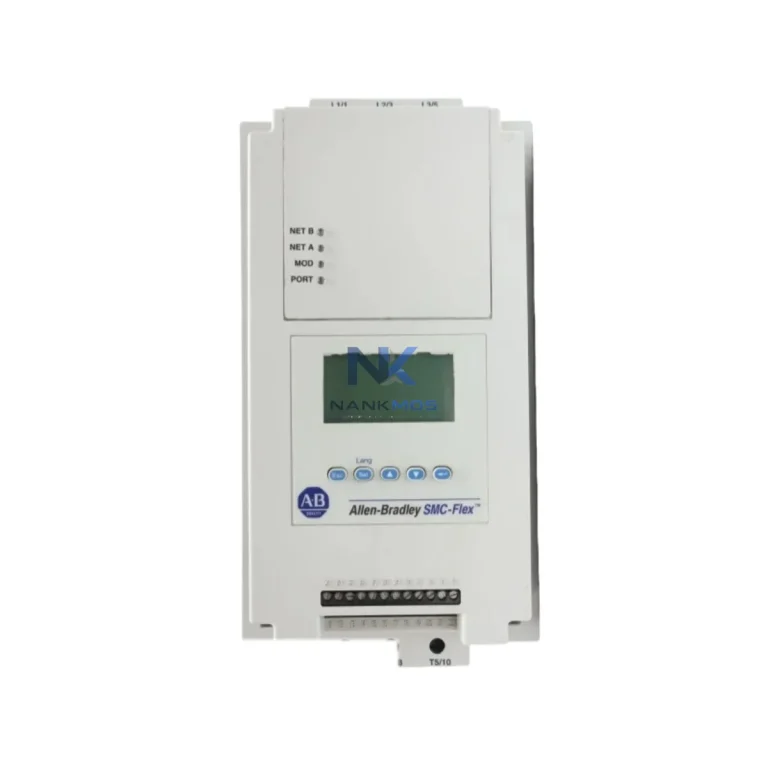
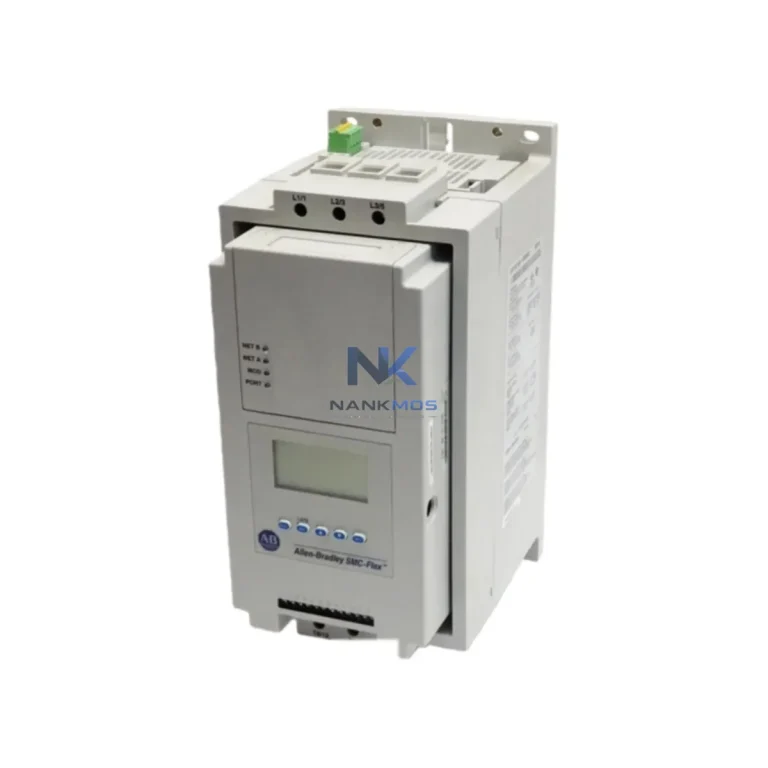
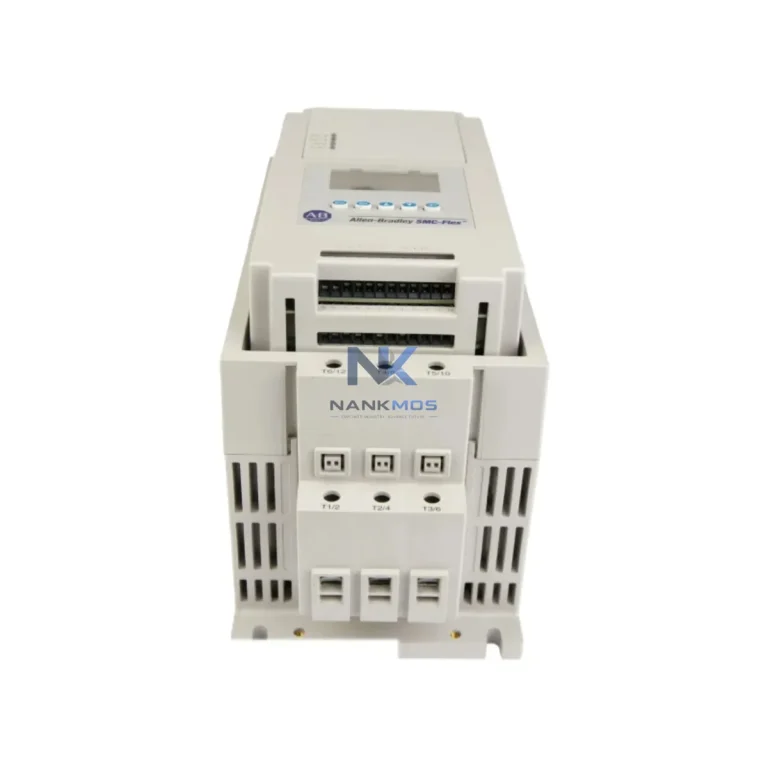
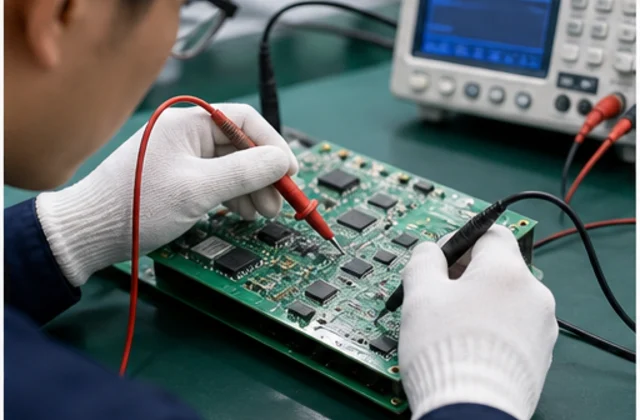
 Functional Inspection
100% tested on professional platforms to ensure stable performance.
Allen-Bradley 1794-OE4 is a NANKMOS industrial automation product record Listed under Flex I/O series and Business & Industrial > Automation, Control & Flow Devices > Programmable Logic Controllers. Confirm condition, availability, lead time, compatibility and documentation by email inquiry.
Brand names are used for identification only.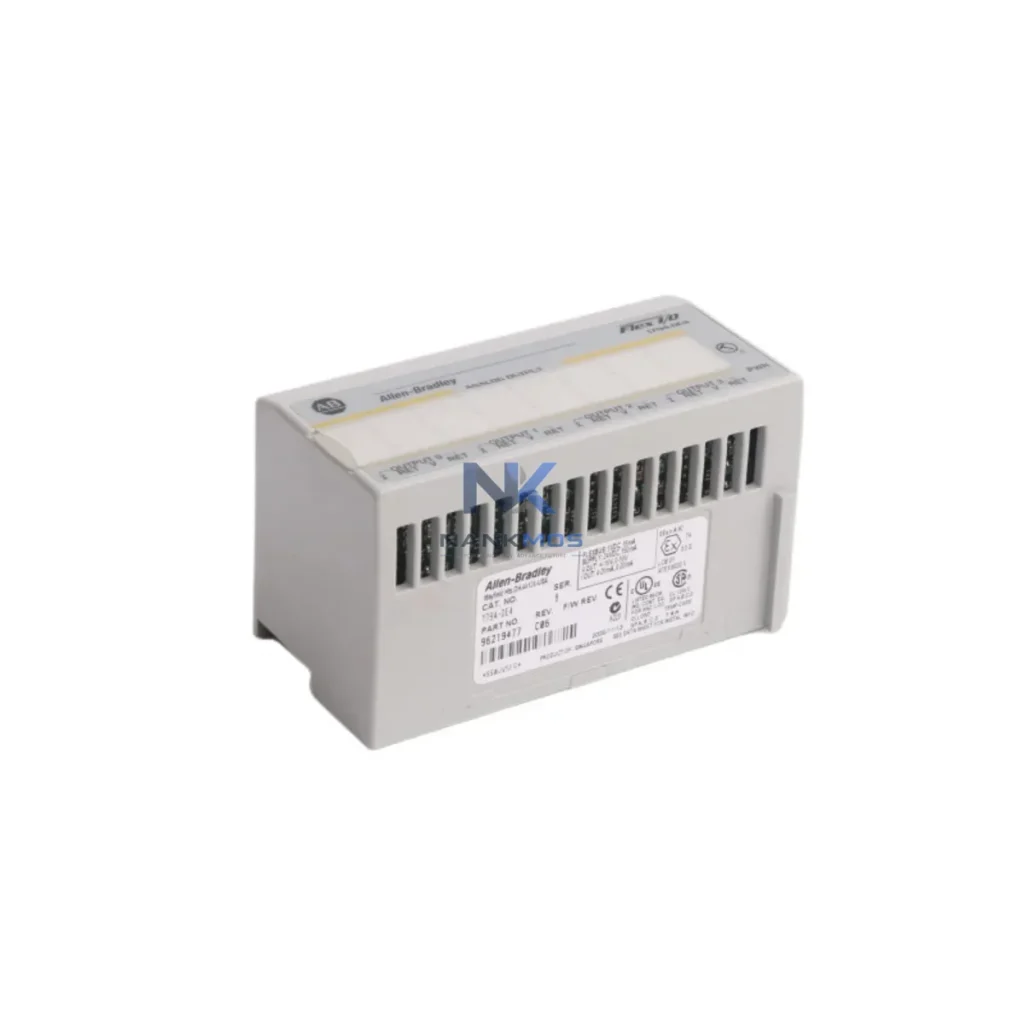
Allen-Bradley 1794-OE4 is a NANKMOS industrial automation product record Listed under Flex I/O series and Business & Industrial > Automation, Control & Flow Devices > Programmable Logic Controllers. Confirm condition, availability, lead time, compatibility and documentation by email inquiry.
| Manufacturer | Allen-Bradley |
|---|---|
| Application | Controller Processing & System Control |
| Part Number / Model | 1794-OE4 |
| Compatible System | Flex I/O |
| Series | Flex I/O |
| Condition Options | To Confirm |
| Module Type | Controller / CPU Module |
| Warranty | 12 Months |
| Packaging | Anti-static Bag / Secure Box |
| Shipping Methods | DHL / FedEx / UPS / Air / Sea |
| Availability | To Confirm |
| Lead Time | To Confirm |
| Documentation | Part number and revision checked before quote |
In modern smart manufacturing environments, the integrity of the analog signal chain is as critical as the digital backbone that carries it. The Allen-Bradley 1794-OE4 is a 4-point analog output module from Rockwell Automation's FLEX I/O platform — a field-proven, modular I/O architecture engineered for seamless integration across EtherNet/IP and ControlNet networks. Designed to bridge the gap between PLC control logic and field-level actuators, the 1794-OE4 delivers precision analog outputs (voltage or current) that drive proportional valves, variable-speed drives, positioners, and process control loops with deterministic accuracy.
At its core, the 1794-OE4 operates within the 1794 FLEX I/O backplane ecosystem, where it communicates upstream to Allen-Bradley ControlLogix or CompactLogix PLCs via the 1794-AENT EtherNet/IP adapter or the 1794-ACN15 ControlNet adapter. This architecture allows the module to participate directly in the plant-wide data fabric — transmitting real-time output status, diagnostic feedback, and channel-level fault data back to the controller and, by extension, to SCADA and HMI layers without additional protocol conversion overhead.
The 1794-OE4 sits at a pivotal node in the smart factory data chain. Consider a typical continuous process line: field sensors — pressure transmitters, flow meters, temperature probes — feed analog signals into companion input modules such as the 1794-IE8 (8-point analog input) or 1794-IRT8 (thermocouple/RTD input). These raw process values are digitized, transmitted across the FLEX I/O backplane, and forwarded via the 1794-AENT EtherNet/IP adapter to a ControlLogix L7x or CompactLogix L3x PLC running the process control algorithm.
The PLC's output logic then writes setpoint values back to the 1794-OE4, which converts them into precise analog signals — 4–20 mA current loops or 0–10 VDC voltage outputs — to command downstream actuators: proportional control valves, electro-pneumatic positioners, or the analog reference input of an Allen-Bradley PowerFlex 525 or PowerFlex 755 variable frequency drive. This closed-loop signal path — from sensor to PLC to analog output to drive — forms the backbone of process automation and energy-efficient motor control in smart manufacturing cells.
At the network layer, the EtherNet/IP connection established through the 1794-AENT adapter allows the 1794-OE4's channel data, output status, and fault diagnostics to be consumed simultaneously by the PLC controller, an Allen-Bradley PanelView Plus 7 HMI for operator visualization, and a plant-level SCADA system such as FactoryTalk View SE or Ignition by Inductive Automation. This multicast data model eliminates polling bottlenecks and ensures that every node in the control hierarchy receives consistent, time-stamped output data.
For facilities operating mixed-protocol environments — where legacy DeviceNet or ControlNet segments coexist with modern EtherNet/IP infrastructure — the FLEX I/O platform's adapter flexibility is a key advantage. The same 1794-OE4 module can be repositioned on a 1794-ADN DeviceNet adapter or a 1794-ACN15 ControlNet adapter without hardware modification, protecting capital investment while enabling phased network modernization. Edge gateway devices, such as the Moxa MGate MB3170 or ProSoft Technology MVI56E-MNET, can further bridge the 1794-OE4's data into Modbus TCP or OPC-UA streams for integration with cloud analytics platforms and MES systems.
Power integrity across the FLEX I/O rack is maintained by dedicated power supply modules such as the 1794-PS13, ensuring that analog output accuracy is not compromised by backplane voltage fluctuations — a critical consideration in high-density I/O installations where multiple analog modules share a common rail.
Protocol Fragmentation: Many production sites operate a patchwork of communication standards — EtherNet/IP on the controller backbone, ControlNet on time-critical motion segments, and legacy DeviceNet or Modbus RTU on older field devices. The 1794-OE4's adapter-agnostic design means it can be deployed on any of these network segments without re-engineering the I/O hardware, reducing integration cost and commissioning time.
Data Silos and Production Transparency: When analog output modules operate in isolation — without network-level diagnostics — maintenance teams have no visibility into output drift, channel faults, or wiring failures until a process upset occurs. The 1794-OE4's EtherNet/IP connectivity exposes channel-level diagnostic data (open-circuit detection, output clamping status, calibration offsets) directly to the SCADA historian, enabling proactive maintenance and reducing unplanned downtime.
Remote Monitoring and Alarm Tracking: In geographically distributed facilities or unmanned substations, the ability to monitor analog output status remotely is essential. Through the EtherNet/IP network, the 1794-OE4's output values and fault flags are continuously available to remote HMI clients and SCADA alarm servers, enabling operators to detect and respond to process deviations without physical site visits.
System Scalability: As production capacity grows, the FLEX I/O platform scales linearly — additional 1794-OE4 modules can be added to existing backplanes, or new FLEX I/O racks can be distributed across the plant floor and connected to the same EtherNet/IP network. This distributed I/O architecture eliminates the need for centralized marshalling cabinets and reduces field wiring costs significantly.
Shipment Testing and Inventory Assurance: Every 1794-OE4 unit supplied by NANKMOS undergoes functional output verification and communication handshake testing prior to dispatch. Stock is maintained in climate-controlled storage to preserve module integrity, and all units are covered by a 12-month warranty from the date of shipment — providing procurement teams with the confidence to specify refurbished and surplus Allen-Bradley components without compromising system reliability.
Q1: What is the communication latency of the 1794-OE4 over EtherNet/IP?The 1794-OE4 communicates via the 1794-AENT adapter using EtherNet/IP implicit (I/O) messaging. Typical requested packet intervals (RPI) range from 5 ms to 500 ms, configurable in RSLogix 5000 / Studio 5000. For most analog process control applications, an RPI of 20–50 ms provides sufficient update rates without overloading the network.
Q2: Is the 1794-OE4 compatible with non-Rockwell PLC platforms?Yes, with appropriate protocol conversion. Edge gateways supporting EtherNet/IP client functionality — such as the ProSoft MVI56E-MNET or Moxa MGate series — can map the 1794-OE4's output data to Modbus TCP, PROFIBUS DP, or OPC-UA, enabling integration with Siemens, Mitsubishi, Schneider, and other PLC platforms. Direct native compatibility requires a Rockwell Automation controller.
Q3: How does the 1794-OE4 maintain network stability in high-noise industrial environments?The FLEX I/O backplane uses differential signaling and optical isolation between the backplane bus and field-side analog circuits. EtherNet/IP network stability is further ensured by using industrial-grade managed switches — such as the Allen-Bradley Stratix 5700 or Hirschmann RS20 — with IGMP snooping and storm control enabled to prevent multicast flooding from degrading I/O update rates.
Q4: What does the 12-month warranty cover, and how is it claimed?The 12-month warranty covers manufacturing defects, functional output failures, and communication faults verified through NANKMOS's pre-shipment test protocol. Warranty claims are processed via email at [email protected] or by phone at +86 18359268345. NANKMOS will arrange replacement or repair within the warranty period, with return shipping coordinated on a case-by-case basis depending on the fault diagnosis.
Functional Inspection100% tested on professional platforms to ensure stable performance.
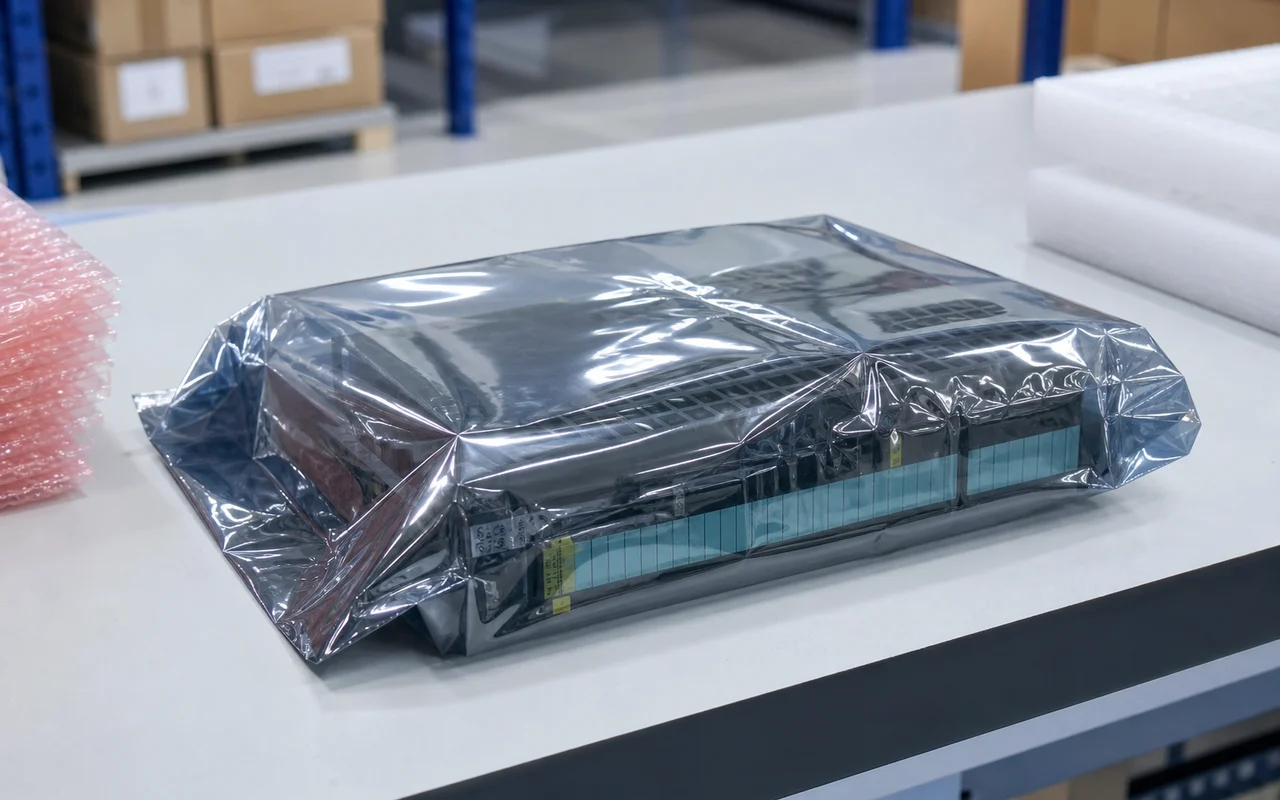 Anti-static Packaging
Modules are packed in anti-static bags to prevent electrostatic damage.
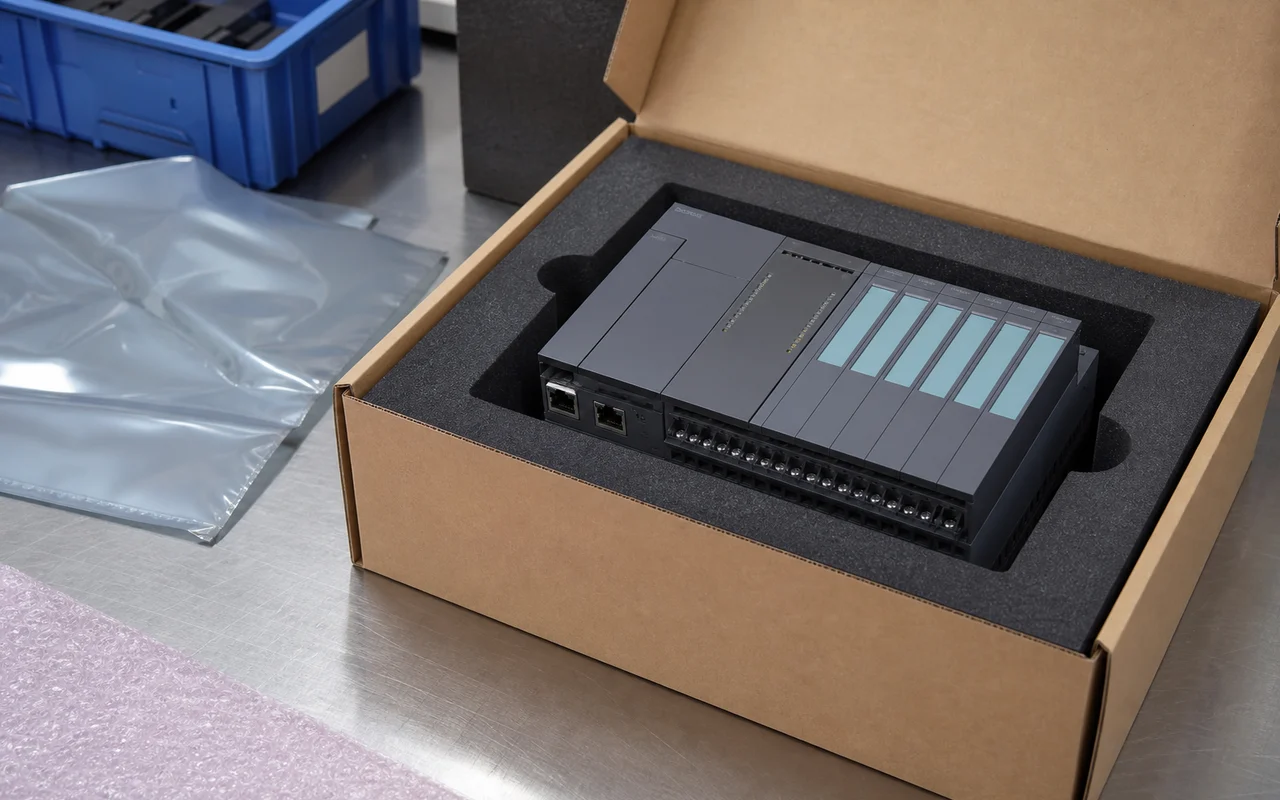 Secure Export Packing
Cushion protection and strong cartons ensure safe transportation.
 Worldwide Shipping
Global logistics network supports air, sea and express delivery.
 Documentation Check
Part number, revision and compatibility verified before shipment.
 After-sales Support
Professional technical support to help resolve your issues.