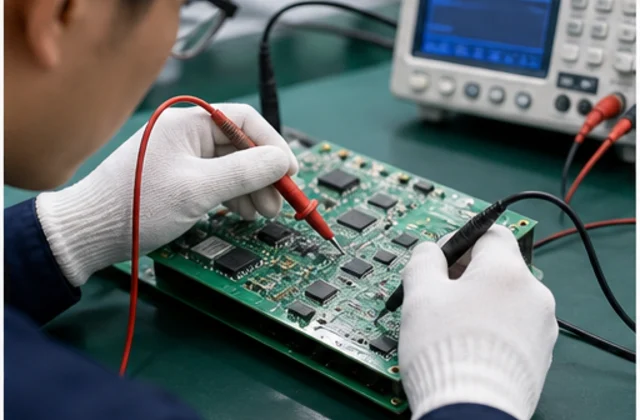
 Functional Inspection
100% tested on professional platforms to ensure stable performance.
Schneider Electric LC1D620M7C is a NANKMOS industrial automation product record Listed under TeSys series and Business & Industrial > Automation, Control & Flow Devices. Confirm condition, availability, lead time, compatibility and documentation by email inquiry.
Brand names are used for identification only.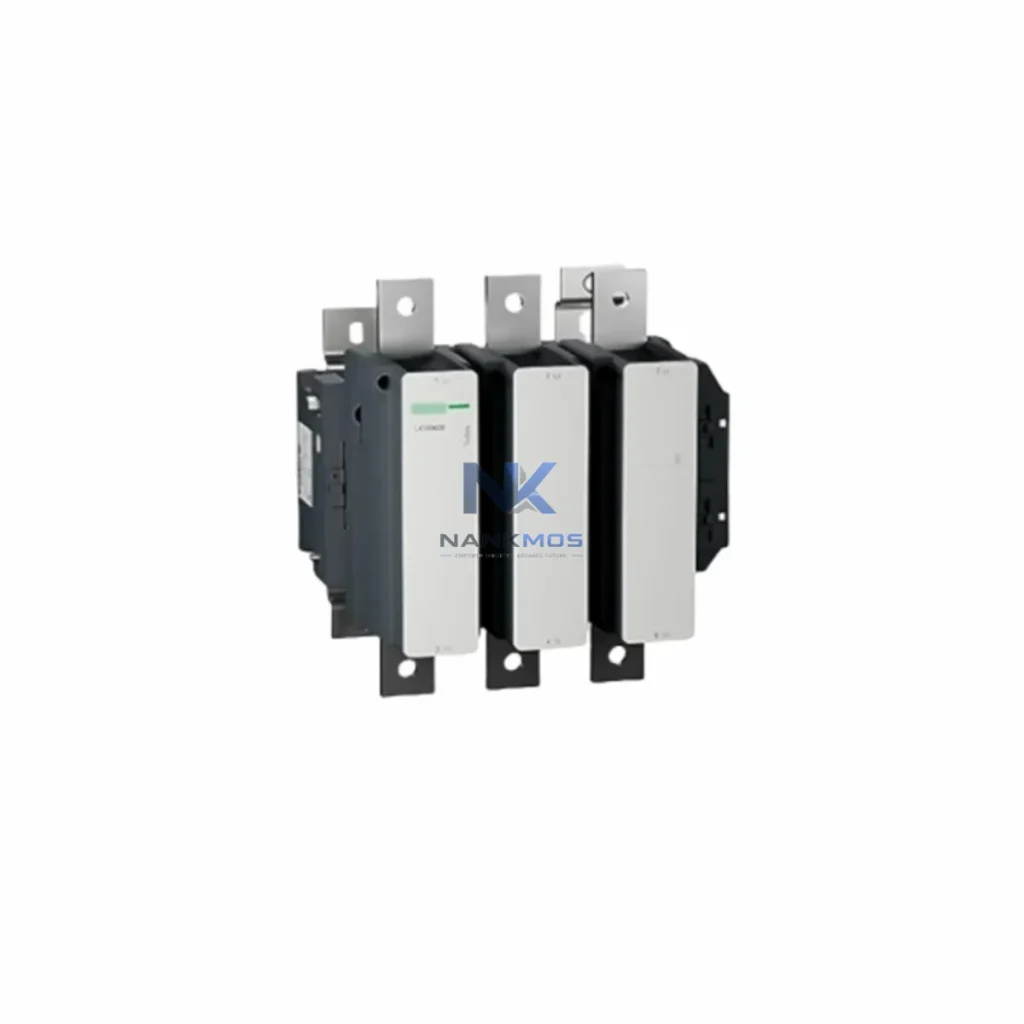
Schneider Electric LC1D620M7C is a NANKMOS industrial automation product record Listed under TeSys series and Business & Industrial > Automation, Control & Flow Devices. Confirm condition, availability, lead time, compatibility and documentation by email inquiry.
| Manufacturer | Schneider Electric |
|---|---|
| Application | Industrial Automation Maintenance |
| Part Number / Model | LC1D620M7C |
| Compatible System | TeSys |
| Series | TeSys |
| Condition Options | To Confirm |
| Module Type | Automation, Control & Flow Devices |
| Warranty | 12 Months |
| Packaging | Anti-static Bag / Secure Box |
| Shipping Methods | DHL / FedEx / UPS / Air / Sea |
| Availability | To Confirm |
| Lead Time | To Confirm |
| Documentation | Part number and revision checked before quote |
The Schneider Electric LC1D620M7C is a high-performance TeSys D series magnetic contactor engineered for energy-efficient motor switching and load management in demanding industrial environments. Rated for 620A AC-1 duty and 690V AC operation, this contactor delivers precise, low-loss switching that directly reduces reactive power draw and thermal stress across production line infrastructure. Designed for integration into smart factory architectures, the LC1D620M7C supports seamless coordination with upstream power management systems and downstream drive and motor assemblies, making it a cornerstone component for facilities targeting measurable reductions in energy consumption and unplanned downtime.
In a fully integrated smart factory, the LC1D620M7C operates as the primary switching element within a coordinated energy management chain. When paired with a Schneider Electric Modicon M340 or M580 PLC, the contactor receives switching commands via discrete output modules, enabling precise on/off sequencing that eliminates unnecessary motor run time during low-demand production windows. This alone can account for a 5–15% reduction in motor-related energy consumption across a multi-shift operation.
For variable-speed applications, the LC1D620M7C is commonly deployed in bypass or star-delta configurations alongside Schneider Altivar ATV630 or ATV930 variable frequency drives. The contactor handles the line-side switching while the VFD manages soft-start ramp profiles and speed regulation, together eliminating inrush current spikes that would otherwise stress the upstream distribution transformer and increase peak demand charges. The TeSys D auxiliary contact blocks — such as the LA1DN11 — provide real-time feedback signals to the PLC or HMI, confirming contactor state and enabling closed-loop load monitoring.
Power quality monitoring is enhanced when the LC1D620M7C is installed in panels equipped with Schneider PowerLogic PM5000 series power meters or ION7650 energy analyzers. These instruments capture per-phase current, voltage, power factor, and harmonic distortion data at the contactor's load side, feeding structured energy data to the plant SCADA system — typically a Wonderware or Schneider EcoStruxure Plant platform — where load profiles are trended and anomalies flagged for predictive maintenance action.
On the I/O side, Schneider TM3 expansion modules connected to the Modicon PLC handle the digital status signals from the LC1D620M7C's auxiliary contacts, while analog input modules process current transformer signals to calculate real-time load factor. This data loop supports automatic load shedding routines: when total facility demand approaches a contractual threshold, the SCADA system can command the PLC to open selected LC1D620M7C contactors on non-critical loads, preventing demand charge penalties without manual operator intervention.
For operator visibility, a Magelis HMIGTO or HMISCU HMI panel displays contactor status, accumulated run hours, and energy consumption per motor circuit. Maintenance teams use this data to schedule contactor inspections based on actual switching cycles rather than fixed calendar intervals, extending service life and reducing spare parts expenditure. The LC1D620M7C's robust silver-alloy contact tips are rated for millions of AC-3 operations, making it well-suited to high-cycle applications such as conveyor drives, cooling tower fans, and injection moulding machine auxiliaries.
Factories operating large motor loads — compressors, pumps, fans, and conveyor systems — face a common challenge: motors that run continuously at partial load consume disproportionate amounts of energy relative to their productive output. The LC1D620M7C addresses this at the switching level by enabling rapid, reliable load connection and disconnection without the arc erosion and contact welding that afflict lower-grade contactors under high-current duty.
When integrated into a demand-response strategy, the LC1D620M7C allows production schedulers to stagger motor start sequences, preventing simultaneous inrush events that spike the facility's apparent power demand. Combined with Altivar soft-starter or VFD ramp control, this staggered switching approach can reduce peak kVA demand by 20–30% in facilities with multiple large motors, directly lowering monthly electricity costs tied to demand tariffs.
Thermal load management is another key benefit. By ensuring motors are only energised when production demand requires it — controlled via PLC logic and SCADA scheduling — the LC1D620M7C reduces the cumulative heat generated in motor windings, switchgear enclosures, and cable trays. Lower thermal stress translates to extended insulation life, fewer nuisance trips on thermal overload relays such as the Schneider LRD series, and reduced cooling requirements for electrical rooms, further compounding energy savings.
Production line rhythm (takt time) stability is also improved. Because the LC1D620M7C provides consistent, bounce-free contact closure, motor start times are repeatable to within milliseconds. This predictability is critical in automated lines where conveyor indexing, robotic pick-and-place cycles, and press operations must be synchronised. Erratic switching caused by worn or undersized contactors introduces timing jitter that accumulates into throughput losses; the LC1D620M7C eliminates this variable.
All units supplied are drawn from verified in-stock inventory, subjected to pre-shipment functional testing covering coil energisation, contact resistance measurement, and auxiliary contact continuity checks. Each LC1D620M7C is covered by a 12-Month Warranty from the date of shipment, with technical support available for installation, commissioning, and compatibility queries.
Q1: What energy savings can I expect by deploying the LC1D620M7C in my motor control centre? Actual savings depend on your load profile and control strategy. In facilities where motors previously ran continuously, implementing PLC-controlled switching via the LC1D620M7C — combined with VFD speed regulation on variable-torque loads — typically yields 10–30% reductions in motor-related energy consumption. Power meter data from Schneider PowerLogic instruments can be used to baseline and verify savings before and after deployment.
Q2: Is the LC1D620M7C compatible with my existing Schneider TeSys D overload relay and control wiring? Yes. The LC1D620M7C is fully compatible with the TeSys D range of thermal overload relays (LRD series), auxiliary contact blocks (LA1D series), and surge suppression modules. It mounts directly onto standard DIN rail or panel back-plate and accepts standard 35mm DIN rail accessories. Coil wiring follows the standard A1/A2 convention, making it a drop-in replacement for existing TeSys D contactors of equivalent frame size.
Q3: What is the recommended replacement or upgrade path if I am currently using an older LC1D or LC1F series contactor? For applications currently using LC1D115 through LC1D500 contactors at partial capacity, upgrading to the LC1D620M7C provides headroom for load growth without requiring panel redesign. If migrating from the LC1F or GV series, verify coil voltage compatibility (M7C = 220V AC) and auxiliary contact block mounting dimensions before installation. Our technical team can provide a compatibility checklist on request.
Q4: What does the 12-Month Warranty cover, and how is pre-shipment testing conducted? The 12-Month Warranty covers manufacturing defects, contact failure under normal operating conditions, and coil burnout not attributable to overvoltage or incorrect installation. Pre-shipment testing includes coil pull-in and drop-out voltage verification, main contact resistance measurement (target <100μΩ per pole), and auxiliary contact open/close continuity confirmation. A test record is available upon request. Units are shipped in original or equivalent protective packaging to prevent transit damage.
Functional Inspection100% tested on professional platforms to ensure stable performance.
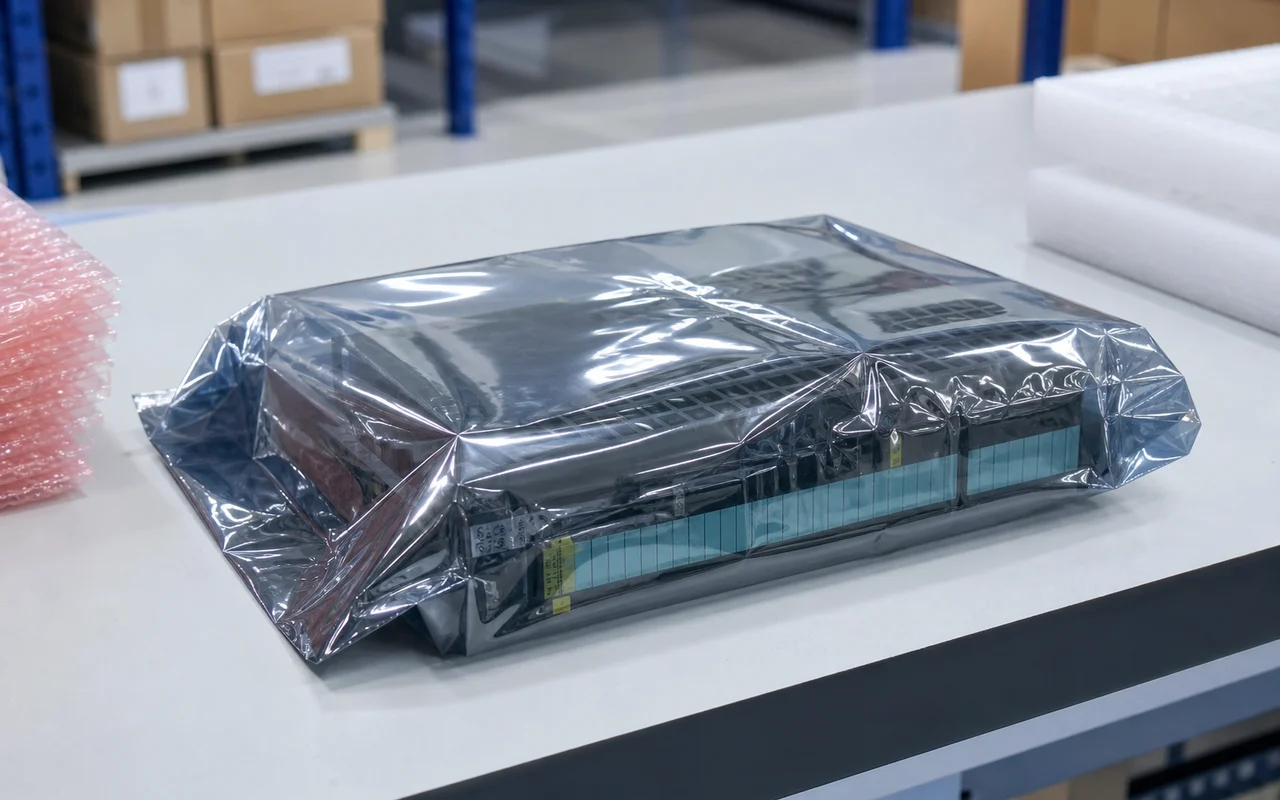 Anti-static Packaging
Modules are packed in anti-static bags to prevent electrostatic damage.
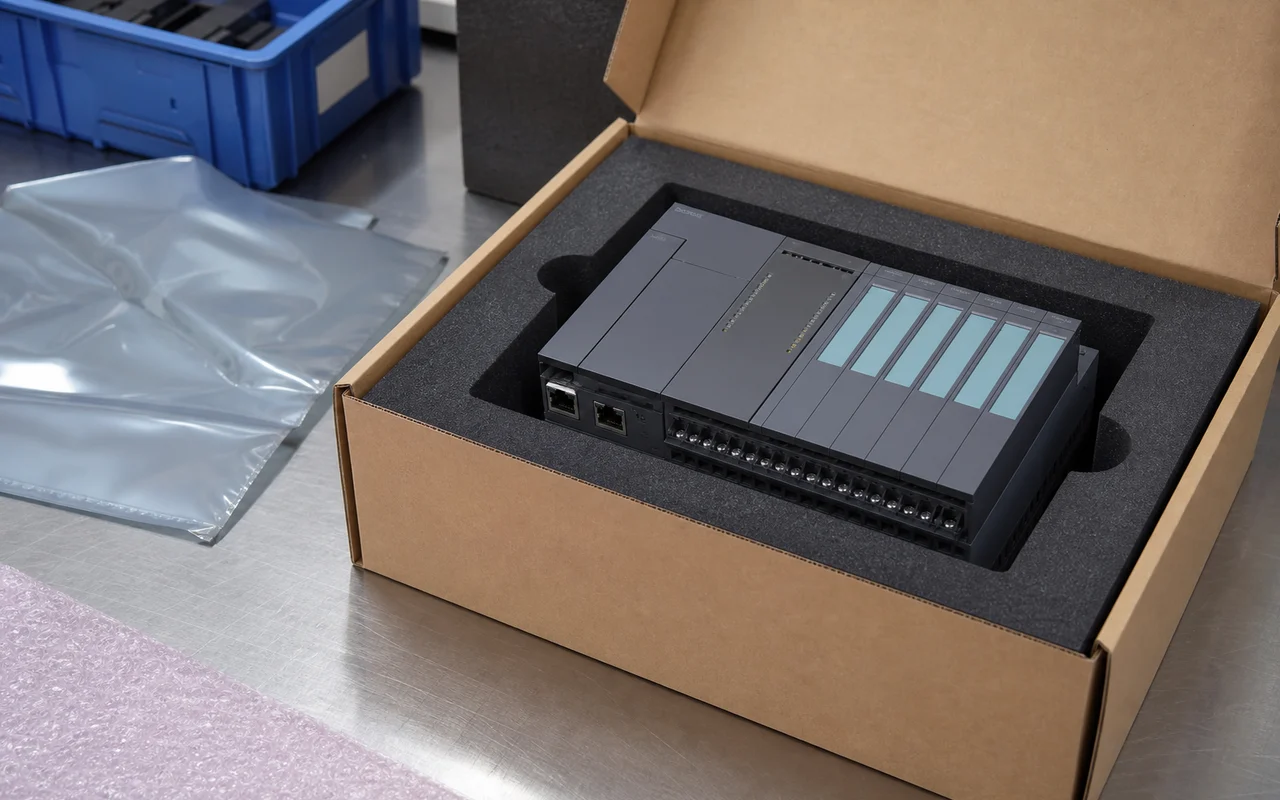 Secure Export Packing
Cushion protection and strong cartons ensure safe transportation.
 Worldwide Shipping
Global logistics network supports air, sea and express delivery.
 Documentation Check
Part number, revision and compatibility verified before shipment.
 After-sales Support
Professional technical support to help resolve your issues.