Functional Inspection
100% tested on professional platforms to ensure stable performance.
Schneider Electric iC65N 1P C1A is a NANKMOS industrial automation product record Listed under Other series series and Business & Industrial > Automation, Control & Flow Devices. Confirm condition, availability, lead time, compatibility and documentation by email inquiry.
Brand names are used for identification only.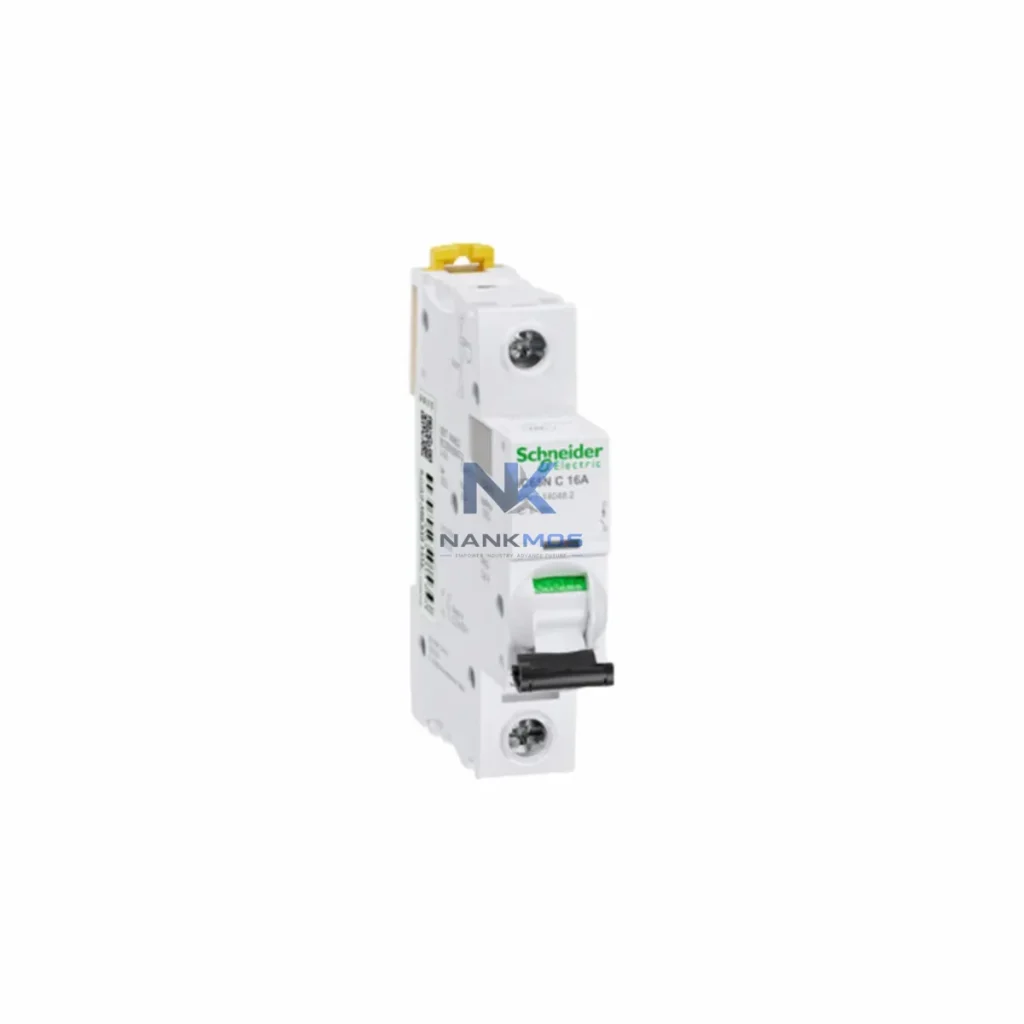
Schneider Electric iC65N 1P C1A is a NANKMOS industrial automation product record Listed under Other series series and Business & Industrial > Automation, Control & Flow Devices. Confirm condition, availability, lead time, compatibility and documentation by email inquiry.
| Manufacturer | Schneider Electric |
|---|---|
| Application | Industrial Automation Maintenance |
| Part Number / Model | iC65N 1P C1A |
| Compatible System | Confirmed by inquiry |
| Condition Options | To Confirm |
| Module Type | Automation, Control & Flow Devices |
| Warranty | 12 Months |
| Packaging | Anti-static Bag / Secure Box |
| Shipping Methods | DHL / FedEx / UPS / Air / Sea |
| Availability | To Confirm |
| Lead Time | To Confirm |
| Documentation | Part number and revision checked before quote |
The Schneider Electric A9F18101 is a 1-Pole, C1A-rated Miniature Circuit Breaker from the Acti9 iC60N series, engineered for precision overcurrent protection in energy-conscious industrial environments. Designed to operate within smart factory architectures, this MCB delivers reliable load isolation, fault interruption, and energy-flow governance across low-voltage distribution panels, motor control centres, and production-line sub-circuits. Its compact DIN-rail form factor and IEC 60898-1 compliance make it a foundational component in any power-aware automation strategy where uptime, thermal stability, and energy efficiency are non-negotiable.
In modern manufacturing facilities, uncontrolled energy consumption at the circuit level is one of the most overlooked sources of operational cost. The A9F18101 addresses this directly by providing deterministic trip characteristics that prevent overcurrent events from cascading into broader system faults — events that not only damage equipment but also generate significant reactive energy losses. By maintaining clean, stable circuit conditions, this MCB reduces thermal load on downstream components, extends the service life of connected devices, and supports the predictive maintenance frameworks that Industry 4.0 demands.
The A9F18101 does not operate in isolation — it is most effective when integrated into a layered, power-aware automation architecture. In a typical smart factory deployment, this MCB sits upstream of critical loads such as Schneider Electric TeSys D LC1D series contactors, which handle motor switching duties for conveyor drives, pump stations, and HVAC compressors. Paired with a Schneider Electric PM5000 series PowerLogic power meter, the A9F18101's circuit can be continuously monitored for real-time energy consumption, power factor deviation, and harmonic distortion — data that feeds directly into the plant's energy management system (EMS).
For variable-speed applications, the A9F18101 provides upstream protection for Schneider Electric Altivar ATV320 variable frequency drives (VFDs), which regulate motor speed and torque to match actual production demand rather than running at fixed full-load. This combination — MCB protection plus VFD speed control — is one of the most effective strategies for reducing motor energy consumption by 20–50% in pump and fan applications. The Altivar ATV320 also communicates over Modbus RTU and CANopen, enabling the plant's Modicon M340 or M580 PLC to dynamically adjust drive parameters based on production schedules, sensor feedback, and energy pricing signals.
On the I/O and sensing layer, Schneider Electric Acti9 iEM3000 series energy meters can be installed in the same distribution board as the A9F18101 to provide per-circuit energy sub-metering. This granular data is invaluable for identifying energy waste at the machine level — a capability that generic panel-level metering cannot provide. The iEM3000 communicates via Modbus TCP/IP to the plant's EcoStruxure Power Monitoring Expert (PME) SCADA platform, where energy KPIs are visualised, alarmed, and reported in real time.
For safety and control integration, the A9F18101 can be paired with Schneider Electric Acti9 iACT24 auxiliary contacts and iOF+SD24 combined fault signal contacts, which relay trip status to the PLC's digital input modules — such as the Modicon TM3 I/O expansion modules — enabling automated fault response routines without manual panel inspection. This closed-loop feedback architecture is essential for achieving the sub-second fault response times that modern high-speed production lines require.
At the HMI layer, operators interact with the energy and protection system through Schneider Electric Magelis HMIGTO series touchscreen panels, which display real-time circuit status, energy consumption trends, and maintenance alerts. When a trip event occurs on the A9F18101's circuit, the HMI immediately surfaces the fault location, probable cause, and recommended corrective action — dramatically reducing mean time to repair (MTTR) and minimising production downtime.
Energy optimisation in industrial production is not achieved through a single device — it is the result of systematic, coordinated control across every layer of the electrical and automation architecture. The Schneider A9F18101 contributes to this goal at the most fundamental level: ensuring that every ampere flowing through the protected circuit is doing productive work, not generating heat, noise, or reactive losses.
In high-density production environments — automotive assembly, food and beverage processing, pharmaceutical manufacturing, semiconductor fabrication — the cumulative effect of dozens or hundreds of properly protected sub-circuits is substantial. Each A9F18101 installation eliminates the risk of sustained overcurrent conditions that would otherwise force connected equipment to operate outside its rated thermal envelope. Equipment running hot consumes more energy, degrades faster, and is more likely to fail unexpectedly — all of which translate directly into higher operating costs and lower overall equipment effectiveness (OEE).
The C-curve trip characteristic of the A9F18101 is specifically calibrated for loads with moderate inrush currents — including small motors, solenoid valves, and transformer primaries — ensuring that legitimate start-up transients do not cause nuisance tripping while still providing robust protection against genuine fault conditions. This selectivity is critical in production environments where an unnecessary trip on one circuit can halt an entire production cell, triggering a cascade of downstream delays and energy-intensive restart sequences.
From a predictive maintenance perspective, the A9F18101's consistent trip behaviour provides a reliable baseline for condition monitoring. When integrated with the plant's SCADA system via auxiliary contacts and energy meters, maintenance teams can track trip frequency, correlate events with production data, and identify deteriorating insulation or overloaded circuits before they cause unplanned downtime. This shift from reactive to predictive maintenance is one of the highest-value outcomes of a properly instrumented low-voltage distribution system.
All units are supplied from verified stock, subject to pre-shipment functional testing, and covered by a 12-Month Warranty from the date of shipment. Global logistics support ensures fast delivery to manufacturing sites across Asia, Europe, the Middle East, and the Americas.
Q1: How does the A9F18101 contribute to measurable energy savings on a production line? The A9F18101 prevents overcurrent conditions that cause resistive heating losses in cables, connectors, and downstream equipment. By maintaining clean circuit conditions, it reduces reactive energy consumption and thermal stress — both of which inflate energy bills and accelerate component wear. When combined with sub-metering via Acti9 iEM3000 energy meters and monitored through EcoStruxure PME, the per-circuit energy data enables targeted optimisation actions that can reduce site energy consumption by 5–15% in the first year of deployment.
Q2: Is the A9F18101 compatible with Schneider Electric's EcoStruxure architecture and third-party PLC systems? Yes. The A9F18101 is fully compatible with the EcoStruxure Power and Grid architecture when paired with Acti9 iACT/iOF auxiliary contacts and Acti9 iEM energy meters. It is also system-agnostic at the protection level — the MCB itself requires no communication interface and integrates with any PLC platform (Siemens S7, Allen-Bradley ControlLogix, Mitsubishi MELSEC, etc.) via standard digital I/O signals from auxiliary contacts. For Modbus-connected monitoring, the associated iEM3000 meters handle all communication independently of the MCB.
Q3: Can the A9F18101 replace legacy MCBs from other manufacturers, and what is the replacement process? The A9F18101 follows IEC 60898-1 standard dimensions and DIN rail mounting, making it dimensionally compatible with most 1P MCB positions in standard distribution boards. Before replacement, verify the existing circuit's rated current, trip curve, and breaking capacity requirements. The A9F18101's 6 kA Icn is suitable for most LV industrial sub-circuits; for higher fault-level environments, consider the Acti9 iC60H (10 kA) or iC60L (15 kA) variants. Always isolate the circuit upstream before replacement and verify correct operation with a functional test after installation.
Q4: What does the 12-Month Warranty cover, and how is stock availability managed? The 12-Month Warranty covers manufacturing defects, premature trip mechanism failure, and rated performance deviations under normal operating conditions. It does not cover damage resulting from installation errors, operation outside rated parameters, or physical abuse. Stock is maintained in our warehouse and subject to pre-shipment functional inspection. Lead times for standard quantities are typically 1–5 business days for in-stock items. For project quantities or urgent requirements, contact our team directly to confirm availability and arrange expedited dispatch.
Functional Inspection100% tested on professional platforms to ensure stable performance.
 Anti-static Packaging
Modules are packed in anti-static bags to prevent electrostatic damage.
 Secure Export Packing
Cushion protection and strong cartons ensure safe transportation.
 Worldwide Shipping
Global logistics network supports air, sea and express delivery.
 Documentation Check
Part number, revision and compatibility verified before shipment.
 After-sales Support
Professional technical support to help resolve your issues.