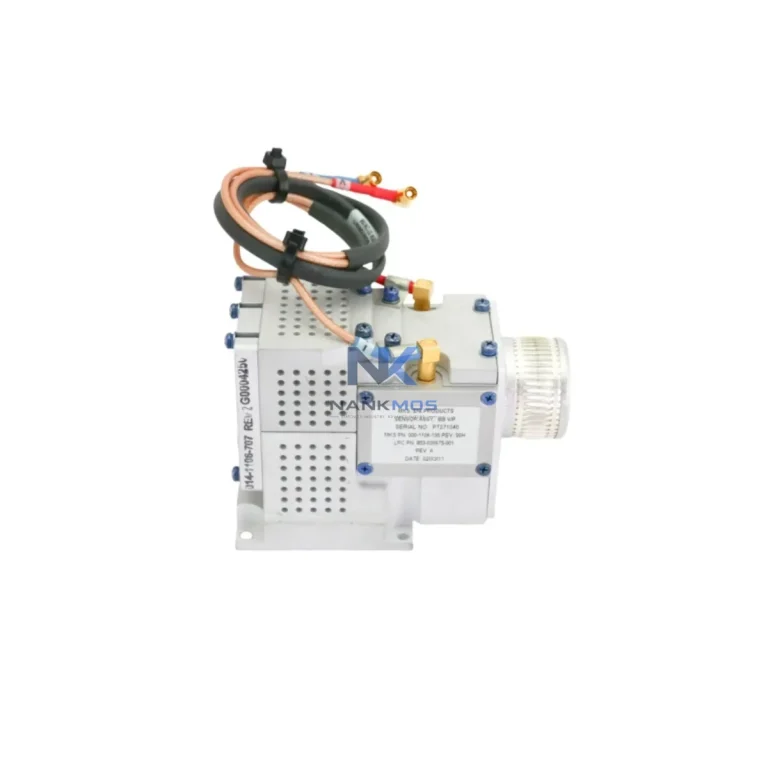
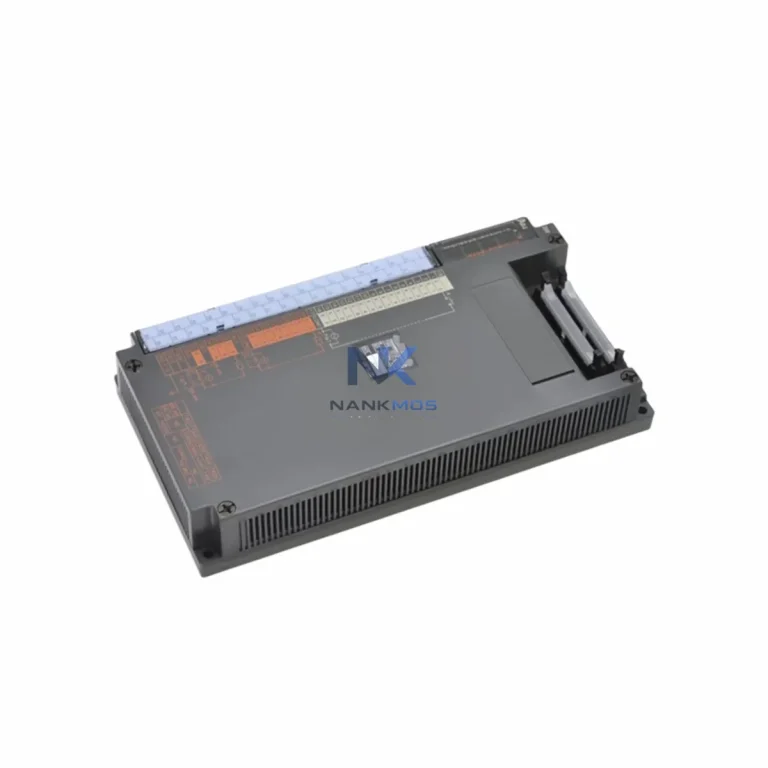
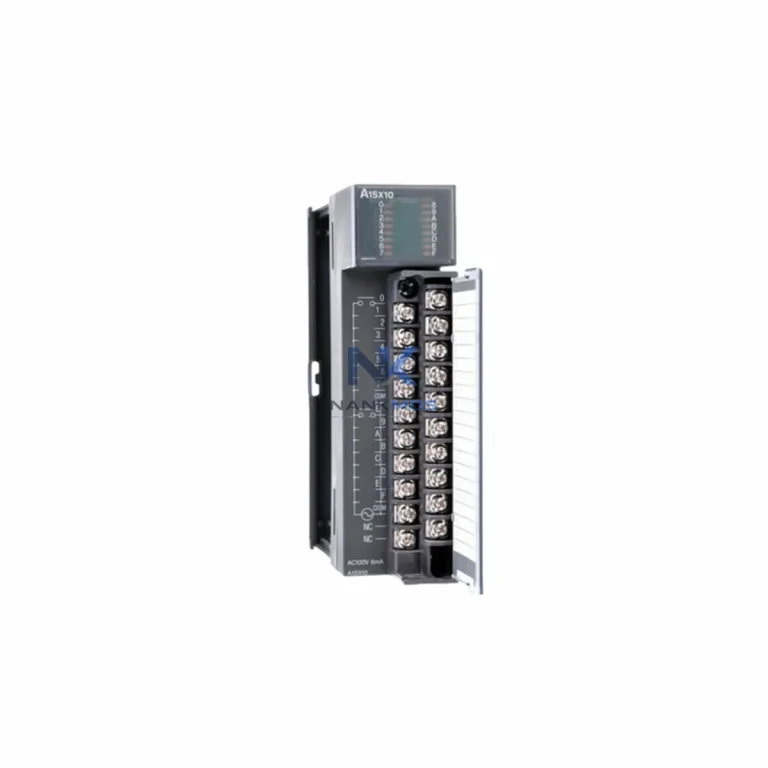
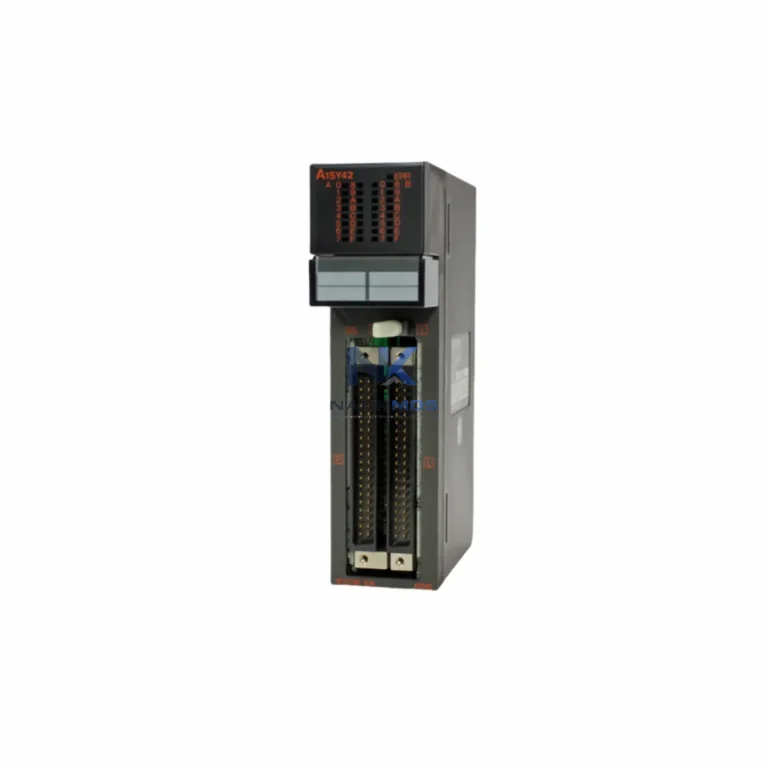
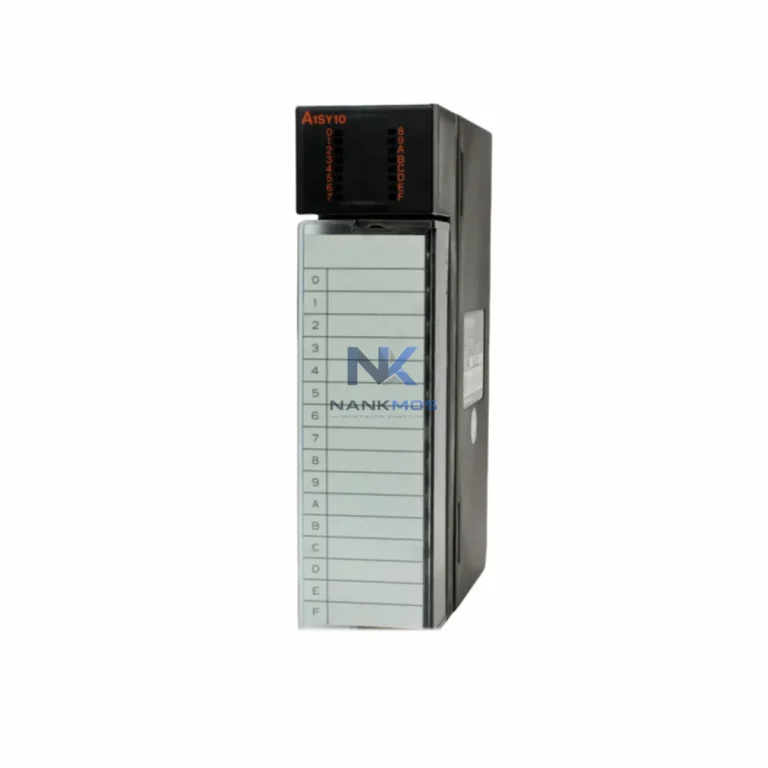
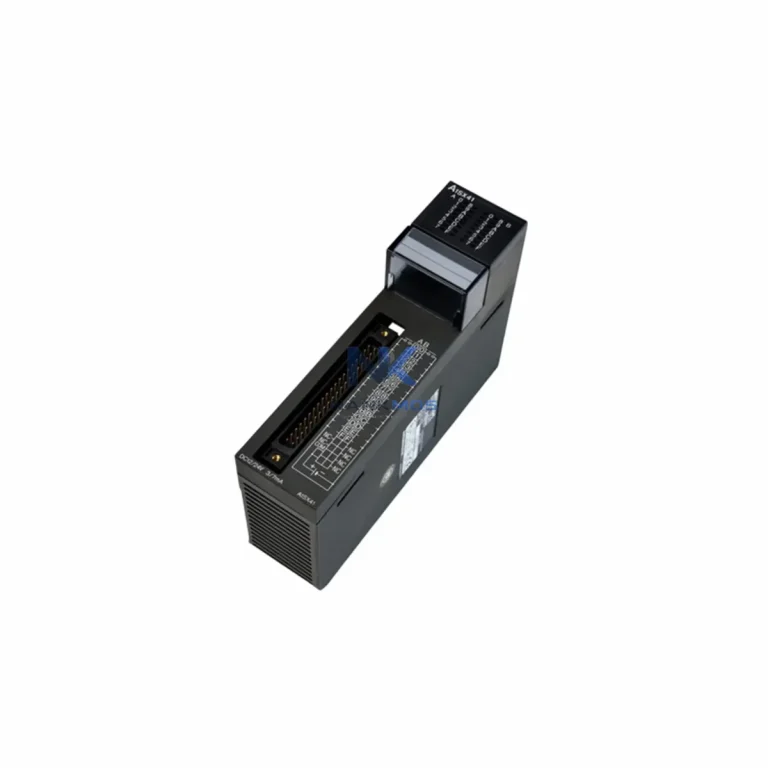
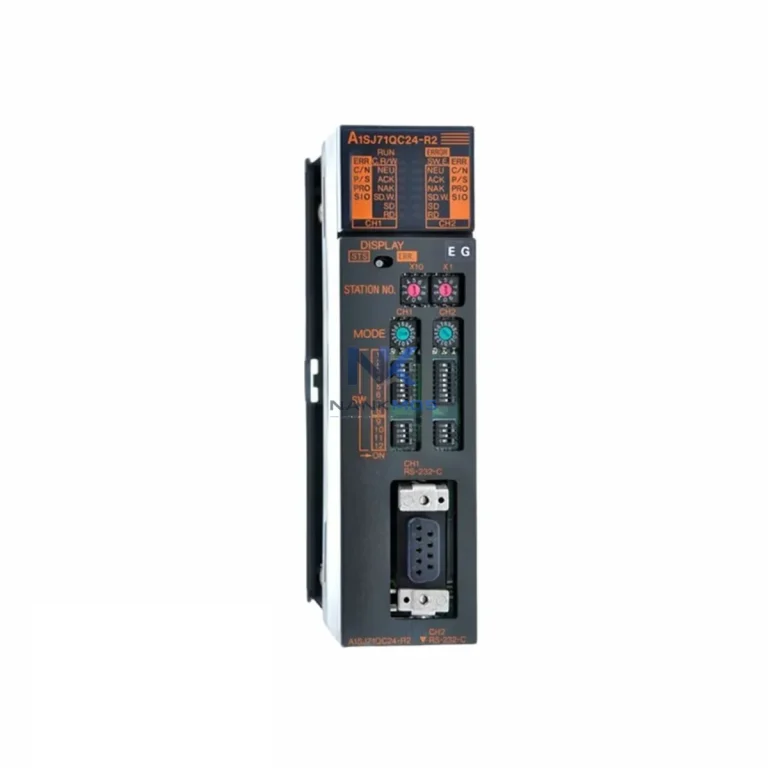
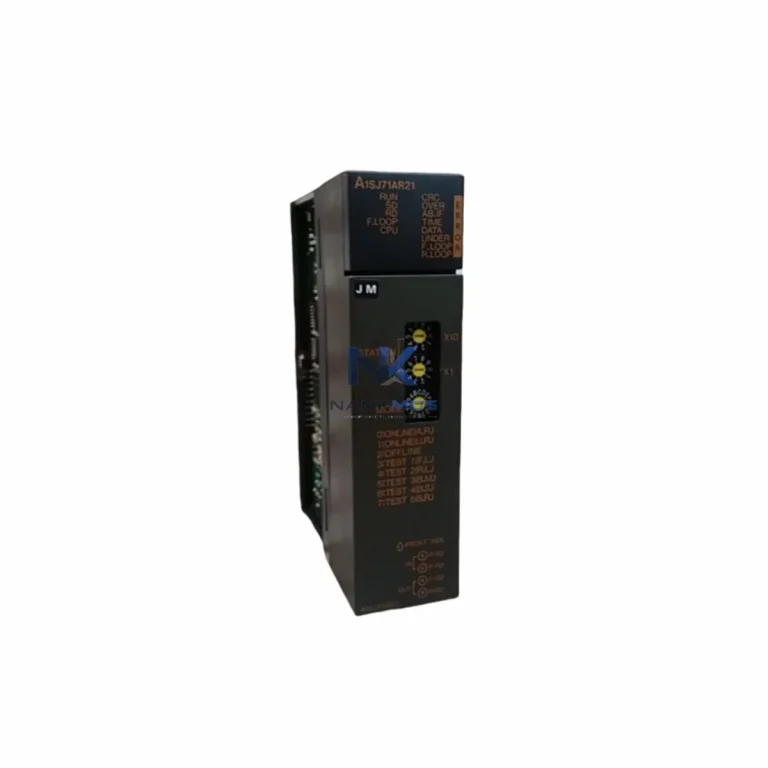
Functional Inspection
100% tested on professional platforms to ensure stable performance.
Mitsubishi Electric A6TBXY36 is a NANKMOS industrial automation product record Listed under MELSEC-A series and Business & Industrial > Automation, Control & Flow Devices > Programmable Logic Controllers. Confirm condition, availability, lead time, compatibility and documentation by email inquiry.
Brand names are used for identification only.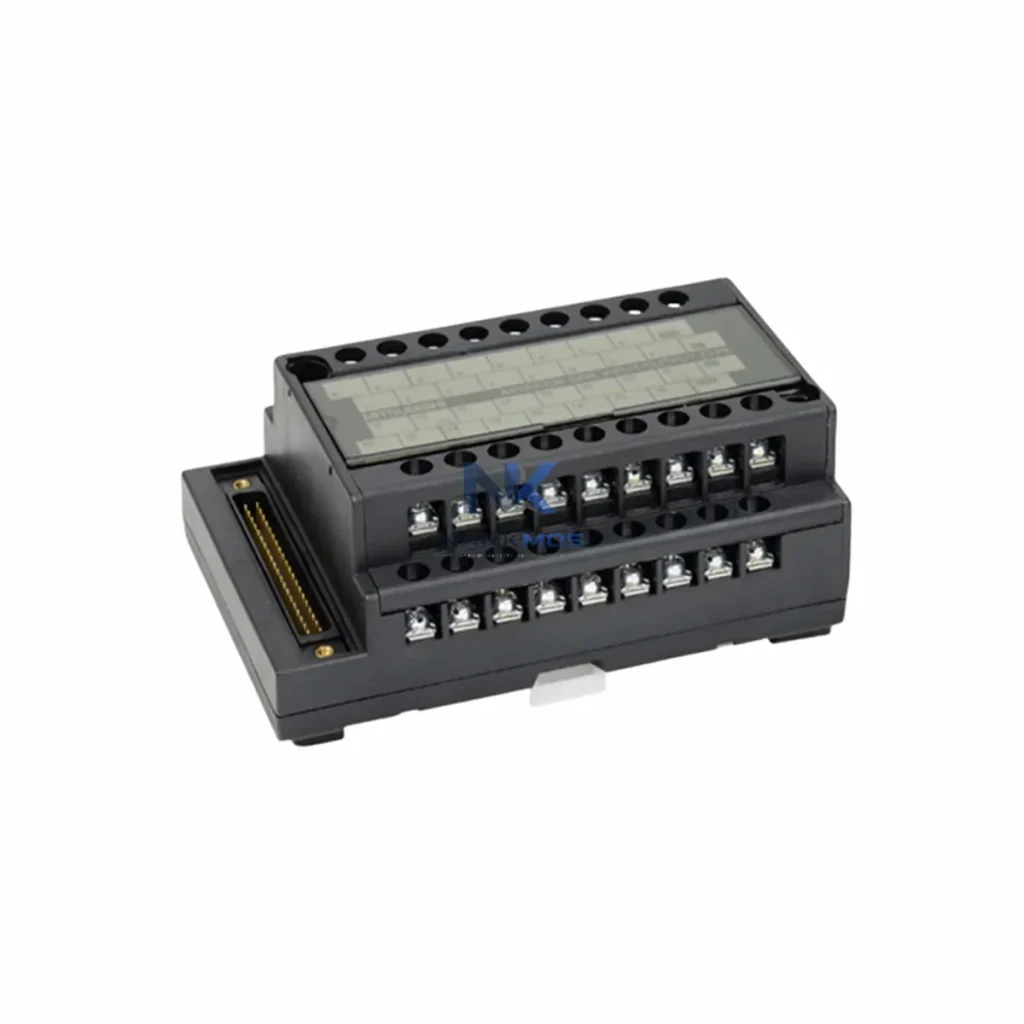
Mitsubishi Electric A6TBXY36 is a NANKMOS industrial automation product record Listed under MELSEC-A series and Business & Industrial > Automation, Control & Flow Devices > Programmable Logic Controllers. Confirm condition, availability, lead time, compatibility and documentation by email inquiry.
| Manufacturer | Mitsubishi Electric |
|---|---|
| Application | Controller Processing & System Control |
| Part Number / Model | A6TBXY36 |
| Compatible System | MELSEC-A |
| Series | MELSEC-A |
| Condition Options | To Confirm |
| Module Type | Controller / CPU Module |
| Warranty | 12 Months |
| Packaging | Anti-static Bag / Secure Box |
| Shipping Methods | DHL / FedEx / UPS / Air / Sea |
| Availability | To Confirm |
| Lead Time | To Confirm |
| Documentation | Part number and revision checked before quote |
The Mitsubishi A6TBXY36 is a high-density mixed I/O terminal block module designed for the MELSEC-A Series PLC platform. Engineered for energy-conscious industrial environments, the A6TBXY36 serves as a critical interface between field devices and the control system, enabling precise load management, reduced idle energy draw, and optimised production line throughput. Whether deployed in discrete manufacturing, process automation, or smart factory infrastructure, this module delivers the signal integrity and switching reliability that modern energy management systems demand.
As industrial facilities face increasing pressure to reduce energy consumption and carbon footprint, the role of the I/O layer in the control architecture becomes strategically important. The A6TBXY36 supports this objective by providing clean, low-latency signal routing between sensors, actuators, and the MELSEC-A CPU — minimising unnecessary switching cycles, reducing heat generation at the terminal level, and contributing to a leaner overall power budget across the production cell.
In a fully integrated MELSEC-A control architecture, the A6TBXY36 operates as the terminal interface layer connecting the PLC's I/O bus to field-level devices. When paired with an A2USHCPU-S1 or A3UCPU main unit, the module enables the CPU to execute energy-optimised scan cycles — activating outputs only when process conditions require, and suppressing unnecessary switching that would otherwise generate reactive power losses and increase thermal stress on downstream components.
On the drive side, the A6TBXY36 output channels are commonly wired to Mitsubishi FR-A700 Series variable frequency drives (VFDs), where discrete run/stop and speed-reference signals are routed through the terminal block. This arrangement allows the PLC program to implement demand-based motor control strategies — ramping drives down during low-load periods and staging motor starts to avoid peak current spikes that inflate energy billing and stress power distribution infrastructure.
For servo motion axes, the module's output points interface with Mitsubishi MR-J4 Series servo amplifiers, providing enable, reset, and mode-select signals. Coordinating these signals through the A6TBXY36 ensures that servo axes are energised only during active production windows, reducing standby power consumption across multi-axis systems.
On the input side, the terminal block receives feedback from proximity sensors, photoelectric sensors, and pressure transducers — field devices that report machine state, part presence, and process variables back to the CPU. Accurate, low-noise signal acquisition at this layer is essential for the PLC to make correct control decisions, avoiding false triggers that would cause unnecessary actuator cycling and wasted energy.
Power monitoring is enhanced when the A6TBXY36 is deployed alongside Mitsubishi A1S68AD analogue input modules or third-party power quality analysers connected via the MELSEC-A backplane. These modules feed real-time current, voltage, and power factor data into the CPU, enabling the control program to implement closed-loop energy management — adjusting output states dynamically to maintain target efficiency KPIs.
At the HMI layer, operators interact with the system through Mitsubishi GOT2000 Series graphic terminals connected via RS-422 or Ethernet. The HMI displays live I/O status mapped through the A6TBXY36, giving operators visibility into which outputs are active, which loads are drawing power, and where idle equipment can be switched off to reduce consumption during shift transitions or scheduled downtime.
For plant-wide energy management, the MELSEC-A system communicates upstream to SCADA platforms via MELSEC protocol or OPC-UA gateways. The A6TBXY36's I/O state data is aggregated at the SCADA level alongside data from other production cells, enabling energy managers to identify consumption hotspots, benchmark line efficiency, and schedule preventive maintenance before thermal or electrical stress causes unplanned downtime.
Communication modules such as the A1SJ71QE71N3-T Ethernet interface or A1SJ71UC24-R4 serial communication module extend the MELSEC-A system's connectivity to MES and ERP layers, where production scheduling decisions directly influence energy consumption profiles. By aligning I/O control logic with production orders, the A6TBXY36 contributes to a leaner, more responsive energy footprint across the entire facility.
The A6TBXY36 contributes to production line energy optimisation at multiple levels. At the device level, its terminal block design minimises wiring resistance and connection losses compared to relay-based I/O expansion, reducing heat generation in control panels and lowering the cooling load on enclosure climate control systems — a frequently overlooked source of parasitic energy consumption in large automation installations.
At the process level, the module enables the PLC to implement zone-based energy management strategies. Production lines can be segmented into independently controlled zones, with the A6TBXY36 outputs governing power to conveyors, actuators, and lighting within each zone. During scheduled breaks or low-demand periods, the CPU can systematically de-energise non-critical outputs, reducing standby consumption without requiring manual operator intervention.
For predictive maintenance, the input channels of the A6TBXY36 collect state feedback from field devices over time. Trend analysis of input signal patterns — such as increasing cycle times for a pneumatic actuator or erratic feedback from a proximity sensor — can indicate developing mechanical issues before they cause failures. Addressing these issues proactively avoids unplanned downtime, which is one of the most significant sources of energy waste in manufacturing: idle lines still consume power for lighting, HVAC, and standby equipment while producing no output.
The module's compatibility with the full MELSEC-A ecosystem means that energy optimisation programs developed for one production cell can be replicated across multiple lines with minimal engineering effort. Standardised I/O mapping, consistent terminal block layouts, and shared PLC program libraries reduce commissioning time and ensure that energy management logic is applied uniformly across the facility.
All units supplied by NANKMOS are sourced from verified channels, subjected to pre-shipment functional testing, and covered by a 12-Month Warranty. In-stock availability ensures short lead times, supporting maintenance teams that need rapid replacement of failed I/O modules to minimise production interruption and the associated energy and productivity losses.
Q1: How does the A6TBXY36 contribute to energy savings in a MELSEC-A system?The A6TBXY36 enables the PLC to implement precise, demand-driven output control — activating loads only when process conditions require and suppressing unnecessary switching. When integrated with VFDs such as the Mitsubishi FR-A700 and servo amplifiers like the MR-J4 Series, this reduces reactive power losses, lowers thermal stress on power distribution components, and supports measurable reductions in overall facility energy consumption.
Q2: Is the A6TBXY36 compatible with current MELSEC-A CPU modules and programming tools?Yes. The A6TBXY36 is fully compatible with the MELSEC-A Series CPU range, including A1S, A2S, A2US, A2USH, and A3 variants. It is programmed and configured using GX Developer software. For facilities transitioning to newer platforms, the module can also be integrated into hybrid architectures via MELSEC protocol gateways, preserving existing I/O investments while extending system capability.
Q3: What is the recommended replacement or upgrade path for ageing A6TBXY36 modules?For direct replacement, NANKMOS maintains in-stock inventory of tested A6TBXY36 units with 12-Month Warranty coverage, enabling rapid like-for-like substitution with minimal reprogramming. For facilities planning platform upgrades, the MELSEC-Q or iQ-R Series offer enhanced energy monitoring capabilities and higher I/O density, and NANKMOS can advise on migration strategies that protect existing wiring and panel layouts.
Q4: What testing and warranty coverage is provided with NANKMOS-supplied A6TBXY36 units?Every A6TBXY36 unit supplied by NANKMOS undergoes pre-shipment functional testing to verify I/O channel integrity, terminal continuity, and communication with the MELSEC-A backplane. Units are covered by a 12-Month Warranty from the date of shipment. In the event of a warranty claim, NANKMOS provides technical support and replacement coordination to minimise production downtime.
Functional Inspection100% tested on professional platforms to ensure stable performance.
 Anti-static Packaging
Modules are packed in anti-static bags to prevent electrostatic damage.
 Secure Export Packing
Cushion protection and strong cartons ensure safe transportation.
 Worldwide Shipping
Global logistics network supports air, sea and express delivery.
 Documentation Check
Part number, revision and compatibility verified before shipment.
 After-sales Support
Professional technical support to help resolve your issues.