
Maintenance & RFQ Guides
FactoryTalk Conductor: Simulation Is Not Hardware Approval
FactoryTalk Conductor and PLC spare validation: distinguish simulation results, physical-unit evidence and site acceptance before approving a replacement.
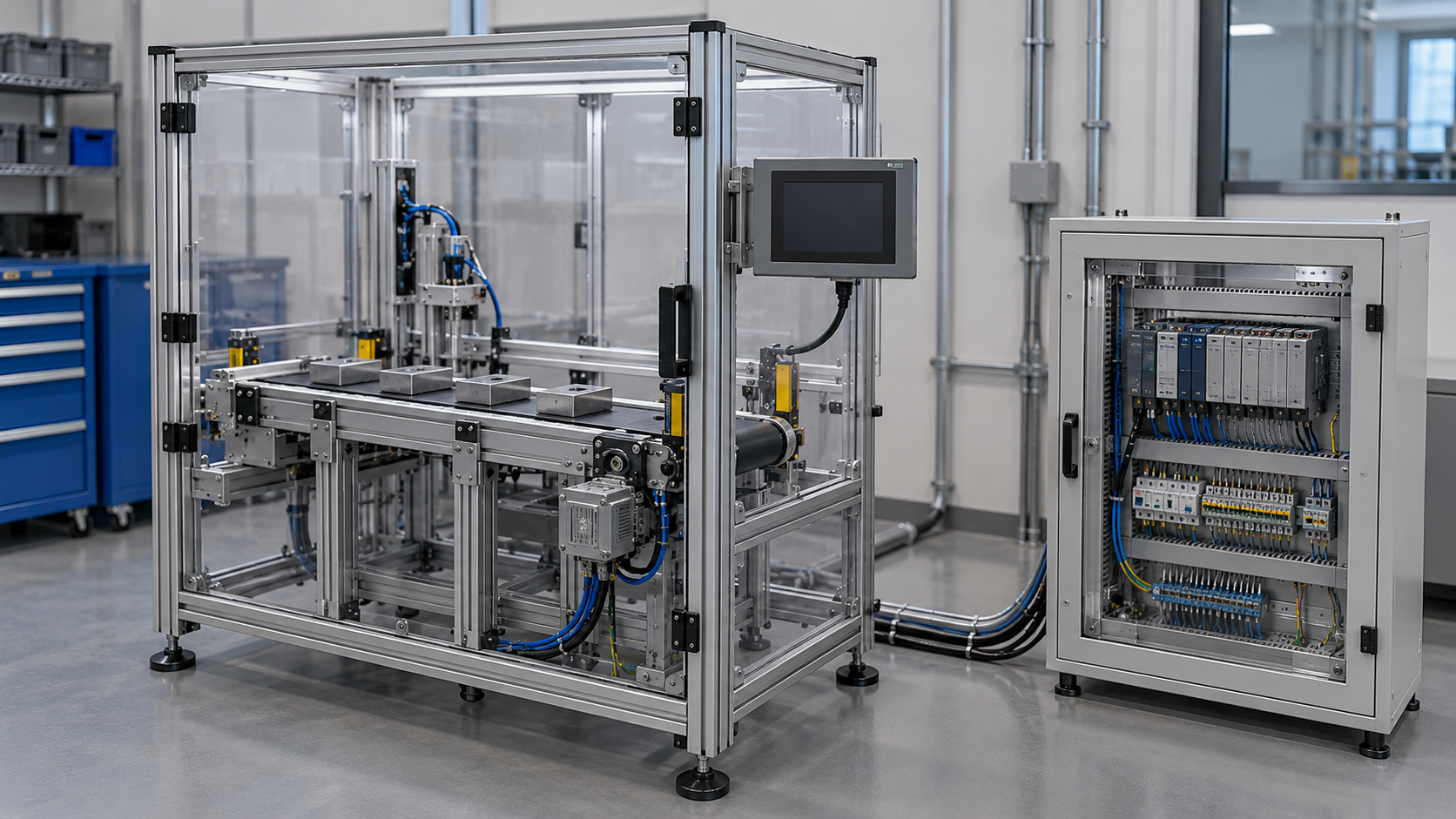
PLC spare validation needs a clear distinction between testing an application model and approving a physical replacement. Faster engineering workflows can help teams organize their work, but a successful simulation does not establish the condition or suitability of the unit sitting in a stores bin.
Rockwell Automation’s October 21, 2026 FactoryTalk Conductor announcement describes an AI-native platform for coordinating engineering workflows. It names planned launch integrations with Studio 5000 Logix Designer, Logix Echo, Emulate3D and FactoryTalk Optix. Commercial availability is planned for the first quarter of 2027, following a preview at Automation Fair 2026.
Those are announced product plans, not evidence that the software is already deployed at a particular plant. For maintenance teams, the useful question is how engineering results will be carried into a controlled replacement decision without losing their limits.
A test result needs a named subject
A statement such as “the replacement passed simulation” leaves an important ambiguity. Was the test performed on an application project, an equipment model, a communication scenario or the physical spare itself? Each has a different subject and answers a different question.
Consider an illustrative conveyor project. A model may show the intended sequence when simulated inputs arrive in the expected order. That result does not demonstrate the condition of an output channel on a particular physical module, the suitability of its installed electrical interface or the behavior of the actual machine.
Keep the tested project revision, model revision, assumptions and relevant results together. Identify any functions that were outside the test scope. If the model was simplified, make that limitation visible in the handover rather than allowing a short “passed” label to imply complete coverage.
Carry evidence through three separate gates
Virtual behavior. Record what the model or software test exercised and the conditions under which it ran. This can support a review of the tested logic or scenario, but only within its documented scope. It is not a blanket approval of every possible controller or I/O replacement.
Physical-unit suitability. Assess the proposed spare against the complete installed reference and the applicable manufacturer requirements. Identity, revision, condition, interfaces and documented application dependencies need their own evidence. These questions cannot be settled solely by a virtual representation of a device.
Site acceptance. The responsible engineering and operations teams must define what is required before the affected service returns to use. An offline result does not automatically validate field wiring, connected equipment or the installed operating environment. Site procedures, authorization and any required safety review remain applicable.
This three-gate separation is an editorial planning framework, not a Rockwell acceptance standard. Do not connect unreviewed hardware to a live process, bypass protection or force outputs simply to reproduce a simulated result.
Keep the handover useful to maintenance
A useful handover explains what was tested, what remains unverified and who owns the next decision. Link evidence to the actual asset or application, not just to a general project name. Keep approved configuration files and access arrangements within the site’s controlled systems rather than adding them to ordinary supplier correspondence.
Model-family selection also deserves a separate review. Our CompactLogix 5390 and 5380 replacement-planning article discusses why product-family names alone do not settle a replacement requirement. A workflow integration announcement should not be read as a universal hardware compatibility list.
When reviewing the NANKMOS product catalogue, distinguish the requested physical item from the software tools used to engineer its application. Through our contact and RFQ page, provide the complete installed identifier, required quantity and whether the scope is an assessed replacement or a proposed upgrade. Describe the requirement without sending confidential project exports.
Availability, offered condition and supporting information are confirmed during quotation. Final suitability and installation approval require the responsible technical review. Related maintenance reading is available in the resources library.
Source checked October 24, 2026. The October 21 announcement describes planned FactoryTalk Conductor capabilities and availability. The validation discussion is NANKMOS editorial guidance, not a commissioning procedure or a report of a Conductor deployment. Featured image: AI-generated generic offline automation test cell, not a Rockwell product photograph, FactoryTalk screenshot or manufacturer-approved test rig.
Related guides
View all guides
Machine Vision False Rejects: Check the Lighting Before the Camera
When a reflective part fails inspection, compare reference images before ordering a camera. Learn when to scope the light, controller or mounting instead.
Read guide
AMR Charging Faults: Is the Spare on the Robot or at the Dock?
When an AMR stops charging, distinguish the fixed dock from the vehicle battery. Use dock IDs and fleet events to scope the right replacement RFQ.
Read guide
Servo Drive Spares: EtherCAT Is Not the Encoder Interface
An EtherCAT drive can still be the wrong spare. Learn how to verify the motor encoder protocol, feedback cable and exact drive variant before ordering.
Read guide
CENTUM R7.02: An Estimate Is Not a Field Measurement
Yokogawa’s CENTUM R7.02 adds AI Estimation. See how to distinguish model outputs, transmitter readings and laboratory results before ordering a spare.
Read guideSend your part number, photos or nameplate.
Our team will verify, check availability, and reply with options within 24 hours.
[email protected]+86 18359268345WhatsApp