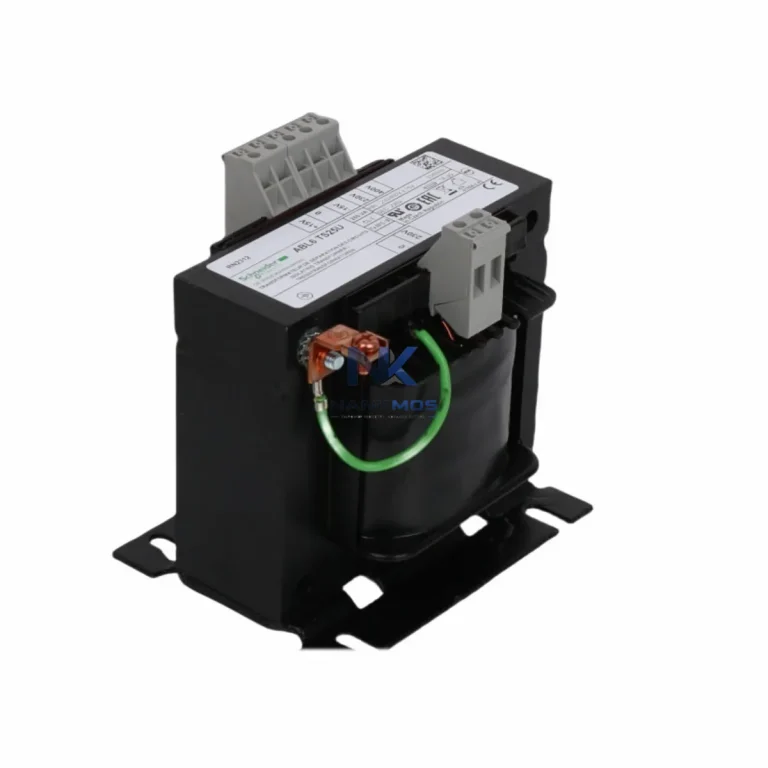
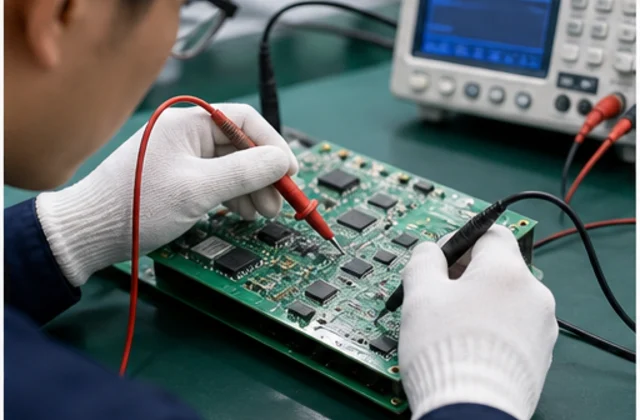
 Functional Inspection
100% tested on professional platforms to ensure stable performance.
Schneider Electric LC1D150M7C is a NANKMOS industrial automation product record Listed under TeSys series and Business & Industrial > Automation, Control & Flow Devices. Confirm condition, availability, lead time, compatibility and documentation by email inquiry.
Brand names are used for identification only.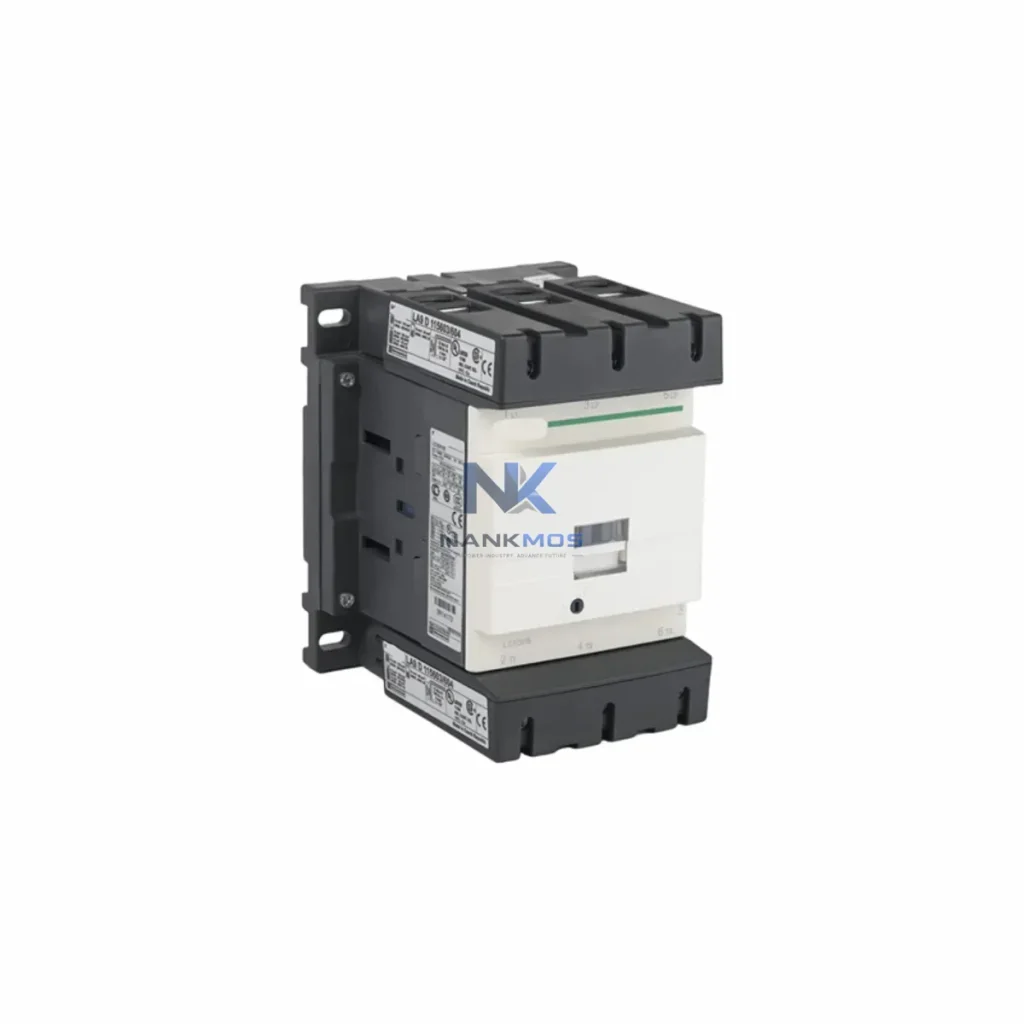
Schneider Electric LC1D150M7C is a NANKMOS industrial automation product record Listed under TeSys series and Business & Industrial > Automation, Control & Flow Devices. Confirm condition, availability, lead time, compatibility and documentation by email inquiry.
| Manufacturer | Schneider Electric |
|---|---|
| Application | Industrial Automation Maintenance |
| Part Number / Model | LC1D150M7C |
| Compatible System | TeSys |
| Series | TeSys |
| Condition Options | To Confirm |
| Module Type | Automation, Control & Flow Devices |
| Warranty | 12 Months |
| Packaging | Anti-static Bag / Secure Box |
| Shipping Methods | DHL / FedEx / UPS / Air / Sea |
| Availability | To Confirm |
| Lead Time | To Confirm |
| Documentation | Part number and revision checked before quote |
The Schneider Electric LC1D150M7C is a three-pole IEC electromagnetic contactor from the TeSys D series, rated at 150 A AC-3 duty and designed for seamless integration into layered industrial control architectures. With a 220 V AC coil voltage (M7 suffix) and robust mechanical endurance exceeding 10 million operations, the LC1D150M7C delivers the switching reliability, thermal stability, and modular expandability demanded by modern automation platforms across manufacturing, power distribution, petrochemical, water treatment, mining, metallurgy, marine, and process control environments.
Unlike standalone switching devices, the LC1D150M7C is engineered as a system component — one that derives its full value from its position within a coordinated control hierarchy. Its compact DIN-rail or panel-mount footprint, standardised auxiliary contact interface, and compatibility with the TeSys D accessory ecosystem make it a cornerstone of scalable motor control centres (MCCs), soft-starter bypass circuits, variable-frequency drive (VFD) output switching, and feeder protection assemblies.
The LC1D150M7C achieves its highest system value when deployed as part of a fully coordinated automation platform. In a typical layered architecture, the contactor sits at the execution layer, receiving switching commands from a programmable logic controller (PLC) such as the Schneider Electric Modicon M340 or M580 CPU module. The PLC issues discrete output signals through a BMX DDO 3202K digital output module or equivalent I/O slice, which drives the LC1D150M7C coil via an interposing relay or solid-state relay interface — ensuring electrical isolation between the control bus and the power circuit.
For motor protection and diagnostic integration, the LC1D150M7C is routinely paired with the LRD325 or LRD332 TeSys D thermal overload relay, mounted directly onto the contactor body without additional wiring. This combination forms a certified motor starter assembly compliant with IEC 60947-4-1 Type 2 coordination, providing short-circuit protection when coordinated with a GV2ME or GV3ME motor circuit breaker upstream. The motor circuit breaker also serves as the local isolation point, satisfying EN 60204-1 safety requirements for machinery.
At the communication layer, the TeSys T LTM R motor management relay can be connected in series with the LC1D150M7C to provide real-time current monitoring, thermal modelling, phase imbalance detection, and MODBUS RTU or EtherNet/IP reporting back to the SCADA system or DCS historian. This transforms a conventional contactor circuit into a fully observable, remotely diagnosable drive point — reducing unplanned downtime and enabling predictive maintenance scheduling without physical inspection.
In variable-frequency drive (VFD) bypass applications, the LC1D150M7C is deployed alongside an ATV630 or ATV930 Altivar Process drive. The contactor provides the bypass path when the drive is taken offline for maintenance, ensuring process continuity. Interlocking between the drive output contactor and the bypass contactor is implemented in the PLC logic, with auxiliary contact feedback wired to the BMX DDI 3202K digital input module to confirm contactor state before permitting bypass engagement.
Power supply integrity for the control circuit is maintained by a Phaseo ABL8 24 V DC SMPS, which feeds the PLC I/O bus, the contactor coil circuit, and the HMI panel. The Magelis HMIGTO or HMISTO HMI terminal provides the operator interface, displaying contactor status, motor current, thermal state, and alarm history sourced from the TeSys T relay via the EtherNet/IP network. An industrial Ethernet switch — such as the ConneXium TCSESM083F2CU0 — provides the managed Layer 2 switching infrastructure connecting the PLC, HMI, TeSys T relay, and plant historian on a single VLAN-segmented network.
For redundant or safety-critical applications, the LC1D150M7C can be incorporated into a dual-contactor safety circuit using a Preventa XPSMCM safety module, achieving PLd / SIL 2 category 3 performance. The safety module monitors auxiliary contact feedback from both contactors and de-energises the circuit upon detecting a welded contact or coil failure — a configuration commonly required in emergency stop, safe torque off (STO), and fire pump control applications.
Manufacturing & Assembly Lines: In automotive body-in-white and general assembly plants, the LC1D150M7C controls conveyor drive motors, robotic cell power feeds, and compressed air compressor starters. Its high mechanical endurance supports the frequent start-stop cycling inherent in production line sequencing, while the TeSys D overload relay provides thermal protection against motor overloading during peak throughput periods.
Power Distribution & Utilities: In medium-voltage transformer secondary switchboards and LV motor control centres, the LC1D150M7C serves as the main switching element for pump motors, fan drives, and capacitor bank switching. Its 690 V AC rating and IEC 60947-4-1 compliance make it suitable for European and Asian utility substations where high-voltage tolerance and certified performance are mandatory.
Petrochemical & Refinery: In hazardous area motor control applications, the LC1D150M7C is installed inside Ex e or Ex d enclosures to control process pumps, agitators, and compressor auxiliaries. The contactor's sealed contact chamber and robust arc extinction design minimise the risk of ignition in Zone 1 and Zone 2 classified areas when properly enclosed and coordinated with certified protection devices.
Water & Wastewater Treatment: Pump station motor control panels rely on the LC1D150M7C for reliable start-stop control of submersible pumps, aeration blowers, and sludge mixers. Remote SCADA monitoring via the TeSys T relay enables operators to track motor health across geographically distributed pump stations without on-site visits, reducing operational expenditure and improving response times to fault conditions.
Mining & Metallurgy: In ore processing plants and smelting facilities, the LC1D150M7C controls high-inertia conveyor belt drives, crusher motors, and cooling fan systems. Its high electrical endurance and compatibility with soft-starter bypass circuits make it well-suited to the demanding duty cycles and high ambient temperatures encountered in underground and surface mining environments.
Marine & Offshore: Shipboard motor control panels and offshore platform auxiliary systems use the LC1D150M7C for HVAC fan control, seawater cooling pump switching, and ballast pump operation. Its compliance with IEC standards and compatibility with DNV-GL approved enclosures supports classification society approval for marine electrical installations.
Q1: Is the LC1D150M7C compatible with Schneider Electric Modicon PLC digital output modules for direct coil drive? The LC1D150M7C coil draws approximately 70–80 VA at 220 V AC inrush, which exceeds the direct drive capacity of most PLC transistor output modules. The recommended integration method is to use an interposing relay — such as the Schneider Electric RXM2AB2P7 plug-in relay with RXZE2M2C socket — between the PLC digital output and the contactor coil. This protects the PLC output card from inductive kickback and allows the coil circuit to be powered from a dedicated 220 V AC control transformer, maintaining clean separation between the 24 V DC control bus and the 220 V AC power circuit. The auxiliary contact feedback from the LC1D150M7C is then wired back to a digital input module for state confirmation in the PLC ladder logic.
Q2: What coordination type is achieved when the LC1D150M7C is paired with a GV3ME motor circuit breaker and LRD332 overload relay? When coordinated with the GV3ME motor circuit breaker (rated up to 100 A) and the LRD332 thermal overload relay (28–40 A range), the assembly achieves IEC 60947-4-1 Type 2 coordination — meaning that after a short-circuit event, neither the contactor nor the overload relay sustains damage that prevents immediate recommissioning without replacement. Schneider Electric publishes certified coordination tables in the TeSys D catalogue (document reference: MKTED210011EN) confirming this performance. For the 150 A LC1D150M7C, upstream protection should be coordinated using the NS160N or NS250N Compact NSX circuit breaker with a motor protection trip unit to achieve Type 2 coordination at the full rated current.
Q3: What does the 12-Month Warranty cover, and what is the supply and lead time status for the LC1D150M7C? The 12-Month Warranty covers manufacturing defects, coil insulation failure, contact material defects, and mechanical assembly faults under rated operating conditions as defined by IEC/EN 60947-4-1. It does not cover damage resulting from incorrect installation, operation outside rated parameters, or contact wear from duty cycles exceeding the published electrical endurance rating. The LC1D150M7C is maintained as a stocked item and undergoes pre-shipment functional testing — including coil energisation verification, contact resistance measurement, and insulation resistance check — before dispatch. Standard lead time from confirmed order to shipment is 1–3 business days for in-stock units. Expedited shipment options are available upon request. Contact [email protected] or +86 18359268345 for real-time stock confirmation and volume pricing.
Functional Inspection100% tested on professional platforms to ensure stable performance.
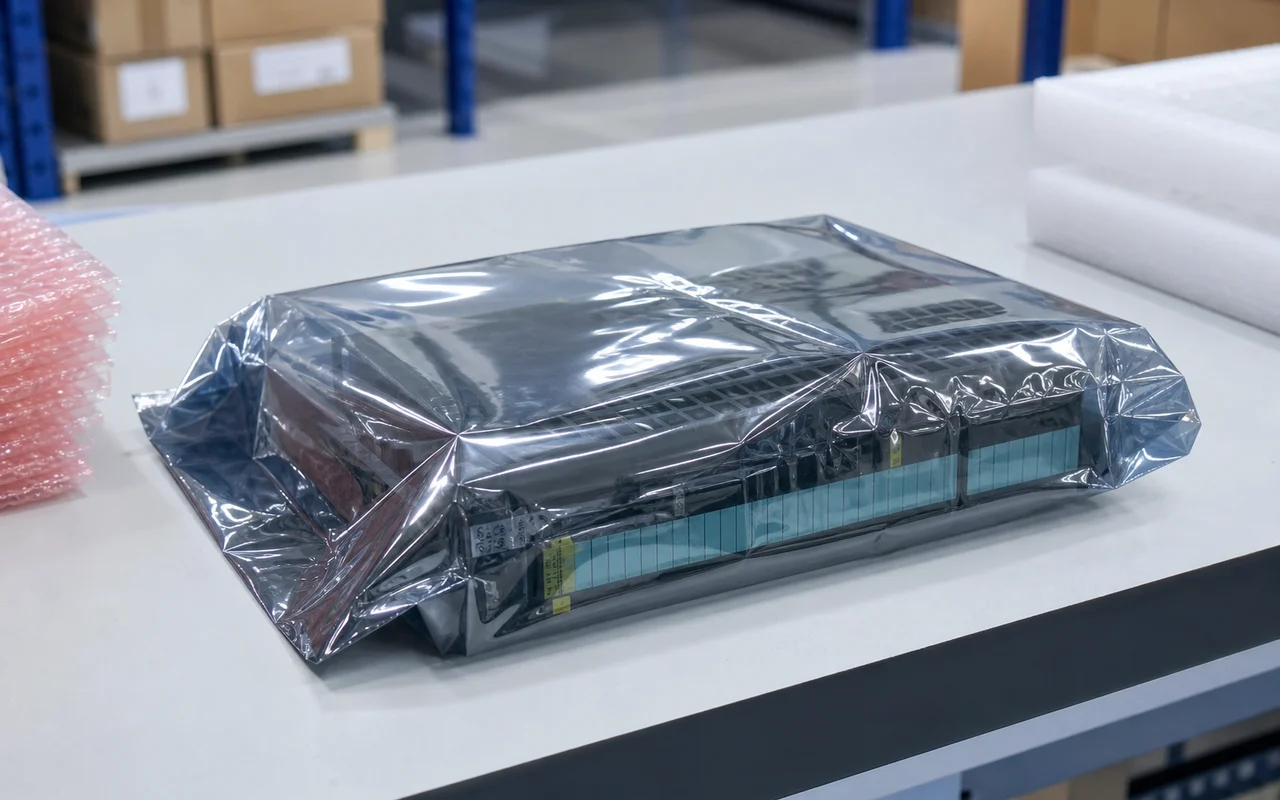 Anti-static Packaging
Modules are packed in anti-static bags to prevent electrostatic damage.
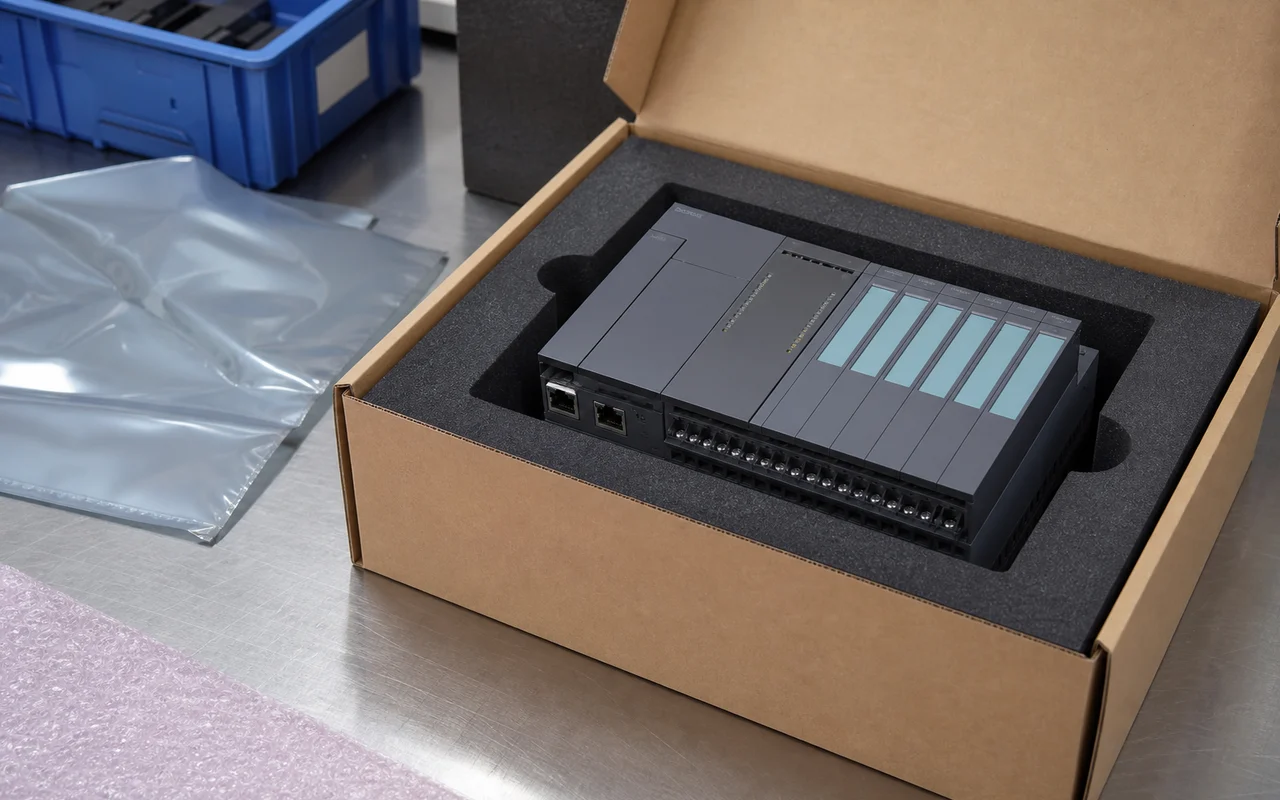 Secure Export Packing
Cushion protection and strong cartons ensure safe transportation.
 Worldwide Shipping
Global logistics network supports air, sea and express delivery.
 Documentation Check
Part number, revision and compatibility verified before shipment.
 After-sales Support
Professional technical support to help resolve your issues.