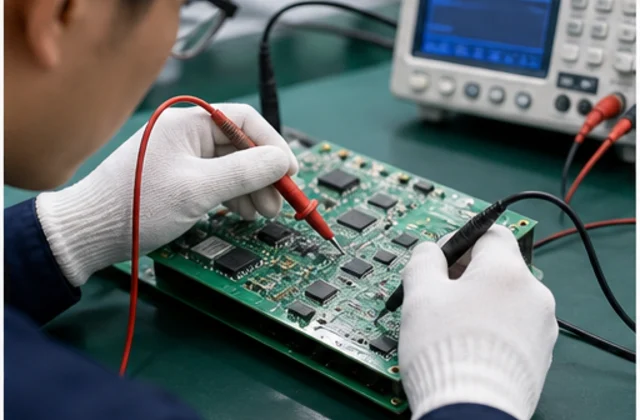
 Functional Inspection
100% tested on professional platforms to ensure stable performance.
Schneider Electric LC1D38M7C is a NANKMOS industrial automation product record Listed under TeSys series and Business & Industrial > Automation, Control & Flow Devices. Confirm condition, availability, lead time, compatibility and documentation by email inquiry.
Brand names are used for identification only.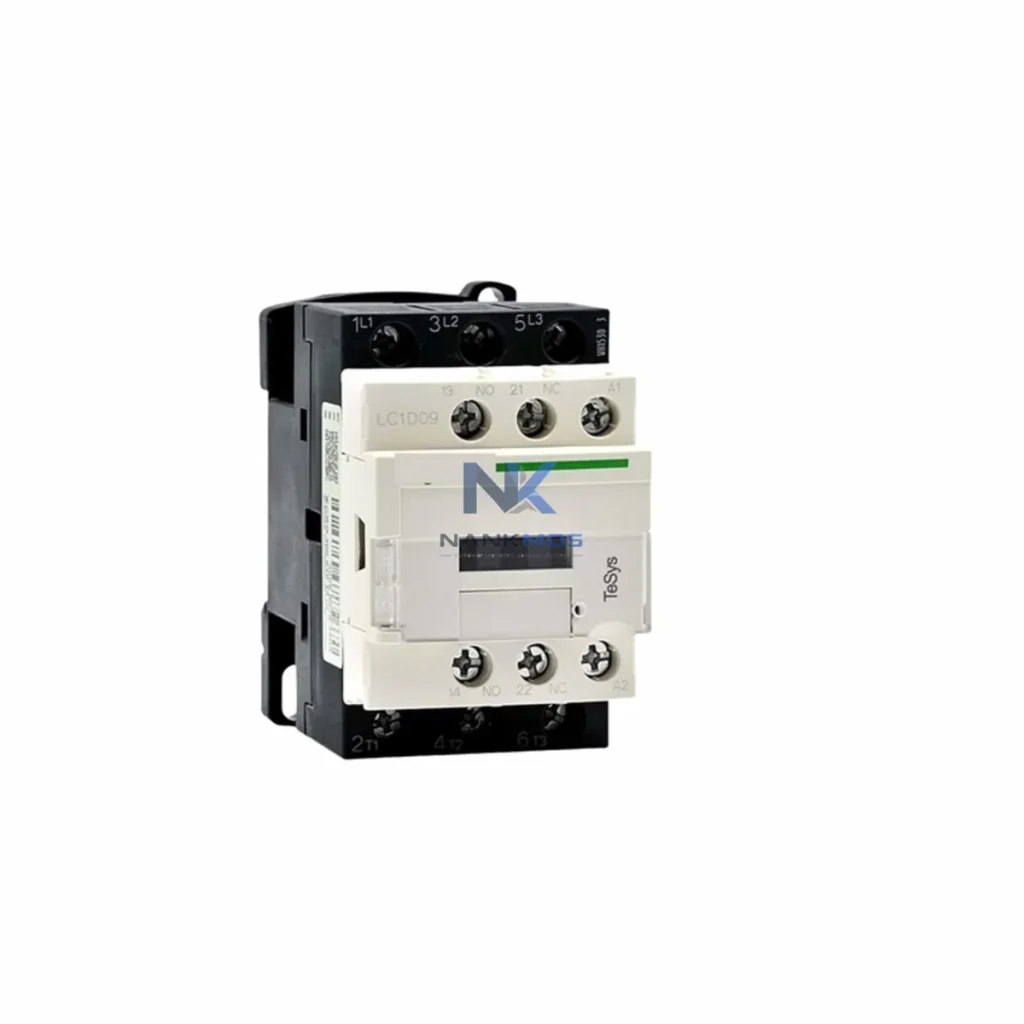
Schneider Electric LC1D38M7C is a NANKMOS industrial automation product record Listed under TeSys series and Business & Industrial > Automation, Control & Flow Devices. Confirm condition, availability, lead time, compatibility and documentation by email inquiry.
| Manufacturer | Schneider Electric |
|---|---|
| Application | Industrial Automation Maintenance |
| Part Number / Model | LC1D38M7C |
| Compatible System | TeSys |
| Series | TeSys |
| Condition Options | To Confirm |
| Module Type | Automation, Control & Flow Devices |
| Warranty | 12 Months |
| Packaging | Anti-static Bag / Secure Box |
| Shipping Methods | DHL / FedEx / UPS / Air / Sea |
| Availability | To Confirm |
| Lead Time | To Confirm |
| Documentation | Part number and revision checked before quote |
The Schneider Electric LC1D38M7C is a 38 A three-pole AC contactor from the renowned TeSys D series, engineered to deliver precise, energy-efficient motor switching across demanding industrial production environments. Rated at 220 V AC coil voltage (M7 suffix) and designed for IEC 60947-4-1 compliance, this contactor serves as a cornerstone load-management device in smart factory architectures where every watt of consumed energy must be accounted for and optimised. Its compact DIN-rail footprint, low coil power consumption, and robust silver-alloy contact technology make it an ideal choice for integrators building energy-aware automation cells, motor control centres (MCCs), and variable-load production lines.
In a modern smart production line, the LC1D38M7C does not operate in isolation — it functions as a precision switching node within a tightly integrated energy management ecosystem. When a Schneider Electric Modicon M221 PLC or Modicon M340 PLC issues a motor-start command via its digital output module, the LC1D38M7C responds within milliseconds, energising the load circuit with minimal inrush energy thanks to its optimised coil design. This rapid, controlled switching reduces voltage transients that would otherwise stress downstream components and inflate reactive power demand.
Paired with a Schneider Electric Altivar ATV320 variable frequency drive (VFD) or ATV630 drive, the LC1D38M7C acts as the upstream isolation and bypass contactor, enabling soft-start sequences and energy-recovery braking cycles to proceed without interruption. The drive's internal energy optimisation algorithms — which continuously adjust output frequency and voltage to match actual load torque — are only effective when the contactor upstream maintains a clean, low-impedance connection. The TeSys D silver-alloy contacts are rated for millions of AC-3 operations, ensuring that contact resistance remains negligible throughout the product lifecycle.
For power monitoring, the LC1D38M7C integrates naturally with Schneider Electric PowerLogic PM5000 series power meters and iEM3000 series energy meters, which measure real-time kWh consumption, power factor, and harmonic distortion at the motor feeder level. When these meters detect a degraded power factor caused by lightly loaded induction motors, the SCADA system — typically running on a Wonderware System Platform or Schneider Electric EcoStruxure Operator Advisor HMI — can command the PLC to cycle the LC1D38M7C and switch in a capacitor bank or redirect the load to a more efficient drive profile, directly reducing reactive energy charges.
On the I/O side, the contactor's auxiliary contact block (available as an add-on LA1DN11 module) feeds status signals back to the PLC's digital input card, enabling the control program to confirm actual motor energisation state rather than relying solely on the output command. This closed-loop feedback is essential for predictive maintenance routines: if the auxiliary contact reports a discrepancy — motor commanded ON but contactor not confirmed closed — the SCADA system logs a fault event and schedules a maintenance inspection before a full production stoppage occurs. Coupling this with a Schneider Electric TeSys T LTM R motor management relay adds thermal overload monitoring, phase-loss detection, and current imbalance alarms, creating a comprehensive motor protection and energy-efficiency layer around the LC1D38M7C.
Communication to higher-level energy management systems is achieved through Modbus RTU or Modbus TCP/IP gateways — such as the Schneider Electric EGX300 Ethernet gateway — which aggregate contactor status, motor run-hours, and energy data from multiple feeder circuits into a single OPC-UA data stream consumed by the plant's MES or ERP platform. This architecture allows energy managers to identify which production cells are consuming disproportionate energy relative to their output, enabling targeted load-balancing and shift-scheduling decisions that reduce peak-demand charges.
Factory energy optimisation begins at the load-switching level, and the LC1D38M7C is precisely where that optimisation is enforced. In a typical conveyor or packaging line, motors run continuously even during idle periods — a common source of unnecessary energy consumption. By integrating the LC1D38M7C into a PLC-controlled load-shedding scheme, plant engineers can automatically de-energise idle motor circuits during scheduled micro-stops, reducing no-load losses that can account for 15–30% of a motor's total energy draw over a shift.
Thermal load management is equally important. Every contactor that dissipates excess heat inside an MCC panel raises the ambient temperature, forcing panel cooling systems to work harder and increasing the risk of insulation degradation on adjacent components. The TeSys D series is specifically designed with low coil power dissipation to minimise this thermal contribution. In high-density panel installations — where 10 to 20 contactors may share a single enclosure — the cumulative thermal savings of using low-dissipation devices like the LC1D38M7C can meaningfully extend the service life of the entire panel assembly and reduce air-conditioning energy costs.
Production line rhythm (takt time) stability is another dimension where this contactor delivers value. Inconsistent motor switching — caused by worn contacts, coil voltage fluctuations, or mechanical bounce — introduces micro-interruptions that disrupt conveyor synchronisation and force downstream buffers to absorb timing variations. The LC1D38M7C's precision-engineered contact geometry and coil suppression circuitry ensure repeatable, bounce-free switching that keeps production takt stable across thousands of daily cycles. When combined with a Schneider Electric Zelio Logic SR3B261BD smart relay for local sequencing logic, the result is a self-contained, energy-aware motor control cell that requires minimal PLC overhead and delivers consistent cycle times.
Predictive maintenance integration further amplifies the energy optimisation benefit. By tracking contactor operation counts via the PLC program and correlating them with motor current signatures from the TeSys T LTM R relay, maintenance teams can schedule contactor replacement during planned downtime rather than reacting to unexpected failures. Unplanned stoppages not only halt production but also generate energy waste as the line restarts — motors draw 5–7× rated current during start-up, and frequent unplanned restarts accumulate significant energy and thermal stress. Proactive replacement of the LC1D38M7C before end-of-life eliminates this hidden energy cost.
All units supplied by NANKMOS are sourced from authorised distribution channels, subjected to pre-shipment functional testing (coil pull-in voltage, contact resistance, and auxiliary contact continuity verification), and shipped with original manufacturer packaging. In-stock availability ensures lead times are minimised, supporting just-in-time maintenance strategies without the need for excessive on-site spare inventory.
Q1: How does the LC1D38M7C contribute to measurable energy savings on a production line? The LC1D38M7C enables PLC-controlled load shedding — automatically disconnecting idle motors during micro-stops and shift breaks. Combined with a VFD such as the Altivar ATV320, it supports soft-start and energy-recovery braking, reducing peak demand and no-load losses. Power meters like the PowerLogic PM5000 can quantify the savings per feeder circuit, providing data for ISO 50001 energy management reporting.
Q2: Is the LC1D38M7C compatible with my existing Schneider Electric TeSys D accessories and overload relays? Yes. The LC1D38M7C is fully compatible with the TeSys D accessory ecosystem, including LRD-series thermal overload relays (direct front-mount), LA1DN auxiliary contact blocks, LAD4RCU surge suppressor modules, and LADN11 auxiliary contact add-ons. This ensures you can build a complete motor starter assembly without sourcing components from multiple product families.
Q3: What is the pre-shipment testing process and what does the 12-month warranty cover? Every LC1D38M7C unit undergoes pre-shipment testing covering coil pull-in and drop-out voltage verification, main contact resistance measurement, and auxiliary contact continuity check. The 12-month warranty covers manufacturing defects and functional failures under normal operating conditions. Warranty claims are supported with replacement dispatch from in-stock inventory to minimise production downtime.
Q4: Can the LC1D38M7C be used as a bypass contactor in a VFD installation, and what are the wiring considerations? Yes. The LC1D38M7C is commonly used as a bypass or isolation contactor in VFD bypass schemes, where the drive output is switched out and the motor is connected directly to the mains during drive maintenance. Electrical and mechanical interlocking with a second contactor (e.g., LC1D38 line contactor) is mandatory to prevent simultaneous closure. The PLC I/O module should enforce a time delay between contactor transitions to protect both the drive output stage and the motor windings from switching transients.
Functional Inspection100% tested on professional platforms to ensure stable performance.
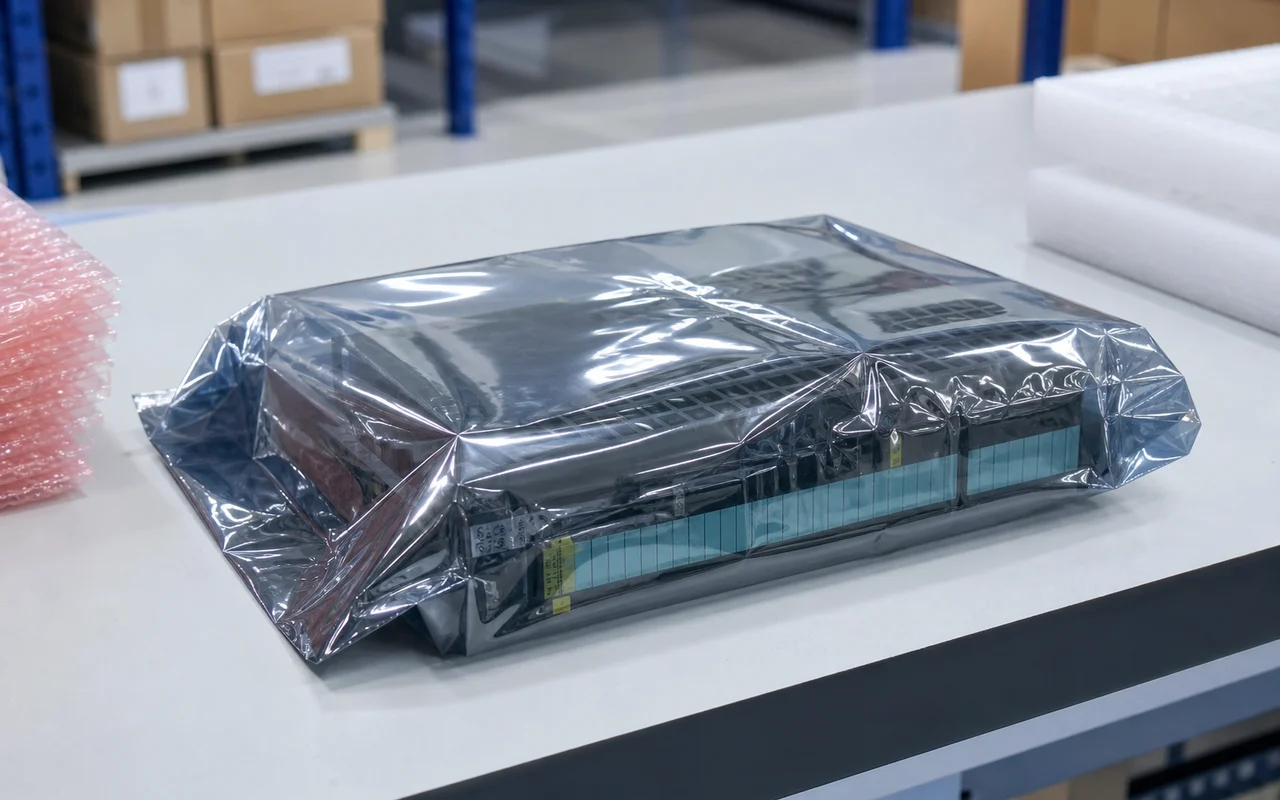 Anti-static Packaging
Modules are packed in anti-static bags to prevent electrostatic damage.
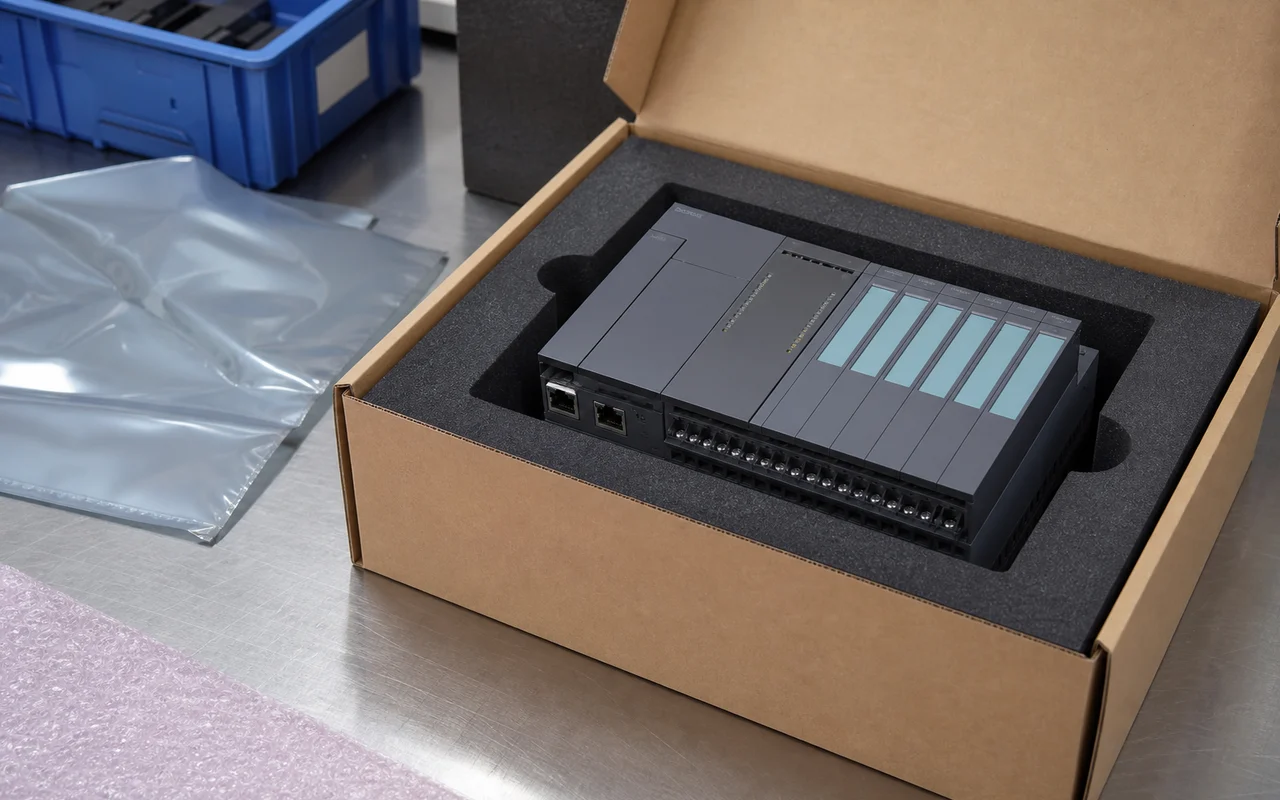 Secure Export Packing
Cushion protection and strong cartons ensure safe transportation.
 Worldwide Shipping
Global logistics network supports air, sea and express delivery.
 Documentation Check
Part number, revision and compatibility verified before shipment.
 After-sales Support
Professional technical support to help resolve your issues.